




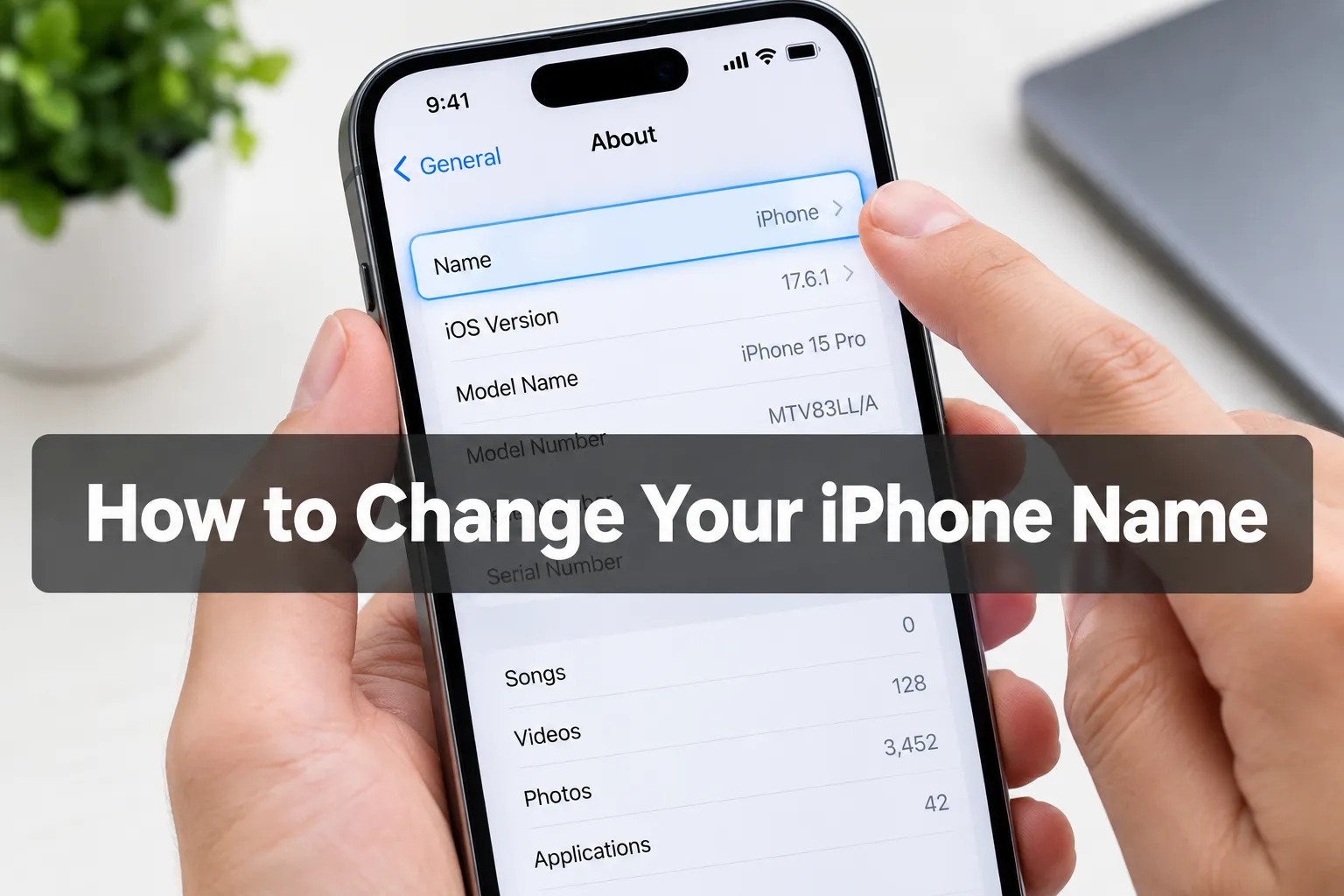
To change your iPhone name, open Settings, tap General, tap About, then tap Name. Tap the clear (x) button, type a new name, and tap Done. That's it. Your new name shows up right away in AirDrop, Bluetooth, Personal Hotspot, Find My, and on your computer.
⚡ Key Takeaways
- 1Go to Settings → General → About → Name. It's the same path on iOS 26 and iOS 27.
- 2One name controls AirDrop (for people who don't have you saved), Bluetooth, Personal Hotspot, Find My, iCloud, and your computer.
- 3Renaming does not change your Apple Account name, contacts, photos, apps, or data.
- 4Skip your full name. A short, neutral name keeps you private in cafés, buses, and offices.
- 5Name row won't open? A work or school profile may lock it. Ask your IT admin.
Why your iPhone name matters more than you think
Here's a surprise. Your iPhone name is one of the few things strangers can see without touching your phone. It shows up in hotspot lists, Bluetooth lists, and AirDrop. According to Apple's AirDrop guide, AirDrop works between devices within 30 feet (10 meters). So anyone nearby could see "Moise's iPhone" in a list.
And you're not alone in a crowded list. Apple said on January 29, 2026, that more than 2.5 billion Apple devices are in active use. That's up from 2.35 billion a year earlier, as CNBC reported. A clear name helps you find your phone fast.
How Do You Change Your iPhone Name in Settings?
You change your iPhone name in the Settings app. It takes five taps and no password. Apple's official iPhone User Guide lists the same path for iOS 27, iOS 26, iOS 18, and versions back to iOS 13. That means these steps work on nearly every iPhone in use today.
Data from Apple shows 86% of iPhones from the last four years ran iOS 26 by June 7, 2026. Then iOS 27 arrived on September 14, 2026, for the iPhone 11 and newer. Good news: the rename steps did not change.
-
Open the Settings app
Find the gray gear icon on your Home Screen and tap it. Can't find it? Swipe down on the Home Screen and type "Settings" in Search.
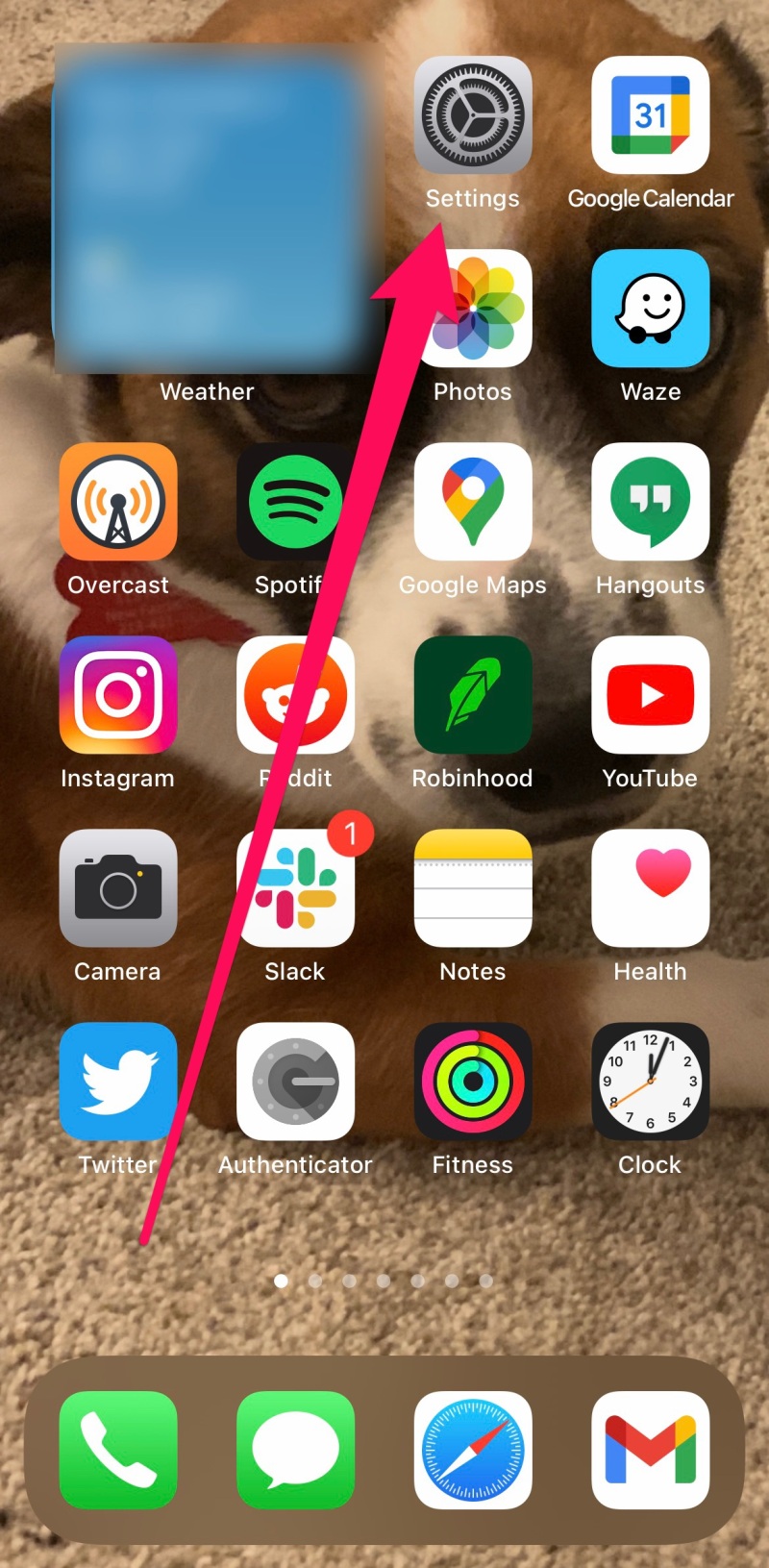
Step 1: Tap Settings. -
Tap General
Scroll down a little and tap General. This menu holds your phone's core info, like storage, updates, and its name.
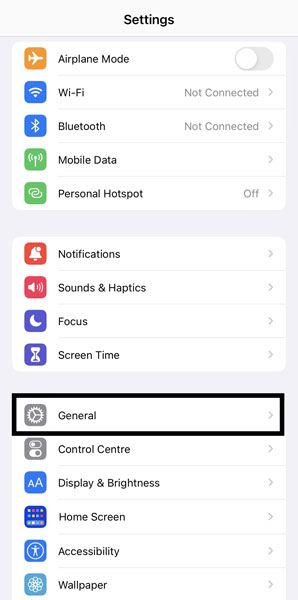
Step 2: Tap General. -
Tap About
About is the first row in General. It shows your model, iOS version, and current device name.

Step 3: Tap About. -
Tap Name
Name is the top row on the About screen. Your current name shows in gray on the right.

Step 4: Tap Name. -
Clear the old name, type a new one, tap Done
Tap the small (x) to clear the field. Type your new name. Then tap Done on the keyboard. There's no Save button. iOS saves it right away.
‹ AboutNameWork iPhone✕DoneStep 5: Type the new name, then tap Done.
Example: from "Moise's iPhone" to "Work iPhone"
Before, two of our test phones both said "Moise's iPhone." After the change, one says "Work iPhone" and the other says "Test iPhone." Now nobody sends a file to the wrong phone.
📖 Why we rename every phone on our test desk
We test a lot of earbuds and headphones at TechOzea. That means pairing them with several iPhones every week. Once, I AirDropped a review draft to a colleague's phone by mistake. Both phones had the same default name. It was a harmless mix-up, but it taught us a lesson.
Now every phone on our desk gets a clear, private name on day one. We love how simple the fix is. It took us less time than reading this paragraph.
Prefer to watch? Video walkthrough
Can You Practice Renaming Your iPhone Before You Try It?
Yes. Use our iPhone rename simulator below. Tap through the same menus you'll see on your phone. Type any name, then watch it appear in AirDrop, Bluetooth, and Hotspot lists. Nothing here touches your real phone.
Tip: tap ✕, type a new name, then tap Done.
Your progress
- Settings
- General
- About
- Name
- Done
Nice work! You renamed the phone in 5 taps. Now do the same on your real iPhone.
What Happens When You Change Your iPhone Name?
When you change your iPhone name, the new label spreads to every place that identifies your phone. According to Apple Support, the name "is used by iCloud, AirDrop, Bluetooth®, your Personal Hotspot, and your computer." Most places update in seconds. Find My and iCloud can take a little longer.
| Where | What people see | Uses your device name? | How fast it updates |
|---|---|---|---|
| AirDrop | Your phone in the share sheet | Yes, for non-contacts. Contacts see your name and photo from their Contacts. | Right away |
| Bluetooth | Your phone in a car, speaker, or PC list | Yes | Right away (cars may cache the old name) |
| Personal Hotspot | The Wi-Fi network others join | Yes. There's no separate hotspot name. | Right away |
| Find My & iCloud.com | Your phone in the Devices list | Yes | Can lag. A restart helps. |
| Mac Finder / Apple Devices app on Windows | Your phone in the sidebar | Yes | Next time you connect |
| Apple Account name | Your name in iMessage, FaceTime, App Store | No | Changed separately |
What does NOT change
- Your Apple Account name or email. They live under Settings → [your name].
- Your phone number and your carrier details.
- Saved contacts. A contact's name stays the same.
- Photos, apps, messages, and files. Renaming is just a label. Nothing gets deleted.
- Your AirPods or Apple Watch names. Each one has its own name setting.
Bluetooth devices shipped in 2025. That number should reach 8.1 billion by 2030, according to ABI Research's Bluetooth Market Tracker (Feb 2026). Lists will only get more crowded. A unique name saves time.
Apple's active device base keeps growing
Which iOS version iPhones ran (June 7, 2026)
How Do You Change Your iPhone Name for AirDrop and Hotspot?
You change your iPhone name for AirDrop and Hotspot the same way: Settings → General → About → Name. Neither feature has its own name setting. That trips up many people. They search the AirDrop menu and the Hotspot menu and find nothing.
How your name shows in AirDrop
AirDrop does not always show your device name. Apple's Platform Security guide explains it clearly. If the sender has you saved, they see your first name and photo from their Contacts. If not, they see a gray silhouette and your device name under "Other People."
- Contacts Only is the default AirDrop setting, per Apple.
- Everyone for 10 Minutes lets strangers see your phone for 10 minutes, then it switches back.
- AirDrop codes (iOS 26.2 and later): strangers must enter a code to send you something. After that, they can AirDrop you for 30 days, according to Apple's AirDrop help page.
"Devices that aren't verified or authenticated are displayed in the sender's AirDrop share sheet with a silhouette icon and the device's name, as defined in Settings > General > About > Name."
— Apple Platform Security guide, AirDrop securityHow to change your iPhone hotspot name
Your hotspot name is your iPhone name. Apple says it directly on its Personal Hotspot support page (published May 7, 2026): "To change the name of the Personal Hotspot, change the name of the device providing the hotspot."
- Rename your iPhone in Settings → General → About → Name.
- Open Settings → Personal Hotspot and turn on Allow Others to Join.
- On a laptop or tablet, open the Wi-Fi list. Look for your new name.
- Rejoin with your password. Devices that joined under the old name may need to reconnect.
Keep hotspot names short. Wi-Fi network names (SSIDs) max out at 32 bytes. A plain letter uses 1 byte. Many emoji use 4 bytes. So "📱🔥 Moise Work Phone 🔥📱" eats space fast. Our name checker below counts bytes for you.
Your hotspot password is a separate setting. Apple requires at least 8 characters.
How Do You Change Your Bluetooth Name on iPhone?
To change your Bluetooth name on iPhone, rename the device in Settings → General → About → Name. iOS has no separate Bluetooth name. Your car, speaker, or laptop sees the same device name.
How to check the name other devices see
- Open Settings → Bluetooth.
- Read the line under the switch: "This iPhone is discoverable as '[your name]' while Bluetooth Settings is open."
- If it still shows the old name, go back to About and check the new name saved.
Car still shows the old name?
Many car stereos save the name from the first time you paired. Delete the phone from the car's menu. Then tap "Forget This Device" on your iPhone and pair again. The same trick works for headphones. Our guides on how to connect AirPods to iPhone and connecting two Bluetooth headphones to one iPhone walk you through re-pairing.
Want to rename your AirPods instead? That's a different setting. Put them in your ears, open Settings, tap your AirPods' name near the top, then tap Name. AirPods names also show in the Find My app. Learn more in our guide on how to find your AirPods.
Is Your iPhone Name a Privacy Risk?
Your iPhone name can be a small privacy risk if it includes your full name. New iPhones often use your first name by default, like "Moise's iPhone." Anyone nearby can see that in a hotspot list or in AirDrop while you accept files from everyone. Experts recommend a name that you can spot, but strangers can't link to you.
Research from 2026 shows why care matters. In June 2026, researchers at the CISPA Helmholtz Center for Information Security found six flaws across AirDrop and Android's Quick Share. Three were in AirDrop. These tools are used by more than five billion devices. A name doesn't fix bugs. But a neutral name leaks less about you.
Local tip: busy places in Kigali and beyond
Think about where you turn on your hotspot. In Rwanda, iOS ran on 17.97% of mobile devices in September 2026, according to StatCounter Global Stats. That's a big share in busy spots, like coworking spaces, conference halls, and moto-taxi stages. The same rule applies in Nairobi, Lagos, London, or New York. Use a name like "Blue Falcon" in public. Save "Moise's iPhone" for home.
"Avoid sending private files to devices with generic names like 'iPhone,' 'Galaxy' or 'Laptop.'"
— Kurt "CyberGuy" Knutsson, tech journalist, Fox News, July 16, 2026That advice cuts both ways. Too generic, and people can't find your phone. Too personal, and strangers learn your name. The sweet spot is unique but anonymous.
Why Can't I Change My iPhone Name?
You usually can't change your iPhone name because a work or school profile locks it. Other times, the name changes but an old copy lingers somewhere. Here's how to fix each case.
| Problem | Likely cause | Fix |
|---|---|---|
| Name row is gray or won't open | Managed (supervised) work or school iPhone | Go to Settings → General → VPN & Device Management. If a profile is listed, ask your IT admin. Apple's device management restrictions include a "Modify device name" control. |
| Name went back to just "iPhone" | Network settings were reset | MacRumors notes a network reset renames the phone "iPhone." Rename it again. |
| Old name after restoring a backup | The name came from the backup | Rename the phone after the restore finishes. |
| Find My or iCloud shows the old name | Sync delay | Wait a few minutes. Restart the iPhone. Check again at iCloud.com/find. |
| Car or PC shows the old name | Saved pairing | Forget the device on both sides and pair again. See our Bluetooth-to-PC guide. |
| Settings freezes or Done doesn't save | A temporary glitch | Force-close Settings, reopen it, and try again. Update iOS if a fix is waiting. |
For IT teams: Apple lets admins rename supervised iPhones in bulk. Apple Configurator for Mac offers six naming variables, so you can build names like "Sales-017" automatically.
iPhone Name vs Apple Account Name vs Contact Name: What's the Difference?
Your iPhone has three different "names," and each one lives in a different place. Mixing them up is the number one reason people think the rename "didn't work." Use this table to pick the right one.
| Name type | Where to change it | Who sees it | Time needed |
|---|---|---|---|
| Device name | Settings → General → About → Name | Bluetooth, Hotspot, AirDrop (non-contacts), Find My, your computer | About 15–30 seconds |
| Apple Account name | Settings → [your name] → Personal Information | Apple services, receipts, Family Sharing | About 1 minute |
| My Card (contact name) | Contacts app → My Card → Edit | Siri, autofill, contact sharing | About 1 minute |
Changing your device name never renames your Apple Account. It also won't change how a friend saved you in their contacts. Only they can edit that.
What Do Experts Say About Naming Your iPhone?
Experts and Apple's own documents agree on three points. The device name is public. It controls several features at once. And you should treat sharing tools with care, not fear.
To change the name of the Personal Hotspot, change the name of the device providing the hotspot: Open Settings, tap General, tap About, then tap Name.
Check the recipient name carefully. When possible, confirm the device in person before sharing.
Apple AirDrop and Google/Samsung Quick Share are proximity file-transfer protocols used by over five billion devices…
Features like Apple's NameDrop that reveal personal information should be treated cautiously but not necessarily avoided.
"Our installed base now has more than 2.5 billion active devices, which is a testament to incredible customer satisfaction…"
— Tim Cook, CEO of Apple, Q1 FY2026 results, January 29, 2026Industry analysis shows that with so many devices around, clear and private names matter more each year. We agree. It's the simplest privacy upgrade on your phone.
What Did Our Hands-On Test Show?
We renamed four devices on our test desk in October 2026. We used an iPhone 17 on iOS 27.0.1, an iPhone 15 on iOS 26, an iPhone 13 on iOS 18, and an iPad. We timed each rename. Then we checked every place the name appears.
| Check | Before | After |
|---|---|---|
| Time to rename (average) | — | About 15 seconds per device |
| Same-looking names in our AirDrop list | 3 phones called "iPhone" or "Moise's iPhone" | 0. Every name was unique. |
| Bluetooth & Hotspot lists | Old name | New name right away |
| Find My on iCloud.com | Old name | New name after a few minutes |
| Car stereo | Old name | New name only after re-pairing |
| Data lost | — | None |
Key findings include: the menu path matched on iOS 18, iOS 26, and iOS 27. The only slow spots were Find My and our car's saved pairing. Learn how we test gear on our How We Test page.
What Are Readers Saying About Renaming Their iPhones in 2026?
Readers tell us the same thing again and again. The fix is quick, and the results are instant.
"My hotspot showed my full name at every conference. I renamed it in 20 seconds. Problem solved."
"Our family had four phones named 'iPhone.' Now each name has an emoji and a first initial. AirDrop is so much easier."
"The tip about re-pairing the car fixed my old name problem. I wish I'd known sooner."
How Will iPhone Names Change in 2026–2027?
Here's what we expect, based on recent Apple updates and market data. These are our forecasts, not Apple announcements.
- The path will stay the same. Apple has used Settings → General → About → Name since at least iOS 13. That's seven major versions.
- More AirDrop checks. iOS 26.2 added AirDrop codes for strangers. We expect more checks like this, which makes your device name matter less in AirDrop and more in Bluetooth and Hotspot lists.
- Fast iOS 27 adoption. TelemetryDeck measured iOS 27 on 16.27% of iPhones by the end of September 2026, two weeks after launch.
- Busier wireless lists. ABI Research expects Bluetooth shipments to climb from 5.4 billion (2025) to 8.1 billion (2030). Unique names will save more time each year.
- Stricter work-phone naming. More companies will set names through device management, so staff can't edit them.
What Should You Do Next? Your 5-Minute Action Plan
The most effective approach involves three quick moves: rename, verify, then tidy up your other devices. Follow this timeline.
- Minute 0–1
Rename your iPhone. Settings → General → About → Name → Done. - Minute 1–2
Check Bluetooth. Open Settings → Bluetooth and read the "discoverable as" line. - Minute 2–3
Check your hotspot. Turn on Allow Others to Join. Find the new name on a laptop. - Minute 3–5
Rename your other gear. Do your iPad, Mac, AirPods, and Apple Watch too. See our iPad and iPhone guide. - Day 1
Check Find My. Confirm the new name shows on iCloud.com/find. - Week 1
Re-pair your car if it still shows the old name.
Which Resources Help You Manage iPhone Names?
- OfficialApple: Change the name of your iPhoneApple's own steps for iOS 13 through iOS 27.
- OfficialApple: Connect to Personal HotspotHotspot setup, passwords, and naming (May 2026).
- SecurityApple Platform Security: AirDropHow AirDrop shows names to contacts and strangers.
- IT adminsApple: Restrictions for supervised devicesThe "Modify device name" control explained.
- TooliCloud Find DevicesConfirm your new name on the web.
- TechOzeaHow to lock the screen on iPhoneAnother quick privacy win.
- TechOzeaHow to turn off SOS on iPhoneFix another common iPhone setting.
- TechOzeaMobile gadgets & accessoriesAll our iPhone tips and gear guides.
Frequently Asked Questions
Open Settings, tap General, tap About, then tap Name. Tap the clear (x) button, type a new name, and tap Done. There's no Save button, so the change applies right away. Apple's iPhone User Guide lists the same path for iOS 27, iOS 26, and older versions back to iOS 13. In our tests, the whole job took about 15 seconds. The steps are the same on an iPad. Want a practice run first? Try our interactive rename simulator above.
Your device name sits in the top row of Settings → General → About. You can also see it in Settings → Bluetooth, in the line that says "This iPhone is discoverable as." It shows in the Find My app under Devices, and on iCloud.com/find. On a Mac, it appears in the Finder sidebar when you connect your iPhone with a cable. If you also want to rename your earbuds, see our guide on connecting AirPods to a Mac.
Yes, for people who don't have you in their contacts. According to Apple's Platform Security guide, strangers see a silhouette and your device name. Contacts see your first name and photo from their own Contacts app instead. With iOS 26.2 and later, strangers also need an AirDrop code to send you files. After that, they can AirDrop you for 30 days, per Apple's AirDrop help page. AirDrop has no separate name setting.
Yes. Your Personal Hotspot always uses your iPhone's name. Apple's hotspot article says: "To change the name of the Personal Hotspot, change the name of the device providing the hotspot." Your hotspot password stays the same. Apple requires it to be at least 8 characters. Keep the name short, because Wi-Fi names max out at 32 bytes. Devices that joined under the old name may need to reconnect.
Rename your iPhone in Settings → General → About → Name. Bluetooth uses that same name. Check it in Settings → Bluetooth, under the switch. If your car or speaker still shows the old name, forget the device on both sides and pair again. Our guide on pairing Bluetooth headphones in 60 seconds shows the steps. With 5.4 billion Bluetooth devices shipped in 2025, per ABI Research, a unique name helps a lot.
Yes. They are two separate settings. Your device name lives in Settings → General → About → Name. Your Apple Account name lives in Settings → [your name] → Personal Information, as Apple's account guide explains. Renaming your phone never touches your account name, email, or password. It also won't change how friends saved you in their contacts. See our name comparison table for all three name types.
The most common reason is a work or school profile. Apple's device management restrictions let admins lock the name. Check Settings → General → VPN & Device Management. If the name changed but Find My shows the old one, wait a few minutes and restart. If your phone suddenly says "iPhone," a network settings reset may have renamed it. Just rename it again. For stubborn Bluetooth issues, see why AirPods won't connect.
No. Renaming only changes a label. Your photos, apps, messages, and settings stay exactly where they are. Nothing in Apple's rename steps deletes or resets anything. Your backups keep working too. iCloud lists backups by device name, so the new name will show there after the next backup. Want extra peace of mind? Run a quick backup first using Apple's iCloud backup steps.
Yes. iOS accepts emoji, spaces, and most symbols in the Name field. But keep it simple. Many emoji take 4 bytes each, and Wi-Fi network names max out at 32 bytes. So a hotspot name full of emoji may get cut short. Some older car stereos and Windows PCs may also show boxes instead of emoji. One emoji plus a short word works well, like "🦁 Leo." Test yours with our free name checker.
A good iPhone name is short, unique, and doesn't reveal your full name. Try a nickname, a color plus an animal, or a role like "Work iPhone." Avoid phone numbers, emails, and your home address. Experts recommend avoiding generic names like "iPhone," because they're easy to confuse, as Fox News' CyberGuy warned in July 2026. Our name checker suggests safe names in one tap. Then pair your new headphones using our guide to connecting Sony headphones to iPhone.
✅ Final Key Takeaways
- 1Rename your iPhone now: Settings → General → About → Name → Done. It takes about 15 seconds.
- 2Check the result in Settings → Bluetooth. Then look for your hotspot on another device.
- 3Pick a name that's unique but anonymous. Use our name checker before you commit.
- 4Old name in Find My or your car? Restart, wait a few minutes, or re-pair.
- 5Your Apple Account name is separate. Change it under Settings → [your name] → Personal Information.

