




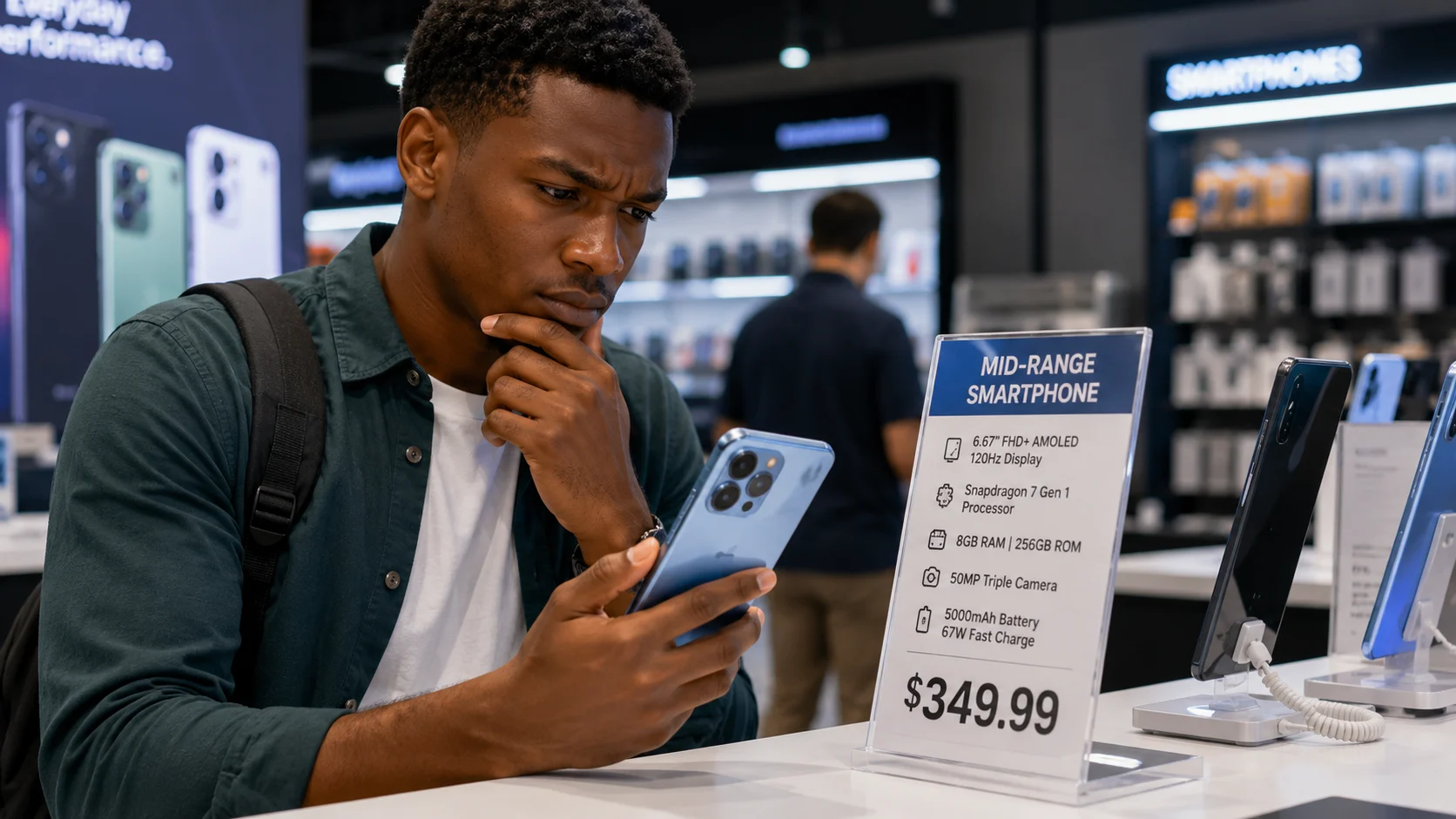
In April, Motorola quietly raised the price of its Moto G (2026) by 50 percent — from $199 to $299 — barely three months after the phone went on sale. Two of its siblings, the Moto G Play and Moto G Power, got price hikes of $70 and $100 in the very same week. Motorola never explained why.
It didn't need to. The culprit is the same one reshaping nearly every corner of consumer electronics this year: a global shortage of memory chips — the RAM and storage that make a phone actually work — caused largely by the artificial intelligence industry's appetite for the same components.
For years, budget phones kept getting better without costing more. That run is ending. Research firm Omdia now expects global shipments of phones priced under $400 to fall more than 22 percent in 2026, the steepest drop the segment has ever recorded. Here's what's driving it, what it means if you're shopping for a phone in the U.S. this year, and how to avoid overpaying.
Key Takeaways
- Budget phones under $400 are on pace for a shipment decline of more than 22% in 2026 — the worst year on record for the category — driven almost entirely by memory chip costs, not general inflation.
- RAM and storage now eat up roughly 60% of the total cost of building a sub-$400 phone, and over 64% for phones under $99, up sharply from about a year ago.
- The root cause is AI: Samsung, SK Hynix, and Micron are redirecting factory capacity toward the specialized memory data centers need, leaving less for everyday phones.
- It's already happening here — Motorola raised prices on three Moto G models by $70 to $100 in a single week this spring.
- Analysts don't expect meaningful relief before late 2027 at the earliest, and some point to 2028.
Jump to a section
What's Actually Happening Right Now
According to Omdia's latest smartphone research, published July 7, global shipments of phones priced below $400 are on pace to fall more than 22 percent this year compared with 2025. The overall smartphone market, pricier phones included, is projected to shrink by roughly 12 percent — even as those pricier phones keep growing.
Omdia followed up on July 13 with hard numbers instead of a forecast: shipments actually fell 4 percent year-over-year in the second quarter of 2026, and the pain wasn't spread evenly. Samsung and Apple both grew their market share. Nearly everyone else, especially the budget-focused Android brands that compete on price, lost ground.
IDC and Counterpoint Research, two of the industry's most-cited analyst firms, reached similar conclusions independently. IDC's own price forecast has climbed twice this year — first to a record $523 average selling price in February, then to $550 by May, up $100 from last year. Counterpoint's tracking shows phones under $200 absorbing manufacturing cost increases as steep as 25 to 30 percent since the start of the year, according to its reporting cited by CNBC, compared with roughly 10 to 15 percent for pricier models.
Why Memory Chips Became Enemy No. 1
Two components sit at the center of this story: DRAM, the short-term memory a phone uses to run apps and switch between them, and NAND flash, the storage that holds your photos and files. Neither is new. Neither is scarce because factories stopped making them.
What changed is who's buying them. Just three companies — Samsung Electronics, SK Hynix, and Micron — produce roughly 90 to 95 percent of the world's DRAM. Since 2023, all three have raced to build a specialized, far more profitable version of that memory, called high-bandwidth memory or HBM, for the AI accelerator chips inside data centers run by Microsoft, Google, Meta, and Amazon.
The Math Squeezing Your Phone
HBM isn't just a different product — it's a different claim on the same factory floor. Fortune reported that Samsung, SK Hynix, and Micron have diverted the bulk of their manufacturing and investment toward AI memory, leaving less plant capacity for the plain DRAM that goes into basic electronics like phones. Every wafer committed to an AI chip is one that isn't making the memory for a $200 Android phone.
The price effect has been extreme. SK Hynix told investors its memory capacity was essentially sold out for 2026, and Samsung raised the price of a standard 32GB memory module by 60 percent in a single month, from $149 to $239. Micron, meanwhile, has stepped back from the broader consumer memory market to focus on enterprise and AI customers, according to the same Network World report.
The Real Numbers: How Much More You'll Pay
The pain isn't uniform — it's steepest at the bottom of the market and tapers as prices rise. Tap a price range below to see how it's being affected.
| Price Tier | Cost Increase | Memory's Share of Cost | Source |
|---|---|---|---|
| Under $99 (ultra-budget) | Steepest | Over 64% | Omdia |
| $99–$400 (budget) | 20%–30% | ~60% | Omdia / Counterpoint |
| $400–$600 (mid-range) | ~15% | Declining with price | Counterpoint |
| $600+ (premium/flagship) | 10%–15% | ~23%–30% | Counterpoint |
Real-World Impact: It's Already Happening in the U.S.
This isn't an abstract forecast. It's already showing up on U.S. price tags.
Case Study: Motorola's Same-Week Price Hikes
In early April, Motorola launched the Moto G Stylus (2026) at $499 — $100 more than the previous year's model. Days later, without a press release, it quietly repriced three of its existing phones:
- Moto G Play (2026): $179.99 → $249.99
- Moto G (2026): $199.99 → $299.99 (a 50% jump)
- Moto G Power (2026): $299.99 → $399.99
Motorola gave no public explanation, but the timing lines up exactly with the memory cost spike. Samsung made a similar move the same season, quietly raising prices on the 512GB and 1TB storage variants of the Galaxy Z Fold 7 by $80 — nine months after that phone originally launched, an almost unheard-of mid-cycle hike.
The effect shows up in the aggregate data too. Omdia's Q1 2026 tracking found the U.S. phone market itself contracted roughly 3 percent year-over-year, a decline researchers tied to rising memory costs alongside more cautious carrier upgrade offers. If you've noticed your carrier's trade-in deals feeling less generous lately, this is very likely part of why. Devices like the budget-friendly Samsung Galaxy A27 5G now compete in a market where every configuration decision is a cost trade-off, not just a feature choice.
A Timeline of the 2026 Memory Crisis
"Memory is now the most expensive component in a smartphone. It can account for more than 50 percent of the total hardware bill. If you've been waiting to upgrade a device, the best time was yesterday. The next best time is now."
— Carl Pei, CEO of Nothing, June 2026
What Most People Miss
Most coverage of this story focuses on sticker prices. That's only half of it. Manufacturers under margin pressure have two levers, not one: charge more, or quietly give you less for the same money. Omdia's own tracking shows average memory capacity climbing at the top of the market while shrinking at the bottom — meaning some 2026 budget phones ship with less RAM and storage than the 2025 models they replace, at the same or a higher price.
There's also a real difference between this shortage and the chip crunch you might remember from 2021. That one was a temporary mismatch between supply and pandemic-era demand, and it resolved within about two years. IDC's own research director has called this one a structural reset rather than a cyclical dip, because the demand pulling memory away from phones — AI data center spending — isn't projected to plateau.
And the group most exposed isn't always who the headlines focus on. Global coverage of this crisis tends to center emerging markets, and for good reason — IDC estimates 171 million devices a year in the sub-$100 category alone could become permanently uneconomical. But the U.S. has its own version of that buyer: people on prepaid and budget carrier plans who depend on the cheapest new phones on the market, not the $1,000 flagships that dominate tech headlines.
The Bigger Picture
This isn't only a phone story. The same three companies that supply the world's DRAM also supply laptops, game consoles, smart TVs, and cars, which means one supply squeeze is quietly inflating prices across almost every category of consumer electronics at the same time — an unusual situation with a single, identifiable root cause.
Tariffs are compounding the pressure, though most analysts consider them the secondary factor. Beyond the January semiconductor tariff, U.S. research group ITIF estimates RAM chip prices alone surged 90 percent in the first quarter of 2026, and has warned that broader tariffs on semiconductors could shave billions more off U.S. economic output if expanded further. But the memory shortage would be driving prices up even without a single tariff in place.
It's also worth remembering this industry has been through cost swings before. A memory glut in 2022 and 2023 pushed prices down and briefly made budget phones better than ever. What's different this time, according to IDC and Omdia alike, is that the buyer pulling supply away isn't a rival phone maker — it's the entire AI industry, with spending that's still accelerating rather than leveling off.
Expert Take
The striking thing about this story is how rarely competing analyst firms agree — and how completely they agree here.
IDC's senior research director, Nabila Popal, put it bluntly: "The era of ultra-cheap smartphones is over." Her colleague, Francisco Jeronimo, described the shock as "not a temporary squeeze, but a tsunami-like shock originating in the memory supply chain."
Counterpoint's analysts reached a nearly identical conclusion from separate data. Senior analyst Yang Wang has said steep low-end price increases "are not sustainable," forcing manufacturers to prune their cheapest models rather than keep absorbing the cost. Omdia's principal analyst, Runar Bjorhovde, put a number on just how uneven the pain has become: some vendors are now paying four to five times what they paid for memory a year ago.
Perhaps the most candid voice has come from inside the phone industry itself. Nothing CEO Carl Pei's public warning that pricing "will keep going up into next year" reads less like marketing spin and more like a heads-up — especially from an executive whose company built its reputation on affordable, design-forward phones like the Nothing Phone 3a Pro.
What Happens Next
Don't expect quick relief. Micron and SK Hynix are both building new fabrication plants, but Micron's earliest new capacity, in Singapore and Taiwan, isn't due until 2027, with a U.S. site not expected until 2030. That timeline matters because it defines the floor for when supply can meaningfully expand.
Omdia's most recent guidance, from its July 13 report, is blunt about the near term: memory price declines are unlikely to begin before the second half of 2027, and even then prices are "unlikely to return to pre-2025 levels." The firm expects the sharpest volume declines yet in the next two quarters, meaning the 2026 holiday shopping season is likely to be the hardest hit of the year, not a reprieve from it.
Other estimates run even later. Micron has told customers the shortage could persist into 2028, and some chip executives have echoed that timeline publicly. A more optimistic camp, including a former Samsung semiconductor chief, points to late 2027 as a realistic turning point. Either way, nobody credible is predicting a return to 2024-style budget phone pricing anytime soon.
Myth vs. Fact
What You Should Do Right Now
- If you genuinely need a phone this year, buy sooner rather than later — most analysts and industry executives expect prices to keep climbing, not fall, through 2026.
- Compare RAM and storage specs against last year's equivalent model, not just the price tag. "Shrinkflation" — same price, smaller specs — is common right now.
- Consider a well-reviewed previous-generation or mid-range phone, such as the CMF Phone 2 Pro, rather than the newest release.
- Check real street prices, not list prices. Some budget models are already selling well below their official MSRP.
- Don't assume Black Friday 2026 will bring the discount depth you're used to — industry executives have publicly warned it might not.
Buy Now If…
- Your current phone is failing or unreliable
- You need it for work, school, or an emergency line
- You've found in-stock, older-generation inventory at a good price
Wait If…
- Your current phone still does the job
- You can comfortably hold out a few more months
- You're open to a certified-refurbished model later
For a fuller list of what's still worth buying at each price point, TechOzea's current smartphone picks are updated as pricing shifts.
The Bottom Line
The Moto G price hike that opened this story wasn't a one-off mistake. It was an early symptom of a global fight over silicon that budget phones aren't even a party to — but are absorbing the cost of anyway.
IDC calls it a structural reset. Omdia calls it a permanent shift in strategy, not a short-term response. Whatever the label, the practical outcome is the same: for the first time in years, the budget phone you buy next is likely to cost more, offer less, or both, than the one it replaces. The humble affordable phone, once tech's great equalizer, is being reshaped by a battle over memory it never asked to be part of — and for now, cheaper isn't coming back.
