


Table of Contents
- Introduction
- What Happened
- Why This Launch Matters
- The Big Story: Midrange Headphones Are Getting More Serious
- On-Ear ANC: The Promise and the Limitation
- Battery Life Is the Headline Feature
- The Replaceable Battery Could Be the Real Upgrade
- Bluetooth 6.0, LDAC, LC3, and LE Audio Explained
- Who Should Buy the Marshall Milton A.N.C.?
- Who Should Skip It?
- Industry and Market Context
- Key Risks and Challenges
- What to Watch Next
- Conclusion
- FAQ
The Marshall Milton A.N.C. headphones are not just another pair of wireless headphones with noise cancelling. They are a sign that the middle of the headphone market is becoming more interesting. For years, most consumer attention has gone to premium over-ear models from Sony, Bose, and Apple, while cheaper on-ear headphones were often treated as smaller, simpler, less serious options.
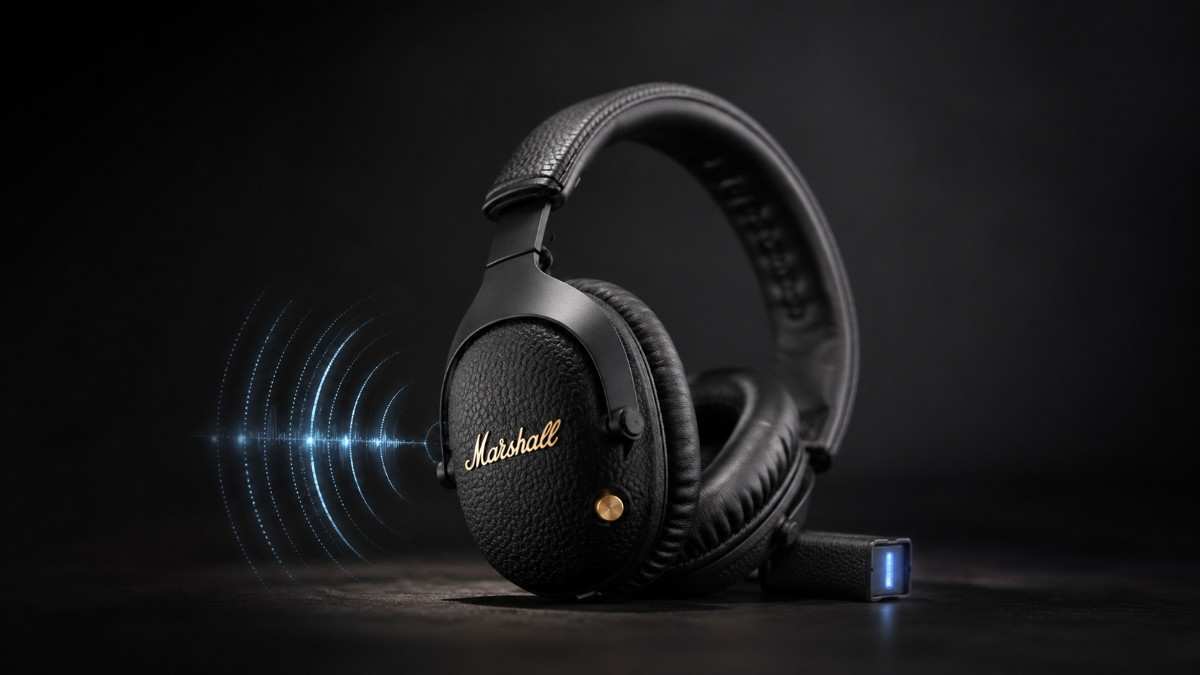
Marshall is trying to change that with the Milton A.N.C. The new model brings adaptive active noise cancelling, transparency mode, Bluetooth 6.0, LDAC, LC3, multipoint pairing, spatial-style sound features, long battery life, and a replaceable battery into a compact on-ear design priced around $229. That combination matters because many everyday listeners want practical headphones that are easy to carry, stylish enough to wear outside, comfortable enough for long sessions, and not so expensive that they feel like a luxury purchase.
What Happened
Marshall launched the Milton A.N.C. on-ear wireless headphones on May 19, 2026. TechRadar reports that the headphones became available through Marshall’s website on May 19 and are expected to reach select retailers from May 27. The listed price is $229 / £179.99 / AU$329, placing them between Marshall’s cheaper Major V on-ear headphones and its more premium Monitor III A.N.C. over-ear model.
The headline specs are strong for a midrange on-ear headphone. Marshall says the Milton A.N.C. delivers more than 50 hours of playtime with ANC on and up to 80 hours with ANC off. The company also highlights adaptive ANC, transparency mode, foldability, multipoint pairing, EQ support through the Marshall Bluetooth app, and fast charging. Marshall’s support page lists a 15-minute quick charge as giving up to 9.5 hours of playtime.
SoundGuys reports that the Milton A.N.C. supports Bluetooth 6.0, LE Audio, LDAC, AAC, SBC, and LC3 codecs. That is notable because many affordable or midrange headphones still keep their codec support relatively basic. For Android users especially, LDAC support may be attractive because it can allow higher-bitrate Bluetooth audio when the phone and music source support it.
The Verge also points out one of the most important practical details: Marshall is bringing ANC back to its smaller on-ear headphone lineup, and the Milton A.N.C. includes a replaceable battery, Apple and Google tracking-network support, spatial audio compatibility, and a new driver system.
Why This Launch Matters
The Marshall Milton A.N.C. matters because it targets a buyer who is often ignored in premium headphone coverage: the everyday consumer who wants better-than-budget features without paying flagship prices.
A shopper comparing headphones in May 2026 might see discounted Sony WH-1000XM5 models, premium Sony WH-1000XM6 models, Bose QuietComfort Ultra headphones, Apple AirPods Max, and several cheaper on-ear models. That creates a confusing question: should you buy a discounted older flagship, a brand-new midrange model, or a premium flagship? Wired’s Memorial Day deal coverage, for example, highlights Sony WH-1000XM5 headphones at a discounted price, which means buyers are likely comparing new launches against older deal prices right now.
Marshall’s answer is not to beat Sony or Bose at maximum ANC. Instead, it appears to be offering a different mix: smaller form factor, strong battery life, recognizable design, modern Bluetooth support, and better long-term repair potential. That is a smart angle because not every listener wants large over-ear headphones. Some people want something lighter and easier to pack. Others prefer the look of on-ear headphones. Some dislike earbuds but find over-ear headphones too bulky or warm.
This is where the Milton A.N.C. becomes interesting for TechOzea readers. It is not just a spec sheet. It is a possible sign that practical design and long-term value are becoming stronger selling points in wireless headphones.
For more background on how ANC headphones compare across categories, see TechOzea’s guide to Best Noise Cancelling Headphones.
Midrange Headphones Are Getting More Serious
A few years ago, midrange wireless headphones usually meant compromises everywhere: weaker ANC, shorter battery life, fewer codec options, less comfortable padding, and limited app control. The Milton A.N.C. suggests that the middle of the market is changing.
Marshall is not positioning this model as a cheap basic headphone. The feature list includes adaptive ANC, transparency mode, LDAC, LC3, LE Audio, multipoint, app EQ, spatial-style Soundstage features, fast charging, and Find My / Google Find Hub support.
That does not automatically make it better than premium over-ear headphones. But it does mean a $229 headphone can now offer many of the convenience features everyday listeners expect from flagship models.
This is especially important for consumers who use headphones across multiple parts of their day. A modern pair of headphones is not just for music. It may be used for commuting, Zoom calls, YouTube, podcasts, studying, workouts, flights, gaming, and casual TV watching. A headphone that can last multiple days, pair with multiple devices, and survive longer through battery replacement becomes more useful than one that only sounds good for a short listening session.
The Milton A.N.C. is also arriving at a time when Sony is moving in the opposite direction with the 1000X The Collexion, a $649.99 luxury model focused on premium materials, comfort, and refined sound. That contrast makes Marshall’s launch more meaningful. Sony is asking what a premium headphone can become. Marshall is asking how many premium-style features can fit into a smaller, more affordable headphone.
On-Ear ANC: The Promise and the Limitation
The biggest question around the Marshall Milton A.N.C. is simple: can on-ear ANC really compete with over-ear ANC?
The honest answer is: probably not at the very top level. On-ear headphones sit on the ear rather than around it. That usually means less passive isolation because the earcup does not fully seal around the ear. The Verge notes that on-ear headphones typically do not offer ANC as strong as headphones that completely cover your ears.
But that does not mean on-ear ANC is useless. It means expectations matter.
For everyday situations like office noise, light commuting, background hum, air conditioning, and low-frequency rumble, adaptive ANC can still be valuable. What Hi-Fi? reports that the Milton A.N.C. offers standard ANC, transparency mode, and adaptive ANC that analyzes surroundings and adjusts noise cancelling in real time.
Marshall also appears to have designed the Milton A.N.C. around the physical limitations of on-ear headphones. The Verge says Marshall enlarged the earpads and used softer memory foam to improve comfort and help block outside sound.
That is the right design direction. ANC is not only about microphones and software. Physical fit matters. If the cushions do not sit securely, outside sound leaks in, and ANC has to work harder. A better cushion can improve both comfort and isolation.
Still, buyers should be careful with expectations. If your top priority is maximum silence on airplanes, subways, and loud offices, a full-size over-ear model may still be better. TechOzea’s own noise-cancelling guide explains that over-ear headphones generally win for serious noise cancellation and extended listening because they provide stronger passive isolation and larger earcups.
Battery Life Is the Headline Feature
Battery life is one of the strongest reasons to pay attention to the Marshall Milton A.N.C. Marshall says the headphones offer more than 50 hours of playtime with ANC enabled and up to 80 hours with ANC disabled.
That is a big number for everyday users. It means many people could go several days, or even a full work week, without charging depending on daily usage. For commuters, students, and office workers, long battery life reduces one of the most annoying parts of wireless headphones: battery anxiety.
Tom’s Guide says its testing reached just over 50 hours with ANC on and about 81 hours with ANC off, which matched Marshall’s claims in that reviewer’s experience. TechRadar also lists 50 hours with ANC on and 80 hours with ANC off in its spec section.
The fast-charging claim is also useful. Marshall support says a 15-minute quick charge gives 9.5 hours of playtime. For everyday consumers, that can matter more than the total battery number. If you forget to charge before work, a short charge while getting ready could be enough for a full day of listening.
Battery life also helps the Milton A.N.C. stand apart from many premium headphones. A lot of expensive ANC models sit around 20 to 30 hours of battery life with ANC on. Long battery life alone does not make a headphone better, but it does make it easier to live with.
The Replaceable Battery Could Be the Real Upgrade
The most underrated part of the Marshall Milton A.N.C. may not be ANC, Bluetooth 6.0, or LDAC. It may be the replaceable battery.
Wireless headphones age differently from wired headphones. The drivers may still work after years, but the battery slowly loses capacity. Once the battery becomes weak, many wireless headphones become frustrating or uneconomical to keep. That is why replaceable batteries matter.
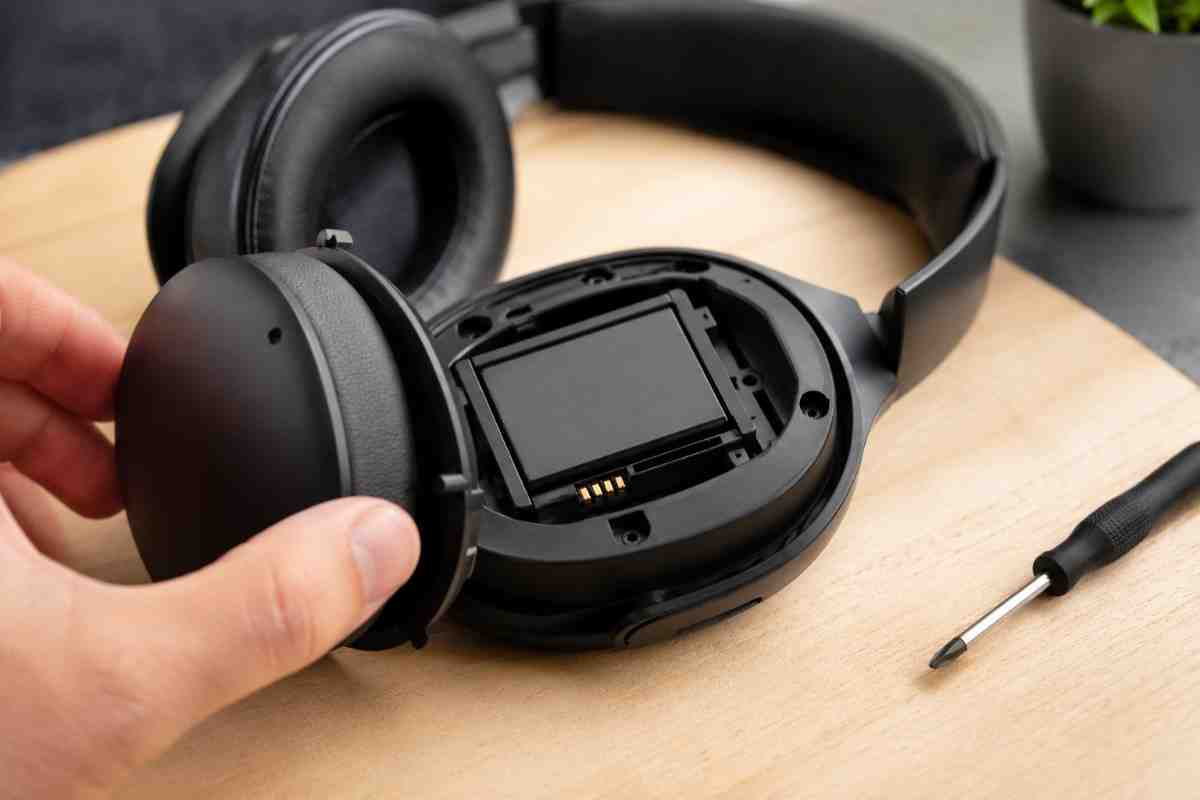
Tom’s Guide reports that the Milton A.N.C. battery can be replaced by twisting off the left earcup and replacing the battery pack. TechRadar also praises the sustainable design and says the headphones are made from 42% recycled materials by weight, with multiple replaceable parts and an easily removable battery.
This could be a major value advantage if Marshall makes replacement parts easy to buy and keeps them available for years. A replaceable battery turns a wireless headphone from a semi-disposable gadget into something closer to a long-term device.
This does not mean the Milton A.N.C. is automatically the most repairable headphone on the market. iFixit has started scoring wireless headphones for repairability, and Fairphone’s Fairbuds XL earned attention for tool-free battery replacement and modular design. But Marshall’s move is still important because it brings the conversation to a more mainstream lifestyle headphone brand.
For everyday buyers, the takeaway is simple: if you keep headphones for years, battery replacement should be part of your buying decision. A cheaper headphone that dies after two years may be a worse value than a slightly more expensive model that can be repaired.
Bluetooth 6.0, LDAC, LC3, and LE Audio Explained
The Milton A.N.C.’s codec and Bluetooth support may sound technical, but it matters because headphones are now expected to work across phones, laptops, tablets, and TVs.
Marshall support lists SBC, AAC, LC3, and LDAC codec support. SoundGuys reports Bluetooth 6.0 with LE Audio support.
Here is what that means in plain English.
SBC is the basic Bluetooth audio codec that almost everything supports. AAC is important for iPhone users because Apple devices commonly use AAC for Bluetooth audio. LDAC is useful for many Android users because it can support higher-bitrate wireless audio from compatible devices. LC3 is tied to Bluetooth LE Audio and is designed to provide high-quality audio at lower data rates. Bluetooth SIG says LE Audio is the next generation of Bluetooth audio and that LC3 gives product makers more flexibility between audio quality and power consumption.
LE Audio also matters for future features like broadcast audio. Bluetooth SIG explains that LE Audio adds broadcast audio, allowing an audio source to broadcast an audio stream to an unlimited number of compatible Bluetooth audio sink devices.
For everyday users, the key point is not that Bluetooth 6.0 magically improves everything. It does not. Your phone, headphones, app, source file, and codec all matter. The real benefit is that the Milton A.N.C. appears more future-ready than many older midrange headphones.
If you use an iPhone, AAC support is the practical codec to care about. If you use Android, LDAC and LC3 support may be more interesting. If you use multiple devices, multipoint pairing may matter more than any codec because it lets you switch between devices more smoothly.
Who Should Buy the Marshall Milton A.N.C.?
The Marshall Milton A.N.C. looks best for people who want a stylish, portable, long-lasting headphone that feels more premium than a basic on-ear model but costs less than many flagship over-ear headphones.
You should consider it if you want:
A compact headphone with ANC. If you dislike bulky over-ear headphones but still want noise reduction, the Milton A.N.C. is one of the more interesting new on-ear options.
Very long battery life. The 50+ hour ANC claim and 80-hour non-ANC claim are excellent for daily use.
A battery that can be replaced. This is a serious long-term value advantage if replacement parts remain accessible.
Modern Bluetooth support. Bluetooth 6.0, LE Audio, LDAC, LC3, AAC, and SBC make this a flexible option for both Android and iPhone users.
Marshall’s design language. Marshall headphones are often bought as much for their look as their specs. If you like the retro amplifier-inspired design, the Milton A.N.C. will likely appeal more than plain black plastic competitors.
A middle option between cheap and flagship. At $229, it sits above budget on-ear headphones but below many premium over-ear ANC models.
Who Should Skip It?
The Milton A.N.C. is not the right choice for everyone.
Skip it if you need the strongest possible noise cancellation. On-ear ANC is usually limited compared with full over-ear ANC because it does not fully surround the ear. The Verge specifically notes this limitation for on-ear headphones.
Skip it if you need waterproofing. TechRadar says the Milton A.N.C. does not have a waterproof rating. That means it may not be ideal for gym use, running, heavy sweating, or rain.
Skip it if you prefer neutral sound. TechRadar describes the sound as clean and energetic but says the bass can be heavy out of the box. If you want studio-flat tuning, you may need to use EQ or choose a different model.
Skip it if you want automatic wear detection. TechRadar notes the lack of wear detection as one of the missing features.
Skip it if discounted over-ear flagships are available near the same price. During sales periods, older flagship models can sometimes drop close to midrange pricing. Wired’s Memorial Day coverage listed Sony WH-1000XM5 headphones at $278, which is not far above the Milton A.N.C.’s launch price. In that case, shoppers should compare comfort, ANC strength, battery life, and repairability before buying.
Industry and Market Context
The headphone market is splitting in two directions.
On one side, premium brands are pushing higher prices and more luxury materials. Sony’s 1000X The Collexion launched at $649.99 and focuses on comfort, premium materials, refined sound, and a more luxury-style design.
On the other side, midrange models are becoming more capable. The Marshall Milton A.N.C. shows how features once associated with premium headphones are moving downward: adaptive ANC, advanced codecs, long battery life, multipoint, app controls, and repair-conscious design.
That creates a better market for everyday consumers. You no longer have to buy the most expensive headphone to get useful features. But it also makes buying decisions more complicated. A $229 headphone might beat a $449 headphone in battery life while losing in ANC strength. A $649 headphone might sound better but be less practical for travel. A discounted older flagship might offer great value but weaker repairability.
This is why headphone buyers should stop looking at one spec in isolation. ANC, sound, comfort, battery life, weight, codecs, repairability, app quality, and price all matter together.
For more comparison context, TechOzea readers can also check Bose QuietComfort Ultra vs Sony WH-1000XM5 and Best Over Ear Headphones.
Key Risks and Challenges
The Milton A.N.C. has a strong story, but several questions remain.
First, independent lab testing is needed. Early reviews are positive, but buyers should wait for deeper ANC measurements if noise cancelling is their top priority. On-ear ANC can be good, but physics still matters.
Second, replacement parts availability will determine whether the replaceable battery becomes a real consumer benefit. A replaceable battery is only valuable if replacement batteries are affordable and available for a reasonable period.
Third, codec support can be confusing. LDAC and LC3 are useful only when the source device and settings support them. iPhone users will mostly care about AAC, while Android users may benefit more from LDAC or LC3 depending on phone support.
Fourth, the lack of water resistance limits the product’s flexibility. Many everyday consumers want one headphone for everything, but no IP rating makes the Milton A.N.C. less convincing for workouts and wet conditions.
Finally, the $229 price is attractive but not automatically unbeatable. Memorial Day and other sales can bring older flagship headphones closer to this price range. Buyers should compare live prices before purchasing.
What to Watch Next
The most important thing to watch is retailer availability. TechRadar and SoundGuys report that broader select-retailer availability begins May 27, 2026. Once the headphones appear at major US retailers, pricing, bundles, and early customer reviews will become clearer.
The second thing to watch is replacement battery support. Marshall should clearly explain how customers can buy replacement batteries, how much they cost, and whether the process affects warranty coverage.
The third thing to watch is real-world ANC testing. If independent measurements show the Milton A.N.C. performs unusually well for an on-ear headphone, it could become one of the most compelling compact ANC models of 2026. If the ANC is only average, the main selling points will remain battery life, comfort, style, and repairability.
The fourth thing to watch is competition. If Sony, Bose, JBL, Sennheiser, or Anker respond with more repairable midrange headphones, the Milton A.N.C. could become part of a bigger trend.
Conclusion
The Marshall Milton A.N.C. headphones are important because they are not trying to win the same battle as every premium ANC flagship. Instead of chasing the most expensive materials or the absolute strongest ANC, Marshall is offering a practical mix: compact on-ear design, adaptive noise cancelling, 50+ hours of battery life with ANC, up to 80 hours without ANC, modern codec support, and a replaceable battery.
That combination makes the Milton A.N.C. one of the most interesting headphone launches of May 2026 for everyday consumers.
It is not perfect. The lack of waterproof rating matters. On-ear ANC will likely remain less powerful than top over-ear ANC. Bass-heavy tuning may not suit everyone. And the replaceable battery story depends on long-term parts availability.
Still, the bigger message is positive: midrange headphones are becoming smarter, longer-lasting, and more feature-rich. For buyers who want a stylish portable headphone that should last longer than the average wireless pair, the Marshall Milton A.N.C. deserves serious attention.
FAQS
What are the Marshall Milton A.N.C. headphones?
The Marshall Milton A.N.C. headphones are wireless on-ear headphones with adaptive active noise cancelling, transparency mode, Bluetooth 6.0, LDAC, LC3, multipoint pairing, long battery life, and a replaceable battery.
How much do the Marshall Milton A.N.C. headphones cost?
The listed price is about $229 / £179.99 / AU$329, according to TechRadar.
When did the Marshall Milton A.N.C. launch?
The headphones launched on Marshall’s website on May 19, 2026, with select retailer availability expected from May 27, 2026.
How long does the battery last?
Marshall says the Milton A.N.C. offers more than 50 hours of playtime with ANC on and up to 80 hours with ANC off.
Does the Marshall Milton A.N.C. have a replaceable battery?
Yes. Tom’s Guide reports that the battery can be replaced by twisting off the left earcup and replacing the battery pack.
Is the Marshall Milton A.N.C. waterproof?
No confirmed waterproof rating is listed. TechRadar specifically notes that the Milton A.N.C. does not have a waterproof rating.
Does the Marshall Milton A.N.C. support LDAC?
Yes. Marshall’s support page lists LDAC, LC3, AAC, and SBC codec support.
Is on-ear ANC as good as over-ear ANC?
Usually not. On-ear headphones typically provide less passive isolation than over-ear headphones. The Verge notes that on-ear ANC normally does not match headphones that fully cover your ears.
Should I buy the Marshall Milton A.N.C. or Marshall Major V?
Choose the Milton A.N.C. if you want active noise cancelling, transparency mode, stronger modern features, and a replaceable battery. Choose the Major V if you want a cheaper Marshall on-ear headphone and do not need ANC.
Are the Marshall Milton A.N.C. good for travel?
They look promising for light travel because they are foldable, compact, and have long battery life. However, frequent flyers who need maximum noise cancelling may still prefer premium over-ear ANC headphones.
