


Headphones operate across a spectrum of sound frequencies, typically ranging from 20 Hz to 20,000 Hz (20 kHz), which mirrors the average human hearing range. Understanding these different frequency ranges of headphones helps you choose models that emphasize bass, vocal clarity, or crisp highs, depending on your listening preferences.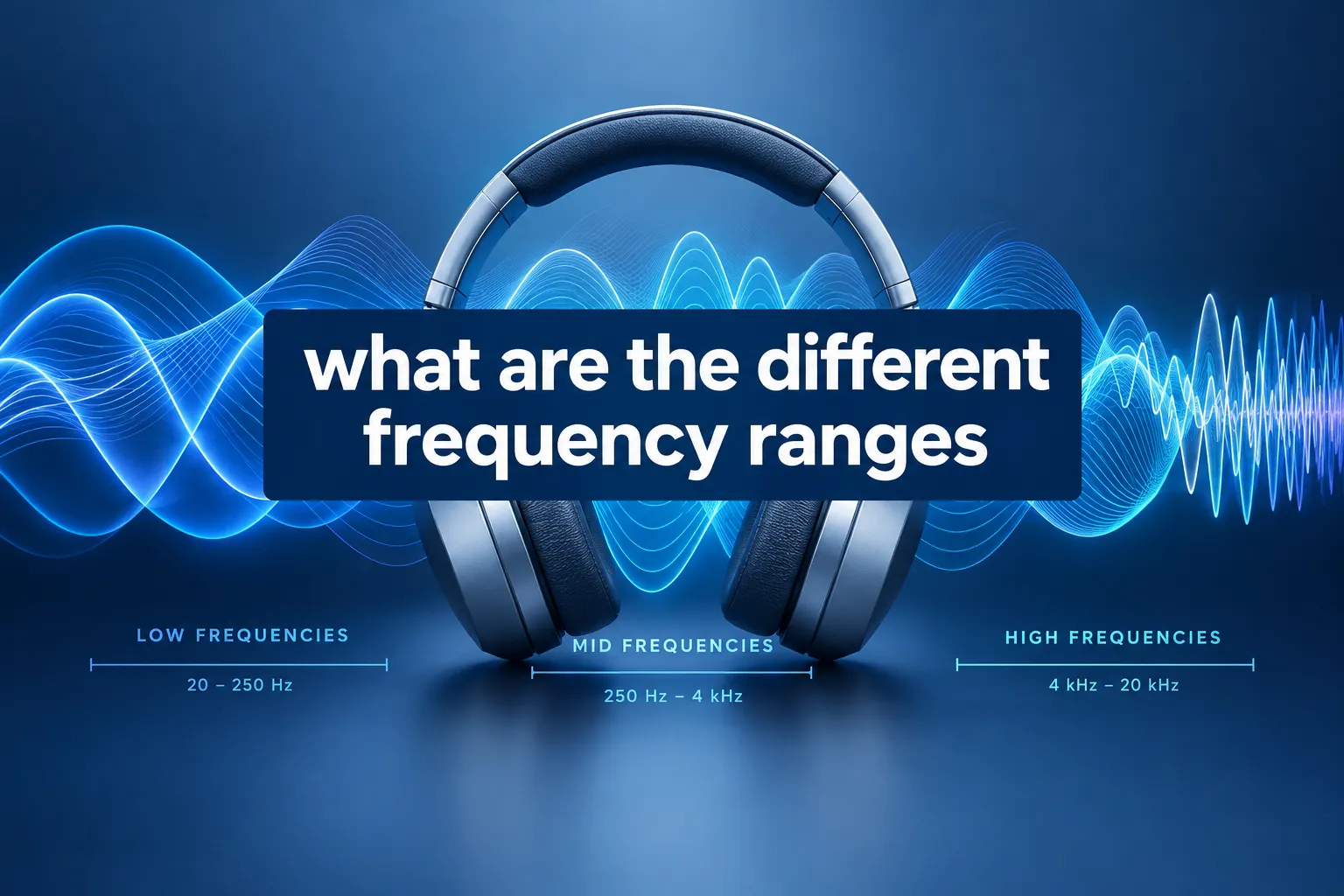
Key Takeaways:
- Standard Range: Most headphones aim for the human audible range: 20 Hz to 20,000 Hz.
- Bass (Low Frequencies): The 20 Hz to 250 Hz range provides the thump and rumble, crucial for genres like hip-hop and electronic music.
- Mids (Mid Frequencies): From 250 Hz to 4,000 Hz, this range covers vocals, guitars, and most instruments, making it vital for dialogue and musical presence.
- Treble (High Frequencies): The 4,000 Hz to 20,000 Hz range offers brightness, clarity, and detail, impacting cymbals, violins, and the airiness of sound.
- Extended Ranges: Some high-end headphones boast ranges beyond 20 Hz to 20 kHz, though the audible benefit for most listeners is debatable.
- Flat vs. Boosted Response: A “flat” frequency response aims for accurate sound reproduction, while boosted ranges cater to specific sound signatures, like emphasized bass.
- Personal Preference: Your ideal frequency response depends on your music taste and how you perceive sound.
Understanding the Human Hearing and Headphone Frequency Ranges
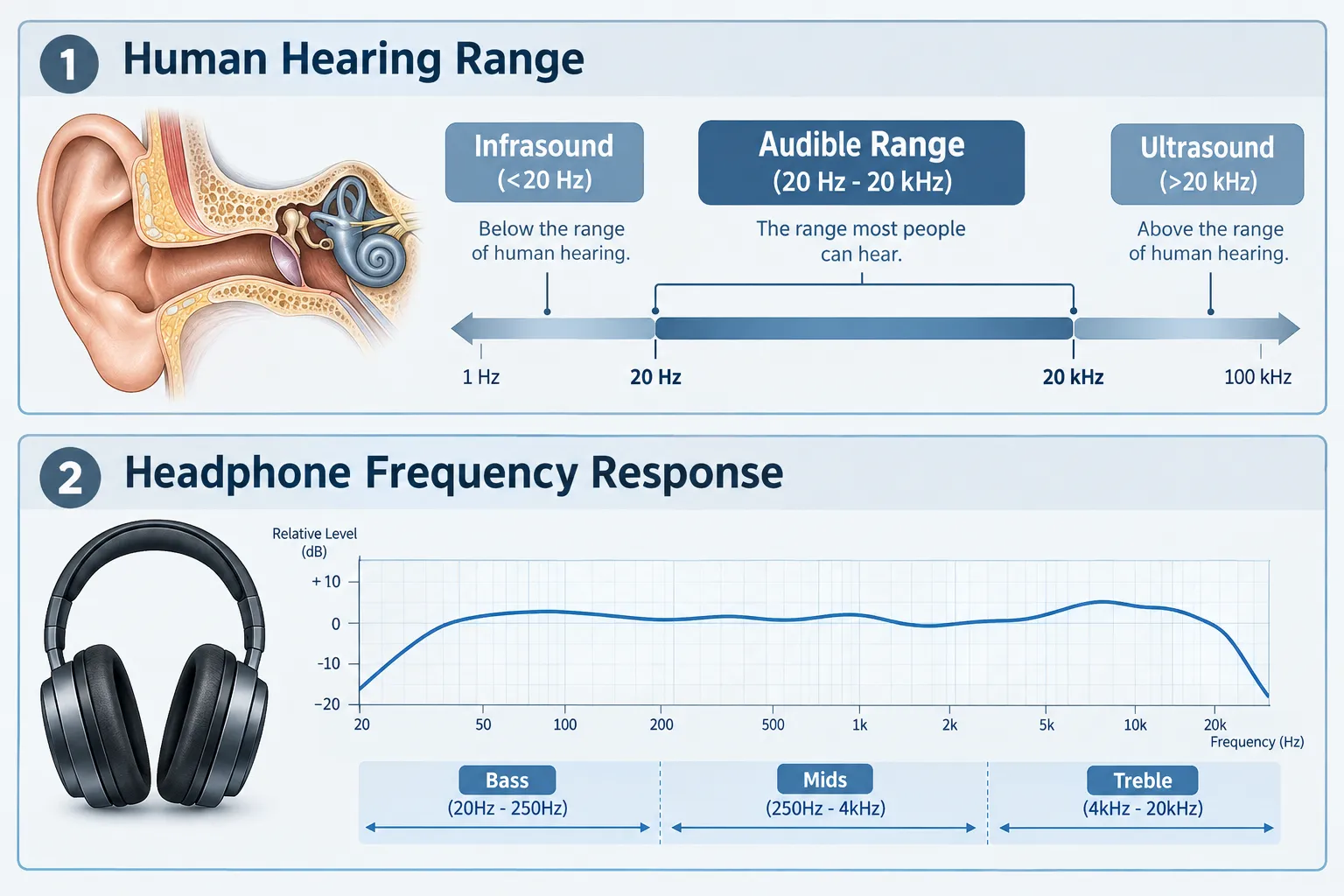
The standard human ear can perceive sounds within an approximate frequency range of 20 Hertz (Hz) to 20,000 Hertz (20 kilohertz or kHz), although the range varies with age and individual hearing.
The National Institute on Deafness and Other Communication Disorders’ explanation of how we hear describes how sound waves are converted into signals the brain interprets.
Headphones are engineered to reproduce sounds within this spectrum, with their stated frequency response indicating how wide a range they can attempt to deliver. While many headphones claim to match this human hearing range, how accurately they reproduce each part of that spectrum varies greatly.
When we evaluate headphones, we’re not just looking at the numerical range. We are also considering the balance and accuracy within that range. A headphone might list a 5 Hz to 40 kHz range, but if it has significant dips or peaks in the critical 20 Hz to 20 kHz area, it won’t necessarily sound balanced.
As RTINGS explains in its headphone frequency-response testing guide, response measurements show how output level varies across frequencies. You should care more about the consistency and balance of the response within the audible range than the extremes of the advertised range.
What Are the Key Frequency Bands and Their Impact?
Breaking down the full audible spectrum into key frequency bands helps to understand how different headphones sculpt their sound. This categorization is practical and buyer-focused, allowing you to identify what characteristics to look for based on your listening habits.
- Sub-Bass (20 Hz, 60 Hz): This is the very bottom end, responsible for the deep rumble in movie explosions, the lowest synth notes, and the physical thump you feel from a bass drum. Headphones that struggle here might sound thin. For most people, a good presence in this range adds fullness and impact.
- Mid-Bass (60 Hz, 250 Hz): This range gives bass guitars and kick drums their punch and body. Too much mid-bass can make headphones sound “muddy” or boomy, overpowering other frequencies. We find that a well-controlled mid-bass is a strong contender for a pleasing sound, especially for pop and rock music.
- Low-Mids (250 Hz, 500 Hz): This is where the warmth of instruments and the fundamental tones of vocals reside. A dip here can make music sound hollow, while a boost can add richness.
- Mid-Mids (500 Hz, 2 kHz): The core of most vocals and many instruments, this range is crucial for clarity in dialogue and musical presence. Problems here can make voices sound nasal or distant. If you prioritize podcasts or vocal-heavy genres, this range is important.
- High-Mids (2 kHz, 4 kHz): This area provides articulation and attack for instruments like guitars and pianos, and also defines the clarity of vocals. A slight boost can add “presence,” but too much can lead to harshness or listener fatigue.
- Low-Treble (4 kHz, 6 kHz): Sibilance (the “s” and “sh” sounds in vocals) and the sparkle of cymbals live here. A good balance provides detail, but an excess can be sharp and piercing.
- High-Treble (6 kHz, 20 kHz): This is the “air” and “sparkle” of music, responsible for the shimmer of cymbals, the harmonics of strings, and the overall sense of space. While some headphones claim to go beyond 20 kHz, human ears typically can’t hear it. Still, a well-extended treble, even if not fully audible at the very top, can contribute to a sense of openness.
How Do Different Frequency Ranges of Headphones Affect Listening Experience?
The way a headphone emphasizes or de-emphasizes these frequency ranges directly shapes its sound signature and suitability for different tasks or music genres. Some headphones are tuned for a broad audience, while others cater to specific audiophile preferences or professional use cases like mixing and mastering.
For example, a bass-heavy tuning might make electronic dance music incredibly engaging, but it could make classical music sound bloated and obscure delicate orchestral details. Conversely, a headphone with a pronounced treble might offer fantastic detail for jazz, yet could be fatiguing for hours of rock music. When we test headphones, we pay close attention to how they handle different genres.
Choosing Headphones Based on Your Preferred Frequency Response
Understanding your own listening habits is key to choosing the right headphones. We’ve found that there’s no single “best” frequency response; it’s a matter of personal preference and intended use.
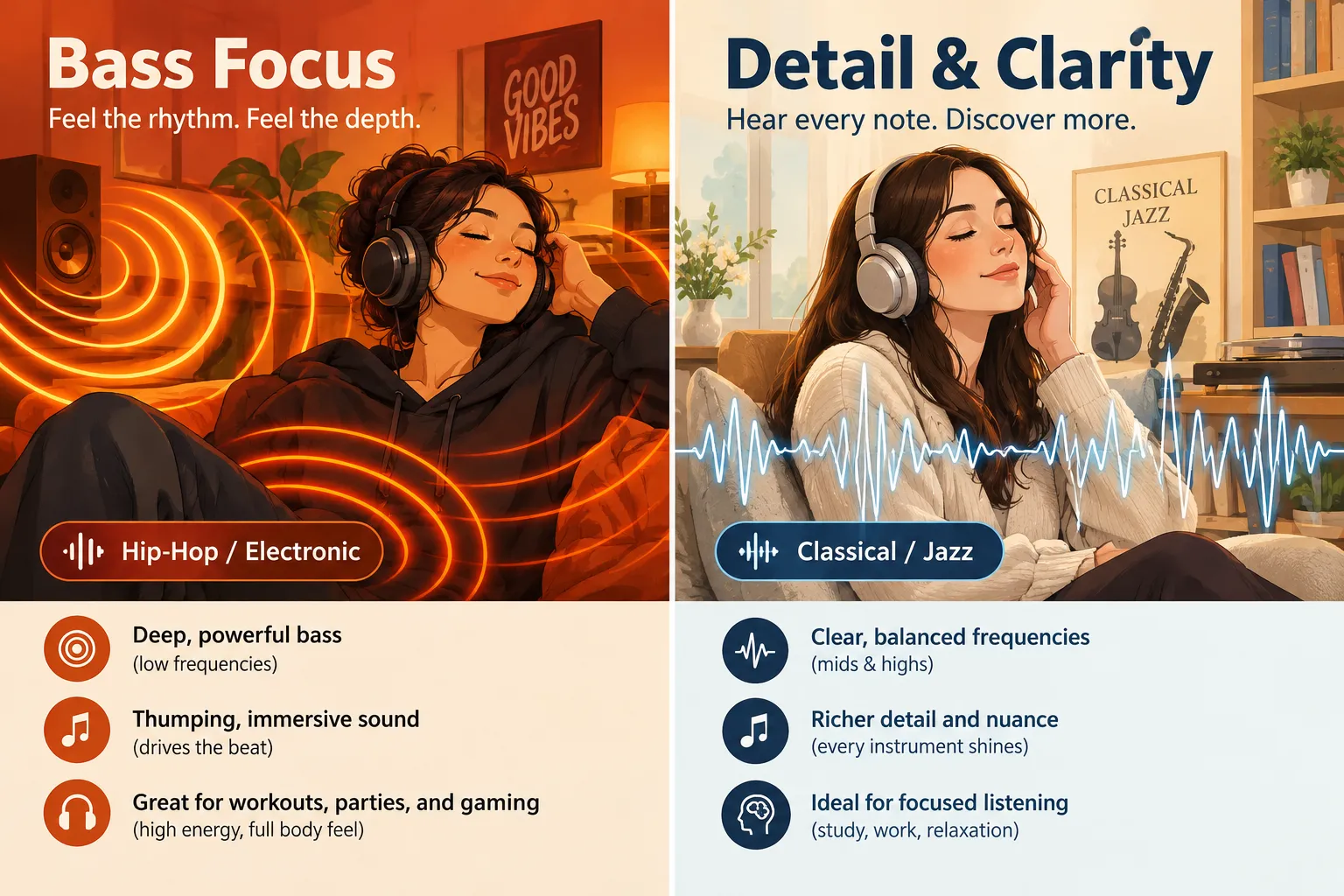
- For Bass Lovers: If you primarily listen to hip-hop, electronic, or pop music, look for headphones that clearly emphasize the sub-bass and mid-bass ranges (20 Hz – 250 Hz). Models that feature a noticeable bass boost can be a strong contender, but beware of excessive muddying of the mid-range. For example, some over-ear headphones for working out prioritize a strong bass punch to keep you motivated.
- For Vocal and Podcast Clarity: If podcasts, audiobooks, or vocal-heavy genres like folk and acoustic music are your go-to, prioritize headphones with a strong, balanced mid-range (250 Hz – 4 kHz). This ensures voices sound natural and clear.
- For Detail and Analytical Listening: Audiophiles and those who listen to classical, jazz, or complex instrumental music might prefer a “flatter” or more neutral frequency response. These headphones aim to reproduce sound as accurately as possible across all ranges, allowing you to hear every nuance. We often see open-back headphones excelling in this area, offering a wider soundstage and more precise detail.
- For Gaming and Movies: A V-shaped frequency response (boosted bass and treble, slightly recessed mids) can enhance explosions and environmental cues in games, making the experience more immersive. However, this isn’t ideal for competitive gaming where vocal cues are paramount.
- Studio Monitoring: Professionals require a very flat and accurate frequency response to ensure their mixes translate well across different sound systems. These headphones aren’t necessarily “fun” to listen to, but they are honest.
- Noise-Cancelling Considerations: While ANC headphones are fantastic for blocking external distractions, active noise cancellation can sometimes subtly alter a headphone’s frequency response, especially in the lower frequencies. This isn’t a liability unless you need absolute sonic neutrality. If you’re looking into these, our guide on what is ANC and how noise-canceling headphones work might be helpful.
It’s also worth considering that sound quality is subjective, and different brands often have their own signature tunings. Bose, for instance, is known for a generally balanced, pleasant sound profile across many of its models. You can read reviews, like our Bose QuietComfort Ultra Headphones review, to get an idea of a brand’s typical sound signature before you buy.
Can Headphones Go Beyond Human Hearing?
Yes, many modern headphones claim frequency responses that extend beyond the standard 20 Hz to 20 kHz human hearing range, sometimes listing ranges like 5 Hz to 40 kHz or even wider.
While humans generally cannot consciously hear these extreme frequencies, there’s debate in the audio community about their perceived impact.
Some argue that these extended frequencies, particularly in the ultrasonic range (>20 kHz), contribute to the overall “feel” or “airiness” of the sound, even if they aren’t directly audible. The idea is that these higher harmonics can influence the perception of audible frequencies.
However, based on our testing and what most listeners report, the impact is subtle at best for the majority of users. For most people, focusing on the quality and balance within the 20 Hz to 20 kHz range will yield much more noticeable improvements in sound quality.
Does EQ Help Adjust Frequency Ranges?
Equalization (EQ) is a tool that lets you adjust the level of selected frequency bands in your headphones. If your headphones’ tuning does not match your preferences, or you want to tailor the sound for a particular genre, EQ can help.
The Audacity Filter Curve EQ documentation explains how equalization can boost or reduce selected parts of the audio spectrum. Many headphones come with companion apps that offer built-in EQ settings, or you can use third-party EQ software on your device.
We recommend experimenting with EQ to tailor the sound. If your headphones have too much bass, for instance, you can try lowering the 60 Hz to 250 Hz bands.
Conversely, if vocals sound recessed, a slight boost in the 500 Hz to 2 kHz range can bring them forward. This can transform good headphones into great ones for your specific needs, making them a more personal choice.
Conclusion
Understanding what are the different frequency ranges of headphones empowers you to make a more informed buying decision. While nearly all headphones cover the 20 Hz to 20 kHz spectrum, their specific tuning within those ranges dictates their sound signature.
Whether you’re a bass enthusiast, a vocal clarity seeker, or an audiophile craving neutral reproduction, knowing which frequencies matter most to you is the first step.
Look beyond just the numbers on the spec sheet and consider how a headphone’s sound profile aligns with your real-world listening habits. Experimenting with EQ is a practical next step to fine-tune your audio experience.
FAQS
What is a good frequency range for headphones?
A good frequency range for headphones typically matches the human hearing range of 20 Hz to 20,000 Hz. However, more important than the absolute range is how evenly and accurately the headphones reproduce sound across that spectrum.
Does a wider frequency range mean better sound quality?
Not necessarily. While a wider frequency range (e.g., 5 Hz to 40 kHz) indicates a headphone’s capability to reproduce extreme frequencies, the audible benefit for most people is minimal. The quality and balance within the standard 20 Hz to 20 kHz range are far more critical for perceived sound quality.
What are bass-heavy headphones?
Bass-heavy headphones are tuned to emphasize lower frequencies, typically boosting the 20 Hz to 250 Hz range. This provides a more pronounced thump and rumble, making them popular for genres like hip-hop, electronic, and certain pop music.
What does “flat frequency response” mean for headphones?
A “flat frequency response” means the headphones aim to reproduce all audible frequencies (20 Hz to 20 kHz) at approximately the same volume level. This results in a neutral, uncolored sound that is often preferred by audio professionals for mixing and mastering, and by audiophiles seeking accurate sound reproduction.
Why do some headphones list frequencies below 20 Hz?
Some headphones list frequencies below 20 Hz (e.g., 5 Hz or 10 Hz) because while humans cannot consciously hear these infrasonic sounds, they can sometimes be felt as a subtle vibration or contribute to the perceived “weight” of the bass. The technical capability to produce them can also indicate driver quality.
Can I adjust the frequency response of my headphones?
Yes, you can adjust the frequency response of your headphones using an equalizer (EQ) feature. Many headphones have companion apps with built-in EQ, or you can use third-party software on your device to boost or cut specific frequency bands to suit your preferences.
What is the ideal frequency range for voice clarity?
For voice clarity, the ideal frequency range to focus on is the mid-range, roughly between 250 Hz and 4,000 Hz. This range covers the fundamental tones and harmonics of most human speech, ensuring dialogue and vocals sound natural and distinct.
Does room acoustics affect headphone frequency response?
No, room acoustics do not affect headphone frequency response in the same way they affect speakers. Headphones deliver sound directly to your ears, largely bypassing the acoustic properties of your listening environment. This is one reason headphones are often preferred for critical listening in untreated rooms.
