




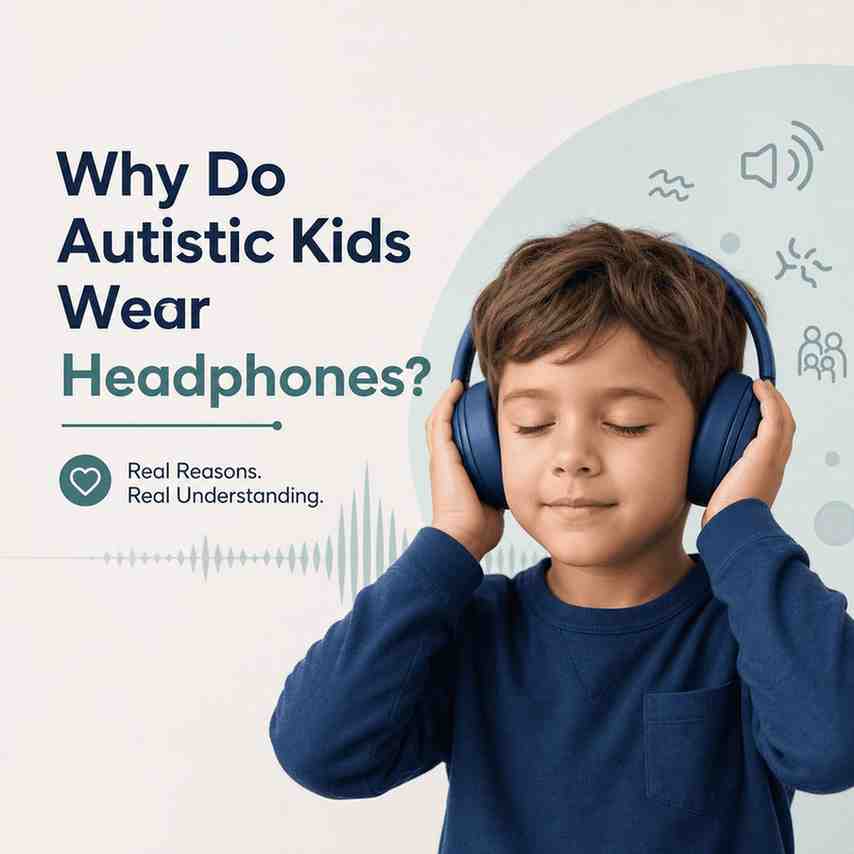
If you have ever seen an autistic child wearing headphones at the grocery store, at school, even at a birthday party, you might have had the same thought a lot of people have.
Are they listening to music.
Are they ignoring everyone.
Is it just a comfort thing.
Sometimes, sure, there is music. Sometimes it is nothing at all. And yes, it is comfort. But not in the casual way we usually mean it.
For a lot of autistic kids, headphones are not a fashion choice or a random preference. They are a tool. Like glasses. Like a wheelchair ramp. Like a cast that helps you get through the day without pain.
Because what looks like normal background sound to you can feel like someone turned the world up to maximum volume for them. All day. No off switch.
Quick note before we go deeper
Not every autistic child is the same. Some love sound. Some seek it out. Some are bothered only by specific noises, others by almost everything. Some will wear headphones every day, others only for certain places.
So when I say “autistic kids” here, I mean “many autistic kids”, not all.
Ok.
1. Everyday sounds can feel painfully loud (even if they are not)
This is the big one. A lot of autistic children experience heightened auditory sensitivity. The technical word you might hear is hyperacusis. Another thing that comes up is auditory processing differences.
But the simplest way to say it is this.
Their brain may treat certain sounds like a threat.
A chair scraping on tile. A hand dryer. A blender. A school bell. A fire alarm. The echo inside a gym. The overlapping chatter in a cafeteria.
To you it is annoying, maybe. To them it can be physically painful, or instantly panic inducing. Like your nervous system gets yanked.
Headphones reduce that intensity. Not always perfectly, but enough to make the world bearable.
And unpredictability matters too. A loud sound you choose is different from a loud sound that ambushes you.
2. They help block unpredictable noise, which is often the worst kind
There are noises that are loud but steady. Like a fan.
Then there are noises that are sudden, sharp, and random. Those are often the hardest.
Examples parents mention all the time:
- Fire alarms and drills
- Vacuum cleaners
- Toilet flushing in public bathrooms
- Dogs barking
- Sirens
- Balloons popping
- A microphone squeal at an assembly
- A crowded classroom where you never know what will happen next
Headphones act like a buffer. Even if the sound still gets through, it hits softer. That can be the difference between “I can stay here” and “I need to escape right now”.
3. Headphones create a calm “bubble” for emotional regulation
A lot of autistic kids are doing regulation work all day long. It is invisible effort.
Staying in line. Staying in a bright classroom. Managing body sensations. Dealing with social demands. Processing too many inputs at once.
When sound is reduced, their brain gets one less thing to fight.
So headphones can create a calm personal space. A kind of portable safe zone. That helps them:
- recover faster after something overwhelming
- avoid tipping into shutdown or meltdown
- feel more in control in places that feel chaotic
This is why you might see a child put their headphones on even before anything “bad” happens. They are preventing overload, not reacting to it.
That is smart, honestly.
Moreover, research suggests that such auditory interventions can significantly aid in emotional regulation for children with autism, providing them with the necessary tools to navigate their environment more effectively.
4. They can prevent meltdowns (and reduce anxiety before it builds)
Meltdowns are not tantrums. They are not a child being stubborn. They are a stress response. Usually after the nervous system has been pushed too far.
Sound can be a major trigger. Or the thing that pushes the child over the edge after other stressors have stacked up.
Headphones can lower the baseline stress level. When you remove or reduce the sensory threat, anxiety often drops with it.
It is the same concept as leaving a room that smells like smoke when it is making your throat burn. You are not being dramatic. Your body is reacting.
5. They help kids focus in noisy environments
Imagine trying to do math while someone plays five radio stations at once, plus a whistle, plus a baby crying.
That is what some classrooms feel like to kids with auditory sensitivity or auditory filtering difficulties.
Headphones can block distracting background noise and help a child concentrate on what they are trying to do:
- schoolwork
- reading
- building blocks
- eating
- even just listening to one person speak
Sometimes the headphones are not even noise canceling. Sometimes they are just over ear “muffs” that reduce volume. Still helps.
And for some kids, the goal is not silence. It is clarity. They want less chaos so the important sounds can stand out.
6. Some kids use headphones to add controlled, predictable sound
This part surprises people.
Not every autistic child wearing headphones wants quiet. Some want control.
So they play:
- calm music
- white noise
- brown noise
- nature sounds
- familiar songs on repeat
Predictable sound can mask unpredictable sound. It can also be regulating in the same way rocking or squeezing a stress ball can be regulating.
A steady auditory input can tell the nervous system, “you are safe, nothing is sneaking up on you.”
And yes, sometimes it is a favorite soundtrack. Sometimes it is the same 30 seconds over and over. That can be soothing, not “weird”.

7. Wearing headphones can be nonverbal communication
This one is real, and it is kind of underrated.
For some autistic kids, headphones are a clear visible signal that says:
- I need space
- I am overwhelmed
- I am not available to talk right now
- I am trying to cope
- please do not add more input
That is valuable. Especially for kids who struggle to explain what they feel in the moment. Or kids who go non speaking under stress. Or kids who are simply tired of being asked questions when their brain is already maxed out.
If you see a kid put headphones on, you can treat it like a stop sign. A polite one.
8. Some environments are basically sensory traps
There are places that are hard even for non autistic adults.
Think about it.
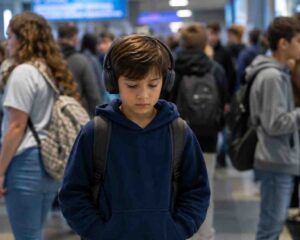
Big box stores. Airports. School cafeterias. Birthday parties. Sports games. Hospitals. Weddings.
Now add sensory differences. Add bright lights. Add strong smells. Add crowds. Add people talking over each other.
Sound is one of the fastest things to adjust. Headphones are portable and immediate. So they become the go to tool.
A lot of parents and therapists prefer proactive supports like headphones because it allows the child to stay included. Instead of leaving early. Instead of avoiding the place forever.
9. It is not rude. It is not “antisocial”. It is adaptive
This is a big mindset shift for families and for strangers.
A child wearing headphones is not automatically refusing connection. They might be trying to make connection possible.
When sensory overload is reduced, the child often has more capacity for:
- eye contact (if they use it)
- conversation
- play
- learning
- flexibility
- patience
Take away their headphones in the name of “social skills” and you may get the opposite of what you want.
You will get a child in distress.
10. Headphones can help with transitions and uncertainty
Transitions can be tough for a lot of autistic kids. Going from home to car to school. Or from quiet to loud. Or from one activity to another.
Headphones can act like a bridge between environments.
They give a consistent sensory experience during an inconsistent moment.
And for a child who gets anxious about “what might happen”, that consistency is a relief. One less unknown.
What kinds of headphones do autistic kids wear?
You will see a few common types. Each one has a purpose.
Noise reducing earmuffs (no audio)
These are like hearing protection. They lower volume but do not play anything. Good for young kids, and good for schools that do not allow music.
Noise canceling headphones
These use technology to reduce continuous background noise. Not perfect for sudden noises, but often helpful for travel, stores, classrooms.
Regular over ear headphones
Sometimes they are not special at all. They just feel comfortable and block some sound by covering the ears.
Earbuds
Some kids prefer less pressure on the head. Others hate the feeling of earbuds. It varies a lot.
If you are a parent choosing, comfort matters as much as sound reduction. If they pinch, itch, squeeze, or feel heavy, the kid will not use them. Or they will rip them off at the worst moment.

Common questions people ask (and what actually helps)
“Won’t headphones make them more sensitive?”
Usually no. Sensory supports are not the same as avoidance. If a child is drowning, you do not remove the life jacket to teach swimming.
Many kids actually build tolerance over time when they feel safe and supported. Headphones can be part of that. Especially if paired with gradual exposure, choice, and consent.
“Should I tell them to take them off so they can listen?”
If you need their attention, you can approach gently, get in their line of sight, speak calmly, and wait. Or ask a parent or teacher what works best.
Demanding removal often escalates things.
“What if they are using it to ignore the class?”
Sometimes they might be, sure. Kids are kids.
But more often, they are using it to stay regulated so they can participate. A better question is: what is the classroom sound like for them. And do they have another tool that works as well?
How to support an autistic child who relies on headphones
If you are a parent, teacher, relative, or just a person trying to be decent in public, here are a few things that help.
- Treat headphones as a legitimate accommodation, not a reward.
- Offer choices. “Do you want your headphones or your earmuffs?” works better than “Put these on.”
- Plan ahead for loud places. Bring them before the child is overwhelmed.
- Respect the signal. If headphones go on, reduce demands for a bit.
- If you need to talk, try short sentences. Give processing time.
- For schools, consider building headphone breaks into the day, not making it a special event.
And if you are a stranger in a store. Honestly the best support is simple.
Let them be. Do not stare. Do not comment. Do not assume bad parenting. Just keep moving.
Additionally, it’s important to remember that children with autism may also benefit from various activities designed specifically for their needs. These activities can provide valuable therapeutic benefits and help with their overall development.
A more human way to look at it
Sometimes I think people get stuck on the visual.
A child with headphones looks like they are separated from the world. Like they are behind glass.
But for many autistic kids, the world is already too close, too loud, too sharp. The headphones are not the wall.
They are the distance the child needs so they can breathe.
And when they can breathe, they can do more. They can stay longer. They can learn. They can play. They can connect, in their way.
Wrap up
Autistic kids wear headphones for real reasons. Not because they are being difficult. Not because they are spoiled. Not because their parents are “letting them”.
They wear them to manage sensory overload, block unpredictable noise, regulate emotions, reduce anxiety, prevent meltdowns, and focus in environments that would otherwise be painful or chaotic. Sometimes they also use them to play calming, controlled sound. And sometimes, quietly, it is the clearest way they can say: I need space right now.
If you remember one thing, let it be this.
Headphones are often a support that makes daily life possible. That is it. That is the whole story.
FAQs (Frequently Asked Questions)
Why do many autistic children wear headphones in noisy or crowded places?
Many autistic children wear headphones as a tool to manage heightened auditory sensitivity. Everyday sounds that seem normal to most can feel painfully loud or overwhelming to them, so headphones help reduce the intensity of these sounds, making environments like grocery stores, schools, or parties more bearable.
How do headphones help autistic kids deal with unpredictable and sudden noises?
Headphones act as a buffer against sudden, sharp, and random noises—such as fire alarms, vacuum cleaners, or balloons popping—that can be especially distressing for autistic children. By softening these unpredictable sounds, headphones help prevent sensory overload and allow the child to stay calm and engaged.
In what way do headphones create a calm space for emotional regulation in autistic children?
Headphones reduce auditory input, which lessens the sensory load on the brain. This creates a personal ‘calm bubble’ or safe zone that helps autistic kids regulate their emotions by preventing overload, aiding faster recovery after overwhelming events, and reducing the risk of shutdowns or meltdowns.
Can wearing headphones help prevent meltdowns and reduce anxiety in autistic children?
Yes. Meltdowns are stress responses triggered when the nervous system is overwhelmed. Since sound can be a major trigger, using headphones to lower background noise helps reduce baseline stress and anxiety levels, effectively preventing meltdowns before they escalate.
How do headphones assist autistic children in focusing within noisy environments like classrooms?
In noisy settings where multiple distracting sounds compete for attention, headphones help block out background noise. This enables autistic kids to concentrate better on tasks such as schoolwork, reading, or listening by providing clarity and reducing chaotic auditory input.
Do all autistic children use headphones to block noise, or do some use them differently?
Not all autistic children seek silence; some use headphones to add controlled and predictable sounds like calm music, white noise, brown noise, or nature sounds. This controlled auditory input can mask unpredictable noises and provide regulating sensory stimulation similar to other calming activities like rocking or squeezing a stress ball.
