


Bose has acquired Skullcandy, bringing two well-known consumer-audio brands under the same corporate umbrella. Announced on October 21, 2026, the deal gives Bose ownership of a brand associated with distinctive designs, bass-focused headphones and lifestyle-oriented earbuds. It also creates an opportunity to expand the reach of audio technologies that the companies have already begun sharing.
For consumers, the immediate question is not whether every Skullcandy headphone will suddenly become a Bose product. It is whether the acquisition will change the features, pricing, availability and value of future headphones and earbuds.
The companies have confirmed the acquisition, but several important details remain undisclosed. Financial terms are confidential, and the announcement does not establish a new product schedule or promise price reductions.
The most useful starting point is the existing partnership. Selected Skullcandy products already incorporate technologies marketed under the Sound by Bose name. The acquisition turns that relationship into a broader opportunity for product development, distribution and long-term investment.
Key takeaways
- Bose has acquired Skullcandy, but the brands are not being merged into one consumer-facing name. The announced plan is for Skullcandy to continue as a separate brand within Bose’s Premium Consumer Audio business.
- The technology partnership already exists. Selected products, including the Method 360 ANC earbuds and Crusher 1080 ANC headphones, incorporate Bose technologies.
- Buyers should not assume immediate price cuts or upgrades. Future prices, product plans, warranty changes and software-support arrangements remain unconfirmed.
Table of Contents
- What Happened in the Acquisition
- Why Bose Wants a Broader Audio Portfolio
- How Sound by Bose Already Works
- What the Deal Could Mean for Consumers
- What Remains Uncertain
- How the Deal Could Affect Competition
- What Buyers Should Do Now
- What to Watch Next
- Frequently Asked Questions
What happened in the Bose–Skullcandy acquisition?
Bose announced on October 21, 2026, that it had acquired Skullcandy from a fund managed by Mill Road Capital Management, a private investment firm based in Connecticut.
In its official acquisition announcement distributed through PR Newswire, Bose described the transaction as a step toward expanding its portfolio of products, technologies and audio brands.
The announcement establishes three important points.
First, Skullcandy is to remain a separate brand within Bose’s Premium Consumer Audio business. This matters because the two brands have different identities and appeal to different listening preferences.
Second, Skullcandy is expected to remain based in Park City, Utah. Bose said it intends to invest in Skullcandy’s growth while giving the brand room to continue developing in ways that fit its identity and customers.
Third, the companies have not disclosed the financial terms of the transaction. There is no confirmed purchase price that can responsibly be reported.
The Verge’s independent report on the acquisition also explains that the deal follows an existing relationship in which Skullcandy products began incorporating Bose audio technology.
That last point is central to understanding why the acquisition matters. Bose is not starting from zero with Skullcandy. It already has a practical route for bringing its engineering and audio-processing expertise into selected products from the brand.
What the announcement does not establish
A confirmed acquisition is not the same as a confirmed product roadmap.
Bose has not announced that every Skullcandy headphone will receive its noise-cancelling technology. Nor has it promised lower prices, a shared app, new retail bundles or a universal warranty change.
Those developments may be possible, but they should not be treated as facts until the companies announce them.
Why Bose wants a broader audio portfolio
Bose has long been associated with premium consumer audio, including noise-cancelling headphones, earbuds, speakers and home-entertainment products. Skullcandy has a different brand identity, emphasizing expressive designs, lifestyle positioning and products such as its Crusher headphones.
The acquisition gives Bose an opportunity to reach consumers who may not begin their search with a premium Bose product.
Different brands can serve different buyers
Headphone shoppers do not all prioritize the same things.
Some buyers want effective active noise cancellation for air travel and focused work. Others prioritize strong bass, a distinctive design, workout convenience or a lower purchase price.
A single brand can serve several of these groups, but it cannot always communicate every product’s purpose equally well. Separate brands allow a company to maintain different visual identities, marketing strategies and product priorities.
Bose’s stated intention to keep Skullcandy separate is consistent with that approach. Instead of replacing Skullcandy with a Bose-branded budget range, the company can continue developing products under the Skullcandy name while exploring opportunities to use Bose technology.
Expert analysis: The strategic opportunity is not simply selling more headphones. It is using a wider brand portfolio to serve customers with different expectations without forcing all of them into the same product identity.
That is a plausible rationale for the deal, not proof that the strategy will succeed. Its results will depend on future products, pricing, distribution and whether customers continue to see Skullcandy as a distinctive brand.
Bose has already expanded beyond its core headphone business
The acquisition also fits into a wider portfolio strategy.
On November 19, 2024, Bose announced that it had acquired McIntosh Group, the parent company of McIntosh and Sonus faber. Bose’s announcement of the McIntosh Group acquisition described the transaction as an opportunity to bring together audio research, engineering and established luxury-audio brands.
The two acquisitions are not identical. McIntosh and Sonus faber are associated with high-end audio systems, while Skullcandy is more closely connected to consumer headphones, earbuds and lifestyle products.
Nevertheless, the pattern is notable: Bose is building a portfolio that can cover different listening environments and customer segments rather than relying exclusively on products sold under its own name.
What is confirmed: Bose acquired McIntosh Group in 2024 and announced the Skullcandy acquisition in October 2026.
What is analysis: These transactions suggest a deliberate multi-brand strategy. They do not establish that every acquisition will use the same operating model or produce the same results.
How Sound by Bose already works in Skullcandy products
The existing partnership provides the clearest evidence of what the acquisition could mean for future products.
The companies have already demonstrated that Skullcandy can retain its recognizable product approach while incorporating selected Bose technologies. That gives Bose a starting point for future development, although it does not guarantee that every future product will follow the same formula.
Method 360 ANC earbuds
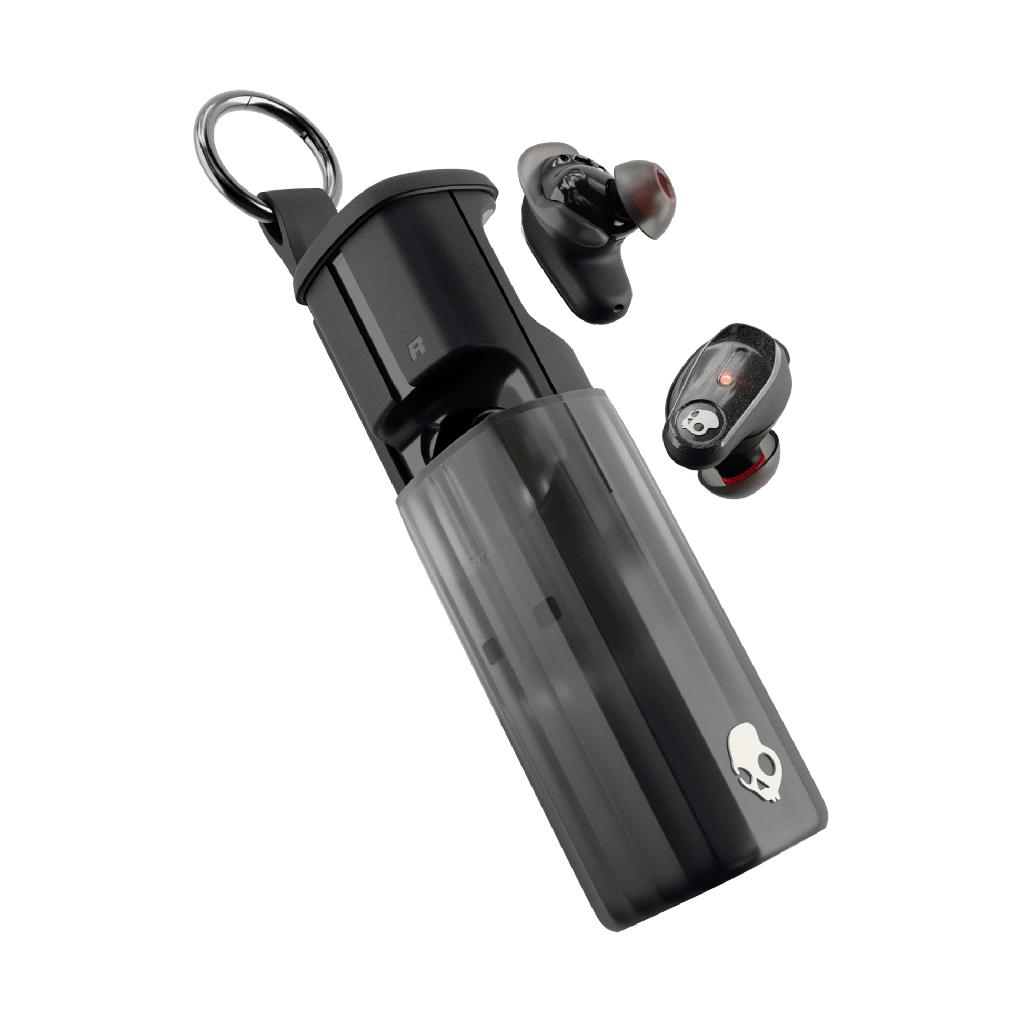
The Skullcandy Method 360 ANC is an example of the partnership in the true-wireless earbud category.
According to the official Method 360 ANC product listing, the earbuds combine Sound by Bose branding with active noise cancellation, adjustable ambient-awareness features, multipoint pairing and app-based audio customization.
The company lists up to 32 hours of total battery life with ANC enabled, including the charging case, and up to 40 hours with ANC disabled. These are manufacturer-rated figures, not independent measurements of real-world battery performance.
Independent coverage provides a useful perspective. In its Method 360 ANC review, WIRED rated the earbuds 8/10, praising their noise cancellation and sound quality while noting that the earbuds and charging case are relatively large.
That review is important because it offers evidence that the collaboration can produce a compelling product at a lower price than many premium alternatives. However, a review of one model cannot establish how all Skullcandy products perform or whether future products will maintain the same balance of features and cost.
Crusher 1080 ANC headphones
The Crusher 1080 ANC shows the partnership in a different category.
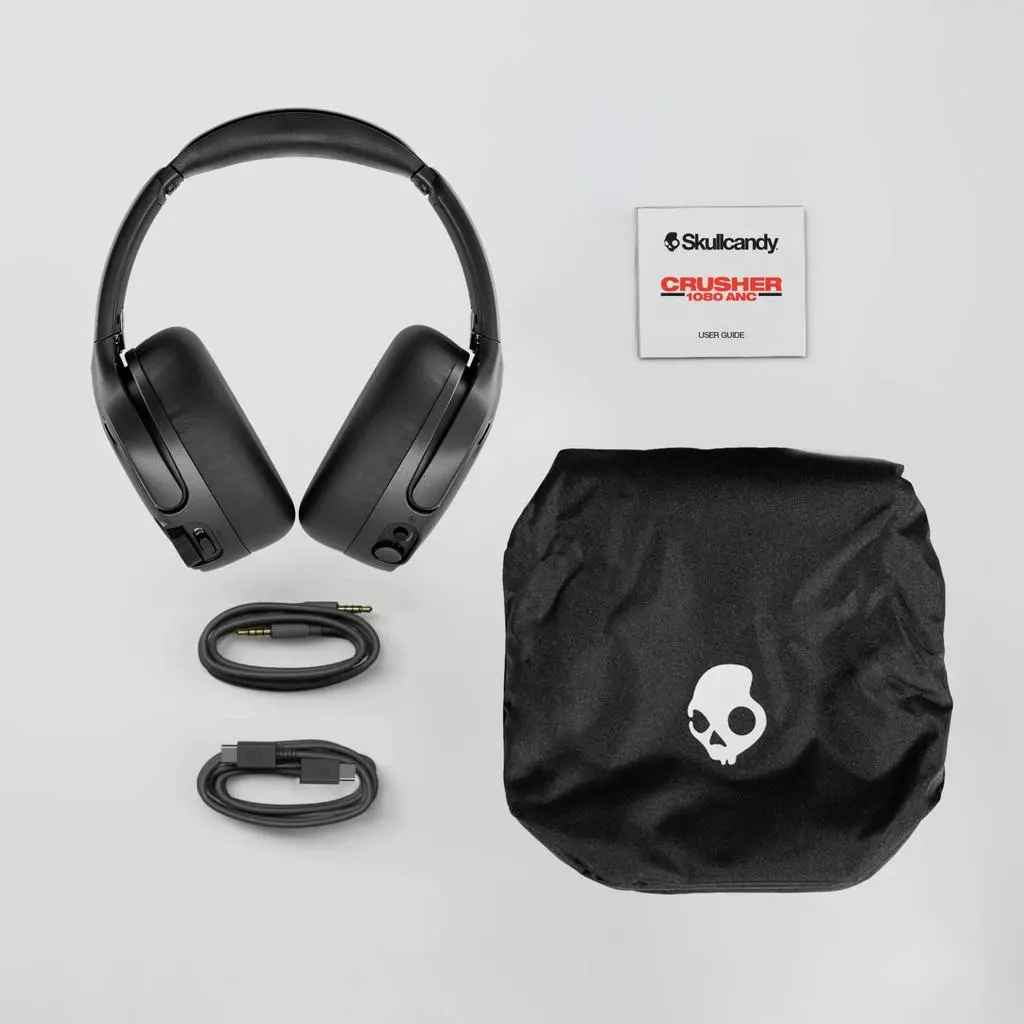
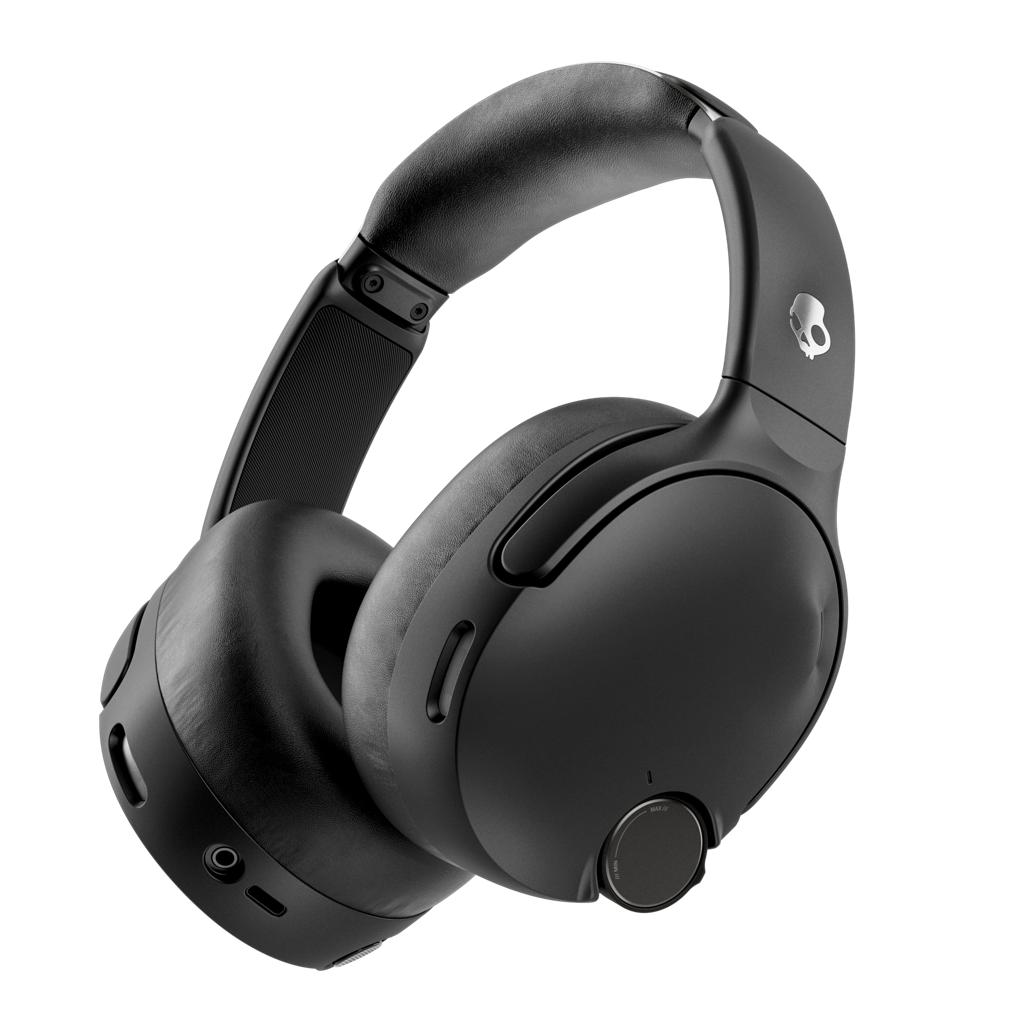
The headphones combine Skullcandy’s adjustable Crusher Bass approach with technologies that the company markets under Sound by Bose. The official Crusher 1080 ANC product page lists Bose QuietControl active noise cancellation, TrueSpatial audio, SpeechClarity voice pickup technology and the WaveForm Audio Engine.
The product page also lists Bluetooth 5.3, multipoint pairing, LE Audio with Auracast, and manufacturer-rated battery life of up to 60 hours with ANC disabled or 50 hours with ANC enabled.
These details demonstrate that the companies were already combining selected technologies before the acquisition was announced.
They do not establish that the same features will appear across the entire Skullcandy range. A manufacturer can license or integrate particular technologies into specific products without using them in every model.
Why the distinction matters
The existing products make the acquisition more than a theoretical strategy announcement. There is already a product-level example of the companies working together.
For buyers, however, the appropriate question is still whether a particular headphone delivers the features and performance they need.
A product bearing Sound by Bose branding should be evaluated on its own specifications, independent testing, comfort, sound profile, software support and price. Brand association alone is not proof that it performs identically to a Bose-branded product.
What the acquisition could mean for headphone buyers
The biggest consumer implications will become clearer as Bose makes decisions about products, pricing, support and distribution.
For now, four areas deserve attention.
1. Prices and value
One possible benefit of the acquisition is that Bose technology could reach more products at different price points.
A company can spread research and engineering work across multiple products, while different brands serve different price segments. If Bose continues to provide selected technologies to Skullcandy, shoppers could have more options without having to purchase a flagship Bose headphone.
That is a reasonable possibility, not a confirmed pricing commitment.
The acquisition announcement did not promise that Skullcandy prices would fall or that Bose would introduce cheaper versions of its premium headphones. It also did not establish that future Skullcandy products will become more expensive.
For consumers, the best measure of value remains the product itself: its retail price, noise cancellation, sound quality, comfort, battery performance, microphone quality and available support.
A headphone with a prestigious technology partner is not automatically the best purchase if it costs more than comparable alternatives or does not suit the buyer’s listening preferences.
2. Active noise cancellation
Active noise cancellation, or ANC, uses microphones and electronic processing to generate a signal that reduces certain incoming environmental sounds. Its effectiveness depends on the headphone’s design, fit, acoustic seal and processing system.
Bose has a long history of developing noise-cancelling products. Bringing selected Bose technologies into Skullcandy products could help broaden the range of headphones offering those features.
The Method 360 ANC provides an existing example. WIRED’s review found its noise cancellation impressive for its price, while also identifying design trade-offs.
That is more useful than assuming that Bose’s name guarantees identical performance across brands.
ANC performance varies by model and by the type of noise. Continuous low-frequency sounds, such as some aircraft and ventilation noise, can behave differently from sudden impacts, nearby speech or high-frequency sounds.
Fit matters too. Poorly fitting earbuds can allow sound to leak around the ear tips, affecting both passive isolation and the perceived effectiveness of ANC.
If you are comparing models, TechOzea’s guide to noise-cancelling headsets with microphones for working from home provides a useful starting point for evaluating noise reduction alongside call quality and work-related features.
3. Sound quality and bass
Skullcandy has an established identity around bold designs and, in the Crusher family, adjustable bass. Bose’s audio technologies can complement that approach without requiring every product to adopt the same tuning.
This is important because sound quality is not one universal target.
Some listeners prefer strong bass for electronic music, hip-hop and other bass-heavy genres. Others prioritize vocal clarity, neutral tonal balance or the ability to adjust the sound for different recordings.
A technology partnership can help with signal processing, noise reduction or spatial effects, but it does not guarantee that every listener will prefer the resulting sound.
Subjective impressions also need to remain separate from objective measurements. A reviewer may find a headphone exciting, balanced or spacious, but those descriptions reflect listening experience unless supported by appropriate measurements.
The sensible expectation is that Bose and Skullcandy may continue combining their strengths in selected products. Whether future headphones sound better will need to be judged model by model.
4. Software, firmware and long-term support
Modern headphones often depend on companion apps for equalizer settings, button customization, ANC adjustments, firmware updates and personalized sound features.
The Crusher 1080 ANC and Method 360 ANC already use the Skullcandy app. The acquisition does not, by itself, establish that the products will move to a Bose app or that both brands will merge their software systems.
For existing owners, it is reasonable to continue following the product’s official support instructions until a specific change is announced.
Buyers should pay attention to the support commitments attached to the product they purchase. Relevant questions include:
- How are firmware updates delivered?
- Are important features dependent on the companion app?
- Does the manufacturer document compatibility with the buyer’s phone and computer?
- Are replacement ear tips, cables or other accessories available?
- What warranty and repair options apply to the specific model?
Those practical details can matter more over several years than a new brand partnership.
What remains uncertain after the acquisition
The companies have confirmed the acquisition and described their intention to continue developing Skullcandy as a separate brand. Several questions remain open.
Will Skullcandy headphones become more expensive?
There is no confirmed answer. The announcement did not provide a future pricing policy.
Bose could choose to keep Skullcandy positioned separately, introduce products at new price points or adjust the lineup over time. Those are possible business decisions, not established outcomes.
Will every Skullcandy product use Bose technology?
There is no such commitment in the announcement.
Existing products demonstrate that the partnership can work, but the technology used in each product depends on its design, cost targets and feature priorities.
Will current products receive new features?
No general upgrade program has been announced. Owners should not assume their current headphones will receive additional ANC modes, spatial audio features or other capabilities because of the acquisition.
Some features depend on physical hardware as well as software, so not every change can be delivered through firmware.
Will customer support and warranties change?
The acquisition announcement does not establish new warranty rules or a revised support process. Existing owners should continue using the applicable official support channels unless the companies announce a specific change.
What was the purchase price?
The transaction’s financial and other terms remain confidential according to the acquisition announcement. Any precise purchase-price estimate presented as a fact would be unsupported.
How the deal could affect the headphone market
The consumer-audio market includes products ranging from entry-level wired earbuds to premium wireless headphones, professional monitoring equipment and high-end home audio.
Different products compete on different combinations of price, comfort, sound quality, ANC, battery life, microphone performance and ecosystem integration.
Bose’s acquisition of Skullcandy gives it another way to participate in that market. The two brands can continue to communicate different priorities while drawing on a shared corporate portfolio.
Competition will depend on the products that follow
The acquisition does not remove competition from Sony, Apple, JBL, Sennheiser, Soundcore or other audio brands.
Buyers will continue comparing individual models, and Bose’s ownership of Skullcandy does not establish that their products will outperform competitors.
For example, Sony’s WH-1000XM6 and other premium noise-cancelling headphones compete on their own combinations of ANC, comfort, battery performance and software. TechOzea’s Sony WH-1000XM6 review provides a separate reference point for buyers evaluating that category.
The acquisition could increase pressure on competitors if Bose-backed Skullcandy products offer compelling combinations of price and performance. But that outcome depends on future products and their actual performance.
A broader portfolio can create both benefits and risks
A broader portfolio may let Bose use its technology in more products, while allowing Skullcandy to maintain its distinct brand identity.
The risk is that shared technology could make products feel less differentiated if companies do not preserve meaningful differences in sound, design, features and pricing.
There is also a consumer-information challenge. Shoppers will need clear descriptions of which technologies each product actually includes, rather than assuming that every headphone from an acquired brand has the same capabilities.
Ultimately, the acquisition’s success should be judged by product quality, customer experience and value—not simply by the number of brands in a company’s portfolio.
What headphone buyers should do now
For people considering a purchase, the acquisition is a reason to watch future announcements, not necessarily a reason to delay buying headphones that meet their needs today.
If you need headphones immediately
Compare currently available products on their own merits. Check current prices, comfort, ANC performance, sound preferences, battery claims, microphone quality and compatibility.
If a Skullcandy model offers the right combination of features and price, the acquisition alone is not a reason to reject it. Likewise, do not pay a premium based solely on the Bose association.
If you are considering an upgrade
Look at the improvements you will actually receive. A new headphone is more worthwhile when it solves a problem with your existing pair—such as poor call quality, inadequate noise cancellation, uncomfortable fit or unreliable connectivity.
If your current headphones work well, waiting for more information about future Skullcandy products may be reasonable. However, no specific upcoming product or release date has been confirmed by the acquisition announcement.
If you use headphones for workouts
Durability and fit should remain central considerations. An acquisition does not automatically make a headphone suitable for sweat or exercise.
Check the official water-resistance rating, fit stability and operating controls before using over-ear headphones during training. TechOzea’s best over-ear headphones for working out guide covers those practical considerations.
What to watch next
Several developments will help establish whether the acquisition delivers meaningful benefits for consumers.
New product announcements: Watch for models that combine Skullcandy’s product identity with additional Bose technologies. A confirmed launch would provide stronger evidence than broad statements about future innovation.
Pricing and product positioning: Compare new retail prices against competing headphones with similar features. This will reveal whether the portfolio creates new value or simply expands the range of products available.
Independent testing: Reviews and measurements of ANC, battery life, microphone quality and sound performance will be more useful than brand claims alone. Testing conditions should be considered when comparing results.
Software and support: Look for official information about firmware, app compatibility, repair options, warranty terms and product support.
Brand identity: Observe whether Skullcandy continues to maintain its own design language, product priorities and customer positioning.
The important distinction is between the strategy the companies have announced and the consumer benefits they have yet to demonstrate.
Conclusion
Bose’s acquisition of Skullcandy is a meaningful development for the headphone industry because it expands Bose’s portfolio while building on an existing technology partnership.
The deal could allow selected Bose technologies to reach more consumers through Skullcandy products, while giving the lifestyle brand access to additional engineering resources and distribution opportunities. The Method 360 ANC and Crusher 1080 ANC already demonstrate how the partnership can work at the product level.
But the acquisition does not establish that every Skullcandy headphone will improve, that prices will fall, or that support arrangements will change.
For consumers, the practical rule remains the same: buy based on the performance, comfort, features and value of the specific headphone. Watch future announcements for evidence of how the acquisition changes the products available, and rely on independent testing rather than assumptions about brand ownership.
Frequently asked questions
Did Bose acquire Skullcandy?
Yes. Bose announced on October 21, 2026, that it had acquired Skullcandy from a fund managed by Mill Road Capital Management.
Will Skullcandy remain a separate brand?
According to the acquisition announcement, Skullcandy will remain a separate brand within Bose’s Premium Consumer Audio business and will continue to be based in Park City, Utah.
How much did Bose pay for Skullcandy?
The financial terms of the acquisition have not been disclosed. A precise purchase price cannot currently be confirmed.
Do Skullcandy headphones already use Bose technology?
Some do. The Method 360 ANC earbuds and Crusher 1080 ANC headphones incorporate selected technologies marketed under Sound by Bose. That does not mean every Skullcandy product uses Bose technology.
Will Skullcandy headphones become cheaper?
No price reductions have been announced. Future pricing will depend on the companies’ product and commercial decisions.
Will existing Skullcandy headphones receive Bose software updates?
The acquisition announcement does not establish a general upgrade program or a change to software support. Owners should follow official product-specific support information.
Should I wait before buying Skullcandy headphones?
Not necessarily. If a currently available model meets your needs and offers good value, the acquisition alone is not a reason to delay. If you are not in a hurry, you can watch for future product announcements and independent reviews.
