




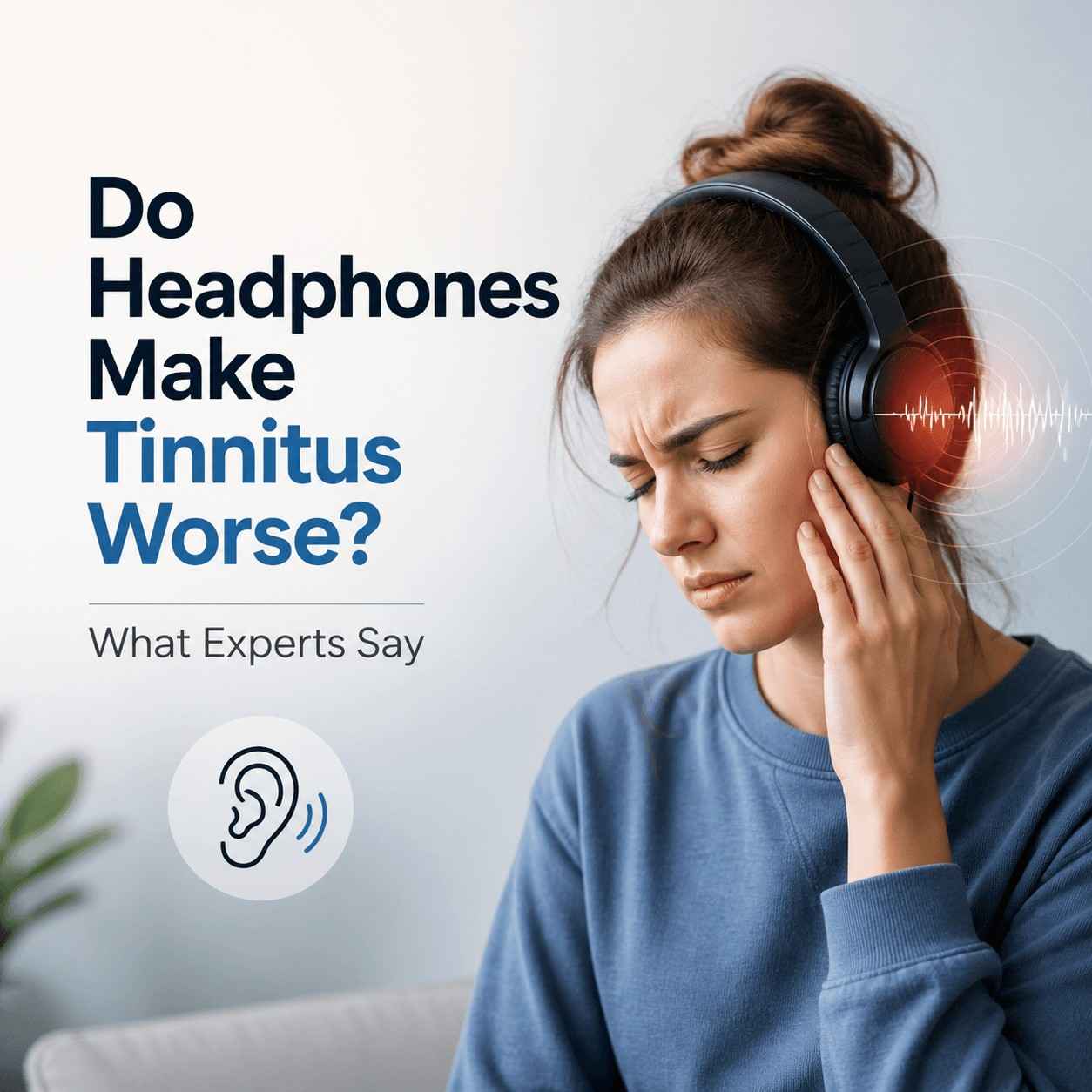
If you have tinnitus, you have probably done this exact thing.
You put on your headphones, press play, and for a few minutes the ringing fades into the background. Relief. Finally.
Then you take them off and you are like… wait. Why does it seem louder now?
So yeah, the question comes up a lot.
Do headphones make tinnitus worse?
Sometimes they can. Sometimes they do not. And sometimes what you are noticing is not damage, but the weird way your brain reacts to sound and silence. That is the frustrating part. Tinnitus is not just an ear thing, it is a nervous system thing too.
Let’s break it down in a way that actually helps you decide what to do next.
First, a quick reality check about tinnitus
Tinnitus is the perception of sound when there is no external sound. Ringing, buzzing, hissing, cicadas, electrical whining. Sometimes in one ear, sometimes both, sometimes in your head.
Experts generally describe tinnitus as a symptom, not a disease. Meaning it usually points to something else going on.
Common contributors include:
- Noise induced hearing loss (even mild)
- Age related hearing changes
- Earwax blockage or middle ear issues
- Jaw problems like TMJ
- Certain medications that can be ototoxic
- Stress, sleep issues, anxiety
- Neck tension, posture issues (yes, really)
The big one in the headphone conversation is noise exposure. Because tinnitus and noise exposure are tightly linked.
Do Headphones Make Tinnitus Worse?
Yes, headphones can make tinnitus worse if you listen to music or media at high volumes or for too many hours each day. Loud sound damages the tiny hair cells in your inner ear, which causes hearing loss and triggers or worsens ringing in the ears.
Headphones themselves are not the enemy. Sound at unsafe levels is.
Audiologists and ENT specialists tend to say the same core thing: tinnitus can worsen if headphones contribute to noise induced hearing damage or auditory stress. And that can happen with headphones more easily than people realize because the speakers are right at your ear canal.
Here are the main scenarios where headphones are more likely to make tinnitus worse.
1. Listening too loud (the obvious one, but it matters)
Noise induced hearing damage is still the clearest, most well supported risk factor for tinnitus getting worse.
And here is the annoying part. You do not need one dramatic concert moment for it to happen. It can be slow. Daily. Repetitive.
Most hearing health guidance points to this general idea:
- Around 85 dB for extended time can start becoming risky
- Higher than that, safe time drops fast
The problem is most people do not know what 85 dB sounds like in headphones. And volume percent is not a reliable measure because different phones and headphones output differently.
Some clues you are likely too loud:
- You cannot hear someone talking near you
- Your ears feel “full” after listening
- You get a temporary spike right after removing headphones
- You feel that slight “burn” or fatigue in your ears
- You keep turning it up as the session goes on
That last one is sneaky. It is called listening fatigue. Your brain adapts, the sound feels less intense, so you increase volume, and you end up pushing your auditory system harder than you intended.
2. Long sessions with no breaks (even at moderate volume)
This one surprises people.
Even when volume is not crazy, long continuous listening can stress the auditory system, especially if you already have tinnitus or sound sensitivity.
Experts sometimes talk about auditory gain, basically the brain turning up the internal volume knob when it thinks it is not getting enough input, or when the system is irritated. That is part of why tinnitus can feel louder after certain sound exposures.
So it is not only volume. It is volume plus duration plus your individual sensitivity.
If your tinnitus consistently spikes after long headphone sessions, that is data. Not something to ignore.
3. Noise canceling and the “silence effect”
A lot of people with tinnitus notice something like this:
They use active noise canceling, it feels great in the moment, then when they take the headphones off the tinnitus feels more obvious. Sometimes temporarily louder.
This does not automatically mean damage. What can happen is:
- Noise canceling reduces ambient noise
- Your brain has less external sound to mask tinnitus
- The tinnitus becomes more noticeable
Also, when you go from quiet to quieter, your attention can snap to the internal noise. Like walking into a silent room and suddenly hearing your fridge hum. Except it is your tinnitus. And you cannot switch the fridge off.
So, do noise canceling headphones make tinnitus worse? Not necessarily, but they can make it feel worse in the short term, because they remove helpful background sound.
If you already hate silence because tinnitus screams in it, you might prefer low level ambient sound instead of total quiet.
4. In ear earbuds can be riskier for some people
Not always, but often.
Earbuds sit deeper and can deliver sound very directly into the ear canal. They also isolate you from outside sound, which makes it easy to crank volume without realizing. This direct delivery and isolation can lead to potential issues, as highlighted in a study by URMC, suggesting that earbuds may not be the best choice for everyone.
Another issue. Earbuds can irritate the ear canal for some people, causing inflammation, wax issues, or pressure feelings. Those things can make tinnitus seem louder or more annoying. Not permanent damage, just a flare up.
If you have tinnitus plus ear fullness or itching or frequent wax buildup, earbuds might not be your best daily option.
Over ear headphones, especially at safe volume, often end up being more comfortable.
5. Headphones + loud environments is the perfect trap
The biggest headphone mistake is not headphones. It is trying to overpower noise.
Gym music, buses, airplanes, office chatter. You turn up volume to drown it out. You can end up listening at unsafe levels for a long time without realizing.
This is where experts often recommend either:
- Noise isolating headphones (passive seal) so you do not need to crank volume
- Or noise canceling, used wisely, at low volume
In other words, noise canceling can be protective if it prevents you from blasting your ears.
What about that temporary tinnitus spike after headphones?
This is important.
Many tinnitus sufferers experience what people casually call a “spike”. Tinnitus gets louder or changes pitch for hours or days, then settles back.
A spike after headphone use can come from:
- Too loud volume
- Too long exposure
- Stress and fatigue
- Ear canal irritation
- Sinus congestion or jaw tension
- Silence contrast effect (especially after noise canceling)
If the spike fades back to baseline within a day or two, that suggests irritation, not necessarily permanent worsening. But if spikes are frequent, longer lasting, or trending upward, that is a sign you should change your listening habits and consider getting evaluated.
What experts typically recommend instead of quitting headphones completely
Most audiologists are not going to tell you “never use headphones again” unless you have very specific issues, like severe hyperacusis or a history of noise trauma and ongoing sound sensitivity.
More commonly, they recommend safer listening habits.
Here is the practical version.
The safer way to use headphones if you have tinnitus
1. Follow the 60 60 idea, but treat it as a starting point
You have probably heard: 60 percent volume for 60 minutes.
It is not a perfect scientific rule, but it is a decent behavior guardrail. If you do that and your tinnitus still spikes, lower the volume further or shorten sessions.
Even better. Use your phone’s built in hearing features.
- iPhone: Settings > Sounds & Haptics > Headphone Safety
- Android: varies by brand, but often under Sound settings or Digital Wellbeing
Some devices can show estimated dB levels. It is not lab grade, but it is better than guessing.
2. Take breaks on purpose
Set a timer. Seriously. Every 30 to 60 minutes, take 5 minutes off.
Not because you are weak. Because the auditory system does better with recovery time.
3. Prefer over ear or on ear when possible
Not a universal rule. But many people with tinnitus do better with comfortable over ear headphones because:
- less ear canal irritation
- often better sound at lower volume
- easier to keep volume moderate
4. If you use earbuds, keep them clean and do not jam them in
This is boring advice, but it matters.
Dirty earbuds can contribute to ear infections or inflammation. Both can aggravate tinnitus. And pushing them deep can pack wax.
5. Use sound that is gentle, not aggressive
Some audio is more fatiguing.
High treble, heavy distortion, sharp transients, harsh podcasts, poorly mixed YouTube audio. It can all feel like sandpaper to an already sensitive system.
Many tinnitus patients do better with:
- lower treble EQ
- slightly reduced high frequencies
- calmer music
- natural soundscapes
If you love bright music, fine. Just notice how your tinnitus responds.
6. Do not use headphones to “test” your tinnitus
This is a mental trap. You listen, then remove them, then scan your head: is it louder? is it quieter? did it change?
That constant monitoring makes tinnitus more central in your attention system, which can make it feel worse.
If you are going to use headphones, use them to live your life, not to measure your symptoms every 10 minutes.
Can headphones actually help tinnitus?
Yes. And experts talk about this too.
Sound therapy is a real tinnitus management strategy. The idea is not to cure tinnitus, but to reduce contrast, reduce distress, and help the brain stop treating it as a threat.
Headphones can be used for:
- White noise or pink noise at low volume
- Nature sounds
- Tinnitus masking tracks
- Notched music therapy in some cases
- Guided relaxation, breathing, sleep stories
The key is volume. Sound therapy should be soothing, not loud. If you blast masking noise, you can irritate your ears and worsen things. The goal is gentle background sound.
A lot of audiologists recommend the sound be set just below or at the level of the tinnitus, not way above it.
What type of headphones are best if you have tinnitus?
There is no one perfect answer, but here is what tends to work well in real life.
Over ear closed back headphones
Good if you want isolation so you can listen at lower volume. Comfort matters. Clamp force matters. If it squeezes your jaw or temples, that can trigger tension and make tinnitus worse for some people.
Open back headphones
They let outside sound in, which means you might not crank volume as much in quiet rooms. But they are terrible in noisy environments because you will turn up volume to compensate.
Noise canceling headphones
Useful in loud environments because they reduce the urge to blast volume. But if you hate silence, you might prefer to keep a low level background sound on rather than wearing them with nothing playing.
Bone conduction headphones
Interesting option for some people, especially those who dislike in ear pressure. But they can still get loud. And if you have sound sensitivity, the vibration sensation can be weird.
So, best headphone choice usually comes down to your triggers:
- If loud environments are the problem, noise canceling can help.
- If ear canal irritation is the problem, avoid earbuds.
- If silence makes tinnitus scream, do not over rely on total cancellation.
Signs your headphone use is actually making tinnitus worse
This is the part people want. A simple checklist.
Consider it a warning sign if you notice:
- tinnitus is louder after headphone use and stays louder for more than 24 to 48 hours
- spikes are happening more often over time
- you develop new sound sensitivity (normal sounds feel sharp or painful)
- you notice muffled hearing after listening
- you get ear pain, pressure, or persistent fullness
- you need higher volume than before to enjoy audio
If any of this is happening, do not try to power through it. Lower volume, reduce time, change headphone type, and consider getting your hearing tested.
When to see an audiologist or ENT (do not overthink this)
You do not have to panic. But you should get checked if:
- tinnitus is new and sudden
- tinnitus is only in one ear (especially if new)
- you have sudden hearing loss, dizziness, or vertigo
- tinnitus is pulsatile, like a heartbeat sound
- you have ear pain, drainage, or infection symptoms
- your tinnitus is worsening steadily
A hearing test can tell you if there is hearing loss you did not notice. A lot of tinnitus sufferers do. Even mild changes can matter.
And if you have hearing loss, hearing aids can sometimes reduce tinnitus perception because they restore environmental sound input.
A few myths that keep floating around
Myth: “Any headphones will worsen tinnitus”
Not true. Unsafe listening worsens risk. Headphones used responsibly can be fine.
Myth: “If tinnitus is louder after headphones, you permanently damaged your ears”
Not always. Temporary spikes can happen from fatigue, stress, and contrast effects. Still, repeated spikes are a sign to adjust.
Myth: “Masking noise should cover tinnitus completely”
Often not recommended. Many tinnitus clinicians suggest partial masking so the brain can habituate instead of fighting tinnitus constantly.
A simple, realistic plan if you have tinnitus and still want to use headphones
This is what I would do if I was trying to be careful without making my life miserable.
- Switch to over ear headphones for daily use if earbuds irritate you.
- Turn on headphone safety limits on your phone.
- Keep volume lower than you think you need, especially at first.
- Listen in chunks. 30 to 60 minutes, then break.
- Avoid blasting audio in noisy places. Use noise canceling or just skip headphones there.
- Track tinnitus for two weeks. Just quick notes. Did it spike? how long? what were you listening to?
- If spikes keep happening, get a hearing test and ask about tinnitus management options.
That is it. Not a huge lifestyle overhaul. Just a more intentional approach.
Let’s wrap this up
Headphones do not automatically make tinnitus worse.
But if you listen too loud, for too long, especially in noisy environments, yes, headphones can absolutely aggravate tinnitus and in some cases contribute to long term worsening. That is what most hearing experts are getting at.
The good news is you usually do not have to quit headphones. You just need to treat your ears like they are already a bit irritated. Because they are.
Lower the volume. Take breaks. Use the right type of headphones. And if your tinnitus is changing in a way that feels persistent or one sided or just wrong, get a proper hearing evaluation.

FAQs (Frequently Asked Questions)
What is tinnitus and what causes it?
Tinnitus is the perception of sound like ringing, buzzing, or hissing when there is no external sound. It is generally a symptom pointing to other issues such as noise-induced hearing loss, age-related hearing changes, earwax blockage, jaw problems like TMJ, certain ototoxic medications, stress, sleep issues, anxiety, or neck tension and posture problems.
Can headphones make tinnitus worse?
Headphones themselves do not inherently worsen tinnitus. However, listening at unsafe volume levels or for extended periods can contribute to noise-induced hearing damage or auditory stress, which may worsen tinnitus symptoms.
How does listening volume affect tinnitus when using headphones?
Listening at volumes around 85 dB or higher for extended times can increase the risk of worsening tinnitus. Signs you might be listening too loud include difficulty hearing nearby conversations, ear fullness after listening, temporary spikes in tinnitus after headphone use, ear fatigue or burning sensations, and the need to keep increasing volume due to listening fatigue.
Does the duration of headphone use impact tinnitus severity?
Yes. Long continuous headphone sessions—even at moderate volumes—can stress your auditory system. This can cause the brain to increase internal volume (‘auditory gain’), making tinnitus feel louder after prolonged listening.
How do noise-canceling headphones affect tinnitus?
Noise-canceling headphones reduce ambient noise which can make tinnitus more noticeable once the headphones are removed. This effect doesn’t necessarily mean damage but happens because less external sound masks the internal tinnitus sounds. People sensitive to silence may prefer low-level ambient sounds instead of complete quiet.
Are in-ear earbuds riskier for people with tinnitus compared to over-ear headphones?
In-ear earbuds deliver sound directly into the ear canal and isolate outside noise, often leading users to increase volume unknowingly. This direct delivery can pose a higher risk for some people by causing irritation or inflammation in the ear canal and potentially worsening tinnitus symptoms.
Is it better to use speakers instead of headphones for tinnitus?
Often yes, because speakers reduce direct sound exposure to the ear canal and keep you connected to ambient sound. But speakers can also be loud. The same rule applies: volume and duration.
Are AirPods or wireless earbuds worse for tinnitus?
Not inherently. The risk comes from listening level and time. Many people turn wireless earbuds up in noisy places, which is where trouble starts.
Can tinnitus be caused by headphones alone?
Headphones can contribute if they lead to chronic unsafe noise exposure. But tinnitus usually has multiple factors. Sometimes the trigger is one loud event. Sometimes it is gradual.
Should I stop using headphones during a tinnitus spike?
If you suspect the spike was caused by sound exposure, yes, give your ears a quiet, normal day or two. Avoid silence caves though. Gentle background sound can help.
