


Apple’s first foldable iPhone is now available, but early reports of damaged inner displays raise an important question: should buyers purchase the iPhone Duo immediately or wait for more evidence about its reliability?
Key Takeaways
- Do not confuse early reports with a confirmed widespread defect. Several damaged units have been reported, but the total number of affected phones and the underlying cause remain unknown.
- Buy for the larger display, not simply for novelty. The iPhone Duo’s main advantage is its ability to combine a conventional phone with a larger screen for supported apps, reading, video, and multitasking.
- If reliability is your main concern, consider waiting. More information about the reported failures, app compatibility, and long-term ownership should help buyers make a better-informed decision.
Introduction
The first foldable iPhone has arrived, bringing a significant design change to Apple’s smartphone lineup. The iPhone Duo combines a conventional outer screen with a larger folding display that opens into a tablet-like workspace.
Its starting price is $1,999 in the United States. That is a substantial investment for a smartphone, even before adding a protective case, accessories, insurance, or applicable taxes. Apple’s decision to introduce a foldable model also places greater importance on software adaptation and mechanical reliability than it does for a conventional phone.
The launch has produced two developments worth examining together.
First, Apple has highlighted new app experiences designed to make better use of the larger screen. Second, The Verge has reported early cases of damaged inner displays around the hinge area.
The second development deserves attention, but it needs careful interpretation. A few reported failures can identify a problem that deserves investigation. They cannot, on their own, establish how frequently that problem occurs across all devices.
This article examines the confirmed specifications, the available reporting, the practical benefits, and the risks that buyers should consider.
Important limitation: This is a research-based news analysis, not an independent TechOzea hands-on durability test. No conclusions about long-term failure rates can responsibly be drawn from the currently available incident reports alone.
What happened when the iPhone Duo launched?
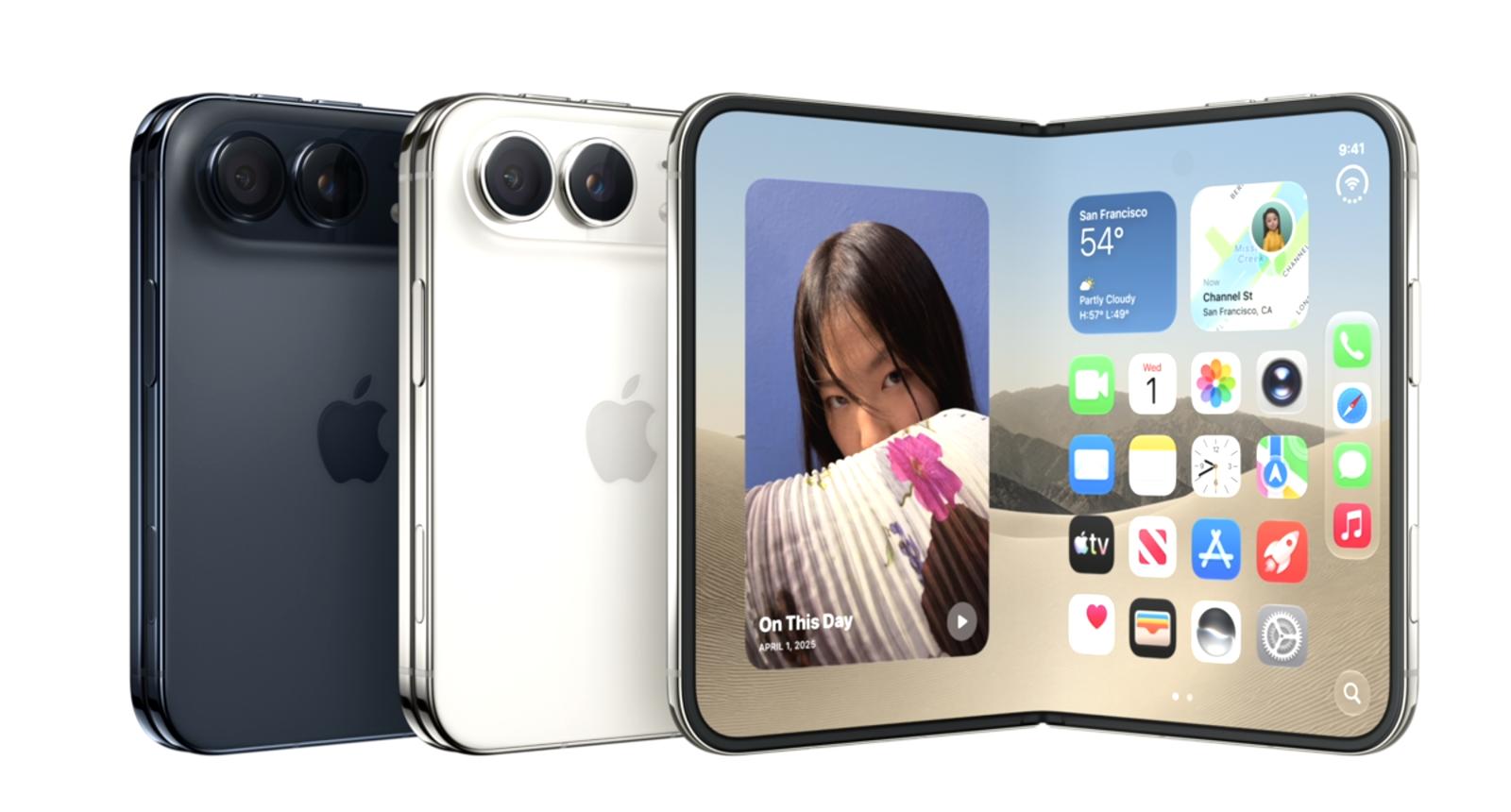
Apple announced the iPhone Duo on September 9, 2026, with preorders opening on October 16 and general availability beginning October 23. The company describes it as its first foldable iPhone and emphasizes its larger display, precision hinge, A20 Pro processor, and revised software experience.
The device starts at $1,999 and is offered in 256GB, 512GB, 1TB, and 2TB storage configurations. Apple lists two colors: Star White and Night Sky.
Its main selling point is the combination of two screen sizes in one device. Closed, the iPhone Duo has a 5.4-inch outer display. Open, it provides a 7.6-inch inner display designed for activities that benefit from more space.
Apple has also adapted iOS to support the folding design, including Split View for opening two apps side by side. The company says the software adjusts as the device opens, closes, and changes orientation.
The launch has attracted attention beyond the usual product specifications. Reuters reported strong demand and limited availability, alongside mixed early reviews. Reviewers praised aspects of the design and hinge while raising concerns about camera compromises, app readiness, and everyday convenience.
That combination makes this launch particularly important for consumers. The device is not simply an expensive iPhone with a different shape. It asks buyers to pay for a new way of using a smartphone—and to accept the uncertainties that come with a new product category for Apple.
What do the early screen-failure reports actually show?
The most important new concern comes from a report published by The Verge on October 23.
The publication described several social-media posts showing damaged iPhone Duo inner displays around the hinge area. One Australian customer reportedly said the phone broke while being opened after approximately six hours of ownership and fewer than 20 openings. The customer said there were no visible marks suggesting an impact and reported receiving a replacement at an Apple Store.
The Verge also described other posts showing damage to additional devices. At the time of publication, Apple had not immediately responded to the publication’s request for comment.
These reports matter because the inner display and hinge are central to the foldable design. Damage in that area could affect the very feature that differentiates the iPhone Duo from a conventional iPhone.
However, the evidence has significant limitations.
A few reported cases do not establish a widespread defect
There is currently no verified denominator showing how many iPhone Duo devices have been sold and how many have experienced the reported failure.
Without those numbers, it is not possible to calculate a meaningful failure rate. Nor is it possible to determine whether the reports are related to a common manufacturing issue, accidental damage, foreign material near the hinge, or another cause.
The incidents deserve investigation, but they do not justify saying that all iPhone Duo devices are defective or that every buyer will experience a screen problem.
The cause remains unknown
A display that breaks near a hinge may raise questions about material stress, manufacturing tolerances, or the way the display interacts with the folding mechanism. Those are possible lines of investigation, not established explanations for the reported cases.
The current reporting does not establish the root cause.
A responsible assessment would require more evidence, such as physical examination of affected devices, a comparison of failure patterns, information from Apple, or a larger set of documented incidents.
What about Apple’s durability claims?
Apple describes the iPhone Duo as having a precision hinge and materials designed for durability. Its specifications also list an IP68 rating for water and dust resistance.
That rating should not be confused with a guarantee against mechanical failure.
IP68 describes resistance to dust and water under specified test conditions. It does not mean that the phone cannot suffer display damage, that the hinge is immune to wear, or that every form of liquid exposure is covered by warranty.
Likewise, a precision-engineered hinge is not proof that a device will remain free from problems over years of use.
The appropriate conclusion is that Apple’s published specifications establish what the company says the device offers, while the reported failures introduce a reliability question that still needs evidence.
What makes the iPhone Duo different?
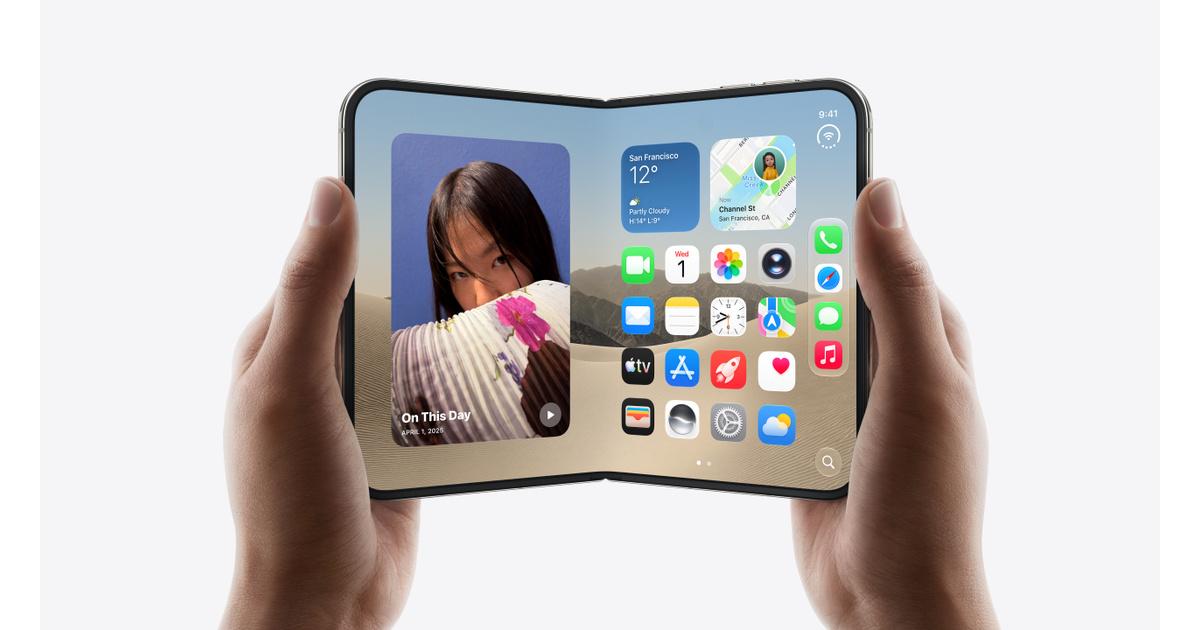
The iPhone Duo is designed to serve two roles: a conventional smartphone when closed and a larger workspace when opened.
That approach can be useful, but it also changes the trade-offs buyers should consider.
Two displays in one device
Apple lists a 5.4-inch outer display and a 7.6-inch inner folding display. Both use OLED technology, and both support ProMotion with adaptive refresh rates up to 120Hz. The inner screen also has a nano-texture finish.
The outer display is intended for everyday tasks such as checking messages, taking calls, and navigating apps without opening the device.
The larger screen is better suited to activities that benefit from additional space: reading long documents, viewing photographs, watching video, and working with two apps at once.
The key question is how frequently a buyer would use that larger workspace.
Someone who mainly sends messages, browses social media, and takes occasional photos may not gain enough from the folding design to justify the extra cost. Someone who regularly reads documents, reviews spreadsheets, or uses supported productivity apps may benefit more.
Size and weight matter
The official specifications list a weight of 254 grams. The phone measures 5.2mm thick when open and 11.3mm when folded.
Those dimensions illustrate a basic trade-off: a device that unfolds into a larger screen must accommodate the additional hardware and folding mechanism.
For some buyers, the larger screen will outweigh the added weight. Others may find the folded device less comfortable to carry or use one-handed.
Before buying, it is worth handling the device in both configurations. A large display may be attractive in a demonstration, but long-term comfort depends on how the phone feels during ordinary use.
Performance and AI
Apple equips the iPhone Duo with its A20 Pro chip. The company’s announcement describes a six-core CPU, a seven-core GPU, and a dual 16-core Neural Engine, alongside thermal-management hardware designed to support demanding workloads.
These components are relevant to gaming, photography, multitasking, and AI processing.
However, specifications and manufacturer performance claims should not be treated as independent proof of real-world superiority. Performance depends on software, thermal conditions, workload, and the way an application uses the available hardware.
For everyday buyers, the more important question is whether the device remains responsive while performing the tasks they actually use.
Cameras: capable hardware, but an important compromise
Apple lists two rear cameras: a 48MP main camera and a 48MP ultrawide camera. The main camera also provides 2x optical-quality zoom. (Apple)
That does not mean the phone has a separate, dedicated telephoto camera.
This distinction matters because buyers who frequently photograph distant subjects may prefer a phone with a dedicated telephoto lens.
The folding design also enables different camera workflows. Apple describes features that use the outer screen for previews and allow users to take photographs with the rear cameras while viewing the framing on the external display.
Those features could be useful for group photographs, selfies, and recording content without a separate tripod or monitor.
Nevertheless, the iPhone Duo’s camera system should be judged on actual image quality and usability, not simply on the number of megapixels or the presence of new software features.
Readers comparing camera-focused devices may also find TechOzea’s guide to smartphones for photography useful.
Battery life and charging
Apple says the iPhone Duo has two integrated batteries and estimates up to 31 hours of video playback using the inner display or up to 44 hours using the outer display. These are manufacturer figures, not independent battery-test results.
Actual endurance will vary according to brightness, network conditions, background activity, gaming, camera use, and the apps running on the phone.
A foldable also has to balance two displays and a more complicated internal layout. Buyers should therefore look for independent tests that reflect their intended usage rather than assuming the advertised maximum will match their daily experience.
For someone who travels frequently or relies on a phone for work, real-world battery testing should be part of the purchase decision.
How useful are the iPhone Duo’s new apps?
A foldable phone is only as useful as the software that takes advantage of its display.
Apple’s October 22 announcement described a growing collection of apps designed for the iPhone Duo. The company highlighted streaming, productivity, gaming, and creative applications.
Streaming and entertainment
Apple says Netflix will adapt its interface between the outer and inner screens. Prime Video can use the partially folded position to display video on one part of the screen and supporting information on another. Paramount+ is also adding expanded controls and browsing.
These features could make the larger display more useful for entertainment.
For example, someone watching a film while traveling might appreciate the ability to prop the phone open without carrying a separate stand.
But the quality of the experience depends on how individual apps implement the layout. A screen that is physically larger does not automatically make video content more immersive, especially if the app leaves unused space or places controls awkwardly.
Productivity and multitasking
Apple has highlighted Split View and app layouts designed for a larger screen. Microsoft Word and Outlook are among the apps expected to offer layouts that place documents, formatting tools, inboxes, and messages side by side. Zoom is also adapting its interface for simultaneous viewing of meetings and shared content.
These are potentially more valuable improvements than simply enlarging an app.
A larger workspace can reduce the need to switch repeatedly between documents, email, and communication tools. That may be useful for students, professionals, and people who frequently review information on their phones.
However, a phone is not automatically a replacement for a laptop. Document editing, complex spreadsheets, and extensive multitasking may still be more comfortable on a larger computer with a keyboard and pointing device.
App compatibility is still evolving
Apple says optimized apps can be identified with a “Made for iPhone Duo” badge, with additional app updates expected throughout the year.
That is a useful signpost, but buyers should not assume every app will be fully adapted at launch.
Some developers may prioritize their most popular screens and functions first. Others may take longer to adapt navigation, text entry, controls, or landscape layouts.
The experience may therefore differ significantly between apps.
Before paying for the phone, consider the specific applications you rely on. If your work depends on a particular business, banking, creative, or accessibility app, verify that it behaves correctly on the inner display rather than assuming that every iPhone app will automatically deliver an ideal foldable experience.
Is the iPhone Duo worth $1,999?
The iPhone Duo starts at $1,999, with storage options up to 2TB.
At that price, the buying decision should focus on practical benefits rather than novelty.
Calculate the total ownership cost
The purchase price is only one part of the cost.
Buyers may also need to consider:
- A case designed for the folding form factor.
- Screen-protection options compatible with the device.
- Applicable AppleCare+ or other protection-plan costs.
- Potential service fees or deductibles.
- Accessories and chargers, depending on what they already own.
- The cost of replacing the phone if it is lost or damaged outside applicable coverage.
The terms of any warranty or protection plan should be reviewed before purchase. Do not assume that every display or hinge problem will be covered under every circumstance.
For a $1,999 device, those details are financially important.
Consider what the larger screen replaces
The iPhone Duo’s strongest value proposition is the possibility of combining a smartphone and some tablet-like functions in one device.
If the larger screen genuinely reduces the need to carry a separate tablet, that may help justify the price for some buyers.
But the saving is not automatic.
A person who already owns a tablet and prefers its larger screen may continue using it. Someone who needs a laptop for work will probably still need one. A user who mostly checks messages and social feeds may gain relatively little from the extra display.
The correct comparison is therefore not simply the price of the iPhone Duo versus a conventional iPhone. It is the cost of the Duo versus the devices and workflows it would realistically replace.
Compare alternatives before deciding
Buyers should also compare the iPhone Duo with conventional flagship phones and competing foldables.
Samsung’s U.S. product page lists the Galaxy Z Fold8 from $1,899.99 before trade-in, although current offers and configurations may affect the price. The two products differ in design, software, dimensions, and camera systems, so their starting prices are not enough to establish which is better value.
A conventional flagship may be a better choice for people who prioritize camera flexibility, lighter everyday use, or lower purchase costs.
Readers comparing broader options can start with TechOzea’s smartphone buying guide and review the relevant product specifications before making a final decision.
How does it compare with other foldable phones?
The iPhone Duo enters a category that already includes competing foldable designs.
Book-style foldables offer a larger inner screen while retaining an outer display for quick tasks. Other folding designs prioritize compactness rather than a tablet-like workspace.
Samsung’s Galaxy Z Fold8, for example, is marketed around its wider inner display, multitasking capabilities, and camera features. Its U.S. product page lists a starting price of $1,899.99 before trade-in.
The iPhone Duo’s advantages are likely to be most compelling to buyers already invested in Apple’s ecosystem, particularly those who want the larger screen without switching platforms.
But ecosystem familiarity is not the same as guaranteed superiority.
Buyers should compare the devices on the factors they will notice every day:
- Comfort when folded.
- Weight and pocketability.
- Inner-screen usability.
- Camera flexibility.
- Battery life in independent tests.
- App compatibility.
- Repair and protection options.
- Total cost over the expected ownership period.
The right choice depends on the user’s priorities. Neither a higher price nor a newer design automatically makes a device the better purchase.
What buyers should check before purchasing
The early reports do not establish a widespread problem, but buyers can still take reasonable precautions.
1. Read the warranty and protection terms
Review the manufacturer’s warranty and any protection plan before purchasing.
Understand the distinction between a manufacturing defect, accidental damage, and damage excluded under the applicable terms. Ask about deductibles, service fees, replacement procedures, and the availability of repairs.
Do not assume that an advertised water-resistance rating guarantees coverage for water damage.
2. Inspect the device when you receive it
Check the outer display, inner display, and hinge area for visible damage.
Open and close the phone normally, without applying unusual pressure or attempting any improvised stress test. Check that the display operates as expected and that there are no obvious visual abnormalities.
If the device arrives damaged or develops a fault, document the issue and contact Apple or the retailer promptly.
3. Avoid improvised durability tests
Do not deliberately bend, twist, press, or repeatedly stress the hinge to see whether the phone can withstand abuse.
Such tests can damage the device and are not a substitute for controlled reliability testing.
4. Check the apps you use most
If the phone is intended for work, confirm that your important apps function correctly on both displays.
This is especially important for business software, creative applications, banking, accessibility tools, and services that you rely on daily.
5. Consider waiting for more evidence
Early buyers can benefit from receiving a new device first, but they also accept greater uncertainty.
If you are concerned about the reported screen failures, waiting for additional reports, independent durability testing, and any response from Apple is a reasonable option.
Who should buy it—and who should wait?
Buyers who may benefit most
The iPhone Duo is most promising for people who regularly use a larger display but still want a smartphone-sized device when closed.
Potentially good candidates include:
- Readers who spend substantial time viewing documents and long articles.
- Professionals who work across supported productivity apps.
- Frequent travelers who value entertainment on a larger screen.
- Content creators who benefit from expanded editing layouts.
- Existing iPhone users who specifically want a foldable design.
For these users, the value comes from using the larger display often enough to justify the price.
Buyers who should consider waiting
Waiting is more sensible for people who:
- Mainly use messaging, social media, and simple apps.
- Need the most predictable long-term reliability.
- Prefer a lighter or more compact everyday phone.
- Depend on a camera system with a dedicated telephoto lens.
- Would struggle financially with an expensive repair or replacement.
- Need every work app to function consistently from day one.
Waiting does not mean the product is necessarily unreliable. It simply allows more evidence to emerge before a large purchase.
What to watch next
The most important developments will be those that answer questions currently left open.
First, watch for an Apple response. A statement identifying the cause of the reported failures, or explaining how affected customers should proceed, would materially improve the available evidence.
Second, look for more documented incidents. Independent reporting with verified cases and a clear denominator would be more informative than additional isolated social-media posts.
Third, watch independent durability testing. Controlled tests can help assess hinge performance and screen behavior, although no single test can guarantee the long-term reliability of every device.
Fourth, track app support. Apple’s promised updates and “Made for iPhone Duo” badge should make it easier to identify apps designed for the new display. The practical quality of those apps will matter as much as the hardware.
Finally, watch real-world ownership reports. Battery life, camera performance, software behavior, and comfort during everyday use will become clearer as more people use the device over longer periods.
Conclusion
The iPhone Duo is a significant addition to Apple’s smartphone lineup. Its folding display, larger workspace, and revised app experiences create genuine possibilities for entertainment and productivity.
But the device also costs $1,999, weighs 254 grams, and introduces a mechanical and display design that deserves careful long-term evaluation. Early reports of damaged screens near the hinge warrant attention, even though they do not establish a widespread defect. (Apple)
The most sensible advice is to match the purchase to actual needs.
If the larger screen would meaningfully improve your daily workflow and you are comfortable with the price and remaining uncertainty, the iPhone Duo may be worth considering. If you prioritize proven reliability, camera flexibility, or value for money, waiting for more evidence is a rational choice.
The best buying decision is not the one made first. It is the one made with the clearest understanding of the benefits, costs, and remaining risks.
Frequently asked questions
Is the iPhone Duo screen problem a confirmed widespread defect?
No. The Verge reported several cases of inner-display damage around the hinge, but the available evidence does not establish a widespread defect or a confirmed root cause.
How much does the iPhone Duo cost?
Apple lists a U.S. starting price of $1,999 for the 256GB model, with 512GB, 1TB, and 2TB configurations also available. Taxes, accessories, and protection plans can increase the total cost.
Is the iPhone Duo waterproof?
Apple lists an IP68 rating, with a maximum depth of 6 meters for up to 30 minutes under IEC 60529. This is a specified resistance rating, not a guarantee against all liquid damage or mechanical failure.
Does the iPhone Duo have a telephoto camera?
Apple lists a 48MP main camera and a 48MP ultrawide camera. The main camera supports 2x optical-quality zoom, but the specifications do not list a separate dedicated telephoto camera.
Is the iPhone Duo worth buying immediately?
That depends on your needs and tolerance for uncertainty. Buyers who value the foldable design may want to consider it, while those concerned about the reported screen failures may prefer to wait for more reliability information.
Will all iPhone apps work properly on the larger screen?
Not necessarily. Apple has announced optimized apps and a “Made for iPhone Duo” badge, but developers will need time to adapt their applications. Compatibility and layout quality should be checked for the apps that matter most to you.
