


What is Dolby Vision? It’s a premium high dynamic range (HDR) format developed by Dolby Laboratories that enhances the visual quality of video content through improved brightness, contrast, color, and detail compared with standard dynamic range (SDR).
It uses dynamic metadata to optimize picture reproduction scene by scene, and in supported workflows, frame by frame, for a more consistent viewing experience across compatible displays.
Key Takeaways
- Dolby Vision is an advanced high dynamic range (HDR) format designed to improve contrast, color, brightness, and detail.
- It uses dynamic metadata to optimize picture reproduction scene by scene, unlike HDR10’s static metadata.
- The format can help preserve highlight detail, shadow detail, and color accuracy, depending on the display’s capabilities.
- To experience Dolby Vision, you need a compatible TV or display, a compatible playback device when required, and Dolby Vision content.
- The technology is available on selected televisions, streaming devices, smartphones, tablets, and gaming systems.
- The difference between Dolby Vision and HDR10 varies with display quality, content mastering, and playback settings.
- Dolby Vision is a licensed technology, while HDR10+ is an alternative HDR format that also supports dynamic metadata.
- Dolby Vision can improve HDR presentation, but it cannot overcome every limitation of a display’s brightness, contrast, or color reproduction.
What is Dolby Vision and How Does It Work?
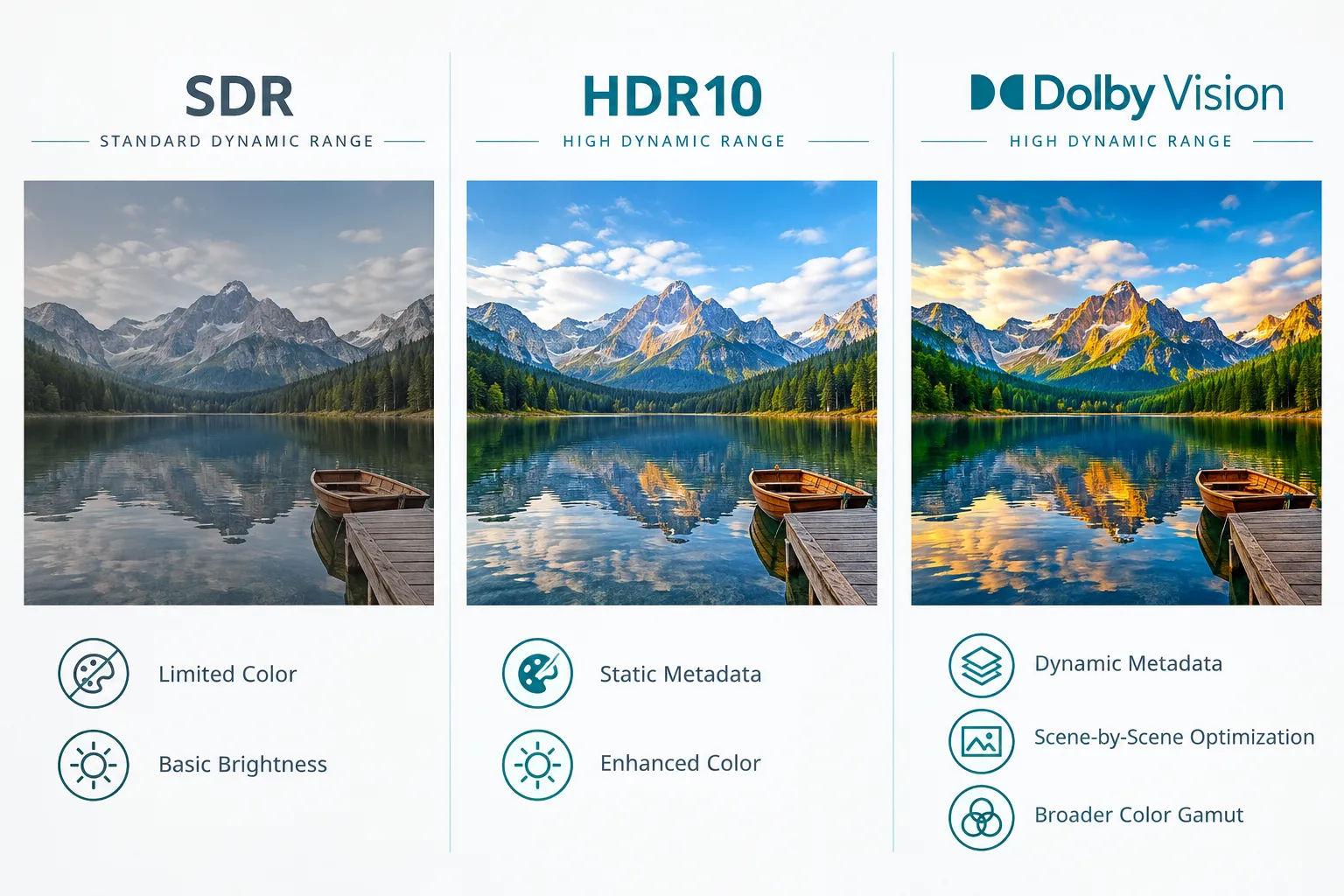
Dolby Vision is a high dynamic range (HDR) format designed to deliver a more lifelike picture than standard dynamic range video. It uses an expanded range of brightness and color, together with dynamic metadata, to help compatible displays reproduce highlights, shadows, and colors more faithfully.
According to Dolby’s official Dolby Vision overview, the format dynamically optimizes image quality according to the content, playback device, and platform. The goal is to preserve more of the detail and creative intent established during production.
The main differentiator is its use of dynamic metadata. HDR10 uses static metadata, which provides a set of mastering instructions for an entire program. Dolby Vision can carry additional scene-level or frame-level metadata that helps a compatible display adapt its tone mapping to changing image conditions.
For example, a movie might transition from a dark interior to a brightly illuminated outdoor scene. Dynamic metadata helps the display determine how to reproduce each scene within its available brightness and contrast capabilities.
This process is known as tone mapping. It helps translate the brightness and color information in the original HDR master to the capabilities of the television or other display being used.
The result can be more controlled highlights, improved shadow detail, and more consistent color reproduction. However, the actual improvement depends on the display’s hardware, calibration, and the quality of the source material.
Is Dolby Vision a Worthwhile Upgrade for Your TV?
For those considering a new television or comparing display technologies, understanding what is Dolby Vision’s impact is crucial. Based on our testing, Dolby Vision generally offers a noticeable, though sometimes subtle, improvement over HDR10, particularly on higher-end TVs. You should care about this if you prioritize cinematic accuracy and dynamic range in your viewing.
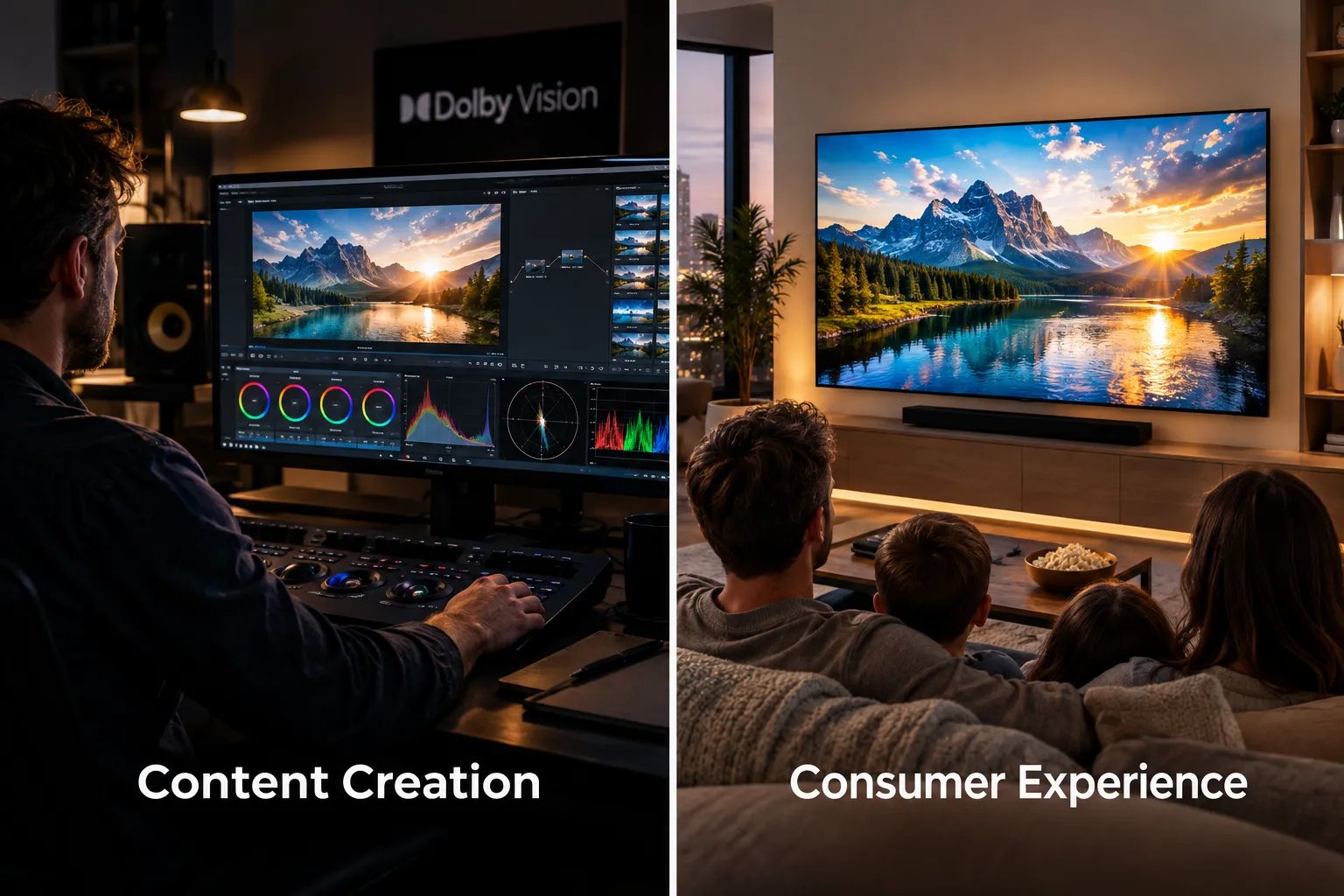
While HDR10 is a good baseline, Dolby Vision’s dynamic metadata lets content creators specify exactly how each scene should look on capable displays. This means a director’s vision for a dark, moody shot or a brightly lit outdoor scene is more accurately reproduced.
We often see better shadow detail and more precise highlight control in content encoded with Dolby Vision. If you’re shopping for a premium TV, like one with OLED technology, Dolby Vision support is a strong contender for a feature to look for.
What Devices and Content Support Dolby Vision?
Experiencing what is Dolby Vision requires compatible hardware and content. The good news is that support has become widespread across many modern entertainment systems in 2026. You’ll find it on a variety of devices, which makes it easier to enjoy the enhanced visual quality.
Devices That Support Dolby Vision:
- Televisions: Most major TV manufacturers, including LG, Sony, Vizio, and TCL, offer Dolby Vision support on their mid-range and high-end 4K and 8K models. Samsung, however, primarily focuses on its HDR10+ format.
- Streaming Devices: Compatible devices include selected Apple TV 4K models and supported streaming boxes and sticks. For Apple’s requirements, consult the official Apple Support website and the specifications for your specific Apple TV model.
- 4K Ultra HD Blu-ray Players: Many dedicated Blu-ray players can output Dolby Vision, allowing you to enjoy physical media with enhanced HDR.
- Game Consoles: The Xbox Series X and Series S support Dolby Vision for compatible gaming and entertainment experiences, subject to supported games, applications, display capabilities, and system settings.
- Mobile Devices: Certain high-end smartphones and tablets also incorporate Dolby Vision for viewing content on their smaller, yet vibrant, screens.
Content Availability:
A growing library of content is available in Dolby Vision. Streaming services like Netflix, Disney+, Apple TV+, Max, and Amazon Prime Video offer a significant portion of their original programming and licensed movies in the format. You can also find Dolby Vision titles on 4K Ultra HD Blu-ray discs. The main drawback is that not all content is available in Dolby Vision, even if your device supports it, so always check the content details.
Dolby Vision vs. HDR10: What’s the Real Difference?
The fundamental difference between Dolby Vision and HDR10 is how they communicate picture information to a compatible display.
According to Dolby’s comparison of HDR10 and Dolby Vision, HDR10 uses static metadata, while Dolby Vision supports dynamic metadata that can help optimize image reproduction for individual scenes. HDR10 is an established HDR format with broad support across televisions, monitors, streaming devices, and video content.
It can deliver excellent picture quality without requiring Dolby Vision compatibility. Dolby Vision adds dynamic metadata that can help a compatible display adapt its tone mapping to changes in scene brightness and color. Consider a movie that moves from a dimly lit cave to a bright, sunlit landscape.
Scene-specific information can help the television reproduce the two environments more appropriately within its hardware limits. Here’s how the formats compare:
- HDR10: Uses static metadata and enjoys broad device and content support.
- Dolby Vision: Supports dynamic metadata and adapts picture reproduction according to the content and compatible display.
- HDR10+: Also supports dynamic metadata and provides scene-by-scene or frame-by-frame optimization. Learn more from the official HDR10+ website.
These distinctions do not mean that Dolby Vision always looks better in every situation. Actual results depend on how the content was mastered, the display’s peak brightness and contrast, its tone-mapping implementation, and the viewing environment.
On entry-level HDR televisions, hardware limitations can reduce the visible difference between HDR formats. A high-quality display with strong contrast and effective tone mapping may make differences easier to see.
Potential Drawbacks and Considerations for Dolby Vision
While what is Dolby Vision offers clear advantages in picture quality, it does come with certain considerations for buyers. Understanding these can help you make a more informed purchase decision in 2026.
The primary drawback is its proprietary nature. Manufacturers need to pay a licensing fee to Dolby Labs to include Dolby Vision support in their products. This cost can sometimes contribute to the higher price of Dolby Vision-enabled devices.
It also explains why some brands, like Samsung, opt to support HDR10+ instead, an alternative dynamic HDR format. This creates a fragmented HDR landscape, where you might have to choose between formats or ensure your chosen TV supports both.
Another point to consider is the actual perceived difference. While technically superior, the real-world visual upgrade from HDR10 to Dolby Vision can be subtle on some displays. If your TV has lower peak brightness or limited local dimming zones, the dynamic metadata might not have enough hardware capability to make a dramatic impact.
For budget-conscious buyers, an excellent HDR10 TV might offer better value than a mediocre Dolby Vision one. It’s not a liability unless you’re expecting a night-and-day difference on every screen.
Conclusion
What is Dolby Vision? It’s a powerful HDR technology designed to deliver a more precise and impactful visual experience through dynamic metadata. It aims to render content with brighter highlights, deeper blacks, and a wider, more accurate color palette, optimizing the picture scene by scene.
While it generally offers a superior viewing experience compared to static HDR10, especially on higher-end televisions, the perceived difference can vary depending on your display’s capabilities.
When you’re considering your next TV or streaming device, checking for Dolby Vision compatibility is a worthwhile step, particularly if you prioritize cinematic picture quality and consume a lot of content from major streaming platforms.
However, remember that an excellent HDR10-capable TV might still outperform a budget Dolby Vision model. We recommend considering the overall display quality first, then looking for Dolby Vision as an added benefit.
Related Reading
- What Is OLED? Your 2026 Guide To Display Technology
- What Is Mini-LED? Your Guide To Display Technology
- What Is QLED? What It Really Means On TVs
FAQS
What is Dolby Vision and is it better than HDR10?
Dolby Vision is an advanced HDR format that uses dynamic metadata to optimize brightness, contrast, and color scene-by-scene, or even frame-by-frame. It is generally considered technically superior to HDR10, which uses static metadata applied to an entire film, potentially offering a more refined and consistent visual experience.
Do all 4K TVs support Dolby Vision?
No, not all 4K TVs support Dolby Vision. Many manufacturers include it on their mid-range and high-end models, but some brands, like Samsung, primarily support HDR10 and their own HDR10+ format.
Can I watch Dolby Vision content on an HDR10 TV?
You can watch Dolby Vision content on an HDR10 TV, but it will default to playing in HDR10 mode. You will still get an HDR picture, but without the scene-by-scene optimization that Dolby Vision provides.
Do I need special cables for Dolby Vision?
For Dolby Vision, you will need High-Speed HDMI cables (HDMI 2.0 or newer, ideally HDMI 2.1 for future-proofing) to ensure proper bandwidth for 4K HDR signals.
Is Dolby Vision important for gaming?
Yes, Dolby Vision can be important for gaming, particularly if you own an Xbox Series X or S. It offers enhanced contrast and color in compatible games, providing a more visually immersive gaming experience.
What streaming services offer Dolby Vision?
Major streaming services like Netflix, Disney+, Apple TV+, Max, and Amazon Prime Video offer a significant amount of content in Dolby Vision. Availability can vary by title and region.
Does Dolby Vision make a big difference?
The difference Dolby Vision makes can range from subtle to significant, depending on the quality of your display. On high-end TVs with excellent brightness and contrast, the improvements are generally more noticeable and impactful.
