




Apple has finally changed one of the most basic parts of the iPhone camera: the lens opening itself.
The iPhone 18 Pro introduces a mechanical variable aperture on its new 48MP Fusion Main camera. It can move between ƒ/1.48, ƒ/1.8, ƒ/2.8, and ƒ/4.0, giving the iPhone something previous models did not offer: physical control over how much light enters the lens and how much of a scene stays in focus.
Apple announced the iPhone 18 Pro and iPhone 18 Pro Max on September 9. U.S. pricing starts at $1,199 for the iPhone 18 Pro, with preorders beginning September 12 and availability starting September 18.
That makes the variable aperture more than another specification on Apple’s camera sheet. It represents a change in how Apple approaches smartphone photography.
For years, iPhones relied on fixed camera apertures and increasingly sophisticated computational photography. Now Apple is combining that software approach with moving optical hardware.
The question is whether everyday users will actually notice.
Key Takeaways
- iPhone 18 Pro introduces a variable aperture for the first time on an iPhone.
- The 48MP Fusion Main camera supports ƒ/1.48, ƒ/1.8, ƒ/2.8, and ƒ/4.0.
- ƒ/1.48 prioritizes light gathering and low-light shooting.
- ƒ/4.0 provides greater depth of field.
- Users can manually control aperture through the new Pro controls.
- The feature applies to the main camera, not all three rear cameras.
- The biggest everyday benefit could be low-light flexibility rather than dramatic DSLR-style bokeh.
- Smartphone sensor size still limits the depth-of-field effect.
- Video creators may benefit significantly from combining aperture and shutter-speed control.
- iPhone 18 Pro starts at $1,199 in the U.S.
- Preorders begin September 12, 2026.
- Availability begins September 18, 2026.
What Changed With the iPhone 18 Pro Camera?
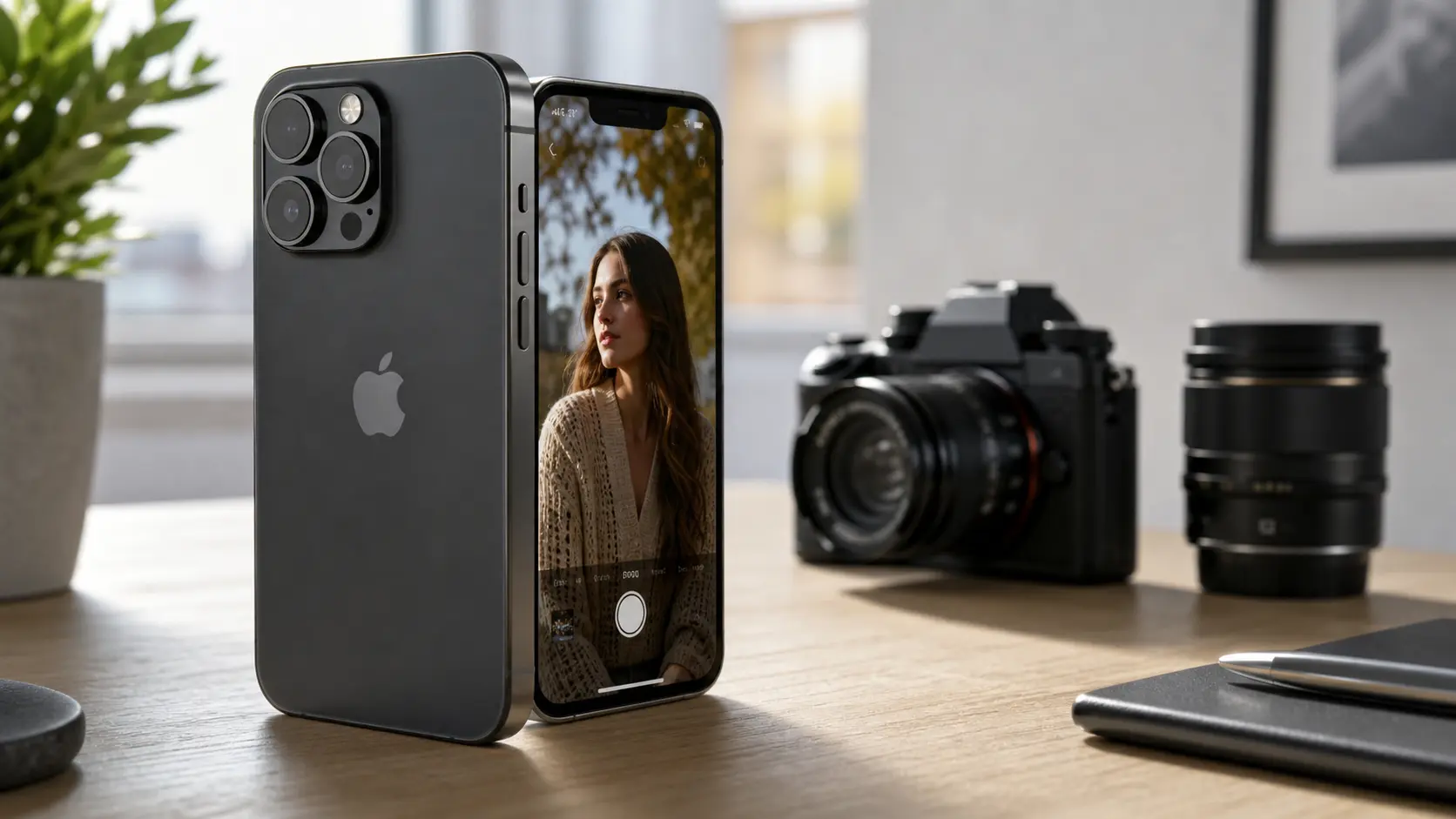
The headline upgrade is the new 48MP Fusion Main camera with variable aperture.
Previous Pro iPhones used fixed apertures. For example, Apple’s iPhone 17 Pro specification lists the 48MP Fusion Main camera at a fixed ƒ/1.78 aperture.
The iPhone 18 Pro changes that relationship. Its main camera can physically adjust its aperture using six laser-cut blades controlled by a new rotor mechanism.
| Camera feature | iPhone 17 Pro | iPhone 18 Pro |
|---|---|---|
| Main camera | 48MP Fusion Main | 48MP Fusion Main |
| Main aperture | ƒ/1.78 fixed | ƒ/1.48, ƒ/1.8, ƒ/2.8, ƒ/4.0 |
| Variable aperture | No | Yes |
| Manual aperture control | No | Yes |
| Low-light emphasis | Computational photography | Wider aperture plus computational photography |
The difference matters because aperture affects two major parts of photography: exposure and depth of field.
Photography guidance from Oklahoma State University explains that a lower f-number represents a wider opening, allowing more light to reach the sensor. A higher f-number represents a smaller opening and generally produces greater depth of field.
That principle is important because smartphone cameras traditionally have had little physical aperture control. Apple’s new system gives photographers another optical variable to work with.
Apple also provides Pro controls that let users manually adjust aperture, shutter speed, white balance, and view a histogram directly in the Camera app.
Apple’s official iPhone 18 Pro camera specifications confirm the four aperture settings and the new manual controls.
What Does ƒ/1.48 Actually Mean?
This is where the story becomes more interesting.
Many people see ƒ/1.48 and assume it simply means sharper photos. That is not how aperture works.
A wider aperture means a larger opening in the lens. That allows more light to reach the sensor. A narrower aperture reduces the opening and increases depth of field.
So the iPhone 18 Pro can use its aperture differently depending on the scene.
- ƒ/1.48: Maximum light and improved low-light capability.
- ƒ/1.8: A general-purpose balance between light and depth.
- ƒ/2.8: More depth of field across the scene.
- ƒ/4.0: Maximum depth of field among the available settings.
Apple says the ƒ/1.48 setting provides around 50 percent better low-light performance compared with the camera’s default configuration.
That claim comes from Apple, so it should not be treated as an independent laboratory result yet. Independent testing will be needed to determine how much improvement users see across different scenes.
The basic photography principle, however, is well established. Nikon and Adobe both explain that wider apertures allow more light and can create shallower depth of field.
Adobe’s explanation of aperture and depth of field provides a useful reference if you want to understand why the setting changes the look of an image.
Why Variable Aperture Matters for Everyday Photos
You do not need to be a photographer to benefit from variable aperture.
Imagine taking a family photograph indoors. The room is dim, people are moving, and you want to avoid a noisy image.
The iPhone 18 Pro can open its main camera to ƒ/1.48 and let more light reach the sensor. That gives the camera another way to manage exposure before relying entirely on slower shutter speeds or aggressive computational processing.
Now consider a group photograph outside.
A wider aperture can make the background softer, but it can also reduce the amount of the scene that appears sharply focused. For a large group, that may not be ideal.
Switching toward ƒ/4 can increase depth of field, helping more people across different distances remain sharp.
This is one of the most practical reasons the feature matters.
Instead of treating the camera’s aperture as a fixed physical characteristic, Apple is turning it into another variable that the camera system can manage.
Variable Aperture Could Be More Important for Video
Still photography gets most of the attention, but video may be where variable aperture becomes especially useful.
Video shooters often need to balance shutter speed, ISO, aperture, and available light. A fixed aperture limits one of those variables.
With the iPhone 18 Pro, users can manually adjust aperture alongside shutter speed and white balance.
That creates more flexibility when moving between different lighting conditions.
For example, imagine recording someone walking from a shaded street into bright sunlight. With a fixed aperture, the camera has fewer physical options for controlling exposure.
With a variable aperture, the camera can change the lens opening as lighting changes.
Apple’s technical specifications also list Dolby Vision recording up to 4K at 120 frames per second, ProRes RAW support, Apple Log 2, genlock, and improved low-light video.
Those features position the iPhone 18 Pro as more than a casual phone camera. Apple is clearly targeting creators who want a compact device that can fit into a more serious production workflow.
The Bigger Picture: Apple Is Blending Optics With Computation
The most important part of this announcement is not simply that the aperture moves.
It is that Apple is combining mechanical optics with computational photography.
Smartphone photography has largely progressed through software. Phones use multi-frame processing, HDR, noise reduction, scene recognition, sharpening, and machine learning to produce usable images from tiny camera modules.
The iPhone 18 Pro adds more physical control to that system.
That is significant because software cannot completely replace every optical behavior.
Computational photography can simulate background blur. It can combine multiple exposures. It can recover detail from several frames.
But a physical aperture changes the amount of light entering the lens before the image reaches the sensor.
That gives Apple’s image-processing pipeline different source data to work with.
DXOMARK’s explanation of variable aperture technology also notes that aperture affects both brightness and depth of field. The organization says variable aperture can provide additional flexibility as smartphone sensors become larger and camera hardware becomes more sophisticated.
DXOMARK’s variable-aperture analysis provides useful technical context for why smartphone manufacturers are returning to this hardware approach.
What Most People Miss About the iPhone 18 Pro Aperture
The biggest misunderstanding is that variable aperture automatically creates DSLR-style background blur.
It does not.
Smartphone cameras still use relatively small sensors and short physical focal lengths. Those characteristics make it difficult to reproduce the same natural depth-of-field behavior you get from a larger interchangeable-lens camera.
Stanford’s photography material has long highlighted this limitation with phone cameras: their small physical optics naturally produce substantial depth of field.
That means moving from ƒ/1.48 to ƒ/4 will not suddenly transform an iPhone photograph into a full-frame mirrorless-camera photograph.
There is another important limitation.
Apple’s variable aperture is available on the main camera. The Ultra Wide and Telephoto cameras retain their own fixed apertures.
So this is not a four-aperture control system across the entire camera array.
It is a significant upgrade to the primary camera.
iPhone 18 Pro vs. iPhone 17 Pro: The Camera Difference
The previous generation already offered three 48MP rear cameras, including a 48MP main camera, 48MP Ultra Wide, and 48MP Telephoto.
Apple’s iPhone 17 Pro therefore established a strong hardware foundation.
The iPhone 18 Pro does something different rather than simply increasing megapixel counts.
| Feature | iPhone 17 Pro | iPhone 18 Pro |
|---|---|---|
| Main camera | 48MP | 48MP |
| Main aperture | ƒ/1.78 fixed | ƒ/1.48–ƒ/4 variable |
| Ultra Wide | 48MP | 48MP |
| Telephoto | 48MP | 48MP |
| Manual aperture | No | Yes |
| Pro camera controls | More limited | Aperture, shutter, white balance, histogram |
This makes the upgrade easier to understand.
Apple is not selling the iPhone 18 Pro primarily on megapixel numbers. It is selling greater control over the capture process.
That distinction will matter most to photographers, videographers, and creators.
For someone who simply points the phone and presses the shutter, the difference may be less dramatic.
Real-World Impact: Where You Could Notice It
1. Indoor photography
The ƒ/1.48 setting should be useful in restaurants, homes, events, and other dim environments.
More light gives the camera more flexibility when producing an exposure. Apple specifically positions the wider aperture as a low-light improvement.
2. Group photography
A narrower aperture can increase depth of field, which can be useful when several people stand at different distances from the camera.
This could reduce situations where one person is sharp while someone slightly behind them becomes noticeably softer.
3. Portraits
A wider aperture can help create more optical separation between a subject and background.
However, users should not expect the same effect as a full-frame camera with a fast portrait lens. Smartphone optics remain physically much smaller.
4. Bright outdoor video
Manual aperture control gives video creators another way to balance exposure without changing every other camera setting.
That can be especially useful when a creator wants consistent motion characteristics while moving through different lighting conditions.
5. Creative photography
The ƒ/4 setting can be useful when you want more of the scene to remain sharp.
Apple even highlights starburst-style effects as one creative use of the narrower aperture.
Expert Take: Is This Really a Big Camera Upgrade?
Independent analysis suggests the answer is more nuanced than Apple’s marketing message.
TechRadar’s photographer-focused analysis describes the mechanical aperture as a major addition because it provides genuine control over exposure and depth of field rather than relying solely on software.
At the same time, the publication notes that smartphone sensor size limits how dramatically aperture changes can affect depth of field.
The Verge reaches a similar conclusion from a different angle. Its analysis argues that the wider ƒ/1.48 setting may ultimately have a larger everyday impact than the ability to stop down to ƒ/4.
That distinction is worth remembering.
The variable aperture is technically impressive. But the most visible improvement for many owners could simply come from the camera’s wider maximum aperture and associated low-light improvements.
What Happens Next?
The next stage will be independent testing.
Apple has provided impressive specifications, but specifications do not tell the whole story of a smartphone camera.
Reviewers will need to compare the iPhone 18 Pro against the iPhone 17 Pro in controlled conditions.
Useful tests should include indoor noise, shutter speeds, moving subjects, group portraits, highlight retention, skin tones, video exposure transitions, and real-world battery consumption during camera use.
The most revealing tests will probably compare identical scenes at ƒ/1.48, ƒ/1.8, ƒ/2.8, and ƒ/4.
That will show how much the aperture changes the image rather than simply repeating Apple’s specifications.
It will also reveal whether users can see meaningful differences on a phone screen rather than only at extreme magnification.
Should You Upgrade for the Variable Aperture?
If you own an iPhone 17 Pro, the camera upgrade alone may not justify replacing your phone immediately.
The iPhone 17 Pro already has a highly capable 48MP camera system and strong computational photography.
The case becomes stronger if you shoot a lot of low-light photography, video, portraits, or manually controlled footage.
For owners of substantially older iPhones, however, the difference could be much more noticeable because the upgrade combines camera hardware, processing, video features, and newer software.
Apple starts the iPhone 18 Pro at $1,199 in the United States, with 256GB of storage.
That price places the phone firmly in the premium flagship category. Buyers should therefore consider whether they will actually use the new controls before paying for the upgrade.
Our existing guide to the best smartphones for photography is also useful for comparing the broader mobile-camera market.
Pros and Cons of the Variable-Aperture Camera
| Pros | Cons |
|---|---|
| More physical control over exposure | Only available on the main camera |
| ƒ/1.48 maximum aperture | Smartphone sensor limits depth-of-field effects |
| Four aperture settings | Full benefits require understanding photography controls |
| Manual aperture control | Independent testing is still needed |
| Useful for video creators | Premium $1,199 starting price |
Myth vs. Fact
| Myth | Fact |
|---|---|
| Variable aperture makes every photo sharper. | Aperture primarily changes light intake and depth of field. |
| ƒ/4 is a wider aperture than ƒ/1.48. | ƒ/1.48 is wider. Lower f-numbers mean larger openings. |
| It replaces a professional camera. | It adds camera-like control but does not remove smartphone hardware limits. |
| Every iPhone 18 camera has variable aperture. | The variable aperture is on the 48MP Fusion Main camera. |
| Computational photography is no longer important. | Apple still relies heavily on computational imaging and image processing. |
What iPhone 18 Pro Buyers Should Do First
- Learn the four aperture settings. Start with ƒ/1.48, ƒ/1.8, ƒ/2.8, and ƒ/4.
- Compare the same scene. Photograph a subject at every setting and examine the background and exposure.
- Try indoor photography. This is where the wider aperture should have practical value.
- Experiment with video. Combine aperture changes with shutter-speed control.
- Do not judge the camera by megapixels alone. Sensor behavior, optics, processing, exposure, and stabilization all matter.
If you are new to camera controls, our broader camera buying guide provides useful background on how dedicated camera systems approach photography.
The Bigger Picture for Smartphone Photography
The iPhone 18 Pro marks an interesting point in smartphone-camera development.
For years, the industry pushed computational photography as the answer to small sensors and limited optics.
Now hardware innovation is returning to the conversation.
Variable aperture, larger sensors, periscope lenses, advanced stabilization, faster readout, and dedicated imaging processors are all ways manufacturers can improve the information reaching the computational pipeline.
The direction is important.
The future of smartphone photography probably will not be hardware versus software. It will be hardware designed specifically to give software better information to process.
That is why the iPhone 18 Pro’s aperture mechanism could matter beyond this generation.
If users respond positively, other flagship manufacturers will have another reason to invest in more sophisticated optical systems.
Final Verdict
The iPhone 18 Pro’s variable aperture is one of Apple’s most meaningful camera changes in years because it alters the physical capture process.
The new 48MP Fusion Main camera can move between ƒ/1.48 and ƒ/4.0, giving the phone more flexibility with light and depth of field.
For everyday users, the biggest potential benefits are improved low-light flexibility, better control in group scenes, and more creative options.
For photographers and video creators, the addition of manual aperture control is arguably even more significant.
But expectations need to stay realistic. A smartphone remains a smartphone, and its sensor and optical dimensions still limit how dramatically aperture can reshape an image.
The real test begins when independent reviewers put the iPhone 18 Pro through controlled camera tests.
If Apple’s hardware and computational photography work as intended, the most interesting change may not be that the iPhone has learned a traditional camera trick.
It may be that Apple has found a better way to make traditional optics and computational photography work together.
Frequently Asked Questions
Does the iPhone 18 Pro have a variable aperture?
Yes. The iPhone 18 Pro has a variable aperture on its 48MP Fusion Main camera. It offers four settings: ƒ/1.48, ƒ/1.8, ƒ/2.8, and ƒ/4.0. Apple’s official iPhone 18 Pro page confirms the aperture range and camera controls.
What does variable aperture do on the iPhone 18 Pro?
It physically changes the size of the lens opening. A wider aperture lets in more light, while a narrower aperture increases depth of field. Nikon’s aperture guide explains the relationship between f-stops, exposure, and depth of field.
Is ƒ/1.48 better than ƒ/4?
Neither is universally better. ƒ/1.48 is useful when you want more light and a shallower depth of field, while ƒ/4 can keep more of a scene in focus. The best setting depends on the subject and lighting.
Will the iPhone 18 Pro take better low-light photos?
Apple says the ƒ/1.48 aperture provides around 50 percent better low-light performance. That is an Apple claim and should be confirmed through independent testing. Apple’s announcement provides the company’s stated performance details.
Can you manually change the aperture on the iPhone 18 Pro?
Yes. Apple’s new Pro controls allow users to manually adjust aperture, shutter speed, and white balance. A histogram is also available for exposure monitoring. Apple’s technical specifications list these controls.
Does variable aperture create DSLR-style background blur?
Not to the same extent as a large-sensor camera. Smartphone sensors and physical focal lengths limit natural depth-of-field effects. The aperture adds useful control, but it does not eliminate those optical limitations.
Does every iPhone 18 Pro camera have variable aperture?
No. The variable aperture applies to the 48MP Fusion Main camera. The 48MP Fusion Ultra Wide and 48MP Fusion Telephoto use fixed apertures.
Is the iPhone 18 Pro better for video because of variable aperture?
It could be. Variable aperture gives video creators another way to control exposure, while Apple’s Pro controls also provide manual shutter-speed and white-balance adjustments. Apple additionally supports advanced formats and features such as ProRes RAW and Apple Log 2.
How much does the iPhone 18 Pro cost?
The iPhone 18 Pro starts at $1,199 in the United States with 256GB of storage. Apple also offers 512GB, 1TB, and 2TB configurations. Apple’s announcement lists U.S. pricing and storage options.
When can I buy the iPhone 18 Pro?
Apple says U.S. preorders begin September 12, 2026, at 5 a.m. Pacific Time. The iPhone 18 Pro becomes available on September 18.
Should iPhone 17 Pro owners upgrade?
Not necessarily. The iPhone 17 Pro already has a capable 48MP camera system. The upgrade makes more sense for users who value low-light photography, manual controls, video production, or the new variable-aperture system.
Is the iPhone 18 Pro variable aperture a major camera innovation?
It is a meaningful hardware change, but its practical impact needs independent testing. The feature gives Apple a new optical control that previous iPhones lacked, while smartphone sensor size still limits some benefits.
Published: September 11, 2026
Updated: December 11, 2026
