


Key Takeaways
-
Fairphone has announced its first US carrier partnership with Boost Mobile, allowing customers to combine its repairable Gen. 6+ smartphone purchase with Boost wireless service.
-
The $649.99 smartphone has 12 replaceable components, a removable battery and security support through June 2033.
-
Buyers should check compatibility carefully: Boost is supported through AT&T’s network, but Verizon is not supported, and some carrier features have limitations.
What happened?
Fairphone has announced its first US carrier partnership, choosing Boost Mobile as its initial wireless-service partner in the American market.
The announcement, reported by WIRED on November 12, 2026, represents an important distribution development for a manufacturer that has traditionally operated outside the purchasing channels most American smartphone consumers use.
Fairphone is known for smartphones built around repairability, replaceable components and longer software support.
However, a good product does not automatically guarantee commercial success.
American consumers frequently purchase smartphones through carrier arrangements. They are accustomed to comparing devices, selecting wireless plans and activating their numbers through familiar mobile-service providers.
Fairphone’s new relationship with Boost addresses part of this challenge.
The partnership connects the company’s Fairphone (Gen. 6+) with Boost Mobile’s wireless service, making it easier for eligible customers to choose the repairable smartphone and activate a compatible plan.
There is an important distinction, though.
Boost Mobile is not yet selling the Fairphone directly through its own retail stores or online storefront.
According to WIRED, consumers still purchase the smartphone from Fairphone or Amazon and activate Boost service separately. Fairphone’s US configuration process now includes Boost plan options.
The phone’s published US price remains $649.99.
This is therefore a carrier-service partnership rather than a conventional carrier handset launch.
How the Boost Mobile partnership works
For consumers, the arrangement is relatively straightforward.
Instead of purchasing a smartphone and independently researching every compatible mobile-service provider, customers can select Boost Mobile during the Fairphone configuration process.
Fairphone’s US configuration page identifies Boost as a supported option.
The company also explains that customers can keep their existing phone number or obtain a new one through a Boost subscription.
Customers who prefer to arrange connectivity later can also choose to use their own SIM or activate Boost after receiving the device.
Fairphone’s official configuration page provides the available carrier options and compatibility information.
What customers should understand
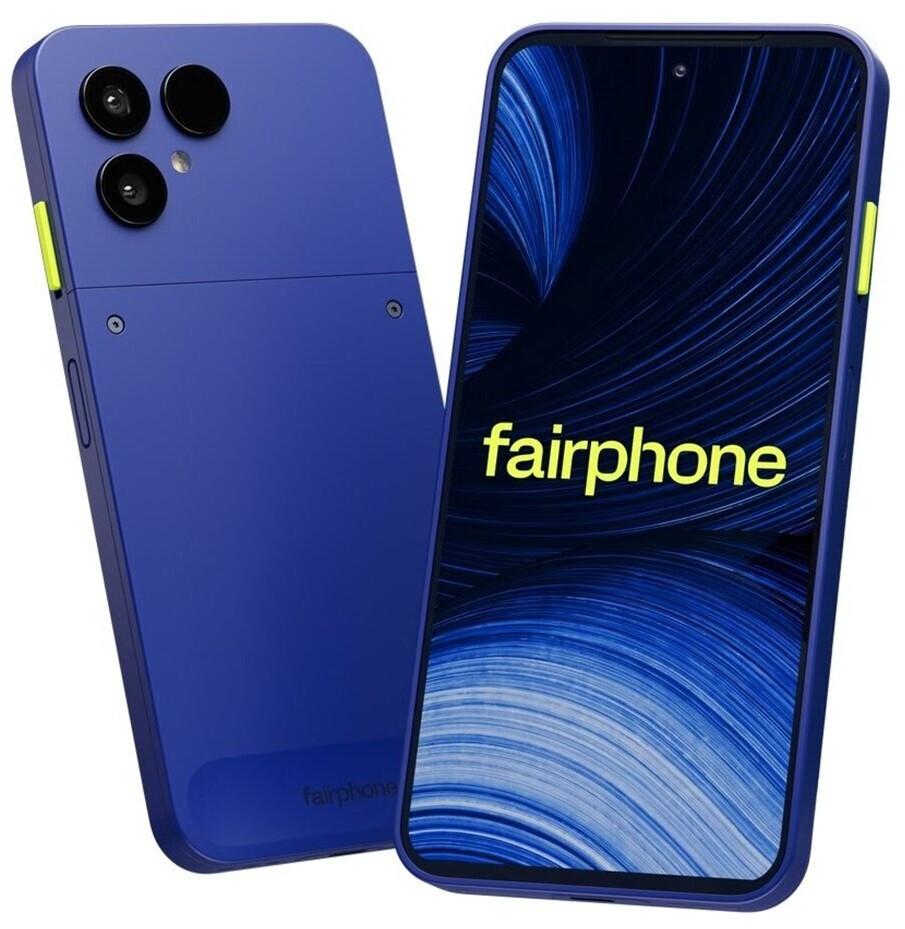
The partnership does not mean that Boost is offering a discounted Fairphone or financing the handset.
The published device price remains $649.99.
Customers should therefore distinguish between:
-
The cost of purchasing the smartphone.
-
The recurring cost of a Boost wireless plan.
-
Any applicable taxes, shipping or optional accessories.
-
Potential costs associated with changing an existing wireless service.
Fairphone’s configuration page links to Boost’s plans, but the partnership announcement does not establish a special discounted monthly device payment.
This distinction matters because consumers sometimes interpret a carrier partnership as an announcement that a phone will become available with the same financing and trade-in arrangements as popular iPhone and Galaxy models.
That is not what has been established here.
Is the Fairphone available in Boost stores?
Not according to the November 12 reporting.
WIRED explicitly states that the phone cannot yet be purchased directly through Boost’s online storefront or physical stores.
The purchasing process remains centered on Fairphone’s own sales channel and Amazon.
That limitation is important.
Many consumers prefer seeing a smartphone in person, checking its dimensions and testing its screen before making a purchase.
A relationship that supports activation but does not provide physical retail distribution only partially addresses that challenge.
There is still room for Fairphone and Boost to develop the arrangement further.
Fairphone chief commercial officer Rutger Sneep described the partnership as the first phase of a longer-term collaboration and indicated that further joint go-to-market developments could follow.
However, no additional retail rollout should be treated as confirmed until the companies announce it.
Why this matters to US smartphone buyers
The American smartphone market has a distribution problem for smaller manufacturers.
Apple and Samsung have established relationships with retailers and wireless providers. Google has also developed a recognizable Pixel distribution ecosystem.
A smaller manufacturer must work harder to reach consumers who do not routinely research unfamiliar smartphone brands.
Fairphone has a different challenge.
Its primary selling proposition is not simply a faster processor, a better camera or a brighter display.
It is the ability to keep a smartphone functioning for longer by replacing individual components instead of immediately purchasing another handset.
That is a different way of thinking about smartphone ownership.
The importance of familiar purchasing channels
Consumers are often more comfortable purchasing devices from companies they already know.
A Boost customer, for example, may already understand how the provider’s plans work and how to activate a device.
Allowing that customer to choose a Fairphone through an integrated configuration process reduces some of the uncertainty associated with an unfamiliar manufacturer.
It also makes Fairphone more visible to people who might otherwise never encounter the brand.
This is commercially significant because product awareness is only one part of the purchasing decision.
Customers also need confidence in:
-
Network compatibility.
-
Warranty coverage.
-
Customer support.
-
Repair arrangements.
-
Software updates.
-
Replacement-part availability.
The Boost partnership improves the service-selection process, but it does not automatically solve every concern.
Repairability becomes a stronger selling point
Most smartphone manufacturers prioritize slim designs, sealed construction and increasingly complex internal assemblies.
These decisions can improve water resistance, structural rigidity and product appearance.
However, they can also make certain repairs more difficult.
Battery replacement is a good example.
As lithium-ion batteries age, their ability to retain charge gradually declines. A phone can remain perfectly functional while its battery becomes inconvenient.
Some consumers replace the entire smartphone because repairing the battery is too expensive or difficult.
Fairphone takes a different approach.
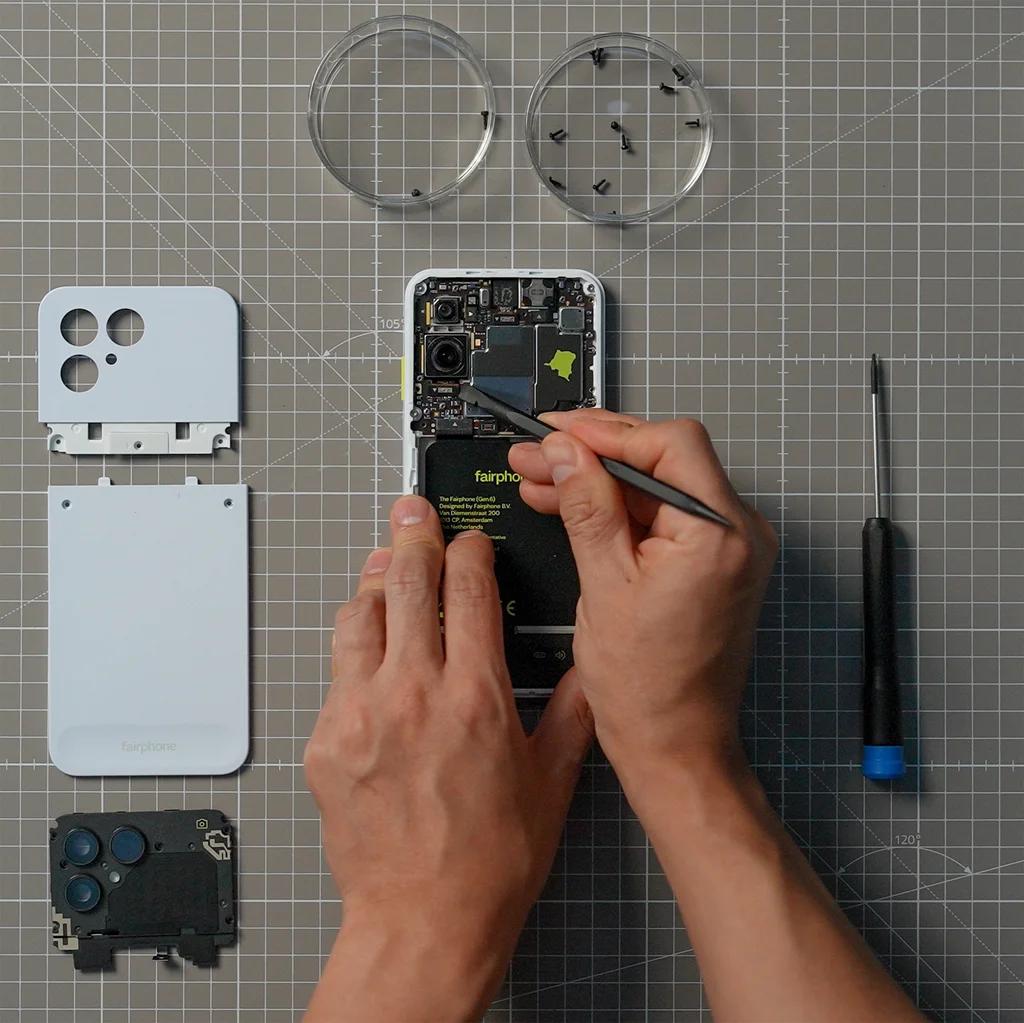
Its Gen. 6+ allows customers to replace the battery, charging port, display and several other components using a relatively simple screwdriver-based repair process.
This is particularly relevant to people who want to keep their smartphones for several years.
Instead of treating every hardware failure as a reason to upgrade, owners have more opportunities to repair the device.
TechOzea has previously examined the financial pressures facing the smartphone market in its analysis of global smartphone shipment declines and rising memory costs.
A smartphone that remains useful longer can help consumers avoid unnecessary replacement purchases, regardless of whether new-phone prices rise.
What makes the Fairphone Gen. 6+ different?
The Fairphone (Gen. 6+) is designed around longevity and repairability.
It is not a flagship smartphone.
Its specifications place it in the midrange category, but its modular construction gives it a different ownership proposition.
Processor and performance
The smartphone uses Qualcomm’s Snapdragon 7s Gen 4 processor.
It comes with 12GB of RAM and 256GB of internal storage.
This configuration should be suitable for everyday activities such as:
-
Web browsing.
-
Messaging.
-
Video streaming.
-
Social media.
-
Navigation.
-
Video calls.
-
Everyday photography.
-
General multitasking.
The processor is not intended to compete with the highest-performing flagship smartphone chipsets.
The Guardian’s independent review described the processor as a modest improvement over the previous generation and found that the phone handled normal tasks smoothly.
That is a more useful description than assuming that a repairable phone automatically offers flagship-level performance.
Display
The phone has a 6.31-inch LTPO AMOLED display.
Its resolution is 1116 × 2484 pixels, with a 431-pixel-per-inch density.
The display supports adaptive refresh rates between 10Hz and 120Hz.
This means it can adjust its refresh rate depending on the displayed content and usage.
For everyday users, this should provide a responsive experience when scrolling, reading and navigating applications.
Fairphone also specifies Corning Gorilla Glass 7i protection.
These are manufacturer specifications rather than independent laboratory measurements.
Camera system
The rear camera system includes:
-
50MP main camera.
-
13MP ultra-wide camera.
-
Optical image stabilization on the main camera.
The front camera is 32MP.
The main camera supports 4K video recording at 30 frames per second.
These specifications are adequate for many everyday photography requirements.
However, megapixel counts alone do not determine camera quality.
Image processing, sensor performance, autofocus, stabilization and low-light processing are equally important.
The Guardian’s testing found that the camera system was capable but not among the best available at its price.
That is a meaningful trade-off.
A buyer who prioritizes photography above everything else may find better alternatives from established flagship and upper-midrange smartphone manufacturers.
Battery and charging
The Fairphone Gen. 6+ includes a removable 4,415mAh lithium-ion battery.
It supports wired charging at up to 30W peak power.
Wireless charging is not supported.
Fairphone advertises up to two days of battery life, but that should be treated as a manufacturer estimate rather than a guarantee.
In the Guardian’s independent testing, the handset lasted approximately a day and a half under its stated usage conditions.
The practical lesson is that consumers should distinguish advertised battery endurance from real-world results.
The removable battery is arguably more important than the advertised runtime.
When the battery eventually loses capacity, owners have the option of replacing it without purchasing an entirely new smartphone.
Repairability and replacement costs
Repairability is the main reason this smartphone stands apart from many competing Android devices.
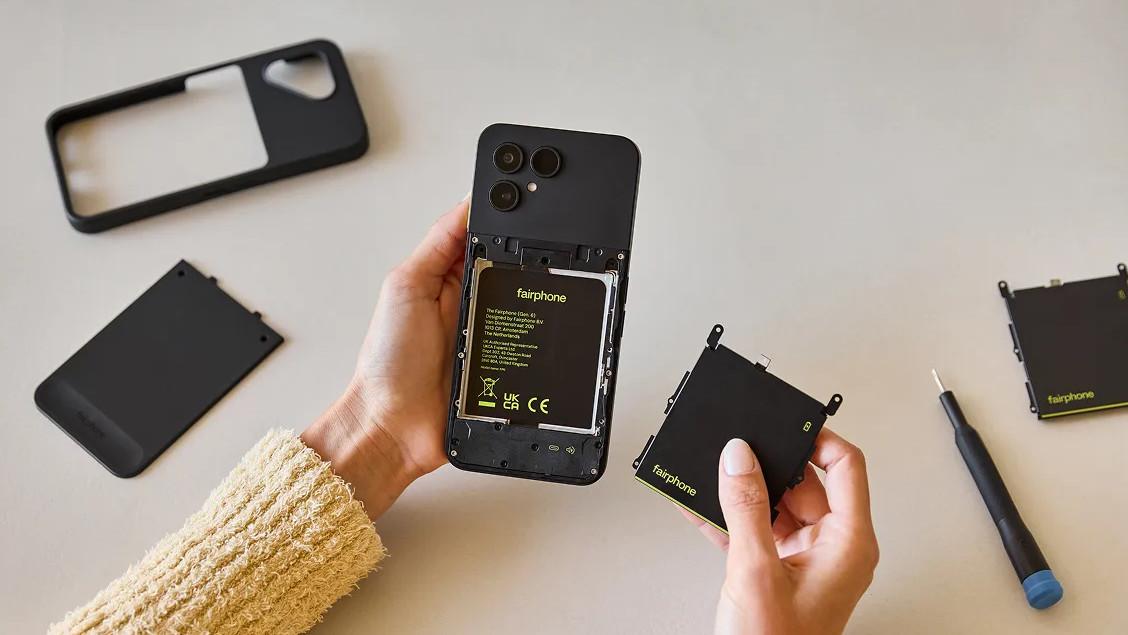
Fairphone provides 12 user-replaceable components.
These include:
-
Battery.
-
Display.
-
USB-C charging port.
-
Rear camera modules.
-
Front camera.
-
Back covers.
-
Other replaceable modules.
The company includes a T5 Torx screwdriver with the smartphone.
This reduces the number of specialist tools needed for common repairs.
Fairphone says that several components, including the battery, display and USB-C port, can be replaced in under five minutes.
That is a manufacturer estimate for the relevant replacement process, not a guarantee that every repair will take five minutes.
Some components require professional service.
How much do replacement parts cost?
The company’s US support documentation provides estimated parts and labor prices.
| Part | Estimated component price |
|---|---|
| Battery | $39.99 |
| Display | $89.99 |
| USB-C port | $19.99 |
| Front camera | $34.99 |
| Rear camera modules | $39.99–$69.99 |
These are component prices, not necessarily the complete cost of a repair.
If a customer chooses professional service, additional labor may apply.
Fairphone lists estimated intermediate repair labor between $40.40 and $100, depending on the work required.
Shipping and sales tax can also increase the final amount.
A practical ownership-cost example
Consider a hypothetical owner who purchases the smartphone for $649.99.
Several years later, the battery loses enough capacity that replacement becomes worthwhile.
The owner purchases a replacement battery for $39.99.
The combined device and battery expenditure would be:
This does not include taxes or shipping.
Now consider a more extensive repair scenario involving a battery, display and charging port.
The three replacement components would cost approximately $149.97 before applicable additional charges.
This is an illustrative parts-cost calculation, not a prediction that every owner will need all three repairs.
The point is that modular construction gives consumers more choices.
A damaged display does not necessarily mean the motherboard, processor and other functioning components must be discarded.
Is repairability always cheaper?
No.
The purchase price still matters.
At $649.99, the Fairphone is not inexpensive.
A consumer could potentially purchase a discounted conventional Android phone for considerably less.
The repairability advantage becomes more meaningful when the owner actually uses it.
Someone who replaces smartphones every two years may never realize the financial benefits of a removable battery or modular display.
Someone who prefers keeping a phone for five or six years may find the arrangement more attractive.
The right comparison is therefore not simply the price of one smartphone against another.
It is the complete expected cost of ownership over the period the consumer intends to keep the device.
Software support and warranty
A repairable smartphone also needs long-term software support.
There is little value in replacing hardware components if the operating system eventually becomes unsupported.
Fairphone has made a substantial commitment here.
The Gen. 6+ launched with Android 16.
Its official software roadmap promises:
-
At least six Android version upgrades.
-
At least seven years of security updates.
-
Security support through June 2033.
-
Monthly security updates for approximately the first two years.
-
Bi-monthly security updates beginning June 2028 until the support period ends.
This is an important commitment for buyers planning to keep the phone for several years.
What does the five-year warranty actually cover?
This detail needs particular attention.
Fairphone advertises a five-year warranty, but the battery has a shorter coverage period.
For the US Gen. 6+:
| Component | Published warranty |
|---|---|
| Main device and components, excluding battery | 5 years |
| Battery | 3 years and 2 months |
The extended warranty combines the standard two-year warranty with an additional three years for the main device, excluding the battery.
The battery receives an additional 14 months after its standard two-year coverage.
Consumers should read the official Fairphone warranty documentation and preserve proof of purchase.
WIRED also reports that customers need to register within 90 days to obtain the full extended warranty.
Why this matters
Software support and hardware repairability complement each other.
A replaceable battery helps maintain physical usability.
Long-term security updates help maintain software usability.
Both are necessary if a smartphone is expected to remain useful beyond the conventional replacement cycle.
US carrier compatibility
The Fairphone Gen. 6+ does not support every US carrier.
This is one of the most important issues consumers should understand before purchasing.
Fairphone’s official compatibility documentation lists the following:
| Carrier | Compatibility |
|---|---|
| AT&T | Supported through BYOD |
| T-Mobile | Supported |
| Boost Mobile | Supported through AT&T |
| Mint Mobile | Supported |
| Metro by T-Mobile | Supported |
| Google Fi | Supported |
| Cricket Wireless | Partial support |
| Consumer Cellular | Partial support |
| Verizon | Not supported |
| Visible | Not supported |
Why Verizon is not supported
The Fairphone does not support LTE Band 13, which Fairphone identifies as Verizon’s primary coverage frequency.
Without this band, the company warns that users may experience incomplete coverage, limited data performance and dropped service.
Fairphone also warns that emergency 911 service cannot be guaranteed in locations where Verizon is the only available provider.
This should not be treated as a minor technical inconvenience.
Consumers who depend on Verizon or a Verizon-based MVNO should not purchase this phone expecting normal network functionality.
What about Boost Mobile?
Boost Mobile uses AT&T’s network for the Fairphone compatibility arrangement.
The company identifies Boost as supported through Bring Your Own Device activation.
However, some advanced carrier features are not guaranteed.
These include advanced carrier aggregation, Band 14 data lanes and Wi-Fi calling.
Fairphone also documents limitations for AT&T involving certain network bands, RCS and Wi-Fi calling.
T-Mobile customers have their own limitations, including the lack of guaranteed advanced carrier aggregation.
The company recommends confirming compatibility with the carrier before activating service.
This is especially important for consumers who live in rural areas or frequently travel between regions with different network coverage.
A smartphone’s advertised 5G capability does not guarantee access to every 5G feature offered by every US carrier.
TechOzea has previously discussed the importance of network compatibility in its coverage of the iPhone 18 Pro Max AT&T connectivity issue.
The same principle applies here: compatibility must be evaluated at the actual device and network level.
Where Fairphone still falls behind
The Fairphone Gen. 6+ has a compelling ownership proposition, but it is not the ideal smartphone for every consumer.
There are several compromises.
1. Midrange performance
The Snapdragon 7s Gen 4 is suitable for everyday tasks, but it is not a flagship processor.
Consumers who prioritize demanding mobile gaming, advanced video editing or sustained high-performance applications may prefer more powerful alternatives.
2. Camera performance
The camera hardware is capable, but independent testing indicates that image quality is not competitive with the best phones at this price.
If photography is your main reason for upgrading, compare camera samples before purchasing.
3. Water resistance
The phone has an IP55 rating.
That means it offers protection against dust ingress and water jets under specified test conditions.
It does not mean the smartphone is waterproof or suitable for full submersion.
Owners should still exercise caution around swimming pools, beaches and water-based activities.
4. Charging limitations
The smartphone supports wired charging but does not provide wireless charging.
Some consumers may consider this a disadvantage, particularly if they already use wireless charging stands.
5. Network restrictions
The absence of Verizon compatibility significantly reduces its suitability for some US consumers.
This is a major limitation compared with mainstream smartphones that support all three major national network operators.
6. Price
The $649.99 price is difficult to justify through hardware specifications alone.
The value comes from the repairable design, software-support commitment and long-term ownership proposition.
Consumers should decide whether those benefits are worth the additional upfront cost.
The Guardian’s independent assessment similarly concluded that the phone is better suited to consumers who prioritize repairability and sustainability than those seeking the strongest possible smartphone performance.
Who should consider buying it?
The Fairphone Gen. 6+ makes the most sense for a particular type of smartphone buyer.
Consumers who keep phones for several years
If you usually keep a smartphone until its battery becomes weak or a component fails, repairability could be valuable.
You have more options for extending the device’s useful life.
People who value repairability
Consumers who dislike replacing an entire device because of one damaged component may appreciate the modular design.
Environmentally conscious buyers
Fairphone reports that 51% of the phone’s weight consists of fair or recycled materials.
The company also publishes sustainability information and emphasizes longer product life.
These are manufacturer sustainability disclosures, not proof that every aspect of the product’s supply chain is impact-free.
Boost Mobile customers
Existing Boost subscribers who want a repairable Android smartphone now have a more direct activation route.
They should still confirm the specific features available in their area and plan.
Who should avoid it?
Consider another smartphone if you:
-
Depend on Verizon.
-
Want the best possible camera performance.
-
Need flagship gaming performance.
-
Expect wireless charging.
-
Prefer buying phones directly from carrier retail stores.
-
Want the lowest possible upfront purchase price.
A good smartphone purchase should reflect actual usage requirements, not simply an attractive sustainability message.
What happens next?
The November 12 announcement is an important first step, but the long-term impact remains uncertain.
There are several developments worth watching.
Wider US distribution
The next important milestone would be direct retail availability through Boost Mobile.
Selling the phone in carrier stores would make it easier for consumers to inspect the device and compare it with conventional Android alternatives.
Additional carrier partnerships
Fairphone may seek relationships with other wireless providers.
However, no additional carrier partnership should be assumed until officially announced.
Repair-service improvements
The company will need to maintain reliable replacement-part availability, repair documentation and customer support.
A modular design is only useful when the necessary parts remain accessible.
Long-term software delivery
The published June 2033 security-support commitment is an important selling point.
Consumers should monitor whether the company consistently delivers updates on its published schedule.
Independent long-term testing
More extensive US-based testing could establish how the device performs over time.
Battery degradation, display durability, repair frequency, camera reliability and replacement-part availability are particularly important measurements.
Frequently asked questions
Has Fairphone partnered with Boost Mobile?
Yes. Fairphone announced its first US carrier partnership with Boost Mobile on November 12, 2026. The arrangement allows customers to pair the Fairphone Gen. 6+ with Boost wireless service.
Can I buy the Fairphone Gen. 6+ directly from Boost Mobile?
Not according to the November 12 announcement. Customers purchase the handset through Fairphone or Amazon and activate Boost service separately.
How much does the Fairphone Gen. 6+ cost?
The published US price is $649.99 for the 12GB RAM and 256GB storage configuration. Taxes, shipping and accessories may increase the total cost.
Fairphone’s US storefront displayed an out-of-stock notice during this research, so consumers should confirm current inventory before ordering.
Does Fairphone work with Verizon?
No. The Fairphone Gen. 6+ is not certified for Verizon’s network. It lacks LTE Band 13, which Fairphone identifies as Verizon’s primary coverage frequency.
How many components can I replace myself?
Fairphone identifies 12 user-replaceable components. These include the battery, display, charging port, camera modules and back covers.
A T5 Torx screwdriver is included with the phone.
How long will Fairphone provide software updates?
Fairphone promises at least six Android version upgrades and at least seven years of security updates for the Gen. 6+. Security support is scheduled through June 2033.
Is the Fairphone Gen. 6+ waterproof?
No. It has an IP55 rating, providing dust protection and resistance to water jets under specified testing conditions. It is not designed for full submersion.
Is the Fairphone Gen. 6+ worth buying?
It can be a good choice for consumers who prioritize repairability, long-term software support and replaceable components. It is less suitable for people who prioritize flagship performance, the best camera or universal US carrier compatibility.
Conclusion
Fairphone’s first US carrier partnership is an important development for repairable smartphones.
The Boost Mobile relationship does not immediately transform Fairphone into a mainstream carrier-distributed manufacturer, but it gives the company a more familiar route into the US wireless ecosystem.
The Gen. 6+ offers something many conventional smartphones do not: 12 replaceable components, an accessible battery, published repair prices and a long software-support commitment.
However, it also has real limitations.
The $649.99 purchase price is substantial for a midrange smartphone, its camera and processor do not compete with the strongest flagship devices, and Verizon customers should look elsewhere.
The biggest question is whether American consumers will value repairability enough to choose a phone that prioritizes longevity over headline specifications.
That is what makes this partnership worth following.
If Fairphone can combine dependable carrier activation, reliable customer support, affordable replacement parts and consistent software updates, it could make repairable smartphones a more realistic option for everyday American buyers.
The partnership is a meaningful beginning. Its long-term success will depend on what Fairphone and Boost do next.
