


Key Takeaways
1. Apple is researching health AI rather than launching an AI doctor. The new study uses OpenEvidence technology to investigate how people understand, trust and interact with AI-generated health information.
2. Participation has strict requirements. Eligible US residents must be at least 21 and have an iPhone 15 Pro or later running iOS 26 or later. Sharing HealthKit information is optional.
3. Privacy and medical accuracy deserve careful attention. Apple says study data will not train AI models, but participants should examine the specific consent terms, understand data handling and never substitute AI answers for professional medical advice.
Introduction
Smartphones have become much more than communication devices.
People use their phones to track physical activity, monitor sleep, record heart rates, manage appointments, store medical documents and understand changes in their everyday health.
Artificial intelligence is creating another opportunity: helping people interpret that information through natural conversations.
Apple is now investigating how that experience should work.
On November 15, 2026, Apple announced the Apple Health AI Usage Study, a US research project conducted in collaboration with OpenEvidence. The company is inviting up to 200,000 eligible participants to use a dedicated iPhone application and interact with conversational AI for everyday health questions.
The research focuses on several important questions. Do people trust AI-generated health information? Can they understand the answers? Are the answers useful? Can personal health information make the experience more relevant?
These questions matter because health information is different from ordinary internet searches.
A wrong restaurant recommendation might waste an afternoon. A misleading explanation of a medical condition or medication could influence an important personal decision.
Apple acknowledges this difference. Its announcement specifically recognizes that consumer health technologies powered by large language models can sometimes produce incomplete or unclear answers.
The company says the study will help it understand how to design more responsible health AI experiences.
However, consumers should understand one important distinction: this is a research study, not the launch of an Apple AI healthcare service.
The application is available to eligible iPhone users, but Apple has not announced a commercial health chatbot, a new Siri medical feature or a replacement for professional healthcare.
Here’s what the announcement means, how the technology works and what consumers should consider before participating.
What Apple announced
Apple introduced the Apple Health AI Usage Study in the United States on November 15, 2026.
The project combines an Apple-designed research experience with technology from OpenEvidence, a clinical AI platform.
According to Apple’s announcement, the research aims to investigate:
-
How people interact with conversational health AI.
-
What makes people trust or distrust AI-generated information.
-
Whether users understand medical explanations.
-
How people evaluate the quality of AI responses.
-
Whether personalized information makes answers more relevant.
-
Whether AI can help patients prepare for medical appointments.
Participants will be able to ask everyday health questions and receive responses containing links to peer-reviewed clinical sources.
Apple says OpenEvidence draws on established medical publications, including The New England Journal of Medicine, the Journal of the American Medical Association and Nature.
Participants can also choose to share selected HealthKit information, including resting heart rate, physical activity, sleep information and laboratory results.
The intention is to investigate whether personal health context improves the relevance and comprehension of AI responses.
Apple’s vice president of Health and Fitness, Sumbul Desai, M.D., described the project as an opportunity to understand how people engage with and evaluate health AI in everyday life.
The announcement also included comments from Robert M. Wachter, M.D., professor and chair of medicine at the University of California, San Francisco.
He emphasized the potential value of connecting the information patients receive with the tools clinicians use.
The complete announcement is available in Apple’s official newsroom release.
Why the announcement is different from a normal product launch
Apple is not introducing a new iPhone or announcing another Apple Intelligence feature.
Instead, it is opening a research environment where eligible consumers can interact with AI and provide feedback.
That distinction matters.
A commercial product launch normally focuses on availability, pricing, features and product benefits.
A research project focuses on collecting information, evaluating behavior and understanding whether a particular technology performs as intended.
Apple’s approach could eventually influence future products, but that outcome has not been promised.
For now, the most important development is the opportunity to study real-world interactions between consumers and conversational health AI.
What the study actually does
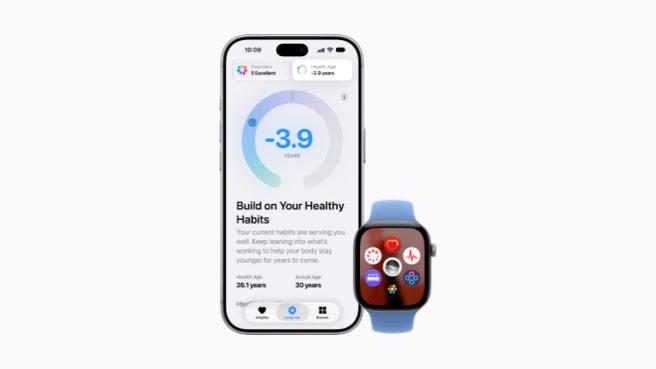
The Apple Health AI Usage Study provides access to a dedicated application called Apple Health AI Study App.
The application is designed to let participants ask questions about health and receive responses personalized using information they choose to share.
According to the App Store description, participants can use it to:
-
Understand symptoms or health conditions.
-
Put personal Health information into context.
-
Prepare for medical appointments.
-
Build personalized exercise or meal plans.
The application also lets participants evaluate their experience.
This is important because a health chatbot should not be judged only by whether its responses sound convincing.
A useful evaluation should consider whether the information is understandable, relevant and supported by appropriate evidence.
For example, imagine someone has noticed changes in their sleeping habits.
They might ask a general question about sleep patterns and review an AI explanation that includes relevant medical sources.
If they choose to share relevant HealthKit information, the system may have additional context for its response.
The participant can then assess whether the explanation is understandable and useful.
However, this does not mean the AI can determine the cause of a medical problem.
Apple explicitly states that neither the application nor the research study provides medical advice, diagnosis or treatment.
Users should consult qualified healthcare professionals when they have health concerns.
The official App Store listing provides the application’s description and compatibility requirements.
Who can participate?
Not every iPhone owner qualifies.
Apple has established specific requirements for people who want to join the study.
| Requirement | Eligibility |
|---|---|
| Location | United States |
| Minimum age | 21 years |
| Smartphone | Apple Intelligence-enabled iPhone |
| Minimum model | iPhone 15 Pro or later |
| Software | iOS 26 or later |
| Application | Apple Health AI Study App |
| Cost | Free download |
| HealthKit sharing | Optional |
There is an important distinction between the application’s App Store age rating and the study’s participation requirement.
The App Store lists an 18+ age rating, but Apple requires study participants to be at least 21.
The App Store also lists the application as iPhone-only and identifies English as its supported language.
These details are important for consumers who might otherwise assume that any modern iPhone can participate.
Why does Apple require an iPhone 15 Pro or later?
Apple’s announcement specifies an Apple Intelligence-enabled iPhone, beginning with the iPhone 15 Pro.
This is a hardware eligibility requirement.
However, it should not be confused with the technology that actually generates the application’s responses.
The Verge reports that the study application does not use Apple Intelligence and is not integrated with Siri.
Instead, it uses OpenEvidence technology through an Apple-designed research experience.
This is one of the most interesting details of the announcement.
Apple is requiring hardware capable of supporting Apple Intelligence, but the research application’s conversational AI is not simply an extension of Apple’s existing assistant.
The hardware requirement does not establish that the application uses Apple’s own generative AI models.
How the technology works
To understand the study, consumers need to understand three important technologies:
-
Large language models.
-
Clinical information retrieval.
-
Personal health data integration.
Large language models
Large language models, commonly called LLMs, are AI systems designed to understand and generate natural language.
Instead of requiring users to search through multiple websites and technical documents, a conversational system allows people to ask questions in ordinary language.
For example, someone could ask:
“What information should I discuss with my doctor about my sleep quality?”
An LLM can interpret the question and generate an explanation.
The advantage is convenience.
However, an AI model can produce a fluent answer without necessarily providing a correct or complete explanation.
This is particularly important in healthcare, where context and individual circumstances can change the meaning of information.
Clinical information retrieval
Apple says the study uses OpenEvidence technology that generates responses using medical information from established publications and clinical sources.
The application also provides linked clinical citations.
This is an important design approach.
Instead of presenting an answer without supporting information, a system can provide references that users can inspect.
However, citations should not automatically be interpreted as proof that the response is correct.
A citation might be relevant to a general medical subject without directly supporting every statement in an AI-generated answer.
The quality of the explanation still depends on how accurately the AI retrieves, interprets and communicates the underlying evidence.
Personal health data integration
The third component is particularly important for iPhone owners.
Apple HealthKit provides a framework through which applications can request access to authorized health and fitness information.
For this study, Apple says participants can choose whether to share selected information, including:
-
Resting heart rate.
-
Physical activity.
-
Sleep information.
-
Laboratory results.
The objective is to investigate whether adding personal context makes AI responses more relevant.
Consider two people asking the same general health question.
One person receives an explanation based only on the question.
Another chooses to share relevant health information that provides additional context.
The study can investigate whether the second experience is easier to understand or more useful.
That does not establish that personalization makes an answer medically correct.
Personal information can improve relevance while still leaving important clinical details unknown.
This is why professional interpretation remains necessary.
Why Apple is studying health AI now
The announcement comes at a time when consumers are increasingly using AI systems for personal health questions.
This is not simply a future possibility.
KFF published a national survey on March 25, 2026, showing that 32% of US adults had used AI chatbots for health information during the previous year.
The research also found that 41% of people who used AI for health information had uploaded personal medical information to an AI tool.
Meanwhile, 77% of adults expressed concern about the privacy of personal medical information supplied to AI systems.
These findings reveal a difficult balance.
Consumers want convenient information, but they are also concerned about how sensitive data is handled.
Some people turn to AI because they want quick answers. Others use it to understand information before visiting a healthcare professional.
Some also face difficulties accessing or affording healthcare.
The KFF findings suggest that consumer health AI is already an important part of the broader digital information environment.
Apple’s research therefore addresses an existing consumer behavior rather than a hypothetical one.
The opportunity for Apple
Apple already operates within a connected hardware and software ecosystem.
The iPhone provides the main interface, while Apple Watch and compatible third-party devices can contribute health and fitness information.
Apple Health provides a place to organize supported information.
HealthKit allows compatible applications to request permission to access selected information.
Conversational AI could provide another way to help users understand that information.
For Apple, the potential opportunity is not simply creating another chatbot.
It is understanding whether a conversational interface can make personal health information easier to interpret.
This also fits into Apple’s wider ecosystem strategy.
TechOzea previously examined how Apple is expanding the iPhone’s role in connected home management in its analysis of Apple’s new Home Collection.
The health AI research explores another possible extension of the same central idea: using the smartphone as a gateway to more personalized digital services.
The opportunity for consumers
For consumers, the most useful potential benefit is improved access to understandable health information.
Medical documents can be difficult to interpret.
People may encounter unfamiliar terminology in laboratory reports, medication information and medical research.
A conversational interface could make it easier to prepare questions before appointments.
It could also help people organize information they want to discuss with their healthcare providers.
However, the value of such assistance depends on the quality of the answers and the user’s ability to understand their limitations.
Convenience is useful only when it does not create misplaced confidence.
What existing research tells us
Apple’s study is particularly relevant because existing research has identified weaknesses in how healthcare AI systems are evaluated.
Two systematic reviews published in JAMA journals provide useful context.
The JAMA Network Open review
A systematic review published in February 2025 examined 137 articles evaluating large language models providing health advice.
The researchers found that 99.3% of the studies assessed closed-source models without sufficient information to identify the model.
They also found that 64.5% relied on subjective methods to define successful performance.
Less than one-third addressed ethical, regulatory and patient-safety implications.
This is significant because it shows that a convincing AI response is not necessarily evidence of a reliable healthcare tool.
A system needs to be evaluated using appropriate methods, including safety and ethical considerations.
The JAMA Network Open review provides important background for understanding why consumer health AI requires more rigorous evaluation.
JAMA Network
The broader JAMA systematic review
Another systematic review, published in JAMA in 2025, examined 519 studies involving large language models in healthcare.
Only 5% used real patient-care data for evaluation.
The researchers also found that fairness, bias, toxicity and uncertainty were less frequently assessed than accuracy.
This highlights an important difference between testing an AI system on controlled questions and understanding how it behaves in everyday healthcare situations.
Real patients have different medical histories, medications, symptoms and circumstances.
An answer that performs well on a general knowledge test may not be appropriate for a particular person.
The JAMA systematic review therefore supports the need for more comprehensive testing of healthcare AI applications.
What this means for Apple’s study
Apple is attempting to investigate some of the issues identified by previous research.
Its focus on trust, comprehension, response quality and everyday engagement is relevant.
But the existence of a large research project does not establish that the application is clinically accurate.
The important evidence will come from the study’s eventual findings.
Consumers should look for transparent methodology, clearly reported limitations and independent evaluation before treating any future health AI feature as a dependable healthcare resource.
Privacy and personal health information
Privacy is one of the most important parts of Apple’s announcement.
Health information is sensitive.
It can reveal medical conditions, physical activity, sleep patterns, medication use and other details that people may not want shared outside their intended healthcare relationships.
Apple says the study has been designed with privacy protections and that study data will not be used to train AI models.
It also says participants retain control over whether they share HealthKit metrics and survey responses.
These are important company commitments.
However, consumers should understand the difference between a privacy commitment, an application privacy label and the complete terms of participation.
What the App Store privacy label says
The current App Store listing identifies:
-
User ID, which Apple indicates may be linked to the user for analytics and application functionality.
-
Performance diagnostics, which Apple indicates may not be linked to the user.
These are developer-provided privacy disclosures.
They should not be treated as a complete technical description of every possible data flow associated with the research study.
Apple’s announcement separately states that participants can choose to share selected HealthKit data.
Read the study consent before sharing information
Apple’s Health Studies Privacy Policy explains that study-specific informed consent is important.
The policy says the consent document controls where its terms conflict with the general policy.
It also explains that coded study information may be used for research and the development of health-related products and improvements, depending on the specific consent.
This is an important distinction.
Apple’s statement that study data will not be used to train AI models does not mean that information cannot be used for research or product-development purposes.
The policy also explains that withdrawing from a study does not necessarily mean previously collected information will be deleted.
Deleting an application should not be assumed to withdraw someone from a study.
The Apple Health Study Apps Privacy Policy is therefore worth reading alongside the specific consent document presented during enrollment. The linked general policy states that it was updated November 20, 2020, making the study-specific consent particularly important.
Practical privacy recommendations
Before participating:
-
Read the complete informed-consent document.
-
Understand which HealthKit categories the application requests.
-
Share only the information you are comfortable contributing.
-
Check which companies and research partners may access study information.
-
Understand data retention and withdrawal procedures.
-
Do not assume deleting the application removes previously collected study information.
Personalization may make a service more useful, but it also creates additional responsibilities around sensitive information.
HIPAA, FTC and FDA considerations
The Apple announcement also raises important questions about US consumer-health regulation.
Three regulatory areas deserve attention.
HIPAA does not automatically protect all smartphone health data
HIPAA is often misunderstood.
Many people assume that any medical information stored on a smartphone receives the same protection as information held by a hospital.
That is not necessarily true.
The US Department of Health and Human Services explains that HIPAA applies to covered entities, including health plans and most healthcare providers, and their business associates.
In most cases, information stored in personal mobile applications is not protected by HIPAA unless the application operates within a covered-entity or business-associate relationship.
This means consumers should not assume that every health application automatically provides HIPAA protection.
Read the HHS guidance on protecting health information when using personal phones and tablets.
The FTC Health Breach Notification Rule
The Federal Trade Commission has also strengthened its approach to health data protection.
In April 2024, the FTC finalized changes to its Health Breach Notification Rule.
The rule clarifies its application to certain health applications and similar technologies outside HIPAA.
It requires covered vendors of personal health records and related entities to notify individuals and relevant authorities about certain breaches involving unsecured identifiable health information.
However, whether a particular application falls within the rule depends on its legal status and activities.
The announcement does not establish whether Apple’s new study application is covered by a particular regulatory provision.
Consumers can read the FTC’s official Health Breach Notification Rule announcement.
FDA oversight of healthcare software
The FDA also distinguishes between different types of healthcare software.
Its January 2026 Clinical Decision Support Software guidance explains how certain software functions may qualify for exclusion from the medical-device definition, while other functions can remain subject to existing FDA digital-health policies.
The intended use and function of the software matter.
Apple’s disclaimer that the study does not diagnose or treat medical conditions is important, but it does not by itself establish a regulatory classification.
The FDA’s current Clinical Decision Support Software guidance provides the appropriate regulatory context.
What this means for iPhone users
The announcement creates several practical considerations for consumers.
Older iPhones are excluded
The requirement for an iPhone 15 Pro or later means that owners of older devices cannot participate.
This also means the study is not representative of every iPhone owner.
People with older devices may have different purchasing habits, financial circumstances and access to connected health technology.
Android users are excluded
Apple has announced a US iPhone-based study.
There is no announced Android version.
This limits the research population to Apple’s eligible device ecosystem.
It also means the results should not automatically be generalized to all smartphone owners.
The application is not a replacement for healthcare
This is the most important practical limitation.
An AI-generated explanation may help someone prepare questions or understand general information.
It cannot replace the judgment of a qualified healthcare professional.
For example, if an AI tool explains a laboratory result, the explanation may not account for every relevant medical factor.
A clinician may need additional tests, medical history and examination findings before determining what the result means.
Users should not change medications, delay urgent treatment or make major healthcare decisions solely because of an AI response.
Participation is optional
The application is free to download, and enrollment is voluntary.
People should decide whether they are comfortable contributing to the study.
There is no need to participate simply because they own a compatible iPhone.
Consumers who prefer not to share personal health information can continue using their existing iPhone and Health features without joining this particular study.
Limitations and unanswered questions
Although Apple’s announcement is significant, the study still has important unanswered questions.
No published study results yet
The research has just been announced.
There is no completed study evidence showing that the application improves medical understanding or produces better health decisions.
Apple’s stated objectives should not be confused with proven outcomes.
The participant limit is not an enrollment result
Apple says the study is open to up to 200,000 participants.
This is a maximum recruitment target, not evidence that 200,000 people have already enrolled.
It is also unclear how many participants will ultimately complete the research.
No public product commitment
Apple has not confirmed that the study will lead to a new Health application feature.
It has not announced a new Siri health assistant or a commercial AI medical service.
The findings may influence future products, but consumers should not assume that a particular feature is coming.
Privacy commitments need transparency
Apple’s privacy statements are important, but consumers also need to understand the practical data-handling arrangements.
These include:
-
Which data is collected.
-
How information is separated from direct identifiers.
-
Which companies process the information.
-
How long different categories of data are retained.
-
Whether information can be used for secondary research.
-
What happens when someone withdraws.
The specific consent document is essential to understanding these details.
Medical citations are not enough
A response containing links to medical research may appear more trustworthy.
However, a citation does not automatically establish that an answer is complete, current or appropriate for a particular person.
Consumers need to understand the difference between finding medical information and applying it safely.
What to watch next
Several developments will determine the long-term significance of Apple’s study.
First, participant recruitment. The number of people who enroll and complete the research will help determine how much real-world feedback Apple can collect.
Second, research transparency. The public should look for more information about study methods, evaluation criteria and the way responses are assessed.
Third, privacy disclosures. The specific consent terms and data-handling arrangements deserve continued attention.
Fourth, independent evidence. Future findings should be evaluated against established medical standards rather than relying only on participant satisfaction.
Fifth, future Apple products. It remains to be seen whether Apple eventually introduces conversational health features into Apple Health, Siri or another service.
Finally, competition. Other smartphone and wearable technology companies are also developing ways to connect AI with personal health information. The difference will increasingly depend on accuracy, privacy, usefulness and integration.
Conclusion
Apple’s Health AI Usage Study is an important development in smartphone technology.
It shows that Apple is investigating how people interact with AI-generated health information before making any further product commitments.
The collaboration with OpenEvidence, optional HealthKit integration and focus on trust and comprehension create an interesting research opportunity.
However, there is still a considerable difference between making health information easier to understand and providing reliable medical care.
The study has not yet demonstrated clinical accuracy, improved patient outcomes or the safety of AI-generated health recommendations.
Consumers should therefore approach the application as a research tool rather than an AI doctor.
For iPhone owners, the most important considerations are eligibility, privacy, informed consent and the limitations of conversational AI.
Ultimately, the success of smartphone-based health AI should not be measured by how convincing its answers sound.
It should be measured by whether people receive understandable, appropriately supported information that helps them make better-informed decisions while maintaining control over their personal health information.
Frequently Asked Questions
What is Apple’s Health AI Usage Study?
It is a US research project announced on November 15, 2026. Apple is working with OpenEvidence to examine how people interact with conversational AI for everyday health questions.
The study evaluates trust, comprehension, response quality and real-world engagement.
Who can join Apple’s Health AI Usage Study?
Eligible participants must:
-
Live in the United States.
-
Be at least 21 years old.
-
Own an Apple Intelligence-enabled iPhone, starting with iPhone 15 Pro.
-
Run iOS 26 or later.
The study is open to up to 200,000 participants.
Is Apple’s Health AI Study App free?
Yes. Apple’s US App Store listing identifies the application as free to download.
However, eligibility requirements apply, and downloading the application does not automatically mean someone has enrolled in the study.
Does Apple’s health AI app use Apple Intelligence?
No, according to The Verge’s reporting.
The application uses technology from OpenEvidence and is not integrated with Siri or Apple Intelligence.
The requirement for an Apple Intelligence-enabled iPhone is a device eligibility condition, not proof that Apple’s own AI model generates the answers.
Does the application access personal Apple Health information?
Participants can optionally share selected HealthKit information, such as resting heart rate, physical activity, sleep information and laboratory results.
Sharing is voluntary, and participants should review the requested permissions before enrollment.
Can Apple’s health AI application diagnose medical conditions?
No. Apple explicitly states that neither the application nor the research study provides diagnosis, treatment or medical advice.
It is not intended to replace a healthcare professional.
Is Apple’s Health AI Study available on Android?
No Android version has been announced.
The current application is designed for eligible iPhones and requires iOS 26 or later.
Does Apple use participants’ information to train AI models?
Apple says study data will not be used to train AI models.
However, participants should distinguish model training from research and product development. Apple’s linked Health Studies Privacy Policy explains that coded study information may be used for research and health-related product improvements, as specified by the relevant consent.
Participants should read the complete study-specific consent before sharing personal information.
