


Key Takeaways
- Onkyo has announced the HA-70 at $649.99 in the US, with availability planned for spring 2027. It combines two ESS ES9039Q2M DAC chips, an XMOS XU316 USB audio interface, three gain settings and a fully balanced signal path, according to the company.
- The specification sheet is not complete enough to judge headphone compatibility. Onkyo has not published output power by load, output impedance, noise floor or total harmonic distortion figures in its announcement. The text also does not identify the headphone socket formats.
- Do not buy it on DAC-chip count or high-resolution numbers alone. A headphone amplifier must be matched to a headphone’s sensitivity and impedance, and its measured performance matters more than the number of DAC chips or the highest supported sample rate.
Table of Contents
- What Onkyo announced
- What the HA-70 is designed to do
- Why two ESS DAC chips are not a sound-quality verdict
- What “fully balanced” means for headphones
- PCM 768kHz and DSD256: useful support, not a promise of better sound
- The 600-ohm claim needs more context
- How the Onkyo HA-70 compares with the Audiolab D7
- Who should consider the HA-70?
- What Onkyo still needs to confirm
- What to watch before the spring 2027 launch
- The bottom line
- Frequently asked questions
What Onkyo Announced
On November 13, 2026, Onkyo introduced the HA-70, a desktop headphone amplifier with a built-in digital-to-analog converter (DAC). The company is positioning it as a premium personal-audio component for listeners who want to connect a computer, digital player or other source to wired headphones.
The HA-70 is scheduled to reach the US market in spring 2027, with a suggested retail price of $649.99. Onkyo says the announcement marks its 80th anniversary. The company’s official HA-70 announcement lists a compact aluminum chassis measuring 180 × 141 × 46mm.
The headline specifications are:
| Feature | What Onkyo has announced |
|---|---|
| Product type | Desktop headphone amplifier with built-in DAC |
| DAC chips | Two ESS ES9039Q2M SABRE DACs |
| Signal architecture | Fully balanced signal path, according to Onkyo |
| USB audio interface | XMOS XU316 |
| PCM support | Up to 768kHz |
| DSD support | DSD256 over DoP |
| Gain settings | Ultra Low, Low and High |
| Headphone impedance claim | Up to 600 ohms |
| Digital connections | USB-C, optical and coaxial |
| Other connections | RCA connections and balanced XLR outputs |
| Dimensions | 180 × 141 × 46mm |
| US suggested price | $649.99 |
| Expected availability | Spring 2027 |
These are announcement specifications, not independent test results. Onkyo has not published a laboratory measurement set for the HA-70, and there is no hands-on review of a retail unit to support claims about its sound, noise performance or ability to drive difficult headphones.
That distinction matters. A DAC and headphone amplifier can look impressive on a feature list while still leaving unanswered questions about the analog output stage. The HA-70 is an interesting new product, but buyers should treat it as an announced design until reviewers can measure and listen to production hardware.
What Hi-Fi? independently reported the launch on November 13 and placed the HA-70 in the same broad price bracket as Audiolab’s D7 DAC and headphone amplifier. Its report also confirms the two ESS chips, balanced architecture, gain settings and spring 2027 US availability. That is useful corroboration of the announcement, but it is not a performance review.
What the HA-70 Is Designed to Do
A desktop DAC/amp combines two jobs in one enclosure.
The DAC converts digital audio data into an analog signal. The headphone amplifier then provides the voltage and current needed to drive a connected pair of headphones at the required listening level. Combining the two can reduce the number of boxes and cables on a desk.
For a computer-based listener, the intended path is straightforward:
- A computer or other digital source sends audio to the HA-70.
- The HA-70’s digital interface receives that signal.
- Its DAC section converts the digital stream into analog audio.
- Its amplifier section drives the connected headphones.
- Separate analog connections can allow the unit to work as part of a wider desktop or hi-fi system, depending on the final input and output configuration.
Onkyo lists USB-C, optical and coaxial digital connections. It also lists RCA connections and balanced XLR outputs. The company has not yet explained every connection’s direction and operating mode in the press release, so buyers should wait for the full rear-panel diagram or manual before planning a complex system around it.
The dimensions suggest a component intended to sit on a desk or hi-fi shelf rather than travel with a phone. At 180mm wide, it is compact compared with many full-size hi-fi components, but it is still a powered desktop unit rather than a pocket DAC dongle.
The HA-70 is therefore aimed at a different problem from wireless earbuds or Bluetooth headphones. It is not being presented as a portable listening device. Its purpose is to serve as a central wired-audio component for people who already own wired headphones, use a computer or digital source, and want a dedicated amplifier and DAC.
That may appeal to desktop listeners, home-audio enthusiasts, people with several wired headphones, and some creators who need a consistent headphone output. However, professional users should not assume that it is a studio reference device until its noise, distortion, output power and monitoring features have been documented.
Why Two ESS DAC Chips Are Not a Sound-Quality Verdict
The HA-70 uses two ESS ES9039Q2M SABRE DAC chips. That is a meaningful design detail, but it is not enough to predict how the product will sound.
A DAC chip is one part of a larger conversion system. The analog output stage, power supply, clocking implementation, board layout, grounding, filtering and amplifier design all affect the performance of the finished component.
A manufacturer can choose a capable converter and still produce very different results depending on how it implements the rest of the circuit. Conversely, a well-designed product does not need the newest or most expensive DAC chip to deliver transparent playback.
Onkyo says the HA-70 gives each audio channel a dedicated DAC and amplifier stage as part of its fully balanced design. That describes the company’s architecture. It does not establish that the HA-70 will have lower distortion, a wider soundstage or better channel separation than every competing product.
To verify those outcomes, reviewers need measurements from the finished unit. Useful tests include:
- Frequency response through the headphone output.
- Total harmonic distortion plus noise (THD+N) at several output levels.
- Noise floor at each gain setting.
- Output power into common headphone loads.
- Channel balance, especially at low volume.
- Crosstalk between left and right channels.
- Output impedance.
- Performance with both sensitive in-ear monitors and demanding full-size headphones.
The output stage matters because it is the part that directly drives the headphone transducers. A DAC chip’s headline dynamic-range figure cannot be treated as the dynamic range of the complete HA-70.
For that reason, the two ESS chips should be read as evidence of Onkyo’s chosen component architecture—not as proof that the HA-70 will outperform a single-DAC competitor.
What “Fully Balanced” Means for Headphones
“Fully balanced” is one of the most prominent phrases in Onkyo’s announcement. It can describe a real circuit architecture, but it is not a universal sound-quality grade.
In a conventional single-ended headphone connection, each channel has a signal conductor and shares a common return. In a balanced headphone drive arrangement, each channel has separate positive and negative amplifier outputs. The exact implementation varies between products.
A differential output can provide a larger voltage swing than a single-ended output using the same supply rails. In some designs, that can increase the available power into a given load. It can also allow a manufacturer to separate channel returns and use a different internal signal topology.
But the word “balanced” does not guarantee lower noise or distortion. The result depends on the circuit, power supply, grounding, output stage and load. A poorly implemented balanced amplifier can measure worse than a well-designed single-ended amplifier.
Benchmark Media Systems makes this point in its technical note, “Audio Myth – Balanced Headphone Amplifiers are Better.” Benchmark argues that balanced headphone outputs are not automatically more transparent and discusses trade-offs involving output impedance, distortion and power consumption. That is the position of an audio-equipment manufacturer, not a universal standard, but it is a useful counterpoint to marketing that treats balanced circuitry as an automatic upgrade.
Onkyo says the HA-70’s balanced path is intended to improve channel separation and reduce unwanted noise and distortion. Those are company claims. They should remain attributed to Onkyo until independent measurements confirm the results.
There is another practical issue: the headphone connector. A balanced amplifier needs a compatible cable and connector arrangement. A headphone with a standard single-ended cable cannot simply be assumed to work from a balanced output through any adapter. Users need to know exactly which socket is provided and whether their headphone cable has independent left and right returns.
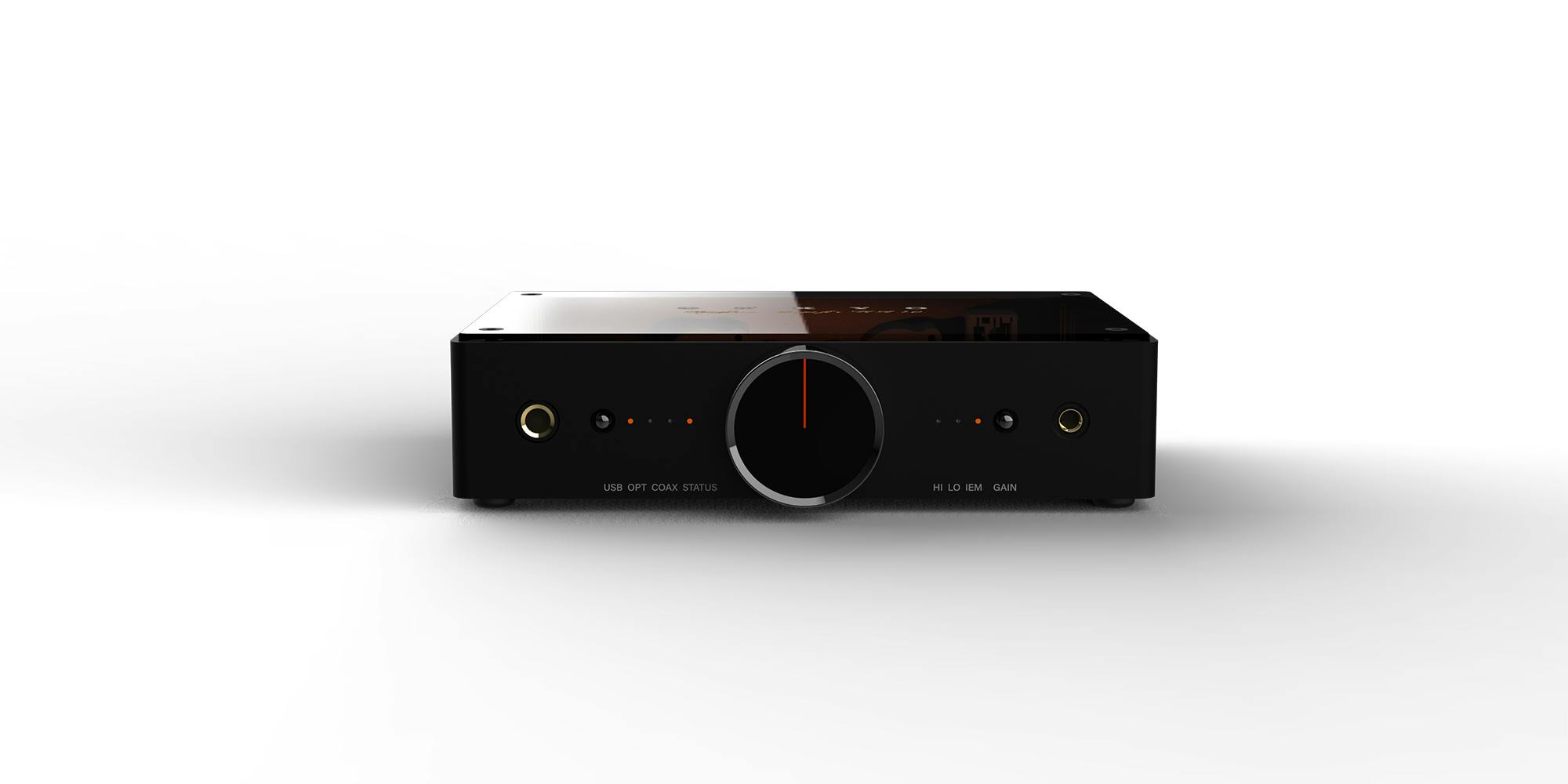
Onkyo’s press-release text does not identify the headphone socket formats. The official product image appears to show two front-panel sockets, but the image does not label their sizes or wiring. The final manual should confirm whether the unit includes 4.4mm Pentaconn, 4-pin XLR, 6.3mm single-ended, or another arrangement.
Until then, buyers should not order a replacement balanced cable on the assumption that a particular connector is supported.
PCM 768kHz and DSD256: Useful Support, Not a Promise of Better Sound
The HA-70 supports PCM playback up to 768kHz and DSD256 over DoP, according to Onkyo. These formats will interest people who maintain high-resolution music libraries, but the numbers need context.
PCM is the digital-audio format used by standard CD audio and many high-resolution downloads. Its sample rate describes how often the analog waveform is sampled during conversion. Its bit depth describes the precision available to represent each sample.
DSD uses a different encoding approach. DSD256 refers to a high-rate one-bit stream, while DoP means DSD over PCM: a method of packaging DSD data inside a PCM-compatible transport.
Support for a high sample rate means the device can accept a particular digital format under the supported connection and software conditions. It does not mean that the recording itself was captured or mastered at that rate, nor does it prove that listeners will hear an improvement.
The Audio Engineering Society’s high-resolution audio overview makes the broader point that high-resolution formats are delivery modes. The quality of the full signal chain, the source material and the limits of human perception matter more than the format label alone.
For example, converting an ordinary recording to a 768kHz file does not create new musical information that was not present in the original master. A larger number in a specification table should not be confused with a better recording or a better-tuned headphone system.
The practical value of the HA-70’s format support is compatibility. If a listener already owns high-resolution PCM or DSD files, the announced limits may be useful. If most listening comes from streaming services, games, video calls or standard-resolution music, the maximum sample-rate figure may have little effect on day-to-day use.
There is also a connection-specific question. Onkyo’s announcement identifies USB-C, optical and coaxial inputs, but does not provide a complete input-by-input format table. The maximum PCM rate may not apply to every connection. Buyers with a specific streamer or computer should wait for the manual to confirm the limits for each input.
The most useful review will test whether the HA-70 performs cleanly at normal listening formats and levels, not simply whether it accepts the largest file on a specification sheet.
The 600-Ohm Claim Needs More Context
Onkyo says the HA-70 is designed to support headphones with impedance up to 600 ohms. It also includes three gain settings:
- Ultra Low Gain: intended for sensitive in-ear monitors.
- Low Gain: intended for lower-impedance headphones.
- High Gain: intended for more demanding, high-impedance headphones.
This is a sensible feature set for a desktop headphone amplifier. Different headphones require different combinations of voltage, current and gain. A low-gain mode can also make the volume control easier to use with sensitive earphones.
However, impedance alone does not tell you whether an amplifier can drive a headphone properly.
A headphone’s sensitivity is just as important. Sensitivity describes how much sound pressure a headphone produces from a defined input. Two headphones with the same impedance can need different amounts of amplifier power because their sensitivities differ.
Sennheiser’s official HD 600 specifications provide a useful example. The HD 600 is rated at 300 ohms, with a sound-pressure level of 97dB at 1V. That tells us more than the impedance number alone, but it still does not tell us how much clean output the HA-70 can deliver into that load. Onkyo has not published the required output-voltage or power figures.
A proper amplifier specification should state power at multiple loads, such as 32, 150, 300 and 600 ohms, with the test conditions clearly defined. Voltage output, distortion at the stated power, and output impedance are also useful.
The 600-ohm statement is therefore a compatibility target, not a complete performance guarantee. It does not prove that the HA-70 will drive every 600-ohm headphone to every listener’s preferred level with adequate headroom.
Why Ultra Low Gain Matters for IEMs
The Ultra Low Gain setting is potentially important for sensitive in-ear monitors.
IEMs can be efficient enough to reach high listening levels with very little amplifier output. If an amplifier has too much gain or a high noise floor, listeners may hear hiss during quiet passages. The volume control can also become difficult to use if small movements cause large changes in level.
Onkyo says the HA-70 is designed for sensitive IEMs, but the announcement does not include a noise-floor figure or a low-gain THD+N measurement. Those numbers will matter more than the name of the gain setting.
A useful review should test the HA-70 with several IEMs of different sensitivities, not just a single high-impedance over-ear headphone. It should check for audible hiss, channel imbalance at low volume, and whether the lowest gain setting provides enough usable adjustment.
Until those tests exist, IEM compatibility is a design intention rather than a proven result.
How the Onkyo HA-70 Compares With the Audiolab D7
The Audiolab D7 is a useful price and feature reference because its US listing is $699, close to the HA-70’s $649.99 suggested price.
The current Audiolab D7 product page lists an ESS ES9038Q2M DAC, PCM support up to 768kHz and DSD512 over USB, Bluetooth 5.1 with aptX and aptX HD, and a dedicated current-feedback headphone amplifier. Audiolab lists headphone loads from 20 to 600 ohms and a 2.35-ohm headphone output impedance.
| Specification | Onkyo HA-70 | Audiolab D7 |
|---|---|---|
| US listed price | $649.99 suggested retail | $699 listed price |
| DAC | Two ESS ES9039Q2M chips | ESS ES9038Q2M |
| PCM support | Up to 768kHz | Up to 768kHz over USB |
| DSD support | DSD256 over DoP | Up to DSD512 over USB |
| Headphone gain | Ultra Low, Low, High | Current-feedback headphone amplifier |
| Published headphone load range | Up to 600 ohms, per Onkyo | 20–600 ohms |
| Headphone output impedance | Not published in announcement | 2.35 ohms |
| Bluetooth | Not listed in Onkyo announcement | Bluetooth 5.1, aptX and aptX HD |
| Digital inputs | USB-C, optical, coaxial | USB-B, USB-A, optical, coaxial and Bluetooth |
| Analog connections | RCA connections and balanced XLR outputs listed | RCA and balanced XLR analog outputs |
The $49.01 difference is modest—about seven percent of the D7’s listed price. That does not make the HA-70 the better buy. It simply places the two products close enough that buyers may compare them directly.
The D7 has a more complete published feature sheet at the time of writing. Audiolab lists its output impedance, supported headphone load range, Bluetooth support and detailed input formats. It also supports DSD512 over USB, while Onkyo currently lists DSD256.
Onkyo counters with two newer-model ESS DAC chips, a fully balanced architecture according to the company, and three gain settings including an Ultra Low mode for IEMs. Those may prove useful, but the HA-70’s missing output measurements make a performance comparison premature.
It is also important not to confuse the D7’s balanced XLR line outputs with a balanced headphone output. They serve different purposes. A line-level XLR connection links audio components; a headphone output drives the headphone transducers directly.
The fair comparison will come after Onkyo publishes a full specification sheet and independent reviewers measure both products under the same conditions. Until then, the D7 is a better-documented alternative, not automatically a better-sounding one.
Who Should Consider the HA-70?
The HA-70 is most relevant to listeners who use wired headphones at a desk and want a single DAC/amp component for multiple digital sources.
Desktop listeners with several wired headphones
The three gain settings could make the HA-70 convenient for someone who switches between sensitive IEMs and full-size headphones. That flexibility still needs testing, especially for noise with IEMs and power delivery into demanding over-ear models.
Owners of high-impedance headphones
The 600-ohm compatibility claim will attract people who own high-impedance reference headphones. They should wait for output-power measurements at 300 and 600 ohms rather than treating the impedance claim as a guarantee.
Listeners with high-resolution music libraries
The PCM 768kHz and DSD256 support may be useful if the listener already owns files in those formats. It is less important if most music comes from services or sources that do not use those rates.
Buyers building a desktop hi-fi system
The combination of USB-C, optical, coaxial and analog connections could make the HA-70 useful as a central component. But buyers should confirm whether the RCA connections are inputs or outputs, how the XLR outputs work, and whether the unit can be used as a DAC/preamp without headphones connected.
People who should wait
Anyone who needs confirmed headphone power, a specific balanced connector, low-noise IEM performance, Bluetooth input, or detailed computer compatibility should wait for the full manual and independent testing.
The HA-70 is not an obvious upgrade for someone whose current DAC or laptop already drives their headphones cleanly to their normal listening level. A more expensive component does not automatically improve the sound of a system that is already performing within audible limits.
What Onkyo Still Needs to Confirm
The announcement provides a useful overview, but a $649.99 headphone amplifier needs more than a list of DAC chips and supported formats.
Before buyers can make a confident decision, Onkyo should publish the following:
- Output power at multiple impedances. Include 32, 150, 300 and 600 ohms, with the distortion threshold and test frequency stated.
- Maximum output voltage and current. These figures help explain how the amplifier handles different headphone loads.
- Headphone output connectors. Identify the socket formats and whether the unit provides both single-ended and balanced headphone outputs.
- Output impedance. This helps buyers understand how the amplifier may interact with headphones whose impedance varies across frequency.
- Noise floor by gain setting. This is especially important for sensitive IEMs.
- THD+N measurements. Measurements should be provided at different output levels and loads, not only at one convenient test point.
- Complete input and output routing. Clarify the direction and role of RCA connections, XLR outputs and any digital pass-through.
- Input-specific format support. State which PCM and DSD rates work over USB-C, optical and coaxial.
- Computer and mobile compatibility. Confirm supported Windows, macOS, iOS and Android configurations, including whether drivers are required.
- Power supply, weight and warranty. These practical details matter for desk placement, long-term ownership and service.
The official front image shows two sockets on the front panel, but the press-release text does not identify their formats. The product may have a useful connector arrangement, but the image alone is not enough to tell buyers which cables they need.
A full user manual and technical specification sheet should resolve these points before retail availability.
What to Watch Before the Spring 2027 Launch
The HA-70 is not expected to ship until spring 2027. That gives Onkyo several months to publish additional specifications and gives reviewers time to test production hardware.
The most useful updates will not be another announcement about the DAC chips. Buyers should watch for:
- A complete front and rear connection diagram.
- Output power into real headphone loads.
- Noise and distortion measurements.
- A clear explanation of the three gain settings.
- Confirmation of USB driver requirements and operating-system compatibility.
- Independent listening and measurement reviews.
- Final retail availability, warranty and dealer information.
The first reviews should also test the HA-70 with a range of headphones rather than a single easy-to-drive model. A good desktop amplifier should be evaluated with sensitive IEMs, typical dynamic headphones and at least one demanding load.
If independent testing shows low noise at Ultra Low Gain, stable channel balance and sufficient output into high-impedance headphones, the HA-70 could become a strong option in the sub-$700 desktop DAC/amp category. If the measurements reveal limitations, buyers will need to weigh those against the connection options and price.
At this stage, neither outcome is established.
The Bottom Line
Onkyo’s HA-70 is a promising new desktop DAC/headphone amplifier with a clear enthusiast target. Its dual ESS DACs, XMOS USB interface, three gain settings, balanced architecture and broad digital input list make it worth watching.
But the most important specifications for a headphone amplifier are still missing. Onkyo has not published output power by load, output impedance, noise floor or THD+N measurements in its announcement. The headphone socket formats also need to be confirmed in the final technical documentation.
The $649.99 price places it close to the Audiolab D7, which currently has a more complete published specification sheet. That makes the HA-70 an interesting competitor, but not yet a proven recommendation.
Our advice: wait for the full specification sheet and independent measurements before buying. If Onkyo supplies the missing data and the HA-70 performs well with both sensitive IEMs and demanding wired headphones, it could become a serious desktop-audio option. Until then, treat its headline features as an announced design—not a verified performance result.
Frequently Asked Questions
How much will the Onkyo HA-70 cost in the US?
Onkyo lists a suggested US retail price of $649.99. The company says the HA-70 is expected to become available in spring 2027. Retail pricing and availability may change before launch.
What DAC chips does the Onkyo HA-70 use?
Onkyo says the HA-70 uses two ESS ES9039Q2M SABRE DAC chips, paired with its own analog circuitry. The company has not published independent measurements of the complete DAC and amplifier system.
Does the Onkyo HA-70 support high-resolution audio?
Onkyo lists PCM playback up to 768kHz and DSD256 over DoP. The press announcement does not provide a complete input-by-input format table, so buyers should check the final manual for USB-C, optical and coaxial limits.
Can the HA-70 drive 600-ohm headphones?
Onkyo says the amplifier is designed for headphones up to 600 ohms and includes three gain settings. However, it has not published output power at 600 ohms. Impedance alone is not enough to determine whether a particular headphone will reach a desired level with clean headroom.
Does the HA-70 have a balanced headphone output?
Onkyo describes a fully balanced signal path from the DAC to the headphone output. The announcement text does not identify the headphone connector formats. Buyers should wait for the final connector diagram or manual before purchasing a balanced cable.
Is the Onkyo HA-70 better than the Audiolab D7?
There is not enough evidence to say. The D7 has a more complete published specification sheet, while the HA-70 lists two ESS DAC chips and a fully balanced architecture. Independent measurements and hands-on tests are needed before comparing sound quality or drive capability.
Should I buy a separate headphone amplifier for my headphones?
Only if your current source cannot drive your headphones to your preferred level cleanly, or you need additional inputs, outputs or system control. Impedance and sensitivity both matter. A dedicated amplifier is not automatically an audible upgrade if your existing source already performs well with your headphones.
