


Key Takeaways
- Klipsch has confirmed two wired models for the US: the closed-back Stratos HP-2 at $999.99 and the semi-open HP-3 at $1,199.99, with December 2026 availability planned.
- The unusual feature is a two-way coaxial driver array: a bio-cellulose mid/bass driver and a 10mm dynamic tweeter share an axis in each earcup. That is an interesting engineering choice, not proof of superior sound.
- Wait for independent tests before buying: Klipsch has published incomplete and internally inconsistent specification details, and there are no verified independent measurements or full production-unit reviews yet.
Table of Contents
- What Klipsch announced
- HP-2 vs HP-3: the important differences
- Why the coaxial driver design matters
- Closed-back vs semi-open: choosing the right enclosure
- What the materials and fit can—and cannot—tell us
- Do the cables and connectors make the Stratos easier to use?
- What the specifications do not tell us
- How the prices compare with established alternatives
- Who should consider the Stratos headphones?
- What independent testing needs to answer
- What to watch next
- Frequently asked questions
What Klipsch Announced
Klipsch is returning to the premium wired over-ear headphone category with the Stratos series. The first two models are the Stratos HP-2, a closed-back headphone, and the Stratos HP-3, a semi-open-back model. The company announced the pair on November 13, 2026, and presented production-ready versions at CanJam Dallas on November 14–15.
The US suggested retail prices are $999.99 for the HP-2 and $1,199.99 for the HP-3. Klipsch says both models are scheduled to reach US retailers and its online store in December 2026. The company also lists a separate walnut-veneer headphone stand with a copper accent for $149.99. The stand is optional, so buyers should not assume it is included in either headphone package.
The launch is part of Klipsch’s 80th-anniversary activity. The company traces its history to 1946, when founder Paul W. Klipsch began building loudspeakers in Hope, Arkansas. Klipsch’s own 80-year brand history emphasizes horn-loaded loudspeakers and a focus on efficiency and dynamics. That heritage helps explain the visual language of the Stratos range, but it does not establish how the new headphones sound.
The company’s announcement describes the HP-2 and HP-3 as a return to premium over-ear headphones. It also says a wireless model, the Stratos HP-1, will receive more details in early 2027. Klipsch has not yet published the HP-1’s final specifications, price or release date. It should therefore be treated as a future product announcement, not as a model that is ready to buy.
The strongest sources for the launch details are Klipsch’s official Stratos announcement, the official CanJam Dallas event page and the independent eCoustics report from the show. These are launch and event reports, not performance reviews.
HP-2 vs HP-3: The Important Differences
The two models share the same basic two-way coaxial idea, but they are not simply two finishes of one headphone. Their enclosure designs, main driver sizes, weights and prices differ.
| Specification | Klipsch Stratos HP-2 | Klipsch Stratos HP-3 |
|---|---|---|
| Enclosure | Closed-back | Semi-open-back |
| Main driver | 40mm bio-cellulose mid/bass driver | 50mm bio-cellulose mid/bass driver |
| High-frequency driver | 10mm dynamic tweeter | 10mm dynamic tweeter |
| Driver arrangement | Two-way coaxial array | Two-way coaxial array |
| Published weight | 380g | 458g |
| US suggested price | $999.99 | $1,199.99 |
| Planned US availability | December 2026 | December 2026 |
| Finish | Auburn | Auburn |
The table uses the details that can be read consistently from Klipsch’s announcement. Some other specification fields need clarification before they are suitable for a buying comparison.
For example, the company’s page renders the HP-2 impedance unit as “W” rather than the expected ohm symbol, and the HP-3 frequency-response entry appears as “16 Hz–22 Hz.” The independent eCoustics table repeats the HP-3 frequency entry and lists impedance values without units. We should not silently correct these fields by guessing what Klipsch intended.
HP-2: The closed-back option
The HP-2 pairs a 40mm bio-cellulose mid/bass driver with a 10mm dynamic tweeter. Klipsch describes it as a closed-back headphone intended to provide noise isolation and support studio monitoring. Its listed weight is 380g.
The closed-back construction is the practical distinction. A sealed earcup can reduce the amount of outside sound reaching the listener and can limit music leakage compared with a more open enclosure. The actual result depends on the earcup, pad seal, materials and frequency. Klipsch has not published an independent isolation curve, so “closed-back” should not be read as a quantified noise-reduction rating.
At $999.99, the HP-2 is still a premium purchase. Its likely audience is a listener who wants a wired headphone for a home studio, a shared room or focused listening where some passive isolation is useful. Whether it is suitable for professional tracking will depend on isolation, comfort, frequency response and how much sound leaks into a microphone. Those are test questions, not established launch facts.
HP-3: The semi-open flagship
The HP-3 uses a larger 50mm bio-cellulose mid/bass driver and the same 10mm dynamic tweeter. It has a semi-open enclosure and weighs 458g, making it 78g heavier than the HP-2 according to the published weights. Its US price is $1,199.99.
Klipsch positions the HP-3 for two-channel listening and describes its intended presentation in terms of warm bass and crisp highs. Those are manufacturer descriptions. Without a frequency-response graph, distortion measurements and independent listening tests, they cannot be treated as confirmed descriptions of what every listener will hear.
The semi-open design may appeal to buyers who listen in a quiet room and prefer not to use a fully sealed earcup. But semi-open is not a standardized acoustic category with one fixed amount of leakage. The actual balance between isolation, leakage and bass response has to be measured on the finished headphone.
The HP-3 also costs $200 more than the HP-2 and weighs more. That premium needs to be justified by more than the larger driver and the semi-open design. Buyers should compare comfort, sound, channel matching and build quality once production samples are available.
Why the Coaxial Driver Design Matters
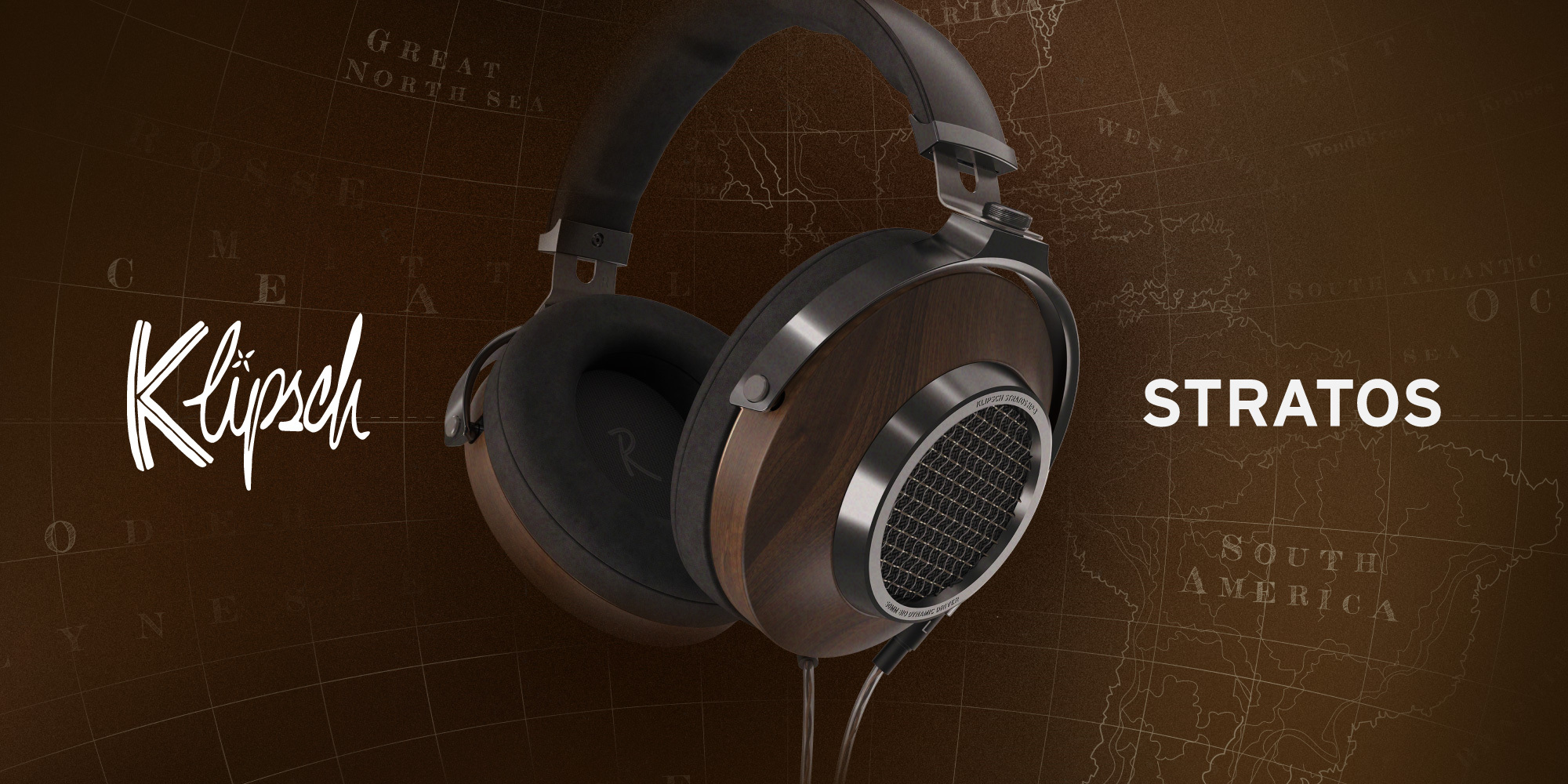
The headline engineering feature is the two-way coaxial driver array. Each earcup combines a larger bio-cellulose mid/bass driver with a separate 10mm dynamic tweeter. Klipsch says the two drivers are arranged coaxially, meaning they share an axis rather than being placed side by side.
Most conventional full-size headphones use one main driver in each earcup to reproduce a broad range of frequencies. That approach can work very well, but a single diaphragm must handle bass, midrange and treble over a wide operating range. A two-way arrangement divides the work between two drivers. In principle, each driver can be optimized for a narrower frequency region.
That design also creates a new challenge: the drivers must work together smoothly. The crossover network or other filtering determines how the signal is divided. The acoustic output of the two drivers must integrate without an audible hole, peak or uneven transition around the crossover region. Their phase and timing behavior also matter.
Why putting drivers on one axis can help
A coaxial layout can bring the acoustic sources closer together in space. In loudspeaker design, companies such as KEF explain their Uni-Q arrangement as placing a tweeter at the acoustic center of a midrange cone so the drivers behave more like a single source. Genelec’s explanation of coaxial driver technology also notes that coaxial placement can address crossover issues caused by physically separated sources, while pointing out that coaxial designs still face diffraction and frequency-response challenges.
These examples are useful for understanding the general engineering idea, but they are loudspeaker technologies, not measurements of the Stratos headphones. Headphones operate close to the ear, inside a small cup with different reflections, leakage paths and acoustic loading. We should not assume a benefit demonstrated in a loudspeaker transfers unchanged to a headphone.
Why two drivers do not automatically sound better
More drivers do not guarantee more detail, a wider soundstage or lower distortion. A poorly integrated multi-driver system can sound less coherent than a well-designed single-driver headphone.
The crossover is especially important. A two-way system needs the correct electrical and acoustic slopes, level matching and phase relationship. Rane’s technical explanation of crossover alignment describes why phase behavior and acoustic summing matter when adjacent drivers share a frequency region. Again, that source explains general crossover engineering; it does not reveal how Klipsch implemented the Stratos crossover.
Klipsch has not published the HP-2 or HP-3 crossover frequency, filter type, acoustic phase plots or a detailed driver cutaway. That means buyers cannot yet tell exactly where the tweeter takes over, how much the two drivers overlap or how the combined response behaves around the crossover.
The important point is not that the coaxial design is automatically better or worse. It is that it gives Klipsch a distinctive engineering approach that now needs to be validated with measurements and listening tests.
Closed-Back vs Semi-Open: Choosing the Right Enclosure
The HP-2 and HP-3 differ in a way that may matter more to everyday use than the driver sizes: one is closed-back and the other is semi-open.
A closed-back headphone uses an enclosed rear volume behind the driver. This can help reduce external sound entering the earcup and limit sound escaping into the room. It is often a practical choice for offices, shared homes, travel and recording environments. The trade-off is that the enclosed cup can create its own acoustic behavior, and the seal around the ear can influence bass response.
A semi-open headphone allows some interaction between the inside and outside of the earcup. Depending on the design, it may leak more sound and isolate less than a closed model. That can be acceptable at a quiet desk but less suitable in a shared room, a library or a recording space with an open microphone.
Sennheiser’s support guide explains the basic distinction in its article on open-back and closed-back headphones. The exact behavior still depends on the model, so the label is only a starting point.
For the Stratos range, the HP-2 is the more obvious option if you need some passive isolation. The HP-3 is the more specialized choice for a quiet listening space. Neither should be purchased on the assumption that it will block noise like an ANC headphone. The Stratos models are wired headphones, and Klipsch has not announced active noise cancellation for either one.
What the Materials and Fit Can—and Cannot—Tell Us
Klipsch has put significant emphasis on the physical design. Both models use machined aluminum yokes and contact points, stained sapele wood earcups, copper-ring accents, Klipsch Heritage Twitchell grille cloth and a protein-leather headband. The company says the headband uses open-cell foam and a cutout intended to reduce pressure on the crown. The earpads are microsuede and attach magnetically.
These details matter because premium headphones are long-term products. Materials affect weight, durability, maintenance and how a headphone feels after several hours. Removable magnetic earpads may also make replacement easier, although Klipsch has not yet published replacement-pad pricing or a spare-parts schedule.
However, premium materials do not guarantee comfort. The HP-3 weighs 458g, which is substantial for an over-ear headphone. A well-shaped headband and good weight distribution can make a heavier model comfortable, but clamp force, pad depth, earcup dimensions and heat buildup matter just as much.
Comfort is also personal. A headphone that fits one head shape well may create pressure points for another listener. The HP-2 is lighter than the HP-3, but it still needs to be tested over longer sessions. The company’s description of the headband cutout and foam is a design claim, not proof that the headphones will suit every listener.
The magnetic earpad attachment is worth checking in person. Buyers should ask whether the pads are user-replaceable, whether replacements will be sold directly, and whether pad changes alter the acoustic response. A different pad thickness or seal can change the distance between the driver and ear, as well as the enclosed air volume. That can affect the sound even when the driver itself has not changed.
Do the Cables and Connectors Make the Stratos Easier to Use?
Klipsch says both models include two detachable braided nylon cables:
- A 2.5m cable with a 3.5mm unbalanced source connection and dual-mono headphone connections.
- A 1.37m cable with a 4.4mm balanced source connection and dual-mono headphone connections.
- A 3.5mm female to 6.35mm male adapter.
The two cable lengths serve different desk setups. The longer unbalanced cable is useful when the headphone amplifier is across a desk or beside a chair. The shorter balanced cable may be neater for a nearby desktop amplifier or a portable digital audio player with a 4.4mm balanced output.
Balanced headphone outputs are not automatically better sounding. They can provide more voltage swing on some amplifiers, but the benefit depends on the amplifier’s design and the headphone’s electrical requirements. The presence of a 4.4mm cable does not prove that the headphone itself needs balanced drive.
Buyers should also check the output connector on their source. Many phones and laptops do not include a headphone jack at all, while some desktop DAC/amps provide 6.35mm, 4.4mm or 4-pin XLR outputs. The included adapter covers a common 6.35mm connection from the 3.5mm cable, but it does not convert an amplifier’s output into a balanced signal.
Klipsch says the headphones are designed to work with a wide range of sources, from smartphones to high-end headphone amplifiers. That is a company statement. Until impedance and sensitivity are confirmed with correct units and reference conditions, it is not possible to give a precise source-matching recommendation.
What the Specifications Do Not Tell Us
The Stratos launch materials provide enough information to understand the broad design, but several technical details remain unclear. This matters because a $1,000 headphone purchase should not depend on assumptions.
Frequency response needs a usable graph
Klipsch lists a frequency response of 15Hz–18kHz with a ±5dB tolerance for the HP-2. A frequency range by itself does not show how evenly the headphone reproduces sound within that range. Two headphones can share the same published endpoints and have very different tonal balances.
A useful independent review should include a measured response curve, the measurement rig, the compensation target and repeated placements. The audioXpress overview of headphone electroacoustic measurements explains why a complete test needs more than a single frequency-range number. It covers response, impedance, repeatability, left/right tracking and distortion.
The HP-3 frequency-response entry on Klipsch’s announcement page appears as 16Hz–22Hz. That is likely a formatting or publication error, but we cannot silently change it to 22kHz without confirmation from the company. The current article therefore does not repeat a corrected HP-3 upper-frequency limit.
There is another conflict: Klipsch’s own table lists 30mW power handling for both models, while the eCoustics specification table lists 1,800mW. Those figures are materially different. Neither should be used to calculate a safe amplifier setting until Klipsch confirms the intended specification and test definition.
Impedance and sensitivity need units and references
The official specification table renders the HP-2 impedance as 32 W and the HP-3 as 24 W. The eCoustics table lists 32 and 24 but does not show units. Those values may have been intended as ohms, but a buying guide should not turn a likely correction into a verified specification.
Sensitivity is listed as 100dB for the HP-2 and 102dB for the HP-3, but the reference is not shown in the official table. Sensitivity may be expressed relative to one milliwatt or one volt, and those figures are not interchangeable without conversion. Benchmark Media Systems’ explanation of headphone impedance and sensitivity shows why the reference matters when comparing how loud headphones will play from the same source.
A correct impedance and sensitivity specification would help buyers estimate whether a phone, laptop, portable player or desktop amplifier can drive the headphones to their preferred level. It would also help reviewers assess whether the source has a suitable output impedance and enough voltage and current for the intended listening level.
Distortion figures are not independent measurements
Klipsch lists total harmonic distortion figures at 1kHz and for the full system. Those are manufacturer-published specifications. The announcement does not provide the complete test setup, output level, fixture, frequency sweep or independent laboratory report.
A distortion number is useful only when the conditions are known. Reviewers should measure at multiple output levels and across frequency, rather than relying on one number at one frequency. The same applies to claims about low distortion, efficiency and full-range reproduction.
There is no independent Stratos review yet
The products were shown at CanJam Dallas, but the sources reviewed for this article do not provide a complete independent measurement report of final retail units. A show-floor audition can be valuable, but it is not the same as a controlled review with repeatable tests.
There are no verified Stratos measurements here for frequency response, distortion, channel matching, isolation, leakage, sensitivity or comfort over extended wear. There is also no independent comparison against headphones in the same price range. Until those tests appear, sound-quality descriptions should remain attributed to Klipsch.
How the Prices Compare With Established Alternatives
At $999.99 and $1,199.99, the Stratos models enter a competitive premium headphone market. Buyers have options with different driver technologies, enclosure designs and brand histories.
For example, Meze lists the open-back 109 PRO at $799 on its US-facing store. That is $200 less than the HP-2 and $400 less than the HP-3. The Meze uses a conventional single dynamic-driver architecture, so it is not a direct design match, but it is a relevant alternative for listeners considering a premium open-back headphone.
The Focal Clear Mg is listed at $1,599 by US specialist retailer HeadAmp. That puts it above the HP-3’s announced price, although the Clear Mg is an open-back model with its own established review history and a different driver design. A price comparison does not mean one product is better value; it simply shows where the Stratos models sit in the market.
| Model | Current listed US price checked | Design context |
|---|---|---|
| Klipsch Stratos HP-2 | $999.99 suggested price | Closed-back, two-way coaxial |
| Klipsch Stratos HP-3 | $1,199.99 suggested price | Semi-open, two-way coaxial |
| Meze 109 PRO | $799 | Open-back dynamic |
| Focal Clear Mg | $1,599 | Open-back dynamic |
Prices can change, and retailer prices may differ from manufacturer suggested prices. The Meze and Focal figures are included as market context, not as a controlled performance comparison.
The HP-3 is particularly close to the price of several established audiophile headphones. At that level, buyers should expect more than attractive materials. They should expect clear technical documentation, reliable build quality, replaceable parts, a comfortable fit and independent evidence that the tuning is competitive.
The optional stand adds another $149.99. If a buyer wants the matching stand, the combined price becomes $1,149.98 for the HP-2 or $1,349.98 for the HP-3 before tax. That is a straightforward calculation using Klipsch’s announced prices. It is not a bundle price or a confirmed package deal.
Who Should Consider the Stratos Headphones?
The Stratos series is worth following if you are interested in wired premium headphones and want to hear a two-way coaxial design. The product is not yet an obvious recommendation because the final listening evidence is missing.
Consider the HP-2 if you need a closed-back headphone
The HP-2 may make more sense if you listen in a shared room, want some passive isolation or need a wired headphone for a home-studio environment. Its lower weight compared with the HP-3 is another practical advantage. However, do not assume it provides enough isolation for recording vocals until a reviewer tests leakage and isolation.
Consider the HP-3 if you listen in a quiet room
The HP-3 is the more expensive model and uses a larger mid/bass driver. Its semi-open construction may suit listeners who prefer a less sealed design. But the 458g weight is worth considering, especially if you plan to wear it for long sessions.
Wait if you need proven performance or a clear value case
If you want a headphone with extensive independent measurements, multiple long-term reviews and a well-documented replacement-parts path, waiting is the safer option. The Stratos launch is new, and its published specification table has errors or missing units that should be corrected before consumers use it to choose an amplifier.
What Independent Testing Needs to Answer
A serious review of the Klipsch Stratos HP-2 and HP-3 should test more than whether the headphones sound impressive during a short demonstration.
- Frequency response: Measure both channels on a suitable headphone fixture, repeat placements and publish the compensation target.
- Distortion: Test harmonic distortion across frequency at several listening levels, not only at 1kHz.
- Crossover integration: Look for response irregularities or phase issues around the point where the mid/bass driver and tweeter overlap.
- Channel matching: Check whether the left and right drivers track closely, particularly through the crossover region.
- Isolation and leakage: Compare the HP-2 and HP-3 in controlled conditions, including speech and low-frequency noise.
- Comfort: Record long-session observations, clamp force, pad dimensions, heat buildup and pressure points.
- Amplifier compatibility: Confirm impedance, sensitivity units and output requirements using the correct measurement references.
- Durability and serviceability: Check the magnetic earpads, cable sockets, yokes, headband and availability of replacement parts.
The testing should also compare the headphones with similarly priced alternatives at matched playback levels. A louder headphone can seem more impressive in a quick comparison, so reviewers should level-match carefully before judging tonal balance or detail.
For buyers, this evidence is more useful than a list of premium materials or a single driver-size number. It can show whether the coaxial design produces a coherent response, whether the HP-2 meaningfully isolates outside sound and whether the HP-3 offers a real advantage for quiet-room listening.
What to Watch Next
The first near-term milestone is December 2026, when Klipsch expects the HP-2 and HP-3 to reach US retailers. Before placing an order, buyers should check the final retail listing for corrected specifications, exact package contents, warranty terms and return conditions.
The second milestone is the publication of independent reviews based on production units. Early show impressions may help identify comfort or design issues, but a full review should include measurements and repeated listening. If the first reviews disagree, look at the test methods and the fit of the headphone on each reviewer’s measurement fixture before treating the results as a contradiction.
The third milestone is the Stratos HP-1 announcement. Klipsch says more information about the wireless model will arrive in early 2027. Until the company publishes the codec list, battery figures, ANC details, wireless platform, microphone design and price, buyers should not assume the HP-1 shares the wired models’ specifications.
The broader question is whether Klipsch can translate its loudspeaker heritage into a convincing modern headphone platform. The Stratos design is distinctive on paper. Its long-term success will depend on comfort, tuning, reliability, independent performance and how it competes with established premium headphones.
Conclusion: Interesting Engineering, but the Sound Still Needs Proof
The Klipsch Stratos HP-2 and HP-3 are notable because they bring a two-way coaxial driver arrangement into a new premium headphone range from a brand best known for loudspeakers. The HP-2 offers a closed-back design at $999.99, while the semi-open HP-3 costs $1,199.99 and weighs more.
There is a plausible engineering reason to explore a coaxial two-way headphone. Sharing an axis can help bring the acoustic sources closer together, but the crossover, driver behavior and earcup acoustics still determine the final result. The design alone does not guarantee better sound.
For now, the most responsible recommendation is to wait for production-unit reviews and corrected technical specifications. Buyers should pay particular attention to the HP-3 frequency-response typo, the missing impedance units and the sensitivity reference. Those details affect how people compare the headphones and match them with their audio sources.
The Stratos range could become an interesting option for listeners who want premium wired headphones with distinctive materials and a less conventional driver layout. But at $999.99 to $1,199.99, Klipsch needs to demonstrate more than a compelling design story. Independent measurements, comfortable long-session fit and consistent sound will decide whether these headphones earn their place.
Frequently Asked Questions
How much do the Klipsch Stratos HP-2 and HP-3 cost?
Klipsch lists a US suggested retail price of $999.99 for the closed-back HP-2 and $1,199.99 for the semi-open HP-3. Both are scheduled for US availability in December 2026. Prices at individual retailers may differ.
What is the difference between the Stratos HP-2 and HP-3?
The HP-2 is closed-back, uses a 40mm bio-cellulose mid/bass driver with a 10mm tweeter and weighs 380g. The HP-3 is semi-open, uses a 50mm bio-cellulose mid/bass driver with the same 10mm tweeter and weighs 458g. The HP-3 costs $200 more.
What does a two-way coaxial driver mean?
It means two drivers are arranged along the same axis. In the Stratos headphones, Klipsch combines a larger bio-cellulose mid/bass driver with a 10mm dynamic tweeter in each earcup. The arrangement is intended to let the two drivers cover different parts of the audio range while sharing an axis.
Are the Klipsch Stratos headphones wireless or noise cancelling?
The HP-2 and HP-3 are wired headphones. Klipsch has announced a separate wireless model called the Stratos HP-1, with more details expected in early 2027. The company has not announced active noise cancellation for the HP-2 or HP-3.
Do the Stratos headphones need a headphone amplifier?
Klipsch says the HP-2 and HP-3 are designed to work with a range of sources, including smartphones and high-end headphone amplifiers. However, the published impedance units and sensitivity references need clarification. Buyers should wait for corrected specifications before making a precise amplifier recommendation.
Are the Klipsch Stratos HP-2 and HP-3 worth buying?
There is not enough independent evidence to answer that yet. The driver design and materials are interesting, but the headphones need independent frequency-response, distortion, comfort, isolation and channel-matching tests. At these prices, waiting for production reviews is the more cautious choice.
When will the Klipsch Stratos headphones be available in the United States?
Klipsch says both wired models are expected in the US in December 2026 through its website and authorized retailers. The company has not provided a specific day for availability.
