


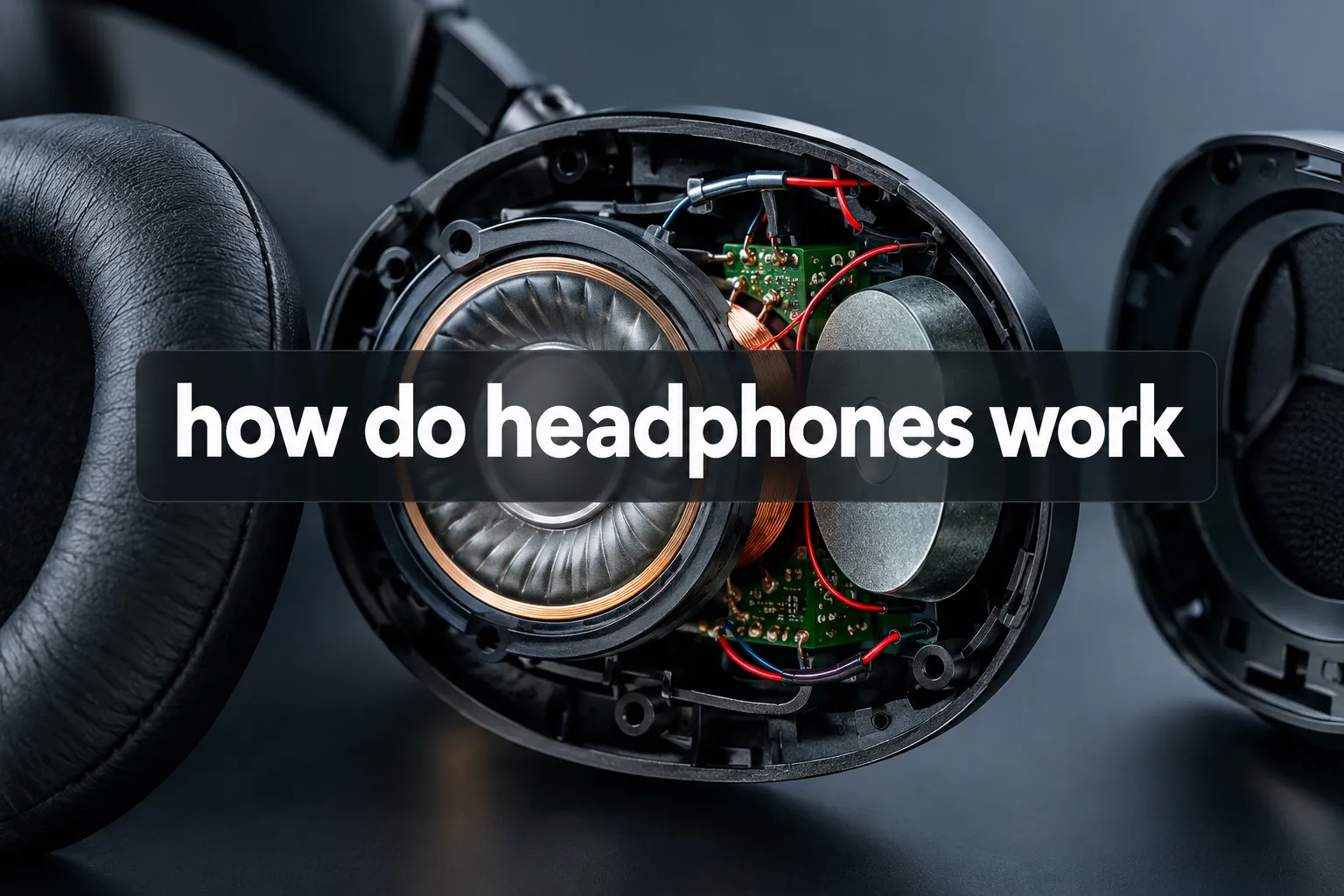
Headphones work by converting electrical audio signals into mechanical vibrations, which then generate sound waves that your ears perceive. A small speaker, known as a driver, uses an electromagnet to rapidly move a diaphragm, pushing air to create the sound you hear. This process, whether wired or wireless, is fundamental to how we experience personal audio.
Key Takeaways
- Headphones rely on a driver, which is essentially a miniature speaker, to produce sound.
- The driver consists of a diaphragm, voice coil, and a permanent magnet.
- An electrical audio signal is sent to the voice coil, creating a fluctuating magnetic field.
- This magnetic field interacts with the permanent magnet, causing the voice coil and diaphragm to vibrate.
- These vibrations generate sound waves that travel into your ear canal.
- Wired headphones transmit signals via a physical cable, while wireless models use radio frequencies like Bluetooth.
- Different headphone types (over-ear, in-ear, bone conduction) modify how these sound waves reach your ear.
- Noise-canceling headphones use microphones and active processing to reduce ambient sound.
How Do Headphones Work?
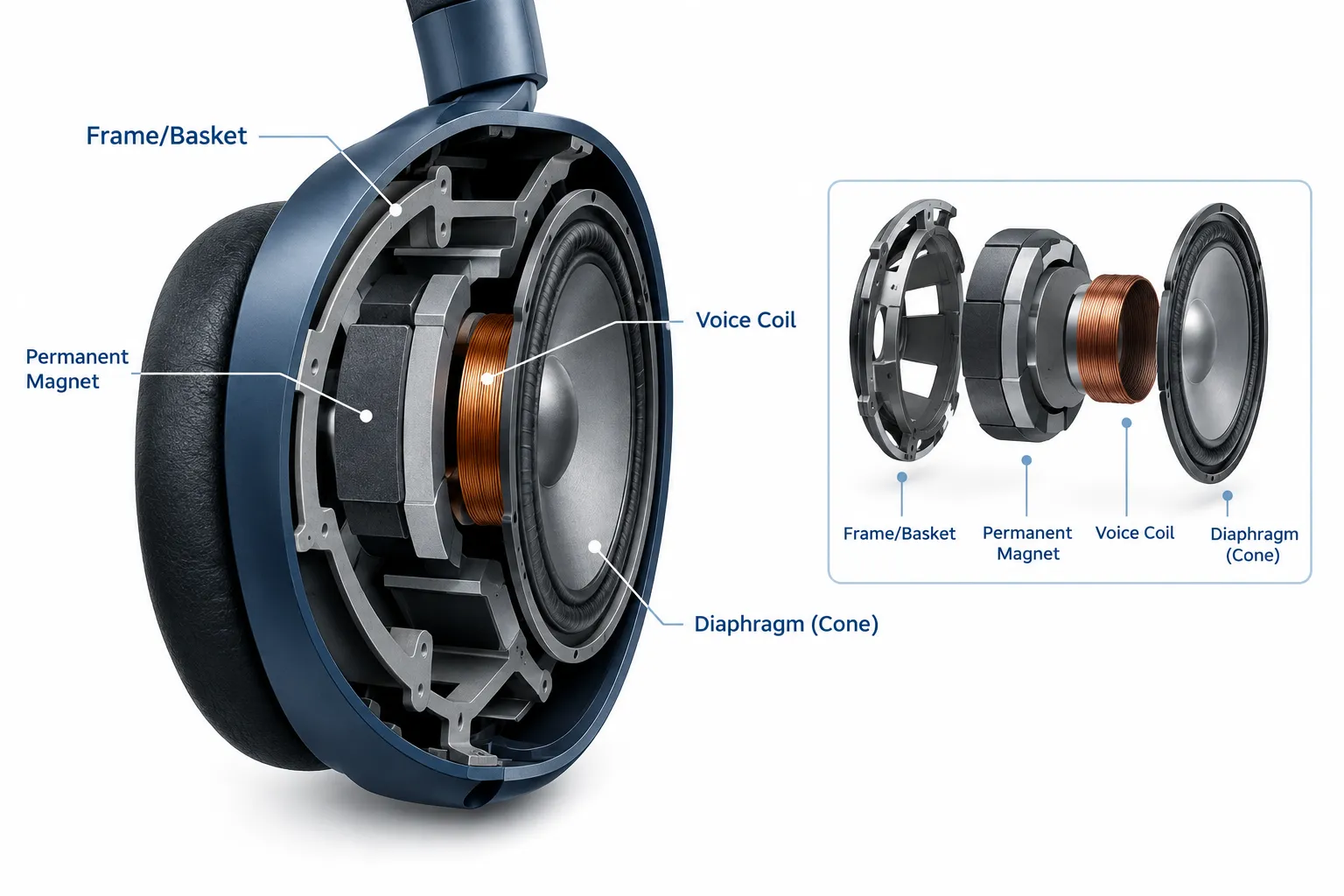
At their heart, headphones operate on the same principle as any loudspeaker, just scaled down dramatically. The central component is the “driver,” a small transducer responsible for converting electrical energy into audible sound waves.
We’ve found that understanding this basic mechanism helps explain why different headphone designs sound the way they do.
A typical dynamic driver inside a headphone consists of three main parts:
- Diaphragm (or Cone): This is a thin, flexible material, often made from plastic, paper, or metal, that vibrates to create sound. Its size and material significantly influence the headphone’s sound profile. A larger diaphragm can often produce deeper bass, for instance.
- Voice Coil: A coil of wire attached to the diaphragm. When an electrical signal passes through it, the coil becomes a temporary electromagnet.
- Permanent Magnet: Positioned around the voice coil, this magnet creates a static magnetic field that the voice coil interacts with.
When you play music or any audio, the electrical signal from your device travels to the voice coil. This signal is an alternating current, meaning its direction and strength change rapidly according to the audio waveform.
This fluctuating current turns the voice coil into an electromagnet with a constantly changing magnetic field. The voice coil’s magnetic field then pushes and pulls against the permanent magnet’s static field, causing the voice coil, and by extension, the diaphragm it’s attached to, to vibrate back and forth very quickly.
These vibrations displace the air, creating pressure waves that our ears interpret as sound.
The Journey of Sound: From Device to Ear
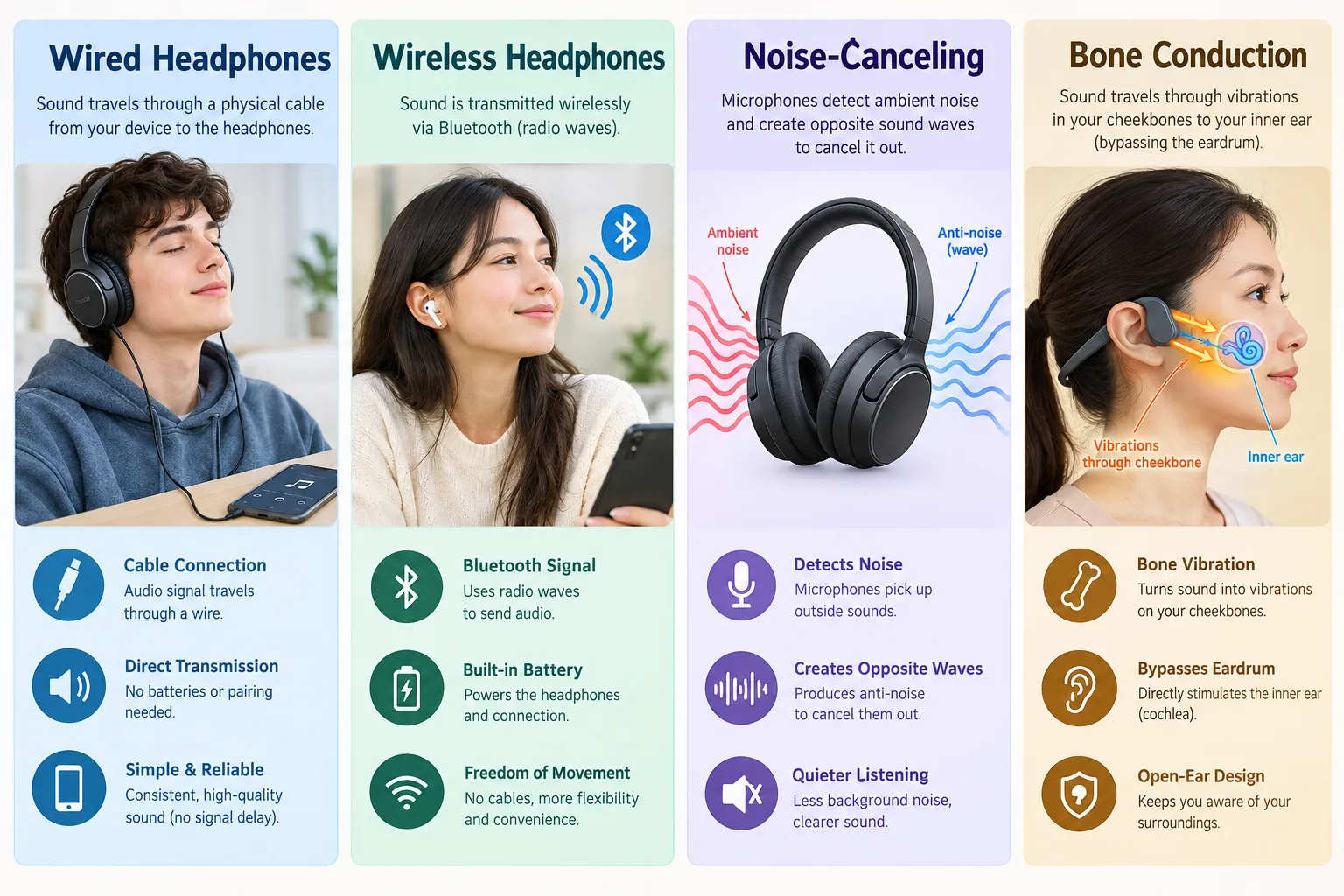
The path an audio signal takes to become sound in your ears differs depending on whether your headphones are wired or wireless, and even if they feature advanced technologies like noise canceling.
We’ve tested countless models, and the method of signal transmission plays a significant role in sound quality and convenience. If you are comparing wired vs wireless headphones, this underlying process is key.
Wired Headphones
For wired headphones, the electrical audio signal travels directly from your source device (phone, computer, amplifier) through a physical cable to the headphone drivers.
The cable contains multiple wires, often copper, which carry the separate left and right channel signals. This direct connection generally ensures a stable signal and minimizes potential interference, which is why many audiophiles still prefer them for best sound quality for music lovers.
Wireless Headphones
Wireless headphones, including Bluetooth models, receive audio without a physical cable connecting them to the source device.
In a typical Bluetooth audio setup, the source device encodes the audio and transmits the data over a short-range radio connection. The headphones receive the data, decode it, and convert it into an electrical signal that drives the speakers.
The Bluetooth SIG’s official technology overview explains how Bluetooth Classic supports wireless audio streaming in products such as headphones, speakers, and in-car entertainment systems.
Bluetooth audio commonly uses codecs to encode and decode digital audio. These codecs can affect bandwidth requirements, latency, and audio quality, depending on the codec, settings, and implementation. Modern wireless headphones can deliver excellent sound, although results vary by model and listening setup.
You can learn more about how wireless headphones work and compare their battery life when deciding whether a wireless model suits your needs.
Noise-Canceling Technology
Active Noise Cancellation (ANC) adds another layer to how headphones work. These headphones use small microphones to detect ambient sound outside the earcups and, in some designs, inside them.
An internal processor analyzes the detected noise and generates an opposing sound signal. When the original noise and the anti-noise interact, they can partially cancel each other out through destructive interference.
According to Sennheiser’s explanation of active noise cancellation, ANC is particularly effective against repetitive, low-frequency sounds, such as engine hum and air-conditioning noise. Its effectiveness against voices and other higher-frequency sounds varies.
ANC does not eliminate every sound, and performance depends on the headphone’s microphones, processing, fit, and acoustic design.
This technology can be particularly useful on airplanes, trains, and in busy offices. Read our guide to how noise-canceling headphones work for a more detailed explanation.
Bone Conduction Headphones
A notable alternative is bone conduction technology. Instead of sending sound waves through the air to your eardrums, these headphones rest on your cheekbones and vibrate.
These vibrations directly stimulate the cochlea in your inner ear, bypassing the outer and middle ear entirely. This can be a significant advantage for those who need to remain aware of their surroundings, like runners, and we’ve detailed their function in our article, how bone conduction headphones work.
Factors Affecting Headphone Performance
Understanding how headphones work also means recognizing the factors that influence their performance. Based on our testing, several key specifications and design choices directly impact the listening experience.
Driver Size and Type
The size of the driver typically correlates with the headphone’s ability to reproduce lower frequencies. Larger drivers (often found in over-ear headphones) can move more air, leading to richer bass.
However, smaller drivers in earbuds can still deliver excellent sound, especially with careful tuning and advanced materials. Dynamic drivers are the most common, but other types like planar magnetic or electrostatic drivers exist, each with distinct sonic characteristics.
Frequency Response
This specification indicates the range of frequencies a headphone can reproduce, typically measured in Hertz (Hz). A wider frequency response (e.g., 20 Hz to 20,000 Hz, matching human hearing) suggests a more complete sound reproduction.
However, a wide range doesn’t guarantee accuracy; the flatness of the response curve across this range is often a better indicator of neutral sound.
Impedance
Measured in ohms (Ω), impedance describes the electrical resistance of the headphone’s voice coil. Lower impedance headphones (under 32 ohms) are easier to drive, meaning they can achieve sufficient volume with portable devices like smartphones.
Higher impedance headphones often require a dedicated headphone amplifier for optimal performance, though they can sometimes offer greater clarity and less distortion with the right equipment.
Sensitivity
Sensitivity, measured in decibels per milliwatt (dB/mW) or decibels per volt (dB/V), tells you how loud a headphone will be for a given amount of power. Higher sensitivity means the headphones will play louder with less power, which is important for mobile devices.
Construction and Materials
The materials used for the diaphragm, earpads, and even the cable can affect sound quality, comfort, and durability. High-quality earpads, for example, can improve seal and isolation, influencing bass response and overall clarity. The construction style, whether in-ear vs on-ear headphones, also plays a part in sound staging and isolation.
Troubleshooting Common Headphone Issues
Even with a grasp on how headphones work, you might encounter common issues. Here are a few practical troubleshooting tips we often suggest:
- No Sound: First, check the cable connection if wired, or the Bluetooth pairing if wireless. For wireless, ensure your headphones are charged and correctly paired (see our guide on how to connect wireless headphones). Sometimes a quick reset of Bluetooth headphones can resolve connectivity glitches.
- Poor Sound Quality: Ensure your audio source is high-quality. Low-bitrate streaming can make even the best headphones sound poor. Check for debris in earbud tips or damage to over-ear earcups. For wireless headphones, try moving closer to your source device to reduce signal interference.
- One Side Not Working: This often points to a damaged cable if wired, or a connectivity issue if wireless. Try restarting your headphones and device. If wired, rotate the jack in the port to see if it’s a loose connection.
- Volume Too Low: Confirm your device’s volume is maxed out. If using high-impedance headphones, consider a headphone amplifier if your device struggles to drive them.
- Static or Crackling: This can be interference for wireless headphones, so try moving away from other electronic devices. For wired, check the cable for damage or try a different audio source to rule out a faulty port.
Conclusion
Headphones, at their core, are marvels of miniature engineering, transforming electrical signals into personal soundscapes through a process involving magnets, coils, and vibrating diaphragms.
Whether you’re using simple wired earbuds or sophisticated noise-canceling wireless models, the fundamental physics remain the same. Understanding these mechanics not only demystifies how they work but also helps you appreciate the nuances in sound quality and design.
When you’re shopping for new headphones, considering these principles can help you make a more informed decision, ensuring you choose a pair best suited for your listening needs and preferences.
FAQs
What is a headphone driver?
A headphone driver is the component that converts the electrical audio signal into audible sound waves, typically comprising a diaphragm, voice coil, and a permanent magnet.
Do wired headphones sound better than wireless?
Wired headphones often offer superior sound quality due to a direct, uncompressed signal path, though modern wireless technology has significantly narrowed this gap.
How does noise-canceling work?
Noise-canceling headphones use microphones to detect ambient sounds and then generate an “anti-noise” signal that cancels out unwanted external noise.
Are larger headphone drivers always better?
Larger drivers can often produce deeper bass due to moving more air, but sound quality depends on overall design, material, and tuning, not just driver size.
What is headphone impedance?
Impedance is the electrical resistance of the headphone driver, measured in ohms, indicating how much power is needed to drive the headphones.
Can headphones cause hearing damage?
Yes. Listening at excessive volumes, particularly for extended periods, can cause noise-induced hearing loss. The National Institute on Deafness and Other Communication Disorders explains that both sound intensity and exposure duration affect the risk of hearing damage.
Keep the volume at a comfortable level and take breaks during extended listening sessions. You can also read our guide to the 60/60 rule for headphones.
What’s the difference between open-back and closed-back headphones?
Open-back headphones have earcups that are open, allowing air to pass through, which results in a wider soundstage but less isolation. Closed-back headphones seal the ear, offering better isolation but a more contained sound.
Do expensive headphones sound noticeably better?
While expensive headphones often use higher-quality components and tuning, the perceived improvement in sound quality can be subjective and depends on the listener’s preferences and the audio source.
What are bone conduction headphones?
Bone conduction headphones transmit sound vibrations directly through your cheekbones to your inner ear, bypassing the eardrum.
