




Open-ear earbuds are moving beyond the running track. Bose has announced two new models designed for different parts of daily life, giving consumers more choice between environmental awareness, comfort, and traditional noise control.
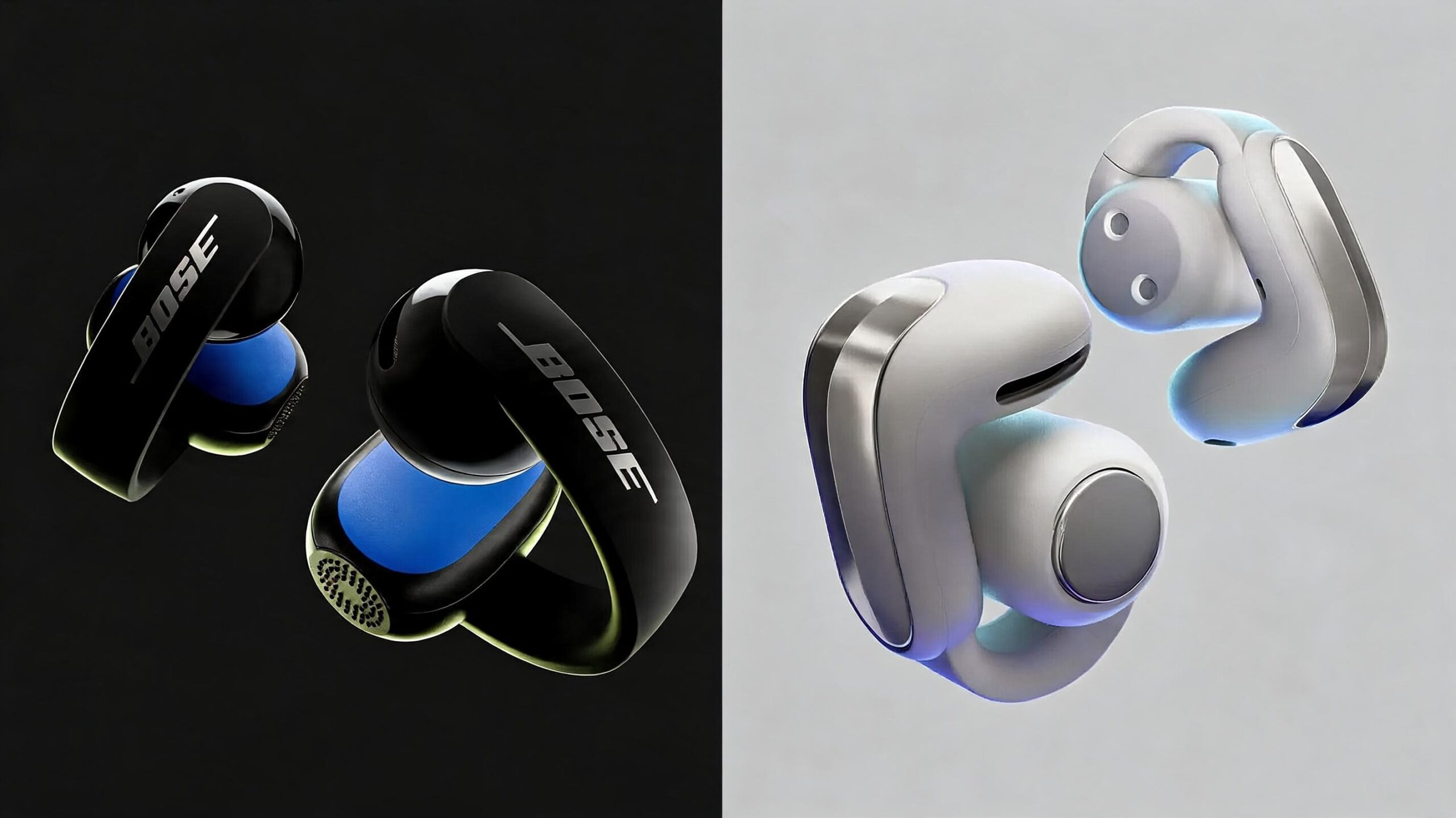
The Bose Sport Open Earbuds cost $199 and target workouts and outdoor activity. The Bose Ultra Open Earbuds 2nd Gen cost $299 and target broader everyday use, including commuting, work, and downtime. Both models are scheduled to arrive in the United States on October 1, 2026, according to Bose’s official announcement.
The announcement matters because Bose is not treating open-ear audio as a niche product anymore. It is building a small family of products around the idea that people want to listen without blocking their ears.
That idea sounds simple, but it creates difficult engineering trade-offs. Open-ear earbuds can feel more comfortable and help users remain aware of nearby sounds. They also allow more outside noise into the listening experience, which can reduce bass, detail, and volume headroom.
So, are open-ear earbuds ready for everyday use? The answer depends on where and how you plan to use them.
Table of Contents
- What Bose announced
- How open-ear earbuds work
- Why consumers are interested
- Open-ear earbuds vs traditional ANC earbuds
- Sound quality and noise limitations
- Comfort and environmental awareness
- Battery life, calls, and durability
- Who should consider Bose’s new models
- Who should choose sealed earbuds instead
- What to watch next
- Conclusion
- FAQ
What Bose announced
Bose introduced the Sport Open Earbuds and Ultra Open Earbuds 2nd Gen on September 17, 2026. The company positioned the Sport model around running, workouts, and outdoor activity. The Ultra model is designed for a wider range of listening situations, including commuting, work, and casual daily use.
The Sport Open Earbuds cost $199. Bose says they offer up to seven hours of playback and use a secure, lightweight design intended for movement. The Ultra Open Earbuds 2nd Gen cost $299 and offer up to nine hours of playback. Bose also lists improved sound, clearer calls, and a wireless-charging case for the Ultra model.
Bose has scheduled both products for US availability on October 1. Preorders began on September 19 through Bose and selected retailers.
The company’s launch strategy is important. Instead of offering one open-ear model for everyone, Bose now separates sports use from general everyday listening. That reflects a wider trend in headphones, where manufacturers design products around specific routines rather than one broad audience.
How open-ear earbuds work
Traditional in-ear earbuds use silicone tips or foam to sit inside the ear canal. That creates a seal that improves bass response and reduces some outside noise. Active noise cancellation then uses microphones and speakers to reduce additional low-frequency noise.
Open-ear earbuds take a different approach. They sit outside or near the ear canal and direct sound toward the ear without sealing it. Some products use hooks, cuffs, clips, or small speaker arms to keep the drivers in place.
The main benefit is awareness. A user can listen to music while still hearing traffic, announcements, coworkers, or nearby conversations. The design can also feel less intrusive for people who dislike pressure inside the ear canal.
The main limitation is sound control. Outside noise enters the ear more easily, while music leaks outward more than it would from sealed earbuds. In a quiet room, that may not be a problem. On a subway platform or beside a busy road, it can make listening less satisfying.
Why consumers are interested
The headphone market has spent years improving isolation. Premium earbuds from Apple, Bose, Sony, and Samsung now offer strong ANC, compact charging cases, and advanced transparency modes.
Yet some users do not want full isolation. Runners may need to hear traffic. Office workers may want music without losing awareness of colleagues. Parents may want to listen while still hearing activity nearby. Travelers may prefer to hear airport announcements without removing their earbuds.
Open-ear products respond to those needs directly. They do not try to make the outside world disappear. Instead, they keep the user connected to it.
Comfort is another major factor. Some people find in-ear tips uncomfortable during long sessions. Others experience pressure, heat, or a feeling of blocked ears. Open-ear designs can reduce those complaints because they do not sit inside the canal.
That does not mean every open-ear product will feel comfortable. Ear shape, glasses, hair, and head movement can affect stability. A design that works for one user may create pressure for another.
Open-ear earbuds vs traditional ANC earbuds
The right choice depends on your environment.
Open-ear earbuds are better suited to:
- Outdoor walking and running
- Cycling where local regulations permit headphone use
- Office work where awareness matters
- Casual listening at home
- Users who dislike in-ear tips
- Situations where announcements must remain audible
Traditional sealed ANC earbuds are better suited to:
- Airplanes
- Trains and buses
- Busy streets
- Shared offices with constant background noise
- Deep bass listening
- Travel where isolation matters
- Users who want stronger call privacy
Open-ear earbuds are not a universal replacement for ANC earbuds. They are a different solution to a different problem.
A commuter who spends an hour on a noisy train may prefer Bose QuietComfort Earbuds or Sony WF-series earbuds. A runner on a quiet neighborhood route may prefer an open-ear design. A user who moves between both situations may eventually own both types.
This category-based approach resembles the wider headphone market. Many consumers now own separate headphones for travel, gaming, workouts, and work calls. Open-ear earbuds add another specialized option.
Sound quality and noise limitations
Sound quality remains the largest technical challenge for open-ear earbuds.
A sealed earbud can create a controlled acoustic space. The driver works inside that space, and the seal helps preserve low frequencies. Open-ear products do not get the same benefit. Bass can sound lighter, especially outdoors or near traffic.
Bose says the second-generation Ultra model delivers deeper bass and higher volume than its predecessor. The company also promotes spatial audio and a Cinema Mode. The Verge’s report on Bose’s new models also notes the company’s claims about improved bass, higher volume, battery life, and the new Cinema Mode.
The listening environment matters more than many product pages admit. In a quiet room, open-ear earbuds may sound balanced and enjoyable. In a loud environment, outside noise can cover details in the music. Users may then increase the volume, which creates a different listening risk.
Open-ear products can also struggle with wind. Running, cycling, and walking near traffic create airflow that microphones and speakers must manage. Call quality may remain understandable, but it may not match the performance of a well-sealed earbud with strong microphone processing.
This is why independent testing matters. Battery life and feature lists are easy to compare. Real-world sound quality requires testing across quiet rooms, streets, gyms, offices, and public transport.
Comfort and environmental awareness
Comfort is the strongest reason to consider Bose’s new open-ear models.
The Sport Open Earbuds are built around active movement. Bose says the design is lightweight and secure, while the Ultra model targets longer daily listening. The company’s two-product approach suggests it is trying to improve both stability and long-session comfort. ([Bose][4])
Open-ear headphones may also reduce the need to remove earbuds when someone speaks to you. That can make them practical at work or while traveling. Users can often hear their surroundings without switching to transparency mode.
However, environmental awareness is not the same as situational safety. Music can still distract users. Loud playback can mask important sounds, even when the ear canal remains open. Runners and cyclists should remain alert and follow local rules.
Consumers should also check fit carefully. An open-ear product that shifts during movement may produce inconsistent sound. Users may press or adjust it repeatedly, reducing the comfort benefit.
If you wear glasses, compare the ear hook or cuff with your frames. If you wear helmets, test compatibility before buying. These details matter more than small differences in advertised battery life.
Battery life, calls, and durability
Bose lists up to seven hours of playback for the Sport model and up to nine hours for the Ultra model. Those figures are useful, but they are not guarantees. Playback time depends on volume, call use, spatial-audio features, and other processing.
The Ultra model adds a wireless-charging case. That feature could make daily charging easier for users who already use a Qi or compatible wireless charging setup. The Sport case also adds extra playback time, although the total varies by usage mode.
The Sport model is aimed at exercise, so durability is central to its value. Buyers should examine the official water-resistance rating and understand the difference between sweat protection and full waterproofing. Most sport headphones are not designed for swimming or long exposure to water.
Calls are another important test. Open-ear earbuds allow users to hear their own voice and surroundings more naturally, but microphones must handle wind and background noise. Bose says both models improve call clarity, but independent review results should determine whether the benefit is meaningful.
For many users, call performance matters more than a small difference in codec support. A headphone can sound excellent for music and still perform poorly during meetings.
Who should consider Bose’s new models
The Sport Open Earbuds make the most sense for active users who dislike in-ear tips. Runners, walkers, gym users, and people who spend time outdoors may value the secure fit and awareness-focused design.
The Ultra Open Earbuds 2nd Gen may suit users who want open-ear listening beyond exercise. They could work for home use, office listening, casual commuting, and situations where awareness is more important than maximum isolation.
They may also appeal to people who already own sealed earbuds but want a second pair for different environments. In that case, the question is not whether open-ear earbuds are better. The question is whether they solve a problem your current headphones do not.
The $199 Sport model is easier to justify for exercise-focused buyers. The $299 Ultra model needs to offer clear advantages in sound, comfort, calls, and convenience to justify its premium.
Consumers should wait for independent testing before judging whether the Ultra model’s sound improvements are large enough to matter. Bose’s feature list is promising, but the real-world experience will depend on fit and noise conditions.
Who should choose sealed earbuds instead
Traditional sealed earbuds remain the better option for many situations.
If you fly often, a sealed ANC earbud will reduce engine noise more effectively. If you commute on trains or buses, passive isolation and ANC will preserve music detail at lower playback levels. If you care about strong bass, open-ear designs may feel limited.
Sealed earbuds also provide more privacy. Music and calls are less likely to leak into the surrounding space. That matters in quiet offices, libraries, and shared rooms.
Users who need the strongest voice-call performance should compare microphone tests rather than assume an open design will work better. Some open-ear products produce a more natural experience, but loud wind and traffic remain difficult.
People with hearing-related concerns should also avoid making broad assumptions. Open-ear does not automatically mean safer, and traditional ANC does not automatically mean harmful. According to the World Health Organization’s safe-listening guidance, hearing risk depends on factors such as sound level and exposure time.
The U.S. National Institute on Deafness and Other Communication Disorders similarly explains that prolonged or repeated exposure to loud sounds can cause noise-induced hearing loss.
For practical guidance, TechOzea’s guide on how to wear headphones correctly can help readers improve comfort and fit across different designs.
The larger market trend
Bose is not launching these products in isolation. The market is moving toward more headphone form factors, including clip-on earbuds, open-ear hooks, bone-conduction headphones, and workout-focused over-ear models.
Beats has launched the Beats 360 for consumers who want over-ear headphones during exercise. That model uses interchangeable cushions and IPX4 protection, showing that even traditional headphone shapes are being adapted for active use.
Shokz continues to compete in open-ear audio, while Soundcore and other brands have introduced clip-on and ear-cuff designs. The category is becoming more crowded, which should create more choice but also make comparisons harder.
For consumers, this means buying decisions will depend less on a simple “best headphone” ranking. The more useful question is which design fits a particular routine.
A runner, frequent traveler, office worker, and home listener may all need different products. Open-ear earbuds are valuable because they serve a specific use case. They become less attractive when buyers expect them to behave like sealed ANC earbuds.
What to watch next
The next important development will be independent testing of Bose’s new models. Reviewers should measure sound quality, wind handling, call clarity, battery life, leakage, and stability during movement.
Pricing will also matter. If Bose discounts the Sport model or bundles it with accessories, it could become a stronger alternative to premium workout earbuds. If the Ultra model remains close to the price of flagship ANC earbuds, consumers will compare it directly with products that offer greater isolation.
The category may also gain more software features. Manufacturers could improve adaptive volume, voice detection, spatial audio, and automatic switching between open and more controlled listening modes.
Privacy will become more important as microphones and AI features appear in more earbuds. Plaud One shows how a headphone can become a recorder, transcription tool, and AI interface. That creates new utility, but it also raises consent and data-storage questions.
Open-ear products are likely to remain strongest when they solve a clear daily problem. Comfort, awareness, and convenience are powerful benefits. They will not eliminate the need for sealed earbuds, but they may become an important second category for many users.
Conclusion
Bose’s new Sport Open Earbuds and Ultra Open Earbuds 2nd Gen show that open-ear audio is moving toward mainstream consumer use. The company now offers a sports model and a premium everyday model, giving the category a clearer product structure.
The benefits are easy to understand. Open-ear earbuds can feel more comfortable, keep users aware of their surroundings, and reduce the need to remove headphones during conversations.
The limitations are just as important. They provide less isolation, may struggle in noisy environments, and may not satisfy listeners who want strong bass or private calls.
For runners, office workers, and casual listeners, Bose’s new models could be compelling. For travelers and commuters who need strong noise reduction, traditional ANC earbuds will probably remain the better choice.
The best approach is to treat open-ear earbuds as a complementary category, not a universal replacement.
FAQs
Are open-ear earbuds better than noise-cancelling earbuds?
Neither design is better in every situation. Open-ear earbuds are better for awareness and comfort. Traditional ANC earbuds are better for travel, noisy environments, bass, and isolation.
Do open-ear earbuds block outside noise?
No. They allow more outside sound to reach the ears than sealed earbuds. That is a major benefit for awareness, but it can reduce sound quality in loud places.
Are Bose Sport Open Earbuds waterproof?
They are designed for active use, but consumers should check Bose’s official water-resistance rating before using them in heavy rain or near water. Sweat resistance does not mean swimming protection.
Can open-ear earbuds damage hearing?
Any headphones can contribute to hearing risk when used too loudly or for too long. Open-ear design does not remove the need to control volume and take listening breaks. The WHO’s safe-listening guidance explains that both sound level and listening duration affect hearing risk.
Are open-ear earbuds good for airplanes?
Usually not. Airplane cabins are loud, and open-ear earbuds cannot provide the same isolation as sealed ANC earbuds. Travelers will generally get better results from traditional noise-cancelling models.
Are Bose Ultra Open Earbuds 2nd Gen worth $299?
That depends on your priorities. They may be worth considering if you value open-ear comfort, awareness, and premium features. Buyers who mainly need noise isolation may get more practical value from sealed ANC earbuds.
Can open-ear earbuds work in an office?
Yes, especially in offices where users need to hear coworkers. The main concern is sound leakage, so keep the volume moderate and test whether nearby people can hear the audio.
Should I buy open-ear earbuds as my only headphones?
For most users, open-ear earbuds work best as a second pair. They are useful for workouts, outdoor walks, and awareness-focused listening, while sealed earbuds remain stronger for travel and loud environments.
