




For most adults, there is no single safe number of hours for wearing headphones. Hearing risk depends mainly on volume, duration, and frequency of exposure. The widely known 60/60 rule can serve as a simple reminder to keep volume below 60% of maximum and take regular breaks, but it should not be treated as a precise medical limit.
The World Health Organization (WHO) recommends keeping personal listening volumes below 60% of maximum when possible and monitoring overall sound exposure. Well-fitted or noise-cancelling headphones can also reduce the need to increase the volume in noisy places.
Key Takeaways:
- Keep the volume down: The WHO recommends keeping device volume below 60% of the maximum when possible.
- Take breaks from loud sound: Regular breaks can reduce your overall sound exposure and give your ears time away from continuous noise.
- Prioritize a comfortable fit: Well-fitted over-ear headphones may provide better comfort and sound isolation for some users.
- Watch your sound exposure: According to the National Institute on Deafness and Other Communication Disorders (NIDCD), repeated exposure to sounds at or above 85 dBA can damage hearing.
- Pay attention to warning signs: Ringing in the ears, muffled hearing, or difficulty understanding conversations may indicate harmful noise exposure.
- Consider noise cancellation: Noise-cancelling headphones can help reduce the need to increase the volume in noisy environments.
- Protect children’s hearing: Children should also avoid excessive noise exposure, as highlighted by the American Academy of Pediatrics.
- Explore alternatives: Speakers or bone conduction headphones can provide alternatives to conventional headphones.
What’s a Safe Amount of Time to Wear Headphones Each Day?
A safe amount of time to wear headphones each day depends more on how loudly you listen than on a fixed number of hours. The WHO’s safe-listening guidance emphasizes that louder sounds require shorter listening periods.
After an hour, a break of at least 5-10 minutes allows your ears to rest and recover, significantly reducing the risk of noise-induced hearing loss. While this is a general guideline, individual factors such as the type of headphones and existing hearing health can adjust this recommendation.
For instance, if you find yourself needing to block out significant ambient noise, using noise-cancelling headphones can help you maintain lower volumes, thus prolonging safe listening periods.
However, continuous, uninterrupted use, even at moderate volumes, can still lead to ear fatigue or discomfort. Think of it like eye strain from looking at a screen too long; your ears also need periodic breaks from constant stimulation.
How Long Can I Wear Noise-Cancelling Headphones For?
You can wear noise-cancelling headphones for extended periods, often longer than regular headphones, because their primary benefit is reducing ambient noise, allowing you to listen at significantly lower, safer volumes. The key distinction here isn’t the total duration of wear but rather the volume level required to enjoy your audio.
Because active noise cancellation (ANC) blocks out external sounds, users don’t need to crank up the volume to overcome background chatter or engine hum. This inherently reduces the risk of noise-induced hearing damage. Many professionals who work in noisy environments or frequently travel find noise-cancelling headphones essential for maintaining focus and reducing stress without resorting to unsafe listening levels.
For truly long sessions, such as during a transatlantic flight, I personally ensure my volume is barely audible and take short breaks when possible. While ANC provides comfort and clarity, you should still adhere to the 60/60 rule by taking short breaks every hour or so, even at low volumes, to prevent ear fatigue and ensure overall ear health. You might find our guide on the Best Noise Cancelling Headphones For Travel helpful if you’re a frequent flyer.
Can Wearing Headphones Too Long Cause Hearing Damage?
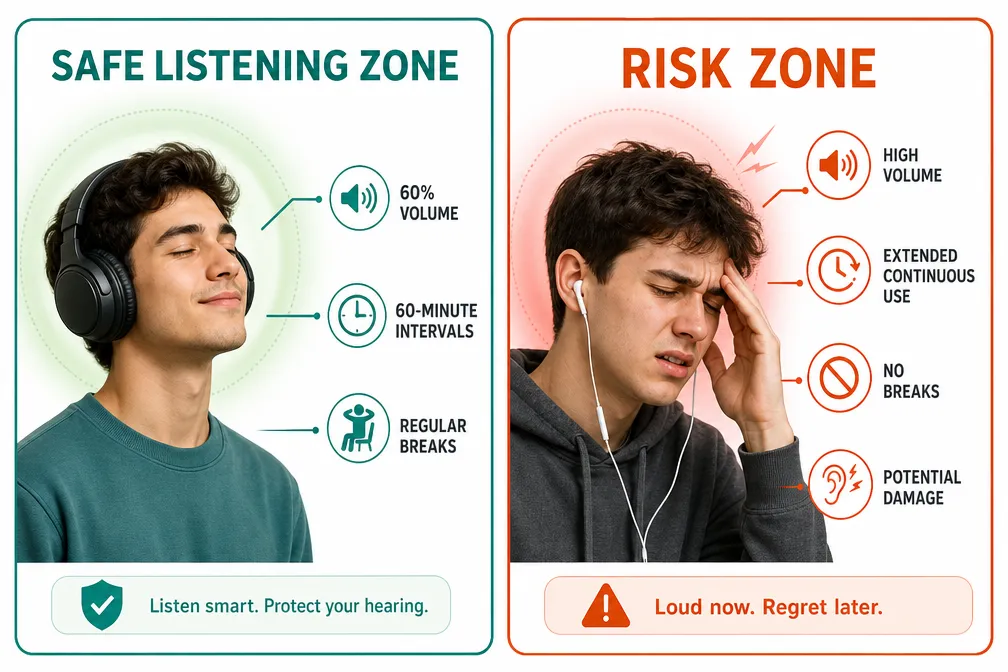
Yes, prolonged headphone use at excessive volumes can cause temporary or permanent noise-induced hearing loss.
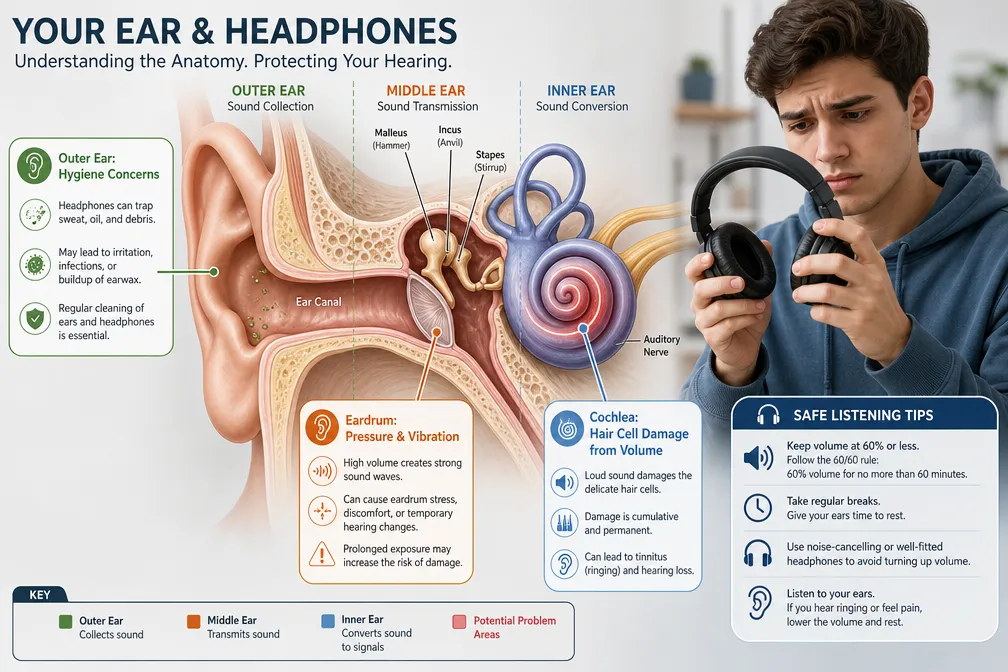
The inner ear contains delicate sensory structures that can be damaged by loud sounds. According to the NIDCD, this damage can develop gradually through repeated exposure to harmful noise.
The delicate hair cells in the cochlea, responsible for translating sound vibrations into electrical signals for the brain, can be irreparably damaged by prolonged exposure to loud noise.
A single loud event, like an explosion, can cause damage, but more commonly, it’s the cumulative effect of daily exposure to moderately loud sounds (above 85 dB) that leads to gradual hearing impairment.
The World Health Organization (WHO) estimates that 1.1 billion young people worldwide are at risk of hearing loss due to unsafe listening practices (World Health Organization, 2015). This kind of damage is often insidious, developing slowly over time without immediate pain or discomfort, making it easy to overlook until significant loss has occurred.
This is why adherence to recommended safe listening guidelines, such as the 60/60 rule, is so critical. For a more in-depth look, consider reading our article Can Headphones Cause Hearing Damage? Safe Volume Levels.
What Are the Signs I’m Wearing Headphones Too Much?
Recognizing possible signs of excessive noise exposure can help you protect your hearing. Common warning signs include ringing in the ears, muffled hearing, and difficulty understanding speech.
According to the NIDCD, loud noise exposure can cause tinnitus and may make sounds seem muffled or distorted.
Other signs to watch for:
- Tinnitus: This is a persistent ringing, buzzing, or hissing sound in your ears, even when no external sound is present. It can be temporary after a loud exposure, but chronic tinnitus can indicate more serious damage.
- Muffled Hearing: If sounds seem dull or unclear after taking your headphones off, or if you find yourself asking people to repeat themselves, your ears might be fatigued or damaged.
- Ear Pain or Discomfort: Physical pain, soreness, or pressure in or around your ears is a clear signal that you need to give your ears a break, adjust your headphones, or reduce volume.
- Headaches: Prolonged headphone use, especially with tight-fitting models or high volumes, can contribute to tension headaches.
- Difficulty Concentrating: Continuous audio input can lead to mental fatigue and reduced ability to focus.
- Irritation or Itchiness: Especially with earbuds, extended wear can cause irritation in the ear canal due to lack of air circulation or trapped moisture.
If you experience any of these symptoms, it’s important to reduce or stop headphone use immediately and consult a healthcare professional if symptoms persist.
Is It Bad to Wear Earbuds All Day?
Wearing earbuds all day may cause discomfort, increase moisture buildup, and increase your total exposure to sound. The most important hearing-related factors remain the volume and duration of your listening.
Earbuds can also trap moisture and irritate the ear canal. The Centers for Disease Control and Prevention (CDC) explains that prolonged moisture in the outer ear can create conditions that allow bacteria to multiply.
Moreover, constant earbud use creates an environment within the ear canal that can trap moisture and impede airflow, making it a breeding ground for bacteria and potentially leading to ear infections or swimmer’s ear.
I once had a client who developed recurring ear infections directly linked to wearing earbuds for 8+ hours a day for work calls. Switching to over-ear headphones and taking regular breaks completely resolved the issue. For more on how to wear headphones correctly, see our guide on How To Wear Headphones Correctly.
How Often Should I Take Breaks from Wearing Headphones?
You should take breaks from wearing headphones at least every 60 minutes, ideally for 5-10 minutes, to give your ears a necessary rest and prevent fatigue or potential damage. This aligns with the widely recommended 60/60 rule for safe listening.
During these breaks, it’s beneficial to step away from all audio input, let your ears “breathe,” and allow them to recover from continuous sound stimulation.
If you’re engaged in a long task, like studying or working, you could use these breaks to stretch, get a drink of water, or briefly interact with your surroundings.
Even a few minutes of silence or low-level ambient noise can make a significant difference in preventing ear strain and maintaining auditory health over the long term.
Are Over-Ear Headphones Better Than Earbuds for Long Use?
Yes, over-ear headphones are generally better than earbuds for long-term use because they typically provide superior comfort, better sound isolation, and often a more spacious soundstage, which collectively encourages safer listening habits.
Their design encloses the entire ear, distributing pressure more evenly and preventing the direct insertion into the ear canal that earbuds require.
This design minimizes direct contact with the inner ear, reducing the risk of ear canal irritation and infections. Furthermore, good over-ear headphones, especially those with effective passive or active noise cancellation, can block out more ambient noise, meaning you don’t have to raise the volume as high to hear your audio clearly.
This natural sound isolation is a key factor in protecting your hearing during extended listening sessions. When I’m editing audio for hours, I always reach for my over-ear headphones; the difference in comfort and reduced ear fatigue is remarkable. For recommendations on comfort, check out Most Comfortable Headphones For Long Listening Sessions.
What Volume Level Is Considered Safe for Daily Headphone Use?
A volume level of 60% of your device’s maximum volume or less is generally considered safe for daily headphone use, especially when combined with intermittent breaks. Prolonged exposure to sounds above 85 decibels (dB) can cause permanent hearing damage, and many devices can easily exceed this threshold at higher volume settings.
To put 85 dB into perspective, it’s roughly equivalent to the sound of heavy city traffic or a noisy restaurant. Most smartphones and audio players can reach levels well over 100 dB. The risk isn’t just about how loud the sound is, but also how long you’re exposed to it. As a general guideline:
- Up to 85 dB: Generally safe for up to 8 hours.
- 90 dB: Safe for about 2 hours.
- 100 dB: Safe for only about 15 minutes.
- 105 dB: Can cause damage in under 5 minutes.
Many devices now offer built-in volume limiters, and some operating systems provide warnings if you exceed safe listening levels. It’s wise to enable these features and consciously keep your volume low enough that you can still hear some of your surroundings, which indicates a safer decibel range.
Can Headphones Cause Headaches or Ear Pain?
Yes, headphones can definitely cause headaches or ear pain, especially with prolonged use, ill-fitting designs, or high volume levels. The mechanisms behind this discomfort can vary.
Common reasons for headphone-induced pain include:
- Pressure on the Head/Ears: Over-ear headphones that are too tight can exert excessive clamping force, leading to pressure headaches or pain around the ears, especially on the cartilage.
- Earbud Pressure/Fit: Earbuds, if too large or small, can irritate the ear canal or cause pressure points, leading to localized pain or soreness.
- High Volume Levels: Listening to loud audio for extended periods can cause inner ear fatigue and contribute to headaches, similar to how bright lights can trigger migraines.
- Lack of Airflow: Particularly with earbuds, the lack of air circulation can lead to moisture buildup, irritation, or even ear infections, which manifest as pain.
- Sound Fatigue: Constant auditory stimulation, even at moderate volumes, can lead to sensory overload for some individuals, resulting in headaches or a feeling of “fullness” in the ears.
If you experience these symptoms, try adjusting your headphones, taking frequent breaks, or switching to a different type of headphone that offers a more comfortable fit.
What’s the Difference Between Open-Back and Closed-Back Headphones for Long-Term Comfort?
The primary difference between open-back and closed-back headphones for long-term comfort lies in their airflow, sound isolation, and overall feel, with open-back headphones generally offering superior comfort for extended sessions due to better ventilation.
Here’s a breakdown:
| Feature | Open-Back Headphones | Closed-Back Headphones |
|---|---|---|
| Airflow/Ventilation | Excellent, allowing air to circulate around the ears, reducing heat and moisture buildup. | Limited, trapping heat and moisture, which can lead to sweating and discomfort. |
| Sound Isolation | Poor; sound leaks out and external noise leaks in. | Excellent; effectively blocks external noise and prevents sound leakage. |
| Soundstage | Wider, more natural, and “airy” sound, often preferred for critical listening. | More contained, sometimes described as “in your head.” |
| Comfort for Long Use | Often preferred for long listening sessions due to reduced heat and pressure, feeling less “clamped.” | Can become uncomfortable after long periods due to heat, sweat, and pressure. |
| Typical Use Case | Home listening, studio mixing, gaming where isolation isn’t critical. | Commuting, office work, recording, situations requiring privacy or noise blocking. |
For purely long-term comfort in quiet environments, open-back headphones like some found in the Best Open Back Headphones category are often the better choice. However, if you need isolation from external noise (e.g., in an office or on public transport), closed-back headphones are necessary, even if they might sacrifice a bit of long-term comfort.
Are There Any Headphones Designed for Extended Wear?
Yes, there are indeed headphones specifically designed with extended wear in mind, prioritizing comfort, lightweight construction, and balanced sound profiles to minimize fatigue.
These models often feature plush, breathable earcups, adjustable headbands with minimal clamping force, and designs that distribute weight evenly across the head.
Key characteristics include:
- Ergonomic Design: Contoured earcups that fit the shape of the ear without excessive pressure.
- Lightweight Materials: Reduced overall weight to lessen strain on the head and neck.
- Breathable Earpads: Materials like velour or specialized mesh that prevent heat and moisture buildup.
- Balanced Clamping Force: Firm enough to stay on, but not so tight as to cause discomfort.
- Open-Back Designs: As discussed, these enhance airflow, reducing sweat and heat for longer sessions.
- Long Battery Life: For wireless options, a battery that lasts through an entire workday or long flight is crucial, eliminating the need to frequently recharge. (See Top Wireless Headphones With Long Battery Life for examples.)
When choosing headphones for extended use, it’s wise to consider user reviews focusing on long-term comfort and to try them on if possible to assess the fit and feel yourself.
What Are Some Alternatives to Wearing Headphones All Day?
To mitigate the risks associated with wearing headphones all day, several excellent alternatives can provide a break for your ears and improve overall comfort and ear health. These options are particularly useful for those who spend many hours consuming audio content or participating in virtual meetings.
- Speakers: For personal listening or calls in a private setting, desktop speakers or a Bluetooth speaker allow sound to disperse naturally in the room, removing direct ear canal pressure.
- Bone Conduction Headphones: These headphones sit on your cheekbones, transmitting sound vibrations directly to your inner ear, bypassing the eardrum entirely. This keeps your ear canal open and free, which is healthier for extended use and safer for outdoor activities as you can still hear your surroundings. Find out How Bone Conduction Headphones Work.
- Headsets with Boom Mics: For long work calls, a dedicated headset with a microphone might offer better voice clarity and overall comfort than some consumer headphones, though they still cover the ears.
- Taking Regular “Ear Breaks”: Simply turning off the audio and removing your headphones for 5-10 minutes every hour, even if you return to them afterward, can significantly reduce ear fatigue.
- Environmental Sound Masking: In open office environments, some companies use white noise machines or sound masking systems to create a more private acoustic space, reducing the need for individuals to use headphones to block out chatter.
Implementing these alternatives can help protect your hearing and reduce discomfort during prolonged audio use.
Can Kids Wear Headphones for As Long As Adults?
No, kids generally cannot wear headphones for as long as adults, as their developing ears are more sensitive and susceptible to noise-induced hearing damage. Children’s auditory systems are still maturing, and prolonged exposure to loud sounds can have more profound and lasting effects.
The American Academy of Pediatrics emphasizes that both sound intensity and exposure duration are important when protecting children’s hearing.
Guidelines for children are typically stricter:
- Volume Limits are Critical: Children’s headphones should have built-in volume limiters that prevent sound levels from exceeding 85 dB, and ideally, closer to 75 dB for very young children.
- Shorter Durations: Limit a child’s headphone use to no more than 30-60 minutes at a time, with extended breaks in between. For younger children, even shorter periods are advisable.
- Supervision: Adults should supervise headphone use to ensure proper volume levels and adherence to time limits.
- Over-Ear vs. Earbuds: Over-ear headphones that fit properly are often preferred for children over earbuds, as they are less likely to be inserted too deeply and can distribute pressure more comfortably.
- Educational Use: For school-related tasks, ensure that the environment is quiet enough that high volumes aren’t necessary.
I often advise parents to check if they can hear the audio from their child’s headphones while standing a few feet away; if they can, the volume is likely too high. For options specifically designed for younger listeners, consider our guide on the Best Noise Cancelling Headphones For Kids.
Conclusion
Determining “How Long Should You Wear Headphones Daily?” is less about a fixed number of hours and more about mindful listening habits that prioritize ear health and comfort. Adhering to the 60/60 rule,listening at 60% volume for no more than 60 minutes at a time, followed by a break, serves as an excellent foundation for safe use.
Beyond this, choosing the right type of headphones, especially over-ear or noise-cancelling models for extended sessions, and being attuned to your body’s signals like ear pain or tinnitus, are crucial steps. Remember, your hearing is precious and irreversible damage can occur gradually.
By implementing these practices, you can continue to enjoy your audio content without compromising your long-term auditory health and beyond.
FAQS
Is it okay to wear headphones for 8 hours a day?
Wearing headphones for 8 hours a day is generally not recommended, even at low volumes, due to potential ear fatigue, hygiene issues, and the cumulative risk of hearing damage. Regular, frequent breaks are essential.
How many hours a day is too much for headphones?
More than 2-4 hours of continuous headphone use per day is often considered too much, especially if breaks are not taken and volumes are moderate to high. The 60/60 rule suggests a maximum of 60 minutes at 60% volume before a break.
What are the disadvantages of wearing headphones too much?
Disadvantages include noise-induced hearing loss, tinnitus, ear infections (especially with earbuds), headaches, ear pain, and reduced awareness of your surroundings.
How can I make wearing headphones more comfortable for long periods?
Choose over-ear headphones with plush, breathable earcups and a balanced clamping force. Ensure a proper fit, take regular breaks, and consider open-back designs for better airflow if your environment allows.
Can wearing headphones cause vertigo?
While not a direct cause, prolonged headphone use, especially at high volumes, can contribute to ear pressure or fatigue that might exacerbate existing vertigo or balance issues for some individuals.
Should I worry about bacteria buildup in my earbuds?
Yes, you should worry about bacteria buildup in earbuds. Extended use can trap moisture and wax, creating a warm, damp environment ideal for bacterial growth, leading to ear infections. Clean your earbuds regularly.
Are wireless headphones safer than wired ones for my ears?
Neither wired nor wireless headphones are inherently safer in terms of hearing damage; the risk primarily depends on volume level and duration of use. However, wired headphones avoid potential concerns over long-term low-level electromagnetic field exposure, which is still a subject of ongoing research.
What is the ideal listening volume for headphones?
The ideal listening volume is generally 60% or less of your device’s maximum output. You should be able to hold a conversation without removing your headphones or have some awareness of your surroundings.
Does taking breaks really help prevent hearing damage?
Yes, taking regular breaks from headphone use is crucial. It allows the hair cells in your inner ear to recover from sound stimulation, reducing fatigue and preventing cumulative damage from prolonged exposure.
Can headphones cause earwax buildup?
Wearing headphones, particularly earbuds, can sometimes push earwax further into the ear canal or prevent its natural expulsion, potentially leading to buildup and blockages.
