




Samsung is taking its Galaxy Buds lineup in a noticeably different direction.
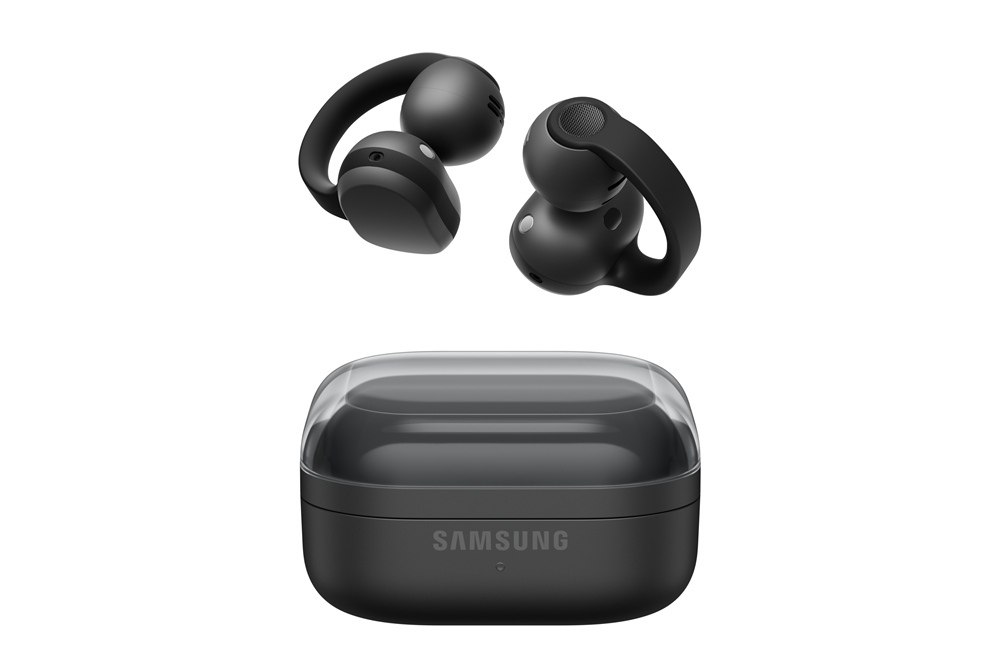
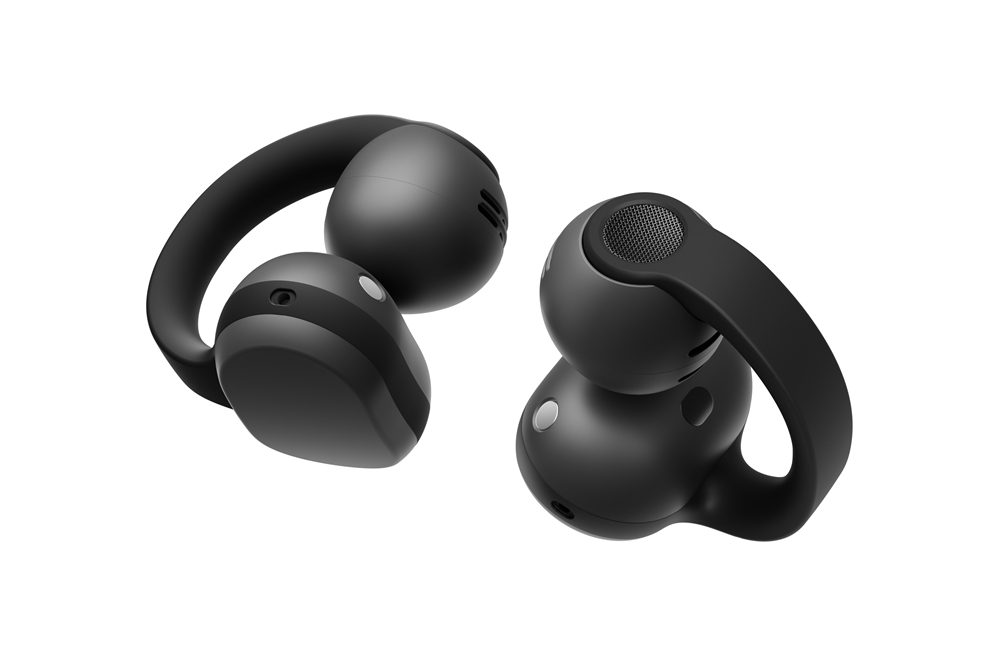
Instead of another sealed in-ear model, the company has introduced the Samsung Galaxy Buds On, its first clip-on wireless earbuds. The design leaves the ear canal open and uses a flexible structure that wraps around the outer ear.
That matters because open-ear audio is no longer a fringe category.
Omdia estimates that open wireless stereo, or OWS, shipments reached 11.1 million units in the second quarter of 2026, representing 12% year-over-year growth. At the same time, conventional true-wireless-stereo shipments declined 2%. Clip-on designs represented 61% of OWS shipments during the quarter.
Samsung is therefore entering a category that already has momentum.
But there is an important catch for American buyers: the Galaxy Buds On has not yet received a confirmed U.S. release date or U.S. price.
Samsung’s first confirmed market is South Korea, where the earbuds are scheduled to go on sale October 27 for KRW 299,000. The company says other markets will follow in stages.
That makes the Galaxy Buds On interesting now, but not yet a straightforward U.S. buying recommendation.
Table of Contents
- What Samsung Announced
- Why the Galaxy Buds On Design Matters
- How Clip-On Open-Ear Earbuds Work
- Why Open-Ear Audio Is Growing
- TwinBoost Speakers and Sound
- Audio Leakage and Automatic Volume
- Calls and Voice Pickup
- Galaxy AI and Gemini Live
- Battery Life and Connectivity
- Galaxy Buds On vs. Conventional Earbuds
- Are They Suitable for Running?
- What U.S. Buyers Need to Know
- Risks and Limitations
- What Samsung Needs to Prove
- What to Watch Next
- Conclusion
- FAQs
Key Takeaways
- The Galaxy Buds On is Samsung’s first clip-on open-ear earbud, designed to keep the ear canal uncovered while providing wireless audio.
- The U.S. launch is not confirmed yet. South Korea gets the product first on October 27 at KRW 299,000.
- The larger story is the growth of open-ear audio: Omdia says OWS shipments grew 12% year over year in Q2 2026, with clip-on products accounting for 61% of the category.
What Samsung announced
Samsung’s official Galaxy Buds On announcement confirms that the Galaxy Buds On is the first clip-type wireless earbud in the Galaxy Buds family.
The basic concept is simple.
Traditional in-ear earbuds place a speaker inside or very close to the ear canal. They normally depend on an ear tip to create a seal. That seal helps with bass reproduction, passive isolation and noise cancellation.
Galaxy Buds On takes the opposite approach.
The ear canal remains uncovered.
The earbuds sit around the outer ear, allowing the wearer to hear external sounds while listening to music.
Samsung specifically positions the design for activities where awareness of the surrounding environment is useful. The company says the product can complement traditional Galaxy Buds: sealed earbuds for deeper immersion and the open-ear Buds On for outdoor activities.
That is an important distinction.
Samsung is not necessarily arguing that open-ear earbuds replace conventional earbuds. It is creating a second category within its ecosystem.
Why the Galaxy Buds On design matters
Open-ear audio solves a problem that conventional earbuds cannot completely solve.
Isolation and awareness are inherently competing goals.
If an earbud creates a strong seal and effective ANC, outside sound becomes easier to suppress. That is excellent on airplanes, trains and noisy offices.
But runners, cyclists and pedestrians sometimes want the opposite.
They may want to hear music while also remaining aware of traffic, people, announcements or other environmental sounds.
Samsung’s clip-on approach attempts to address that use case without relying on an ear hook.
The company says it studied different ear shapes and used simulations to optimize the positioning of speakers, batteries and the flexible band. Samsung also says the design increases the contact area to distribute pressure more evenly.
Those are engineering claims rather than independent comfort-test results.
That distinction matters.
A manufacturer can design a product specifically for stability without proving that every user will find it comfortable.
Ear anatomy varies substantially, so a clip that works exceptionally well for one listener may create pressure elsewhere for another.
How clip-on open-ear earbuds work
The Galaxy Buds On uses an air-conduction approach rather than sealing the ear canal.
That means sound is delivered toward the ear rather than transmitted through the skull as traditional bone-conduction headphones do.
The advantage is that the listener retains a more natural connection to the surrounding environment.
The disadvantage is acoustic leakage.
When the ear canal is not sealed, some sound can travel outward. At higher listening levels, people nearby may hear what the wearer is playing.
Samsung addresses that problem with what it calls Audio Leakage Reduction.
The company says the feature is designed to reduce sound escaping from the earbuds.
That is useful, but it should not be interpreted as “zero sound leakage.”
Open-ear audio still faces a basic acoustic limitation: the speaker is producing sound into an environment that is not enclosed by an ear tip.
Actual leakage will depend on volume, fit, content, distance and surrounding noise.
Why open-ear audio is growing
This is where the Galaxy Buds On story becomes more interesting.
Omdia’s September 2026 data suggests open wireless stereo is growing faster than conventional true wireless stereo.
According to Omdia, OWS shipments grew 12% year over year in Q2 2026 to 11.1 million units. Conventional TWS shipments declined 2%.
Even more strikingly, clip-on designs represented 61% of OWS shipments.
Omdia also says OWS accounted for 13.5% of total TWS shipments in the quarter, up from 12% a year earlier.
That suggests consumers are not simply buying fewer traditional earbuds and replacing them with identical products.
They are experimenting with different physical designs.
The reasons make sense.
Open-ear earbuds can be attractive for:
- Walking
- Running
- Cycling
- Commuting
- Office environments
- Travel
- Casual listening
- Long listening sessions
- Situations where users need environmental awareness
They can also appeal to people who dislike the pressure or plugged-in sensation of silicone ear tips.
That does not mean they are automatically better.
They are better for a particular use case.
TwinBoost speakers and sound
Samsung equips the Galaxy Buds On with what it calls TwinBoost speakers.
The goal is to address one of the traditional weaknesses of open-ear audio: bass.
Bass is difficult to reproduce convincingly when there is no sealed acoustic chamber between the speaker and the ear canal.
A sealed earbud can create a more controlled acoustic environment.
An open-ear device has to project sound into a much more open space.
Samsung therefore designed its speaker system to improve low-frequency performance.
That is a legitimate engineering challenge, but we should wait for independent measurements before declaring the Galaxy Buds On a breakthrough in bass reproduction.
There are several things that matter beyond driver hardware:
- Speaker placement
- Distance from the ear
- Ear geometry
- DSP
- Equalization
- Output level
- Environmental noise
- Fit
- Individual hearing characteristics
A larger or more sophisticated speaker does not automatically guarantee better sound.
For buyers, this means the Galaxy Buds On should eventually be judged using measurements and listening tests rather than Samsung’s marketing language alone.
Audio leakage and automatic volume
The other major technology feature is automatic volume adjustment.
Samsung says the Galaxy Buds On can adjust volume according to the surrounding noise level.
The basic concept is useful.
Imagine walking beside a busy road.
A conventional earbud may become harder to hear as traffic noise rises. A user might manually increase the volume.
An automatic system can instead respond to the changing acoustic environment.
But automatic volume control needs to be implemented carefully.
A system that increases volume too aggressively could encourage higher listening levels.
A system that reacts too conservatively could make music difficult to hear.
This is one area where real-world testing will be more useful than specifications.
Samsung also combines automatic volume with Audio Leakage Reduction.
The intended result is clear: make an open-ear design more usable in environments where sound leakage and background noise would otherwise be significant disadvantages.
Calls and voice pickup
Galaxy Buds On also takes an interesting approach to voice calls.
Samsung lists three microphones and a voice-pickup sensor based on bone-conduction principles. Machine-learning processing is used to separate the wearer’s voice from background noise.
This is consistent with the broader direction of modern wireless audio.
Microphones are no longer used only to capture speech.
They are increasingly part of the headphone’s sensing system.
The microphones can help with:
- ANC
- Transparency
- Wind detection
- Voice isolation
- Call processing
- Environmental awareness
- Automatic sound adjustments
Qualcomm’s Snapdragon S7 Gen 1 platform, which Samsung lists as part of the Buds On architecture, is designed around substantial on-device audio processing and AI capabilities. Qualcomm says the platform supports adaptive ANC, transparency, hearing-related processing and other audio workloads.
That does not mean every feature Qualcomm supports is automatically present in the Galaxy Buds On.
This is an important technical distinction.
A chipset’s capabilities are not the same thing as a finished product’s feature list.
Samsung determines how the platform is configured and which features are enabled.
Galaxy AI and Gemini Live
The Galaxy Buds On is also part of Samsung’s broader push to make earbuds an interface for AI.
Samsung says the earbuds can connect with Galaxy AI features, including Gemini Live.
The product also supports head gestures and voice-memo functionality.
That changes the role of earbuds.
Historically, headphones were primarily output devices.
They played music.
Then microphones made them input devices for phone calls.
Now AI is turning them into conversational interfaces.
The potential is significant.
A user could theoretically ask a question while walking without reaching for a phone. They could dictate a reminder. They could respond to a call using a gesture. They could interact with an AI assistant while keeping their hands free.
But there is an important ecosystem limitation.
Some of these features are tied to Samsung’s Galaxy devices and software environment.
Therefore, someone using an iPhone should not assume that buying the Galaxy Buds On provides the same experience as using it with a Galaxy phone.
This is common across modern earbuds.
Hardware compatibility is increasingly different from feature compatibility.
Battery life and connectivity
Samsung rates Galaxy Buds On for up to 9.5 hours of playback on a single charge. Independent reporting also lists a charging case that extends total listening time substantially.
The phrase “up to” matters.
Manufacturer battery figures are normally measured under specified conditions.
Actual runtime can change with:
- Volume
- Codec
- Microphone use
- Voice calls
- AI features
- Environmental sensing
- Processing load
- Bluetooth connection conditions
- Temperature
Therefore, 9.5 hours should be treated as a manufacturer rating, not a guaranteed real-world result.
For comparison, the design philosophy is quite different from premium sealed earbuds.
An open-ear product does not need to spend as much of its processing effort trying to create a sealed acoustic environment.
But it may have to work harder to maintain intelligibility against environmental noise.
The eventual independent battery and loudness tests will be important.
Galaxy Buds On versus conventional earbuds
The easiest way to understand Galaxy Buds On is not to ask whether they are “better” than traditional earbuds.
Ask what problem they solve.
Conventional sealed earbuds are generally better when you want:
- Strong passive isolation
- Strong ANC
- Deep bass
- Immersive music
- Airplane travel
- Noisy public transportation
- Private listening
TechOzea’s guide to active noise cancellation explains why ANC works particularly well against steady low-frequency sounds while becoming more complicated with irregular sounds.
Open-ear earbuds are generally more attractive when you want:
- Environmental awareness
- Outdoor listening
- Comfort without ear-canal sealing
- Quick conversations
- Walking and commuting
- Long casual listening
- Less physical occlusion of the ear
That is why the Galaxy Buds On makes sense as an addition to Samsung’s lineup.
It does not need to defeat Galaxy Buds4 Pro on every metric.
It needs to be better for the situations where an open design is preferable.
Are Galaxy Buds On suitable for running?
Potentially, yes.
But this is another area where marketing should not be confused with independent testing.
Samsung explicitly positions the Buds On for outdoor activities and says the clip design was developed with movement and stability in mind.
For runners, the advantages are obvious.
The ear canal remains open.
That can make it easier to hear traffic, other runners, cyclists and environmental signals.
The clip design also gives the product a different mechanical attachment point from ordinary earbuds.
But runners should still consider:
- Sweat resistance
- Stability during rapid movement
- Wind noise
- Sound leakage
- Volume levels
- Comfort after an hour or more
- Ability to control playback while moving
For people considering over-ear headphones for gym use, TechOzea’s over-ear workout headphone guide explains why fit, sweat resistance and environmental awareness matter so much for active listening.
What U.S. buyers need to know
This is currently the most important practical point.
Galaxy Buds On is not yet a confirmed U.S. retail product.
Samsung has announced the earbuds and confirmed South Korean availability beginning October 27, 2026.
Samsung has also indicated that additional markets will follow.
But the sources reviewed do not establish a U.S. MSRP or U.S. release date.
That means American buyers should not rely on converted Korean pricing as an official U.S. price.
The KRW 299,000 figure is useful as a reference point.
It is not the same thing as a confirmed U.S. MSRP.
Taxes, distribution, regional pricing, promotions and currency movements can all affect the final price.
This is especially important if Samsung later positions the product near premium open-ear competitors.
The bigger question: can Samsung make open-ear audio mainstream?
This is arguably more important than the Buds On itself.
Samsung has an enormous advantage that smaller open-ear brands do not always have: ecosystem integration.
Galaxy phones already provide the foundation for:
- Galaxy AI
- Gemini-related functionality
- Fast pairing
- Device integration
- Software updates
- Wearable management
- Cross-device experiences
If Samsung makes open-ear audio a normal option inside its Galaxy ecosystem, it could expose millions of consumers to a product category they may not have considered.
That could accelerate the category.
And Omdia’s data suggests the category is already growing.
The challenge is sound quality.
Open-ear earbuds have historically struggled to match sealed earbuds in bass and isolation.
Samsung’s TwinBoost approach is therefore more important than the marketing name itself.
The question is whether the system can deliver sufficiently full sound without forcing the user to increase volume excessively.
The hearing-awareness advantage needs nuance
It is tempting to say that open-ear earbuds are automatically safer because they let users hear their surroundings.
That would be too broad.
Open-ear design can improve environmental awareness because it does not physically seal the ear canal.
But listening safety still depends heavily on volume and exposure duration.
A listener can still play audio loudly through an open-ear product.
The correct consumer advice is therefore not “open earbuds are safe.”
It is:
Open-ear earbuds can make it easier to remain aware of your surroundings, but they do not eliminate the need for responsible listening levels.
For a broader discussion of listening comfort and hearing considerations, TechOzea’s safe headphone listening guide provides additional context.
Risks and limitations
The Galaxy Buds On has several unanswered questions.
1. No confirmed U.S. price
This makes value comparisons premature.
2. No independent measurements yet
We do not yet have reliable independent data establishing how the Buds On performs for:
- Frequency response
- Bass extension
- Distortion
- Maximum output
- Leakage
- Microphone noise rejection
- Battery life
- Latency
3. Open-ear physics remain a limitation
No amount of marketing changes the fact that an open acoustic design has less passive isolation than a sealed in-ear design.
4. Galaxy AI features may be ecosystem-dependent
Consumers outside the Galaxy ecosystem may not receive every feature.
5. Automatic volume requires testing
The feature sounds useful, but independent testing should determine how it behaves across real-world noise levels.
6. Comfort is personal
Samsung’s ergonomic research is encouraging, but ear shape varies.
A clip that distributes pressure well for one person could be uncomfortable for another.
What Samsung needs to prove
The Galaxy Buds On looks technically interesting.
But the next stage should be evidence.
Independent testing should answer five questions.
First: How good is the sound?
Can TwinBoost deliver convincing bass without a sealed ear canal?
Second: How much sound leaks?
Can someone sitting next to the wearer hear podcasts or music?
Third: How stable is the clip?
Does it remain secure during running, head movement and rapid exercise?
Fourth: How good are calls?
Can the microphone system maintain speech clarity in wind and traffic?
Fifth: How useful is automatic volume?
Does it preserve intelligibility without encouraging excessive listening levels?
Those questions will determine whether Galaxy Buds On is genuinely competitive.
What to watch next
The next important milestone is the October 27 South Korean retail launch.
After that, reviewers should begin producing real-world tests.
For U.S. buyers, the most important announcement will be Samsung’s eventual regional availability and pricing.
If the U.S. price lands aggressively, Galaxy Buds On could become a serious mainstream competitor.
If it enters the U.S. at a premium price, consumers will have to compare it against established open-ear products and premium sealed earbuds.
The broader category should also be watched.
Omdia expects OWS shipments to rise from 43.9 million units in 2026 to 90.5 million by 2030.
That is a market forecast, not a guarantee.
But it illustrates why major manufacturers are paying attention.
Samsung is not entering an empty market.
It is entering a market that is becoming strategically important.
Conclusion
Samsung’s Galaxy Buds On is more significant than its name might suggest.
It is Samsung’s first serious move into clip-on open-ear audio, and the timing is important.
Independent market data from Omdia indicates that open wireless stereo is growing faster than conventional TWS, with clip-on products already accounting for the majority of OWS shipments.
Samsung’s approach combines that form factor with its strengths in ecosystem software, AI, voice processing and mobile integration.
The hardware is also interesting.
TwinBoost speakers address the bass challenge. Audio Leakage Reduction tackles one of the biggest weaknesses of open-ear products. Automatic volume adjustment attempts to adapt listening to changing environments. Voice pickup technology targets another traditional weakness: noisy calls.
But buyers should remain patient.
The Galaxy Buds On is currently confirmed for South Korea, not the United States. Its U.S. price, U.S. release date and independent performance remain unknown.
For now, the best way to view Galaxy Buds On is as an important signal about where consumer audio is going.
The future of earbuds may not be about choosing between “wired” and “wireless,” or even between “in-ear” and “over-ear.”
It may increasingly be about choosing the right acoustic design for the situation.
And Samsung has just made open-ear audio a much bigger part of that conversation.
FAQs
What are Samsung Galaxy Buds On?
Galaxy Buds On are Samsung’s first clip-on open-ear wireless earbuds. They sit around the outer ear instead of sealing the ear canal.
When do Galaxy Buds On launch?
Samsung has confirmed South Korean availability beginning October 27, 2026.
How much do Galaxy Buds On cost?
The confirmed South Korean price is KRW 299,000. Samsung has not yet confirmed a U.S. retail price.
Will Galaxy Buds On be available in the U.S.?
Samsung says additional markets will follow, but a specific U.S. release date and U.S. price have not been confirmed in the sources reviewed.
How long does Galaxy Buds On battery last?
Samsung’s rated playback figure is up to 9.5 hours from the earbuds. Actual battery life will vary according to volume, processing, calls and other settings.
Are Galaxy Buds On noise cancelling earbuds?
They are open-ear earbuds rather than conventional sealed ANC earbuds. Their design focuses on environmental awareness rather than isolating the ear canal.
Are Galaxy Buds On good for running?
They are specifically designed with outdoor activities in mind, and the open design can make environmental awareness easier. Independent testing is still needed to establish long-term stability during running.
Should I buy Galaxy Buds On instead of traditional Galaxy Buds?
Choose Buds On if you prioritize environmental awareness and an open fit. Choose sealed Galaxy Buds if you prioritize stronger isolation, stronger ANC and a more immersive listening experience.
