


Fairphone’s Fairbuds 2 bring a different priority to the wireless earbud market: keeping the product useful for longer by making important components replaceable. Announced on October 14, 2026, the second-generation earbuds combine modular construction with active noise cancellation, LDAC Bluetooth audio, and a claimed total playback time of up to 40 hours with the charging case.
The US price is $119, and availability is scheduled for November 2, 2026. That puts the Fairbuds 2 in a competitive price range where shoppers can also find conventional wireless earbuds with ANC, companion apps, and multipoint connectivity.
The central question is whether the Fairbuds 2 offer enough everyday audio performance to make repairability a genuine advantage rather than a feature buyers appreciate but rarely use.
Fairphone’s specifications provide a starting point. An independent hands-on report from The Verge adds useful context about sound quality, ANC, and the practical experience of opening the product for repairs. Together, those sources support a more useful conclusion than simply repeating the manufacturer’s marketing claims.
Key Takeaways
- Consider repairability: The Fairbuds 2 have seven replaceable parts, including batteries, giving owners a way to address some common hardware failures without automatically replacing the whole product.
- Understand the audio trade-offs: LDAC, ANC, and an equalizer make the earbuds more versatile, but independent testing has not established that they outperform leading alternatives.
- Check availability before buying: US sales are scheduled to begin November 2 at $119, so American shoppers should not assume that European availability means immediate US delivery.
Table of Contents
- What Fairphone announced
- Price and US release date
- Why repairability matters
- Replaceable batteries and modular construction
- Sound quality, drivers, and LDAC
- Active noise cancellation and calls
- Battery life and charging
- Compatibility and connectivity
- Sustainability and the bigger industry picture
- Limitations and buying alternatives
- Who should buy the Fairbuds 2?
- Frequently asked questions
What Fairphone Announced
Fairphone introduced the Fairbuds 2 on October 14, 2026. The product is the successor to the company’s first-generation repairable wireless earbuds, retaining the focus on modular components while introducing a redesigned form factor and updated audio features.
The earbuds use 11mm bio-cellulose dynamic drivers, support LDAC, include active noise cancellation, and have an IP54 rating for dust and splash resistance. Fairphone also advertises multipoint connectivity, Google Fast Pair, and an equalizer with adjustable sound settings.
The product is not simply a repairable version of an older design. Fairphone has also updated the shape of the earbuds, moving to a stemmed design, and reduced the size of the charging case.
In its October 14 hands-on report, The Verge noted that the charging case is 37% smaller than the previous generation. The publication also found the new earbuds straightforward to open for repairs and reported improvements to battery life.
The important distinction is between what the hardware offers and what the company claims about performance. The driver size and codec support are specifications. Claims about richer sound, stronger noise cancellation, or greater longevity require testing or long-term evidence.
That distinction should guide any buying decision.
Price and US Release Date
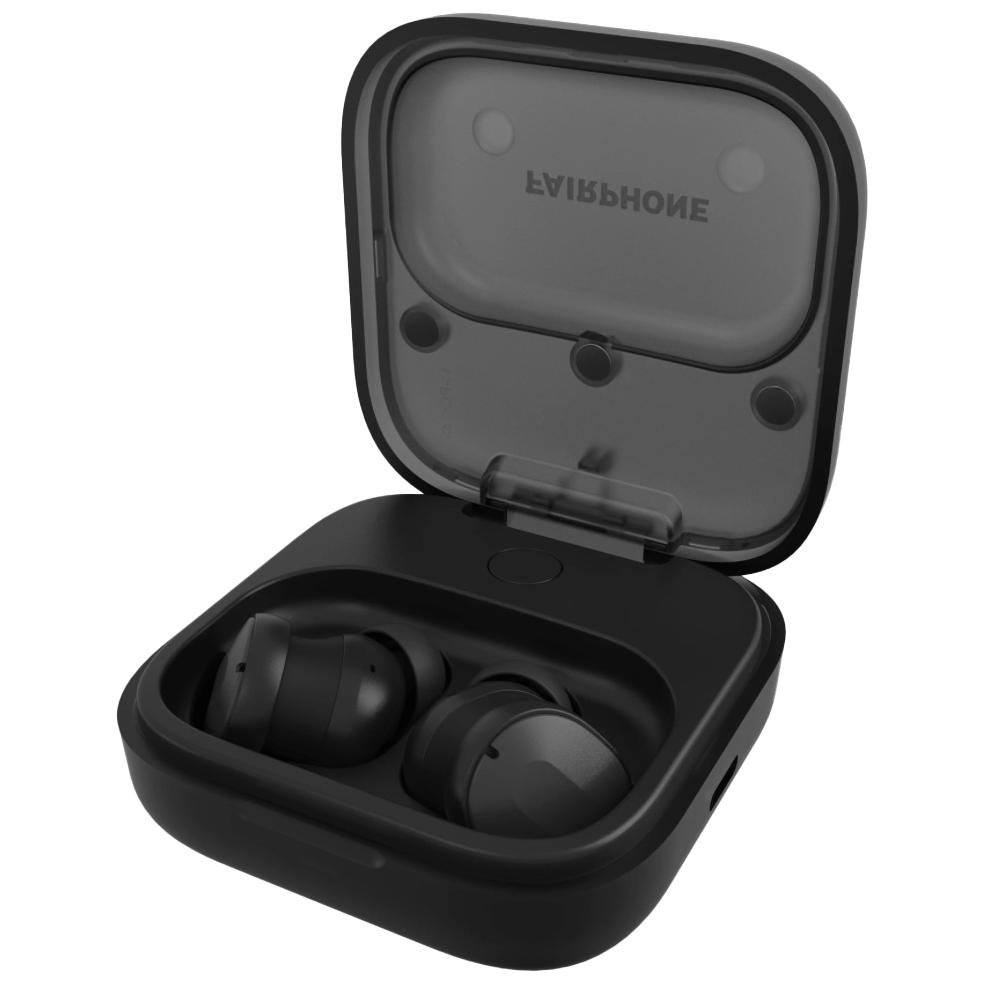
Fairphone has announced a US price of $119 for the Fairbuds 2, with US availability scheduled for November 2, 2026. The earbuds became available in Europe and the UK on October 14.
The timing matters for American shoppers. European product availability does not necessarily mean a US retailer can deliver the product immediately, and regional pricing or shipping arrangements can differ.
At $119, the Fairbuds 2 compete in a crowded segment. Buyers can find earbuds that emphasize noise cancellation, sound quality, comfort, sports use, or smartphone integration. Fairphone’s distinguishing feature is the ability to replace components that often determine whether wireless earbuds remain usable.
A sensible comparison therefore needs to look beyond the purchase price.
For conventional wireless earbuds, the original purchase can be only part of the long-term cost. If a battery becomes inconveniently weak, a charging case fails, or an earbud is lost, the owner may need a replacement component or a new product.
The Fairbuds 2 are designed to offer more options for those situations.
However, repairability does not make the initial price automatically cheaper. The value depends on how long the product remains useful, which parts need replacement, whether spares are available, and how much those repairs cost.
For buyers comparing options, TechOzea’s guide to the best wireless earbuds provides a broader starting point for evaluating everyday listening needs.
Why Repairability Matters
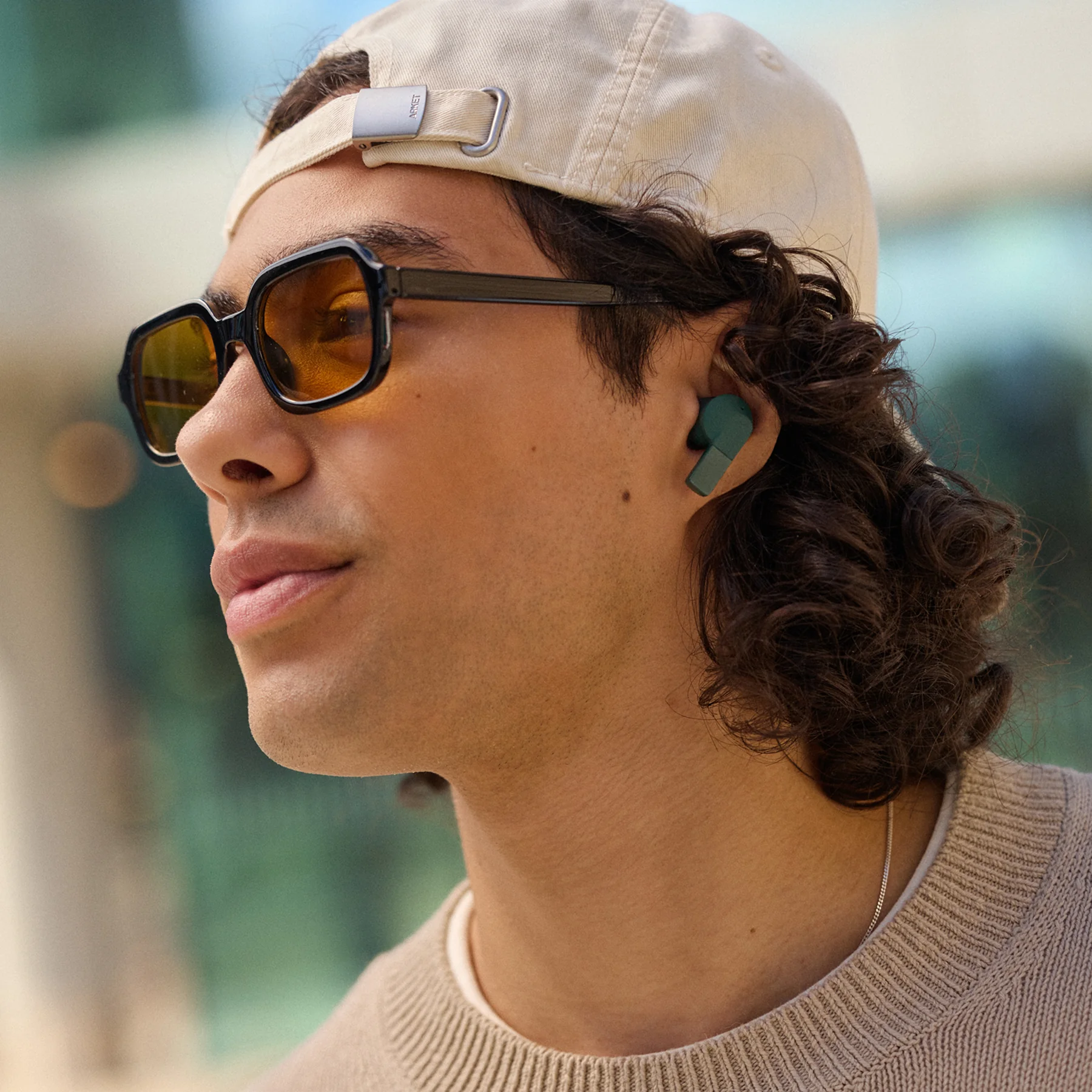
Wireless earbuds are compact products with several components packed into a small enclosure. Their batteries are particularly important because they determine how long the earbuds can operate between charges.
Rechargeable batteries gradually lose capacity with use. As that happens, an earbud that once lasted through a commute, a workout, or several meetings may need charging more frequently.
The problem is not necessarily that the speakers, Bluetooth connection, or microphones have stopped working. The battery may simply have become the weakest part of an otherwise functional product.
With many compact earbuds, replacing that battery is not a straightforward consumer repair. Adhesives, sealed housings, and limited access to spare parts can make disassembly difficult or impractical.
Fairphone’s approach is to make selected components replaceable instead of treating the entire product as a single disposable unit.
That approach is consistent with the repairability principles discussed in iFixit’s assessment of the original Fairbuds. In 2024, iFixit highlighted replaceable earbud batteries and the accessibility of key components as important reasons for its favorable assessment of the first-generation product. That assessment is useful context, but it is not an independent repairability score for the Fairbuds 2.
Repairability is not the same as guaranteed longevity
A repairable product is not automatically a product that will last indefinitely.
Long-term usefulness depends on several factors:
- Whether replacement batteries remain available.
- Whether replacement parts are reasonably priced.
- Whether firmware and companion-app support continue.
- Whether the speakers, microphones, and charging electronics remain functional.
- Whether the product continues to meet the owner’s needs.
The Fairbuds 2 address part of this problem by allowing owners to replace selected components. That is a meaningful design advantage, but it cannot eliminate every possible failure.
A damaged driver, corroded charging contact, or discontinued software feature may still affect the product’s usefulness.
The more accurate conclusion is that repairability can increase the number of options available when something goes wrong. It does not guarantee a particular service life.
Replaceable Batteries and Modular Construction
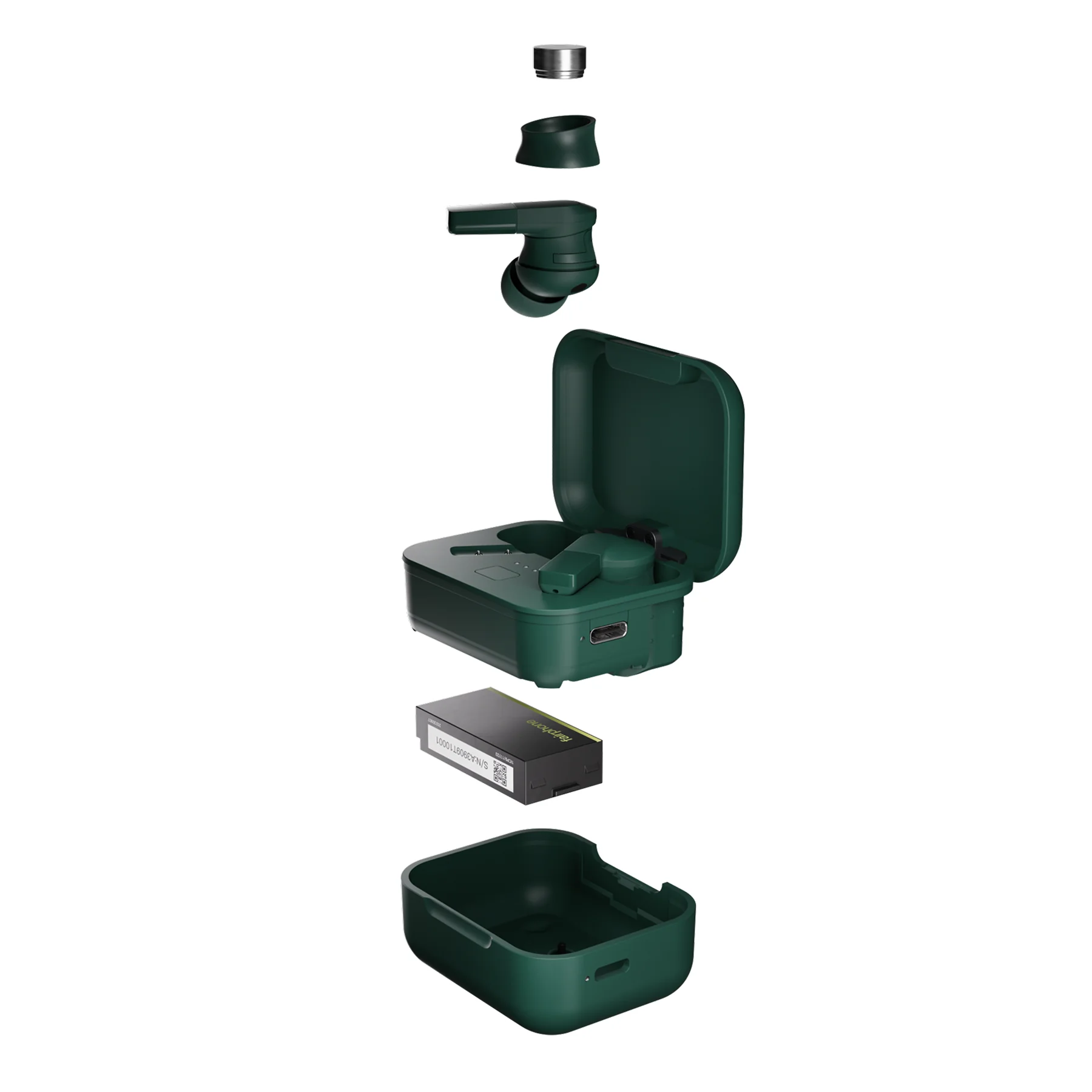
Fairphone lists seven replaceable parts for the Fairbuds 2. Its design allows owners to replace components such as the earbud batteries, charging-case battery, case body, and individual earbuds. The company also provides repair guidance and sells replacement components through its product ecosystem.
This matters because battery wear is one of the most predictable long-term challenges for rechargeable audio products.
Imagine that a pair of earbuds still sounds good after several years but no longer provides enough playback time for a daily commute. With a conventional sealed product, the owner may decide that replacing the entire set is easier than attempting a repair.
With the Fairbuds 2, a replaceable battery creates another option.
The same principle applies to a charging case. If the case battery becomes the main problem, the ability to replace that component could allow the owner to keep using the earbuds rather than purchasing an entirely new system.
What about the repair process?
Fairphone promotes the product as user-repairable, and its official materials emphasize the accessibility of replacement components.
The Verge’s hands-on examination provides a useful practical perspective. The publication reported that the earbud batteries could be removed without tools, while accessing the charging-case battery involved a single Torx T5 screw.
This is an important detail because repairability should be evaluated at the component level. A battery that can be replaced quickly is not necessarily accessed in exactly the same way as a charging-case battery.
Consumers should also check the availability and price of replacement parts before purchasing. The ability to repair a product has less value if a required component is difficult to obtain.
Repairability should be evaluated as a complete system
The most useful questions are practical:
- Can the owner identify the faulty component?
- Can that component be purchased separately?
- Is the repair process documented?
- Is the repair achievable without specialist equipment?
- Does replacing the component restore normal functionality?
Fairphone’s modular design addresses several of these questions, making repairability a central buying consideration rather than a vague sustainability promise.
Owners should still follow the manufacturer’s repair instructions and avoid damaging batteries or other electrical components during disassembly.
Sound Quality, Drivers, and LDAC
The Fairbuds 2 use 11mm bio-cellulose dynamic drivers. Fairphone says the drivers are tuned by Form Follows Frequency and describes the intended sound as having deeper bass, warmer mids, and clear highs. Those descriptions are manufacturer claims, not independent frequency-response measurements.
Driver diameter alone cannot predict how an earbud will sound.
The acoustic design, diaphragm behavior, enclosure, equalization, ear-tip fit, and listener’s ear shape all influence the result. Two products with drivers of the same diameter can have very different frequency responses and listening characteristics.
The Fairbuds 2 also support LDAC, a Bluetooth audio codec developed by Sony.
LDAC can transmit more audio data than the baseline SBC codec under supported conditions. Sony’s technical documentation describes transmission rates of up to 990kbps in supported modes, but the actual connection depends on the capabilities and settings of the transmitting and receiving devices.
What LDAC means for buyers
LDAC can be useful for listeners who want a higher-bandwidth Bluetooth audio option, particularly when using compatible Android devices and suitable source material.
However, the presence of LDAC does not guarantee a noticeable improvement in every listening situation.
The result depends on the source recording, streaming service, codec configuration, connection quality, and the earbuds’ acoustic performance. A listener may not hear a meaningful difference between codecs in ordinary use, especially with heavily compressed source material or noisy surroundings.
LDAC also should not be described as lossless Bluetooth transmission. It is a codec designed to carry higher-resolution audio content over Bluetooth, not proof that the entire playback chain is bit-perfect.
Fairphone notes that improved LDAC performance is currently available only on Android devices. Buyers should check their own device compatibility rather than assuming every phone can use all advertised audio features.
What independent listening suggests
The Verge’s hands-on report found the Fairbuds 2 generally good for everyday listening, while noting that the sound could become muddy at times and that the soundstage was not especially expansive. The reviewer also reported being impressed with the ANC.
Those findings are useful, but they represent one reviewer’s listening experience rather than a standardized laboratory comparison.
They also suggest that the Fairbuds 2 should not be purchased on the assumption that repairability and LDAC automatically deliver flagship sound.
The more useful question is whether their audio quality meets the listener’s needs while providing a repairability advantage that competing products may not offer.
Active Noise Cancellation and Calls
Fairphone advertises ANC performance of up to 45dB and a six-microphone array for handling environmental noise and calls. These are manufacturer claims; the sources reviewed do not establish an independent, standardized measurement confirming the advertised maximum reduction.
ANC works by using microphones and signal processing to reduce unwanted ambient sound. Its effectiveness varies with frequency, fit, the environment, and the particular headphone or earbud design.
A single decibel figure does not explain how a product performs against airplane noise, traffic, office conversation, or sudden high-pitched sounds.
The fit is especially important for in-ear earbuds. Poorly fitting ear tips can reduce passive isolation and affect the overall listening experience, even when the ANC system itself is capable.
For a deeper explanation, TechOzea’s guide to how active noise cancellation works explains the relationship between electronic cancellation and passive isolation.
What about microphone quality?
The six-microphone arrangement is a hardware specification, not proof of superior call quality.
Microphone placement, signal processing, wind handling, and the software’s ability to distinguish speech from background noise all influence the final result.
The Verge’s reviewer reported that the ANC impressed during hands-on use, but that assessment should not be extended automatically to every microphone or call-quality scenario.
For buyers who regularly attend calls in busy environments, independent microphone samples and tests in wind, traffic, and office noise would provide more useful evidence than microphone count alone.
Battery Life and Charging
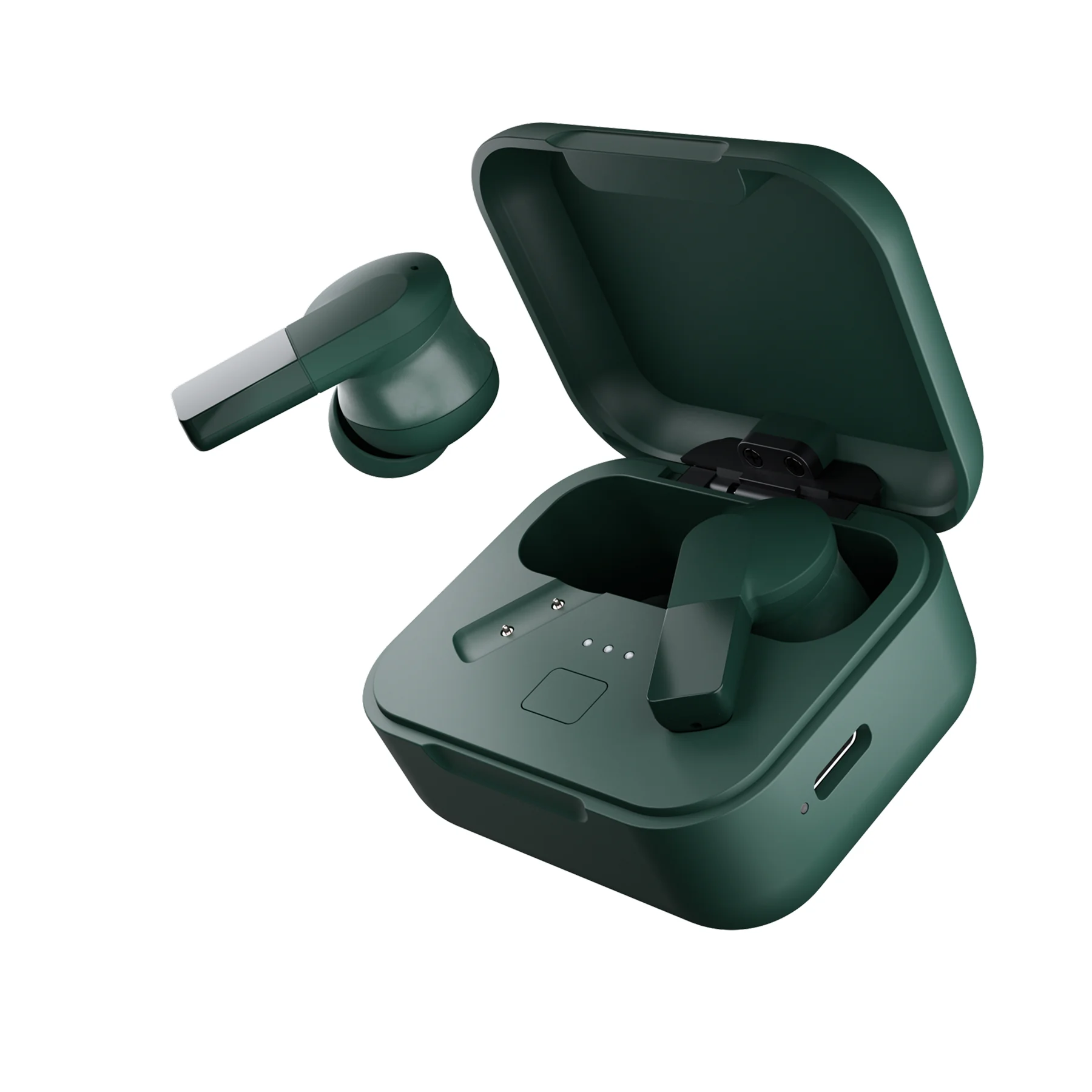
Fairphone advertises up to eight hours of playback on the earbuds and up to 40 hours with the charging case. Its official product page specifies that the stated runtime is measured with ANC disabled.
The Verge reports that playback drops to approximately six hours with ANC enabled. That distinction is important because the longest advertised figure does not describe every listening condition.
Actual battery life can vary with listening volume, codec, connection conditions, call use, ANC settings, and other factors.
Why replaceable batteries matter more than one runtime figure
Battery life is important when buying earbuds, but long-term battery serviceability is also worth considering.
A product with excellent initial endurance can become less convenient as its battery degrades. A product with replaceable batteries may offer a practical way to address that decline without replacing the entire system.
That does not mean the Fairbuds 2 will necessarily outlast every competing product. Their long-term advantage depends on how well the batteries age, the availability of replacement parts, and the condition of the other components.
Consumers who want to understand the wider issue can consult TechOzea’s guide to how long wireless earbuds last.
Charging considerations
The Fairbuds 2 charge through USB-C. The Verge reports that a full charging cycle takes a couple of hours and that wireless charging is not supported.
The absence of wireless charging may be a disadvantage for buyers who already use a wireless charging pad. It is less important for people who routinely charge their earbuds with a USB-C cable.
The more significant question is whether the battery design and availability of replacement parts will help owners continue using the product after its initial battery capacity has declined.
Compatibility and Connectivity
Fairphone lists support for AAC, SBC, LC3, and LDAC, along with Google Fast Pair and multipoint connectivity. The product can save up to six devices and switch between two active connections.
These features make the Fairbuds 2 suitable for people who use earbuds across a phone, tablet, or computer.
Multipoint can be especially convenient for someone who listens to music on a laptop but also wants to receive calls from a phone. Instead of manually disconnecting and reconnecting every time, the earbuds can maintain two active connections.
Compatibility still depends on the source device and the feature in question. Support for a codec or connection technology in the earbuds does not mean every connected device supports it.
Android and iPhone considerations
LDAC is most relevant to users with compatible Android devices. Fairphone specifically notes that improved LDAC performance is currently available only on Android.
For iPhone users, the more important considerations may be comfort, battery life, ANC, call quality, and the companion app’s available features.
Consumers should also confirm that the companion app is available for their operating system and that the functions they care about work on their particular device.
A buying decision should be based on the features a person can actually use, not simply the number of items listed in the specification sheet.
Sustainability and the Bigger Industry Picture
The Fairbuds 2 raise a broader question: should consumers place more importance on repairability when purchasing personal audio products?
Fairphone says 48.6% of the Fairbuds 2’s materials, measured by weight, are fair and recycled. It also describes the product as e-waste neutral and advertises a PFAS-free exterior. These are company-reported sustainability claims; they should not be confused with a comprehensive independent lifecycle assessment.
A full assessment of environmental impact would need to consider material sourcing, manufacturing, transportation, energy use, repair rates, product lifespan, and end-of-life processing.
Replaceable batteries may help extend useful life, but their overall benefit depends on what happens in practice. If owners replace batteries and continue using their earbuds, repairability can reduce the need for complete replacements. If spare parts become unavailable or the product develops an unrelated failure, the outcome may be different.
The regulatory direction
The European Union’s Batteries Regulation includes provisions intended to make portable batteries removable and replaceable by end users, subject to the detailed rules and exceptions. Article 11 is generally applicable from February 18, 2027.
This provides important context for the repairability debate, although the regulation should not be interpreted as a universal rule applying identically to every product in every country.
For American consumers, the immediate benefit of the Fairbuds 2 is the product’s design itself, not any assumption that US law requires every competitor to use the same construction.
What would make repairability more valuable?
The strongest long-term case would combine accessible replacement parts, reasonable prices, clear repair instructions, and continued software support.
Fairphone’s approach addresses several of these issues. Its official product information includes replacement-part options and repair guidance. The remaining question is how well the company will support the product over the years an owner actually uses it.
That question cannot be answered fully at launch.
Limitations and Buying Alternatives
The Fairbuds 2 are not automatically the right earbuds for every buyer.
Their main attraction is repairability, supported by a feature set that includes ANC, LDAC, multipoint, and an equalizer. However, shoppers should still compare them with alternatives based on the requirements that matter most.
Buyers who prioritize noise cancellation
People who frequently travel by plane or train may want to prioritize independently tested ANC performance. Fairphone’s advertised 45dB figure is not a complete description of how the earbuds perform across different frequencies.
The best choice for a frequent traveler may be a different product if it offers stronger verified noise reduction or a more comfortable fit.
Buyers who prioritize sound quality
Listeners who care most about tonal balance, instrument separation, bass extension, or soundstage should seek independent measurements and listening comparisons.
LDAC is a useful connectivity feature, but it cannot guarantee that the earbuds will sound better than a competing model with a different codec.
Buyers who prioritize comfort
Comfort depends on ear shape, ear-tip selection, pressure, and the way the earbuds sit during movement.
The stemmed design may appeal to some listeners, but the fit should be evaluated individually. Buyers should also consider whether the earbuds remain comfortable during extended listening.
Buyers who prioritize price
The $119 launch price needs to be compared with actual retail prices for competing products, not just their original recommended prices.
Discounted alternatives may offer better performance for some buyers, while the Fairbuds 2 may be more attractive to those who place substantial value on replacement parts and long-term serviceability.
The right decision depends on which benefits the buyer expects to use.
Who Should Buy the Fairbuds 2?
The Fairbuds 2 make the strongest case for consumers who want wireless earbuds with replaceable batteries and a design intended to support repair.
They are particularly worth considering for people who:
- Prefer repairing electronics instead of replacing them unnecessarily.
- Want ANC and modern Bluetooth features in the same product.
- Use compatible devices that can take advantage of LDAC.
- Are comfortable evaluating audio performance separately from sustainability claims.
- Expect to keep their earbuds for a long time and value access to replacement parts.
They are less compelling for buyers who only care about obtaining the strongest ANC, the best measured sound quality, or the lowest possible price.
Those shoppers should compare performance and current retail pricing before choosing.
The Fairbuds 2 should also not be treated as a guaranteed long-term investment. Their modular design creates the opportunity for repairs, but actual longevity will depend on battery aging, component reliability, software support, and spare-part availability.
The best reason to consider them is not that they are guaranteed to be better than every competitor. It is that they make repairability a practical part of the buying decision.
What to Watch Next
Three developments will determine how compelling the Fairbuds 2 become after launch.
First, independent performance testing. Standardized ANC measurements, microphone tests, and battery tests would provide a clearer picture of their everyday performance. Listening impressions are useful, but they cannot establish precise comparative performance on their own.
Second, the US launch and spare-part availability. The November 2 launch should make it easier for American buyers to evaluate the product’s price, delivery options, and replacement-part arrangements.
Third, long-term ownership reports. The most important evidence may emerge after months of everyday use, when owners can report battery behavior, repair experiences, firmware reliability, and the practical value of replacing components.
Those findings will provide a stronger basis for judging whether repairability offers meaningful value over time.
Conclusion
The Fairbuds 2 present a credible alternative for consumers who want repairable wireless earbuds without giving up modern features.
Their seven replaceable parts, USB-C charging, LDAC support, multipoint connectivity, and ANC make them more versatile than a product focused on repairability alone. The $119 US launch price also places them within a competitive midrange category.
However, the evidence does not yet establish that they outperform leading alternatives in sound quality, noise cancellation, or long-term durability.
For now, the strongest conclusion is straightforward: Fairbuds 2 make repairability a genuine buying consideration, but consumers should still compare audio performance, comfort, compatibility, and total cost before purchasing.
Frequently Asked Questions
When do the Fairbuds 2 launch in the US?
Fairphone has announced US availability for November 2, 2026, at $119. European availability began on October 14, 2026.
How much do the Fairbuds 2 cost?
The announced US price is $119. Prices in other regions differ, and retailer pricing may change after launch.
Do the Fairbuds 2 have replaceable batteries?
Yes. Fairphone identifies seven replaceable parts, including the earbud batteries and charging-case battery. The product is designed to let owners replace selected components instead of automatically replacing the entire product.
How long does the Fairbuds 2 battery last?
Fairphone advertises up to eight hours per charge and up to 40 hours with the charging case when ANC is disabled. The Verge reports approximately six hours with ANC enabled. Actual endurance depends on usage and settings.
Do the Fairbuds 2 support LDAC?
Yes. Fairphone lists LDAC alongside AAC, SBC, and LC3. Improved LDAC performance is currently available only on Android devices, according to Fairphone.
Are the Fairbuds 2 waterproof?
They have an IP54 rating for dust and splash resistance. That does not mean they are waterproof or suitable for submersion. Consumers should follow the manufacturer’s care instructions.
Are the Fairbuds 2 better than AirPods?
There is no universal answer. The Fairbuds 2 emphasize repairability, while AirPods may be more attractive to some users because of their Apple ecosystem integration. Buyers should compare fit, ANC, sound quality, battery life, compatibility, and repair options.
Timeline
-
April 2024: The original Fairbuds launch with a repairability-focused design. iFixit subsequently published its assessment of the original model.
-
October 14, 2026: Fairphone announces Fairbuds 2, with European availability beginning.
-
November 2, 2026: Scheduled US availability at $119.
