




Affiliate disclosure: TechOzea may earn a commission when you buy through links in this article, at no extra cost to you.
There is a point in every headphone upgrade where the question changes from “Which headphones should I buy?” to “What am I actually plugging them into?”
That question matters more than amplifier marketing makes it sound.
A $100 headphone can work perfectly from a laptop. A $300 headphone may expose weaknesses in a weak output stage. A 300-ohm studio headphone can need much more voltage than a sensitive 32-ohm model. Some IEMs can even become worse matches for an amplifier with a high output impedance.
That is why we approached the best headphone amps differently. Instead of treating power as the only measurement that matters, we looked at power, impedance, sensitivity, output impedance, connections, features, size, value, and the type of listener each amplifier actually suits.
There is another important point: you may not need a headphone amplifier at all. If your current source already gets your headphones comfortably loud without audible noise or distortion, buying another box may add little value.
RTINGS makes the same basic point: an external amplifier becomes useful when the existing source cannot reach the volume or headroom you need.
Our goal here is simple. Help you spend your money where it will make sense.
Key Takeaways
- Best overall dedicated amp: JDS Labs Atom Amp 2.
- Best DAC/amp combo: FiiO K11.
- Best Schiit option: Magni Unity.
- Best feature-rich analog amp: iFi ZEN CAN 3.
- Best for demanding headphones: JDS Labs Atom Amp 2 or FiiO K7.
- Best portable direction: Qudelix 5K or a DragonFly-class USB DAC/amp.
- Do not judge an amp by watts alone.
- Impedance and sensitivity must be considered together.
- Low output impedance is especially important with sensitive IEMs.
- You may not need an amplifier if your current source already drives your headphones properly.
Best Headphone Amps at a Glance
| Headphone Amp | Best For | Type | Why We Like It |
|---|---|---|---|
| JDS Labs Atom Amp 2 | Best overall | Desktop amp | Excellent power, low output impedance and flexible connections |
| Schiit Magni Unity | Desktop value | Desktop amp/DAC option | High power, very low output impedance and compact design |
| FiiO K11 | Best DAC/amp combo | DAC/amp | Strong output, USB, optical, coaxial and balanced headphone output |
| FiiO K7 | Demanding headphones | DAC/amp | High output and useful balanced connectivity |
| iFi ZEN CAN 3 | Features and tuning | Analog amp | High output plus XBass+, XSpace, gaming and movie modes |
| Topping L30 II | Simple desktop setup | Desktop amp | Compact, powerful and designed for a separate DAC |
| Qudelix 5K | Portable listening | Bluetooth DAC/amp | Small, flexible and especially useful with EQ |
| AudioQuest DragonFly range | Simple portable setup | USB DAC/amp | Easy way to add amplification without a desktop stack |
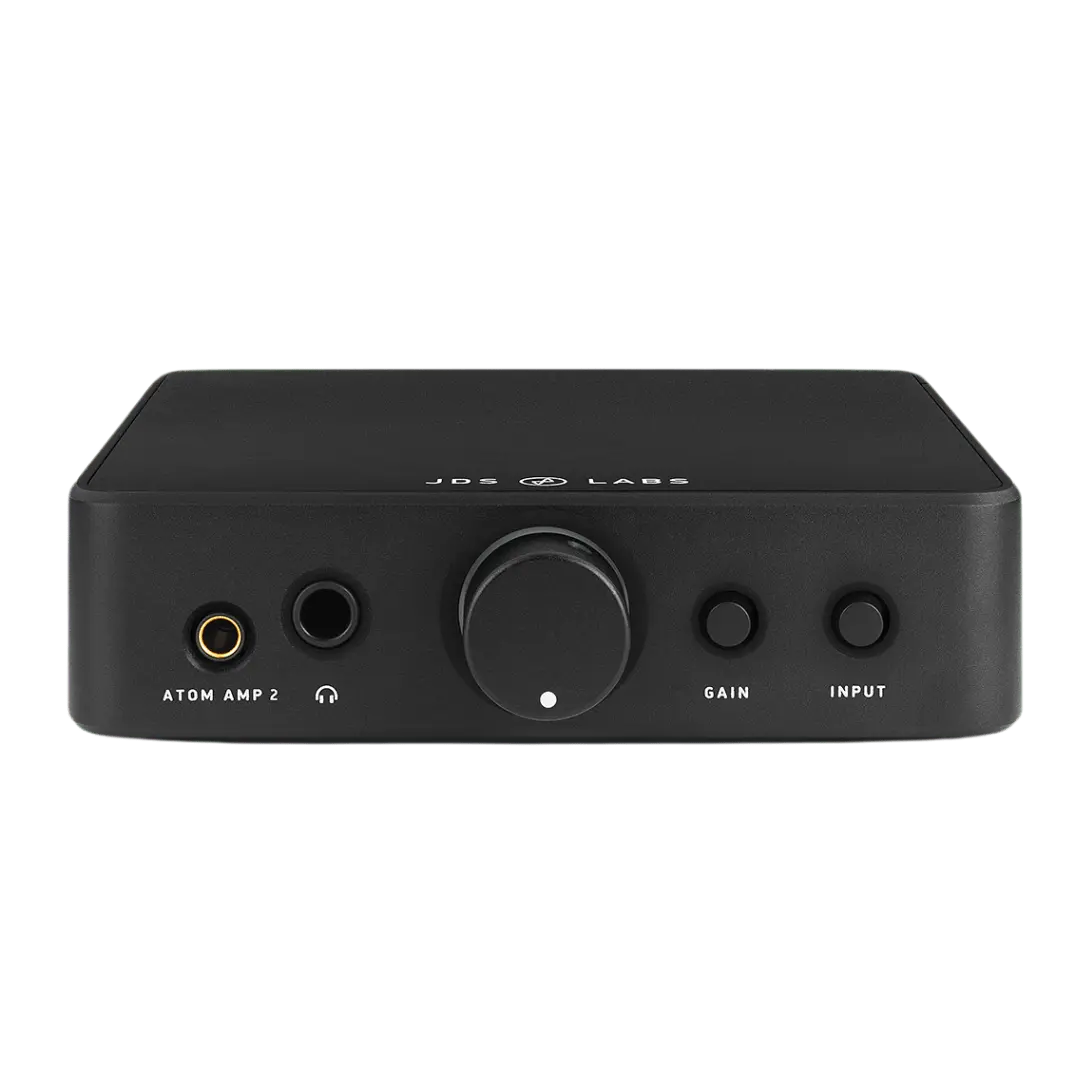
Our overall choice: The JDS Labs Atom Amp 2 is the most convincing dedicated desktop amplifier for a broad range of wired headphones. It combines serious output with very low output impedance, while its RCA, 3.5mm, 4.4mm and preamp connections make it easier to build around.
JDS Labs lists up to 2.65 watts into 32 ohms, 143mW into 600 ohms and a 0.7-ohm output impedance. Those figures give the Atom Amp 2 unusually broad compatibility for a compact desktop amplifier.
Check the JDS Labs Atom Amp 2 on Amazon
Do You Actually Need a Headphone Amp?
This is the first question you should answer before spending anything.
Buying an amplifier because an audiophile forum says you need one is a poor way to build a system. Start with your headphones and your source. If the headphones already reach your preferred listening level with plenty of volume left, you may not need another amplifier.
There are, however, several situations where an external amp makes sense.
- Your headphones are difficult to drive.
- You regularly run your source close to maximum volume.
- You hear hiss or electrical noise.
- Your source has a high output impedance.
- You need additional connection options.
- You want a physical desktop volume control.
- You want a separate DAC and amplifier setup.
- You need more headroom for EQ.
- You want features such as bass boost, crossfeed or gaming modes.
Impedance alone does not tell the complete story. Sensitivity matters too. A low-impedance headphone with low sensitivity can require more amplifier capability than a higher-impedance headphone with much higher sensitivity.
Audeze explains the relationship in terms of voltage, current, impedance and sensitivity. That is why amplifier matching should consider the complete electrical load instead of simply asking whether the headphones are “high impedance.”
For example, a 300-ohm headphone generally needs more voltage than a 32-ohm headphone to reach the same electrical power level. But a very sensitive 300-ohm headphone can still be easier to drive than a low-sensitivity planar headphone.
Think of it like a car climbing a hill. Horsepower matters, but so do the vehicle’s weight, gearing and the road itself. A single number does not tell you whether the system will work well.
Signs Your Current Source Is Struggling
The easiest sign is simple: you need to turn the volume almost all the way up and still want more.
That does not automatically mean an amplifier will transform the sound. It means the current source may not provide enough output for your headphones.
Another warning sign is loss of usable volume range. If your headphones become loud at the first few clicks of the volume control, the source may be too powerful or noisy for them. Sensitive IEMs are especially likely to expose this problem.
In that case, the solution is not necessarily “buy the most powerful amp.” A low-noise amplifier with sensible gain and low output impedance may be the better choice.
How to Choose a Headphone Amp
1. Start With Impedance
Headphone impedance is measured in ohms and describes the electrical load presented to the amplifier.
Higher impedance usually means the amplifier needs more voltage to reach a given level. Lower impedance can require more current. Neither number should be viewed in isolation.
A 32-ohm headphone is not automatically easy to drive. A low-sensitivity 32-ohm planar headphone can demand considerably more amplifier capability than an efficient 32-ohm dynamic model.
2. Check Sensitivity
Sensitivity tells you how efficiently a headphone converts electrical input into acoustic output.
Manufacturers may express sensitivity in dB/mW or dB/V. Those measurements are not interchangeable without considering impedance.
This distinction matters when comparing headphones from different manufacturers. Looking only at the impedance number can produce a bad amplifier recommendation.
3. Look at Output Power at the Correct Load
When an amplifier says “2 watts,” ask one more question: 2 watts into what impedance?
Power specifications are meaningful only when you know the load. An amplifier may produce several watts into 32 ohms but considerably less into 300 or 600 ohms.
That is why we prefer amplifier specifications that list output at several impedance levels.
4. Check Output Impedance
Output impedance is one of the most overlooked amplifier specifications.
A common industry rule of thumb is to keep amplifier output impedance at roughly one-eighth or less of the headphone impedance. Sonarworks gives the same 1/8 guideline and uses a 32-ohm headphone as an example, where a source of 4 ohms or less is preferred.
For sensitive IEMs, lower is generally better. A very high output impedance can interact with the headphone’s changing impedance across frequencies and alter its tonal response.
This is one reason models such as the Atom Amp 2 and Magni Unity are attractive. Their output impedance is extremely low compared with typical headphone impedances.
5. Decide Whether You Need a DAC
A headphone amplifier and DAC perform different jobs.
The DAC converts digital audio into an analog signal. The amplifier then provides the voltage and current required to drive the headphones.
If your computer already has a good DAC but a weak headphone output, an amp-only model can make sense. If you want to connect directly over USB, a DAC/amp combination is usually simpler.
For everyday users, the second approach often makes more sense. One box means fewer cables, fewer power supplies and fewer opportunities for compatibility problems.
6. Do Not Automatically Pay More for Balanced
Balanced headphone connections have become common in desktop audio, especially 4.4mm outputs.
But balanced does not automatically mean better sound.
In many products, the balanced output provides more available power because the amplifier uses a different output architecture. That can be useful. But simply switching from a 3.5mm connection to a 4.4mm plug does not magically improve a headphone.
Look at the actual output specifications instead.
Best Overall: JDS Labs Atom Amp 2 
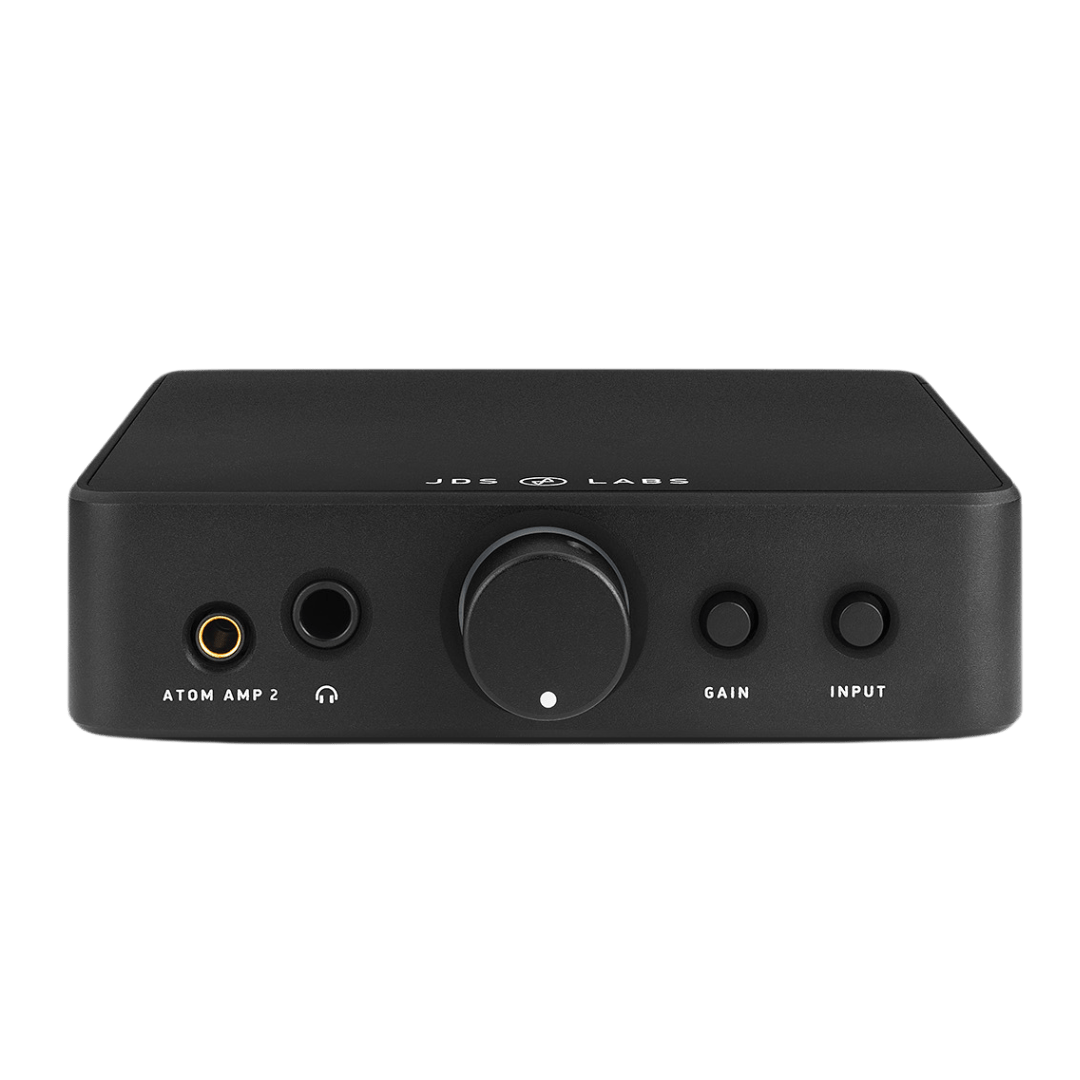
The JDS Labs Atom Amp 2 is our strongest all-round recommendation for a dedicated desktop headphone amplifier.
Its appeal is not based on exotic circuitry or luxury materials. It is based on something much simpler: the engineering makes sense for the people who actually need an amplifier.
JDS Labs specifies up to 2.65 watts into 32 ohms, 286mW into 300 ohms and 143mW into 600 ohms. Output impedance is 0.7 ohms.
That combination makes it a particularly useful match for both conventional dynamic headphones and many demanding planar models.
| Specification | JDS Labs Atom Amp 2 |
|---|---|
| Type | Desktop solid-state amplifier |
| Max power at 32Ω | 2.65W |
| Max power at 300Ω | 286mW |
| Max power at 600Ω | 143mW |
| Output impedance | 0.7Ω |
| Gain | 1x / 4.7x |
| Headphone outputs | 4.4mm and 6.35mm |
| Inputs | RCA and 3.5mm |
| Preamp output | RCA |
JDS Labs also reports 120dB SINAD at 2Vrms and 124dB SNR. More importantly for everyday use, the company lists the minimum suggested headphone impedance at 6 ohms.
That gives the Atom Amp 2 a useful range. You can run sensitive headphones at low gain, then switch to high gain when a harder-to-drive headphone needs more voltage.
Why We Recommend It
We like the Atom Amp 2 because it does not force you into one type of setup.
You can connect a separate DAC. You can feed it from an audio interface. You can use the 3.5mm input from another device. You can also use its RCA preamp output to feed powered speakers.
It is also small enough to avoid turning your desk into an equipment rack.
The biggest limitation is obvious: it is not a DAC. If you want USB audio directly from your computer, you need a DAC or audio interface in front of it.
That is not necessarily a disadvantage. Separating the DAC and amp gives you more upgrade flexibility.
Buy or check the current price of the JDS Labs Atom Amp 2
Best Desktop Value: Schiit Magni Unity
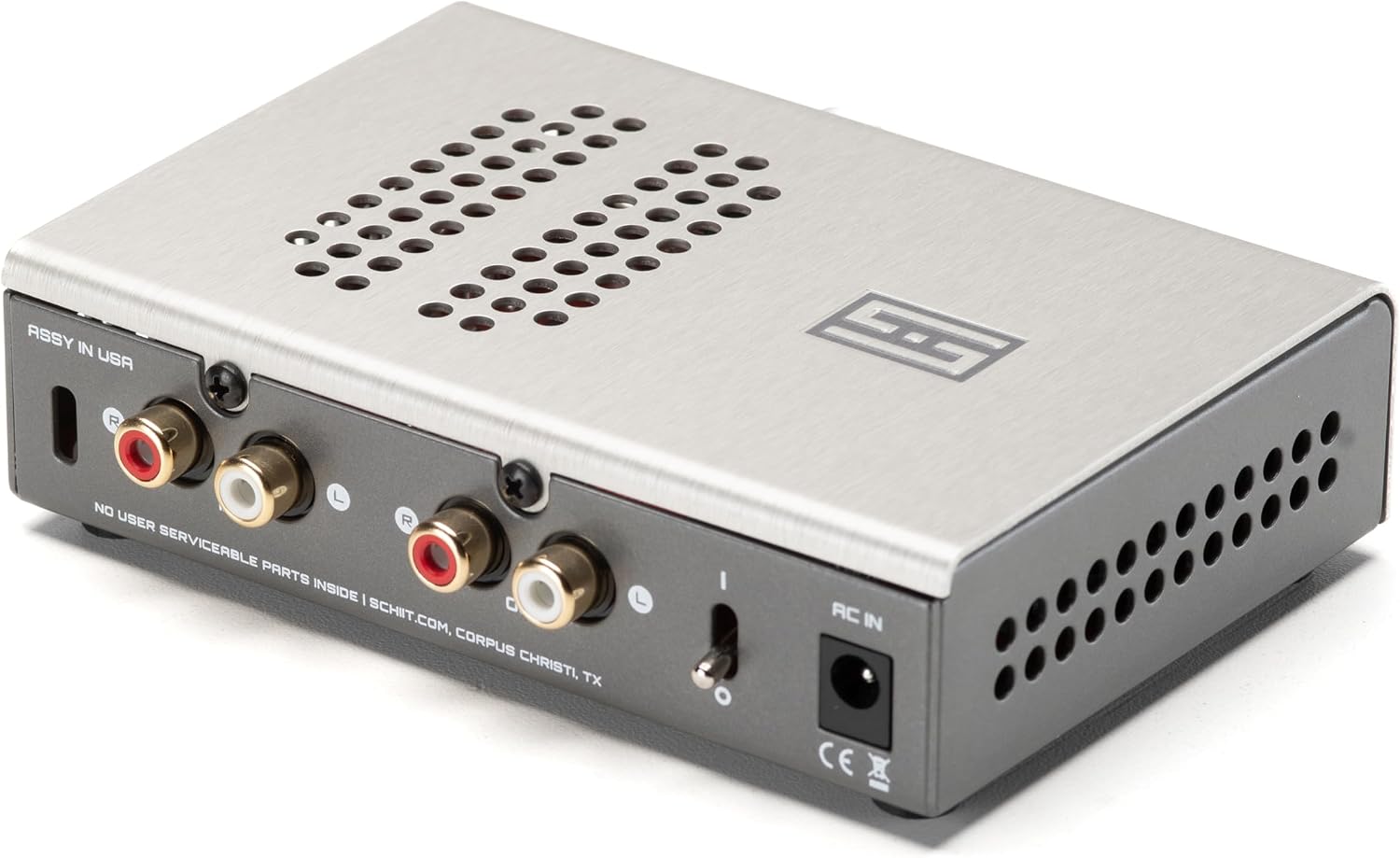
Schiit’s Magni line has become one of the better-known names in affordable desktop headphone amplification.
The Magni Unity is especially interesting because it can function as a compact desktop amplifier and, with the appropriate configuration, as an integrated DAC/amp solution.
Schiit lists up to 3 watts per channel into 16 ohms and 2.5 watts into 32 ohms. It also lists 415mW into 300 ohms and 220mW into 600 ohms.
Output impedance is below 0.1 ohms.
That is more than enough electrical capability for many conventional headphones.
| Specification | Magni Unity |
|---|---|
| 32Ω power | 2.5W per channel |
| 300Ω power | 415mW per channel |
| 600Ω power | 220mW per channel |
| Output impedance | <0.1Ω |
| Gain | -10dB / 0dB / +15dB |
| Design | Fully discrete |
The Magni Unity is particularly attractive if you want a compact desktop component that can grow with your system.
Schiit also emphasizes its low noise performance, which is useful if you plan to use sensitive headphones or IEMs.
Who Should Buy the Magni Unity?
Choose the Magni if you want a straightforward desktop amplifier with serious output and a compact footprint.
It is particularly appealing for users who like the idea of building a system around separate components rather than buying one large all-in-one device.
The main thing to watch is configuration. Make sure you know whether the version you are buying includes the DAC functionality you want.
Check the Schiit Magni Unity on Amazon
Best DAC/Amp Combo: FiiO K11
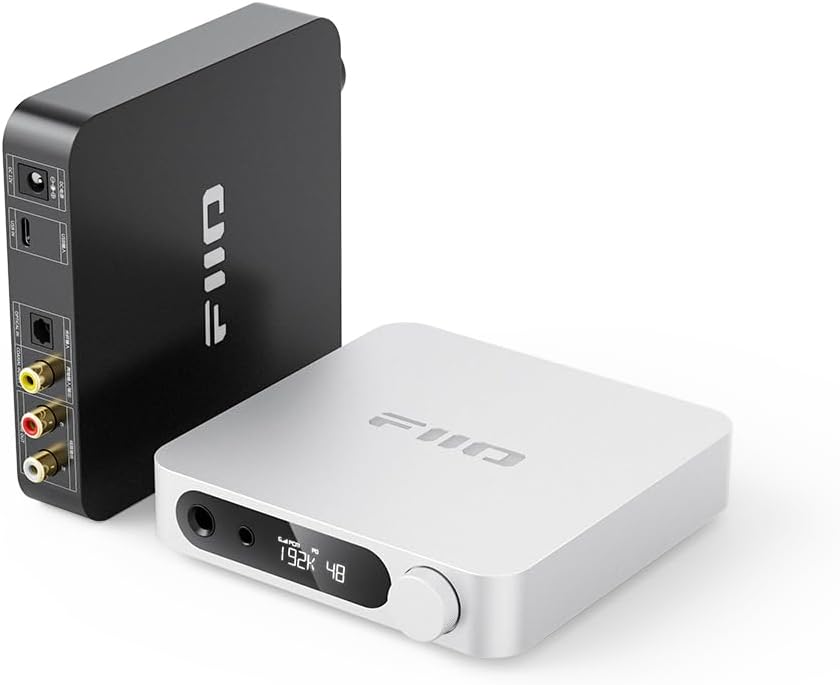
If you want to avoid separate boxes, the FiiO K11 is one of the easiest recommendations.
It combines a DAC and headphone amplifier in a compact desktop chassis. That means you can connect it to a computer over USB and go straight to your headphones.
FiiO lists USB, optical and coaxial inputs. Outputs include 4.4mm balanced, 6.35mm headphone, RCA line-out and coaxial functionality.
The headline number is impressive: FiiO rates the K11 at up to 1,400mW per channel into 32 ohms through its balanced output.
The single-ended output is rated at 520mW per channel into 32 ohms.
| Specification | FiiO K11 |
|---|---|
| DAC | CS43198 |
| Balanced power at 32Ω | 1,400mW per channel |
| Single-ended power at 32Ω | 520mW per channel |
| Balanced power at 300Ω | 250mW per channel |
| Single-ended power at 300Ω | 60mW per channel |
| Output impedance | <1.2Ω single-ended |
| Digital inputs | USB, optical, coaxial |
Why the K11 Makes Sense for Everyday Users
The K11 solves a common problem: too many boxes.
Instead of buying a DAC, headphone amplifier, cables and multiple power supplies, you can connect the K11 to your computer and start listening.
The front display and physical control also make it more approachable than a traditional audiophile stack.
The balanced output is useful when you own headphones with an appropriate balanced cable. However, do not buy the K11 solely because “balanced is better.” The important advantage is its increased available output power.
Best Upgrade for Demanding Headphones: FiiO K7
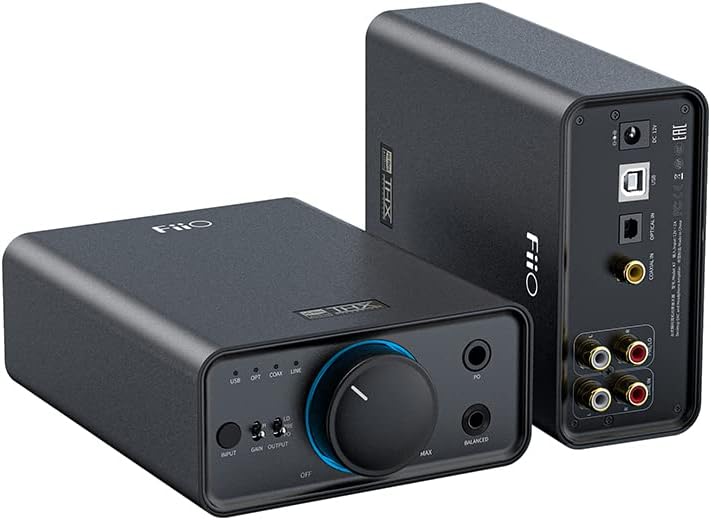
The FiiO K7 remains a strong option for listeners who want a more substantial desktop DAC/amp without jumping into expensive audiophile equipment.
It sits in an interesting part of the market. It is more serious than the smallest USB dongles, but it remains simple enough for a home office or bedroom setup.
Its balanced architecture provides substantially more output than its single-ended connection, which can matter for difficult headphones.
This is particularly useful if you own planar magnetic headphones or higher-impedance studio models.
Who Is the K7 For?
The K7 is a good choice if you want one desktop box and already know that your headphones benefit from more output.
It also makes sense if you want to keep your computer audio setup simple while retaining the ability to use balanced headphones.
The K11 is newer and more compact in some setups, while the K7 remains attractive for buyers who prefer its amplifier architecture and overall feature set.
Best Feature-Rich Amp: iFi ZEN CAN 3
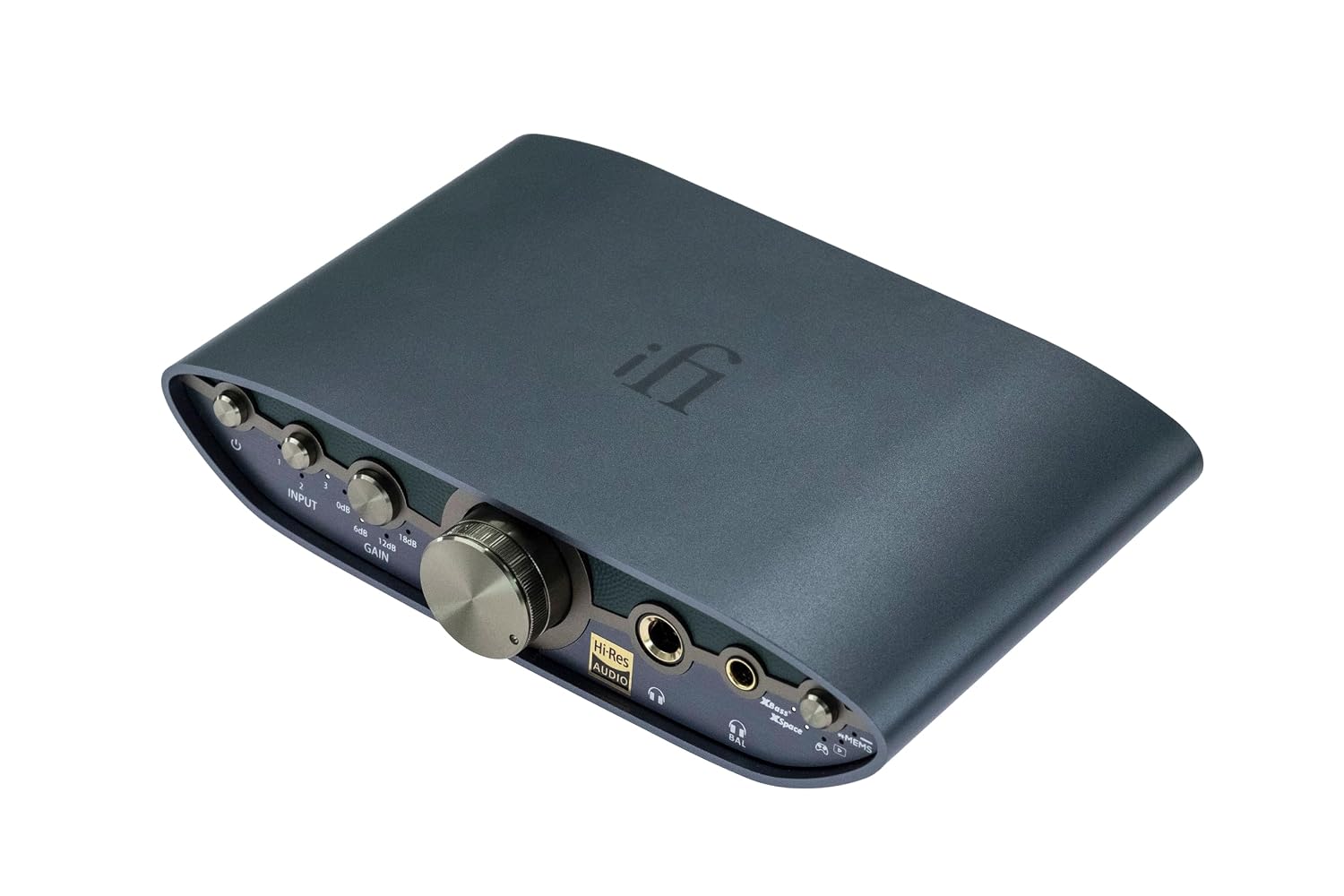
The iFi ZEN CAN 3 takes a different approach.
Instead of focusing only on neutral amplification, it gives listeners several ways to adjust the experience.
It includes XBass+, XSpace, gaming and movie modes. The company also designed it with high output capability for demanding headphones.
iFi rates the ZEN CAN 3 at more than 1,600mW through its single-ended 6.35mm output at 32 ohms and 2,000mW through the balanced 4.4mm output at 64 ohms.
The amplifier also has multiple gain levels, ranging from 0dB to 18dB.
| Feature | ZEN CAN 3 |
|---|---|
| Balanced output | 4.4mm |
| Single-ended output | 6.35mm |
| Balanced power | 2,000mW at 64Ω |
| Single-ended power | 1,600mW at 32Ω |
| Gain | 0 / 6 / 12 / 18dB |
| Special modes | XBass+, XSpace, Gaming, Movies |
Why It Stands Out
The ZEN CAN 3 is a good fit for people who do more than listen to music.
Its movie mode is designed to improve speech clarity. Gaming mode emphasizes useful positional cues. XBass+ can add low-end weight without requiring software EQ.
That makes it less interesting to a strict measurement-focused listener and more interesting to an everyday consumer who wants flexibility.
It also works well as the amplifier stage in a larger DAC setup because it accepts analog inputs.
Check the iFi ZEN CAN 3 on Amazon
Headphone Matching Guide
The right amplifier depends heavily on the headphones you already own.
| Headphone Type | Typical Challenge | What to Look For | Good Direction |
|---|---|---|---|
| Efficient IEMs | Noise and excessive gain | Very low output impedance and low gain | Qudelix 5K or low-noise desktop amp |
| 32–80Ω dynamic | Usually easy to drive | Clean output and useful volume control | K11, Atom Amp 2, Magni Unity |
| 150–300Ω studio headphones | Voltage requirement | Good voltage swing and suitable gain | Atom Amp 2, Magni Unity, K7 |
| 250–600Ω headphones | Higher voltage requirement | Strong high-impedance output | Atom Amp 2, Magni Unity, K7 |
| Planar magnetic | Potentially high current/power demand | Strong output at the headphone’s impedance | K7, Atom Amp 2, ZEN CAN 3 |
Beyerdynamic DT 990 Pro
The DT 990 Pro is a useful example because versions with different impedance ratings can have different amplification requirements.
The 250-ohm model is a classic case where a capable desktop amplifier can make sense.
TechOzea’s existing DT 990 Pro coverage also discusses dedicated amplification options for the 250-ohm version, including JDS Labs and Schiit models.
Read our Beyerdynamic DT 990 Pro review before choosing an amplifier for this headphone.
Sennheiser HD 600
The HD 600 is another classic high-impedance headphone.
Its 300-ohm design makes amplifier voltage capability more relevant than it would be for a typical 32-ohm consumer headphone.
This is exactly the kind of headphone where a modest desktop amplifier can be a more sensible investment than buying an expensive amplifier designed for exotic loads.
HiFiMAN Planar Headphones
Planar headphones complicate the picture.
Some planars have relatively low impedance but low sensitivity. That means the amplifier may need to supply significant current even though the impedance number looks harmless.
This is why experienced buyers look at both sensitivity and impedance.
TechOzea’s existing HiFiMAN coverage provides a useful example with the Arya Stealth, which combines low impedance with relatively low sensitivity and benefits from a capable amplifier.
Common Headphone Amp Buying Mistakes
Mistake 1: Buying an Amp Before Checking the Headphones
This is backwards.
Start with the headphone specifications. Then determine whether your current source is inadequate. Only then choose an amplifier.
Mistake 2: Treating Impedance as a Difficulty Score
Impedance is important, but it is not a complete “difficulty rating.”
Sensitivity changes the equation. A low-sensitivity planar headphone can require significant amplifier capability even when its impedance is only a few dozen ohms.
Mistake 3: Chasing Huge Wattage
More power is useful only when your headphones can use it.
Putting a powerful amplifier behind an extremely sensitive IEM does not automatically improve sound. It can instead make volume control harder and expose background noise.
For sensitive IEMs, low output impedance and low noise can matter more than headline wattage.
Mistake 4: Assuming Balanced Means Better
A balanced output can provide more power, but the connector itself is not a guarantee of better sound.
Compare the actual amplifier architecture and output specifications instead of buying a balanced cable simply because it looks more serious.
Mistake 5: Spending on the DAC Before the Headphones
If you have $300 to improve a headphone system, do not automatically spend $250 on a DAC.
If your headphones are the weak link, upgrading them may produce a much larger practical improvement.
Competent modern DACs can already perform extremely well. The amplifier should solve an actual problem rather than become an expensive accessory.
Mistake 6: Buying a Tube Amp for the Wrong Reason
Tube amplifiers can be attractive if you specifically want their design, behavior or tonal presentation.
But a tube amp is not automatically a higher-quality amplifier than a solid-state model.
Tubes also introduce different maintenance considerations and can behave differently with various headphones.
Buy one because you want the experience, not because the word “tube” appears on the product page.
Real-World Scenarios: Which Amp Should You Buy?
Scenario 1: You Have a Laptop and Sennheiser HD 600
Start by testing the laptop.
If you can reach a comfortable listening level without pushing the volume control close to maximum, you may already be fine for casual listening.
If you want more headroom or your laptop output is weak, a desktop amplifier such as the Atom Amp 2, Magni Unity or K11 is a sensible next step.
Scenario 2: You Have 32-Ohm Gaming Headphones
You probably do not need an expensive headphone amplifier.
If the headphones already get loud enough from your motherboard, controller or USB interface, spending hundreds of dollars on amplification is difficult to justify.
If you need a better microphone interface, volume control or extra connectivity, then an audio interface or DAC/amp can still make sense.
Scenario 3: You Own Planar Magnetic Headphones
Check sensitivity before buying anything.
If the headphones are relatively insensitive, prioritize an amplifier with strong output at the impedance your headphones present.
The Atom Amp 2, FiiO K7 and iFi ZEN CAN 3 are the types of products worth considering here.
Scenario 4: You Mostly Use IEMs
Do not buy the biggest amplifier on this list.
Your priorities should be low noise, low output impedance and sensible gain.
A powerful amplifier can still be useful, but only if it remains quiet and controllable with your IEMs.
Scenario 5: You Want One Box for Everything
This is where the FiiO K11 becomes especially attractive.
It gives you USB, optical and coaxial inputs plus both conventional and balanced headphone outputs.
For a normal home-office setup, that combination is difficult to beat for convenience.
The Bigger Lesson: Buy for the System, Not the Amp
Headphone amplification is one of those audio categories where buyers can easily spend money without solving a real problem.
The amplifier should support the headphones.
It should not become the center of the system simply because its specifications are impressive.
That is why our rankings are based on different use cases rather than one absolute “best” model.
The Atom Amp 2 is our best overall dedicated amp because it combines strong output with excellent electrical compatibility.
The K11 is arguably the smarter choice for someone starting from zero because it combines the DAC and amplifier.
The Magni Unity makes sense for buyers who prefer Schiit’s desktop ecosystem and want serious output in a compact box.
The ZEN CAN 3 is more compelling for listeners who want physical sound-shaping features rather than purely transparent amplification.
And portable users should think beyond desktop power altogether.
What Has Changed in Headphone Amps Today?
The biggest change is not raw amplifier power.
It is integration.
Modern desktop units increasingly combine DACs, headphone amplifiers, displays, multiple digital inputs and balanced outputs.
At the same time, portable DAC/amps have become powerful enough for many everyday headphones.
This reduces the need for a traditional multi-box system for many users.
Another important trend is greater attention to measurements.
Modern affordable amplifiers can deliver extremely low distortion and noise. That makes it harder to justify paying dramatically more for basic amplification alone.
The premium market still exists, but buyers should ask what they are actually paying for.
More power? Better connectivity? A tube circuit? EQ? Streaming? Industrial design? Build quality?
Those are valid reasons to spend more.
“More expensive must sound better” is not.
Best Headphone Amp by Budget
| Budget | Our Direction | Best For |
|---|---|---|
| Under $100 | Basic JDS/Schiit/FiiO options | Simple desktop amplification |
| $100–$200 | FiiO K11 or comparable DAC/amp | First serious desktop setup |
| $200–$350 | Atom Amp 2, Magni Unity or K7 | High-quality desktop systems |
| $300+ | Feature-rich separates | Enthusiasts and demanding headphones |
Prices change frequently, so we recommend checking the current Amazon price before making a purchase rather than relying on an old list price.
Frequently Asked Questions
What is the best headphone amp?
For a dedicated desktop amplifier, we recommend the JDS Labs Atom Amp 2 for its combination of output power, low output impedance, connections and broad headphone compatibility. If you want a DAC and amplifier in one device, the FiiO K11 is a better fit for many everyday users.
Do I really need a headphone amplifier?
Not necessarily. If your headphones already reach a comfortable volume from your laptop, phone, audio interface or other source without noise or distortion, a dedicated amplifier may provide little practical benefit.
What headphones need a headphone amp?
Headphones with high impedance, low sensitivity or demanding planar designs are more likely to benefit from additional amplification. However, impedance alone does not determine amplifier requirements. Sensitivity and the output capability of your source also matter.
Is a DAC the same as a headphone amplifier?
No. A DAC converts digital audio into an analog signal. A headphone amplifier provides the electrical drive needed by the headphone. Many modern products combine both functions in one box.
Is balanced headphone output better?
Not automatically. Balanced outputs can provide more amplifier power in some designs, but the connector itself does not guarantee better sound. Compare the actual output specifications and your headphone requirements.
How much power does a headphone amp need?
There is no single power number that works for every headphone. Required power depends on sensitivity, impedance and your desired listening level. Always compare an amplifier’s output at the impedance of your headphones.
Is a powerful headphone amp dangerous for IEMs?
A powerful amplifier requires careful volume control with sensitive IEMs. Use low gain and start at a low volume. The concern is excessive listening level, not the amplifier’s maximum power by itself.
What is output impedance?
Output impedance is the electrical impedance presented by the amplifier’s headphone output. A high value can interact with the headphone’s impedance curve and alter frequency response. A common rule of thumb is to keep source output impedance below roughly one-eighth of the headphone’s impedance.
Should I buy the FiiO K11 or JDS Labs Atom Amp 2?
Choose the FiiO K11 if you want a DAC and amplifier in one box with digital inputs. Choose the Atom Amp 2 if you already have a DAC or audio interface and want a dedicated amplifier with strong output and flexible analog connectivity.
Are expensive headphone amps worth it?
Sometimes, but not automatically. Higher-priced amplifiers can offer additional power, features, connectivity, construction or a particular circuit design. For many listeners, a competent affordable amplifier already provides enough clean power.
Final Verdict: Which Headphone Amp Should You Buy?
The best headphone amp is the one that solves the problem you actually have.
If your headphones are already loud and clean from your current device, you may not need one.
If you own demanding headphones and want a dedicated desktop amplifier, the JDS Labs Atom Amp 2 is our top overall recommendation. Its 2.65 watts into 32 ohms, strong high-impedance output and 0.7-ohm output impedance give it excellent flexibility.
If you want a DAC and amp together, choose the FiiO K11. Its digital inputs, display, balanced output and strong power make it one of the easiest systems to recommend to everyday listeners.
If you want Schiit hardware and a compact desktop design, the Magni Unity is another strong choice. Its very low output impedance and high power make it suitable for a broad range of headphones.
If you want tuning features for music, movies and games, the iFi ZEN CAN 3 offers more flexibility than a strictly neutral amplifier.
And if portability matters most, look at compact DAC/amps such as the Qudelix 5K instead of buying a large desktop amplifier you will rarely use.
The important lesson is simple: do not shop for the biggest amplifier. Shop for the right amplifier.
Check your headphone’s impedance and sensitivity. Look at the amplifier’s power at that load. Check output impedance. Decide whether you need a DAC. Then choose the model that fits your actual listening habits.
That approach will save you money and, more importantly, leave you with a system that makes sense.
