




Apple has spent years pushing buyers toward AirPods Pro when they want serious noise cancellation. That line is getting harder to defend now that the regular AirPods 5 start at $129 and include ANC as standard.
Apple announced the Airpods 5 Anc on September 9, with two versions priced at $129 and $149 in the U.S. Both use the same basic open-ear design and include ANC, while the more expensive model adds wireless charging, volume controls and longer battery life, according to Apple’s official announcement.
That sounds like a straightforward upgrade. It isn’t.
The interesting part is what Apple didn’t change. These are still open-ear AirPods, so the physical limitations of that design remain. And with only four hours of ANC playback on the $129 model, battery life is hardly the strongest part of the pitch.
What happened with the AirPods 5?
Apple announced AirPods 5 during its September 9 hardware event, with U.S. preorders opening immediately. The earbuds arrive in stores on September 18, 2026, according to Apple’s launch announcement.
There are two versions. The standard AirPods 5 cost $129, while AirPods 5 with Wireless Charging Case cost $149.
Both versions now include active noise cancellation. That is the biggest change because Apple no longer makes shoppers pay extra simply to get ANC in the standard AirPods range.
Apple also changed the acoustic architecture and added next-generation Adaptive EQ. The company says the new AirPods remove up to 50% more external noise than AirPods 4 with ANC. That is an interesting claim, but it remains an Apple claim until independent testing tells us how these cans perform in real-world conditions.
The other additions are less dramatic but still useful. Both models support Adaptive Audio, Transparency mode, Personalized Spatial Audio, Live Translation and Siri AI features when paired with compatible Apple hardware and software.
So yes, there is more going on here than a new number on the box.
How much better is AirPods 5 ANC?
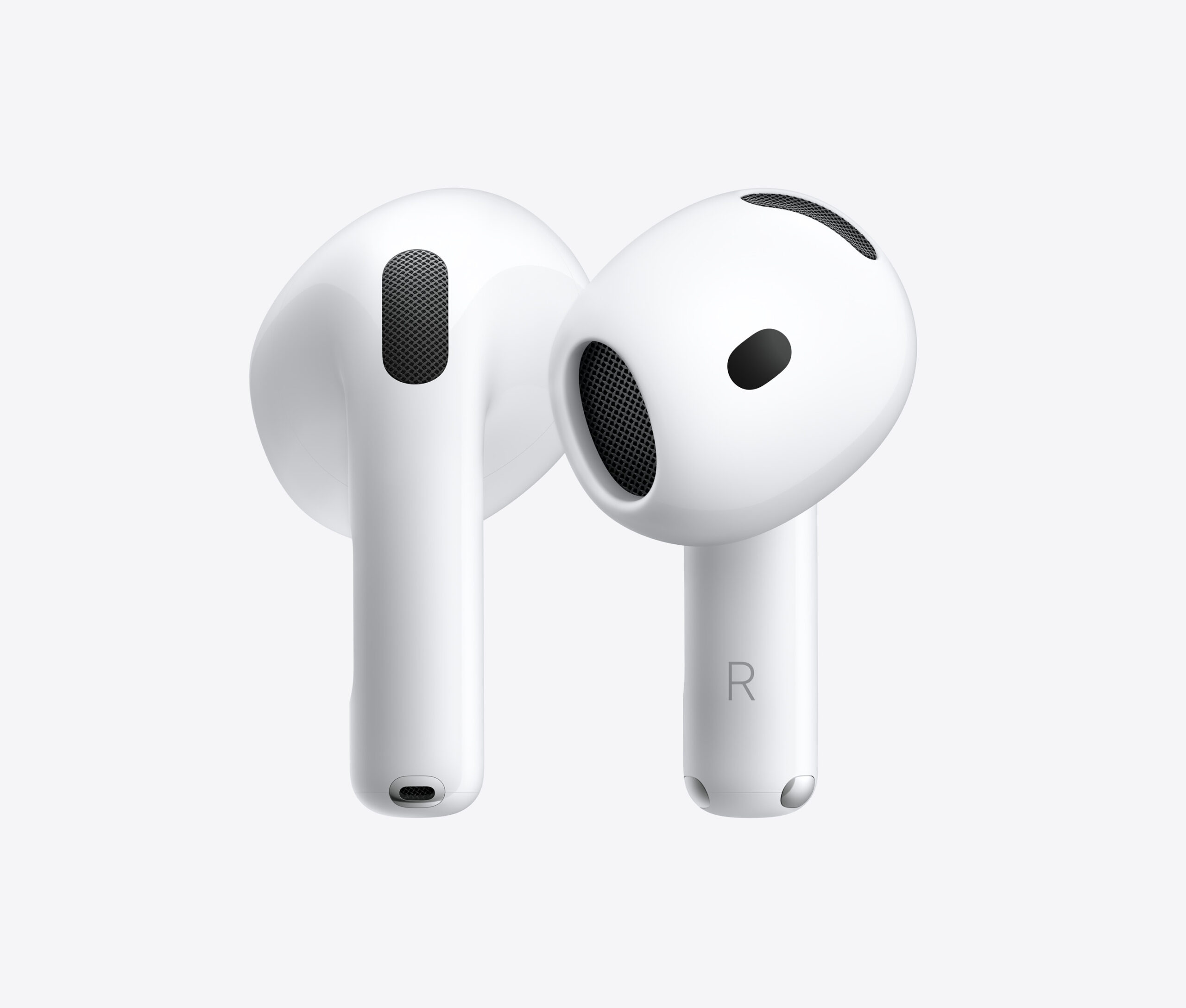
This is where things get complicated.
ANC works differently when the earbud does not seal the ear canal. Traditional in-ear earbuds use silicone tips to create passive isolation before the microphones and processing even start doing their work.
AirPods 5 don’t have that seal.
That makes Apple’s claim more interesting, not less. The company says its new multiport acoustic architecture and computational audio processing allow AirPods 5 to remove up to 50% more external noise than AirPods 4 with ANC.
But “50% more” should not be translated into “50% stronger ANC” in every environment. Noise reduction depends on frequency, fit, environmental conditions and the way the manufacturer measures performance.
A sealed pair of earbuds still has a fundamental advantage against voices, high-frequency sounds and other noise that leaks through an open design. The AirPods 5 can reduce environmental noise, but they are not magically turning open earbuds into AirPods Pro 3.
That distinction matters.
Techozea already covers the practical difference between ANC modes in its guide to turning noise cancellation on and off. The short version is simple: ANC is most useful when you actually have unwanted environmental noise to reduce.
For AirPods 5, the question isn’t whether ANC works. It almost certainly does.
The question is how much isolation you are willing to give up for the comfort and awareness of an open-ear fit.
Which AirPods 5 model should you buy?
This is probably the easiest part of the new lineup to analyze.
The standard AirPods 5 cost $129. The Wireless Charging Case version costs $149.
For that additional $20, you get a wireless charging case, volume swipe controls and up to five hours of listening with ANC instead of four. Apple also rates the case for up to 22 hours of listening with ANC.
That’s a fairly small price difference.
The $129 model makes sense if you simply want the cheapest way into Apple’s new AirPods experience. If you already have a USB-C charging setup and don’t care about wireless charging, there isn’t much reason to spend more.
For those who use AirPods every day, though, the $149 model is the better bet.
The extra hour of ANC playback won’t transform the product. Five hours is still five hours. But wireless charging and on-stem volume controls are exactly the sort of small conveniences you notice repeatedly after months of use.
It’s worth knowing that neither model includes the health features Apple reserves for the Pro line. Apple’s own comparison shows AirPods 5 without Hearing Test, Hearing Aid and Hearing Protection features, while AirPods Pro 3 includes those capabilities.
So the $149 model is the one I’d watch.
Is four hours of ANC battery life enough?
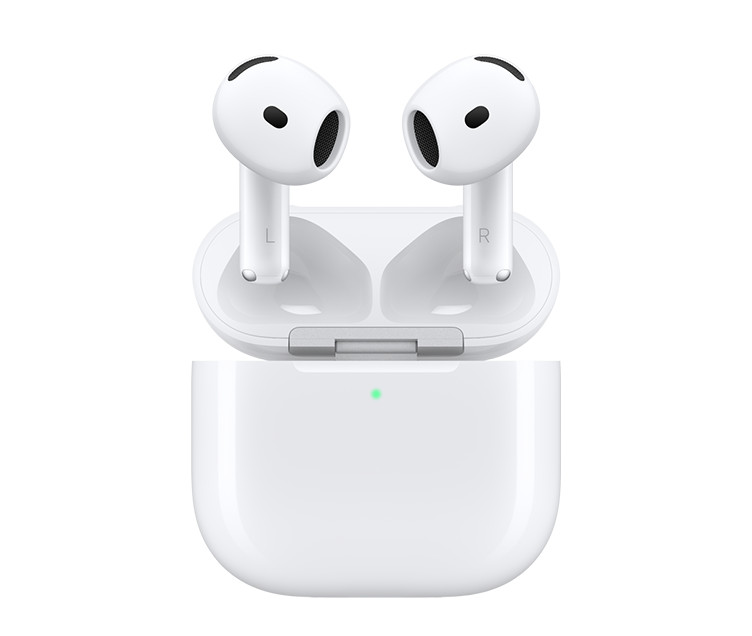
This is the first AirPods 5 specification that makes me hesitate.
Apple rates the standard AirPods 5 for up to four hours of listening with ANC on. The Wireless Charging Case version increases that to five hours per charge.
For a commute, workday and casual listening, that may be perfectly adequate.
For a long flight, however, four hours can disappear quickly.
The charging case helps, of course. Apple rates the wireless-charging model for up to 22 hours with ANC, which makes the overall package much more practical than the single-charge number suggests.
Still, the comparison is worth making.
Techozea’s existing AirPods 4 review already highlights battery life as one of the compromises of Apple’s open-ear approach. The AirPods 5 don’t suddenly turn into endurance champions.
This also creates a strange product hierarchy. The $149 AirPods 5 offer five hours with ANC, while Apple’s $249 AirPods Pro 3 are rated for up to eight hours with ANC.
That is a substantial difference.
If you spend most of your time near a charger, it probably won’t matter. If you travel frequently, it matters a lot more.
How does AirPods 5 compare with AirPods 4?
The AirPods 5 are not a completely different product category from AirPods 4.
They retain the open-ear concept that made AirPods 4 interesting in the first place. That means people who dislike silicone tips still have a reason to consider them.
The difference is that Apple has pushed more of its higher-end software and processing features down the range.
AirPods 5 now include ANC on both versions. Apple also claims improved acoustic performance, better Transparency mode and up to 50% more external-noise reduction compared with AirPods 4 with ANC.
The pricing also deserves attention.
Apple’s $129 starting price keeps the AirPods 5 accessible, while the $149 model adds enough useful hardware that it becomes difficult to justify saving the extra $20 unless budget is the priority.
If you’re currently considering AirPods 4, I’d wait.
There is little reason to rush into the older model at full price with the AirPods 5 arriving September 18.
That said, discounts could change the calculation. If AirPods 4 fall substantially below $129, they become a different proposition.
Are AirPods 5 Better Than AirPods Pro 3?
This is where Apple’s product segmentation becomes clearer.
AirPods 5 are for people who want an open-ear fit. AirPods Pro 3 are for people who want a sealed in-ear fit and stronger isolation.
Apple lists AirPods Pro 3 at $249, with up to three times the ANC of AirPods 5 according to Apple’s own comparison. The Pro model also adds heart-rate sensing during workouts and hearing-related features that the AirPods 5 lack.
That’s a $120 difference between the cheapest AirPods 5 and AirPods Pro 3.
For some buyers, that is money well spent.
If you travel frequently, work in noisy offices or regularly use earbuds on airplanes, the sealed fit of the Pro 3 is still likely to be more useful. You get stronger isolation before ANC even enters the equation.
But not everybody wants silicone tips.
That is the entire reason AirPods 5 exist.
Some people find in-ear earbuds uncomfortable after a few hours. Others dislike the pressure and isolation created by a sealed ear canal. For those buyers, the AirPods 5 offer something the Pro 3 cannot replicate.
Comfort is not a secondary specification.
What does open-ear ANC still fail to solve?
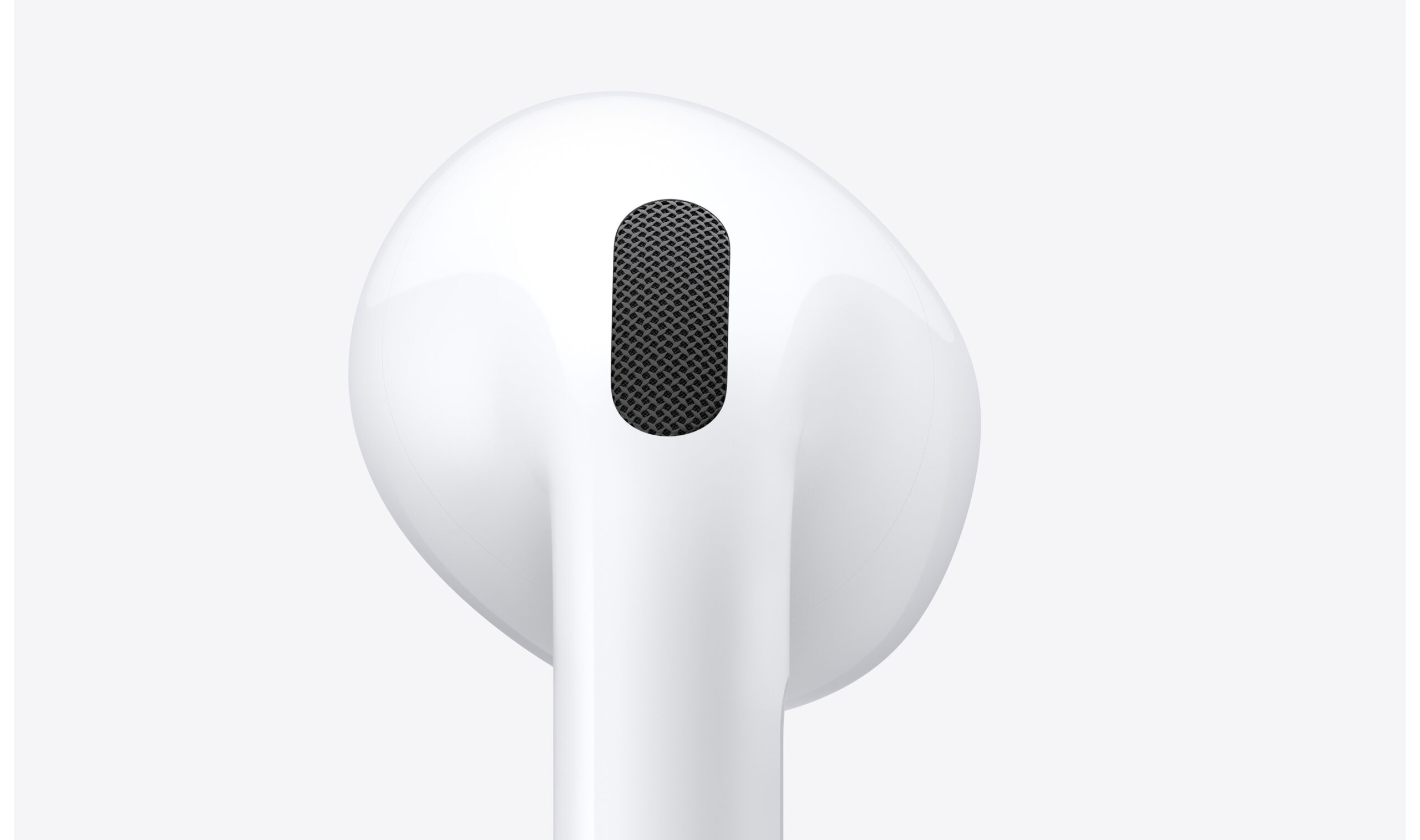
There is a tendency to treat ANC as a software feature that manufacturers can simply improve with more processing.
Physics doesn’t care.
An open-ear earbud leaves a path between your surroundings and your ear. That makes the design comfortable and keeps you aware of the environment, but it also makes complete isolation impossible.
AirPods 5 can use microphones and signal processing to reduce unwanted noise. They cannot create the same physical barrier as a sealed in-ear earbud.
That trade-off is not necessarily bad.
For walking, office work, casual commuting and situations where you want to hear what is happening around you, open-ear earbuds can be a better fit.
On an airplane, the calculation changes.
Engine rumble is exactly the sort of low-frequency noise that ANC handles well, but the open-ear design still leaves you without the passive isolation you get from a sealed ear tip.
So if your main reason for buying AirPods 5 is “I want maximum noise cancellation,” you’re looking at the wrong product.
If your reason is “I hate silicone tips but want some noise reduction,” you’re getting much closer to the point.
What does the $129 price mean for the headphone market?
Apple’s pricing is arguably more important than the product itself.
The standard AirPods 5 put ANC at $129. That creates pressure on every mainstream earbud maker selling ANC products in the $100–$200 range.
Sony, Bose, Samsung and dozens of smaller brands already compete in this space. But Apple has a particularly strong advantage among iPhone owners because AirPods are tightly integrated into the company’s hardware and software ecosystem.
Live Translation adds another layer.
Apple says AirPods 5 can provide Live Translation when paired with compatible Apple hardware, the latest software and Apple Intelligence. Availability depends on supported languages and regions.
That makes AirPods 5 more than a traditional audio upgrade.
They’re becoming another interface for Apple’s software.
That matters because sound quality isn’t the only thing consumers consider anymore. Call quality, device switching, voice assistants, translation and spatial audio increasingly influence buying decisions.
The headphone market is turning into a software market.
Does the $149 AirPods 5 make more sense?
Yes, with one qualification.
The $149 model is the version I’d recommend for most people who have already decided that the AirPods 5 fit their needs.
The additional $20 gets you longer ANC battery life, wireless charging and volume swipe controls. None of those features is essential, but all three are practical.
The standard model is still the value option.
If you want AirPods for calls, podcasts, music and everyday use and don’t care about wireless charging, the $129 version gets you the important parts of the experience.
But once you’re already spending $129, the extra $20 isn’t much of a whack to the price.
I’d spend it.
What should you watch after the AirPods 5 launch?
The next important stage isn’t another Apple announcement.
It’s independent testing.
We need to see how the AirPods 5 perform against competing open-ear earbuds, AirPods 4 with ANC and sealed alternatives such as AirPods Pro 3. Battery testing will matter just as much as ANC measurements.
The first retail reviews should also answer questions Apple’s launch presentation cannot.
How consistent is the fit?
How much noise does ANC actually remove?
How does the microphone perform outdoors?
Does the open-ear design leak enough sound to annoy people nearby?
And perhaps most importantly, do the AirPods 5 actually sound better?
Those questions cannot be answered honestly from Apple’s specification sheet.
They need testing.
That is particularly important because Apple’s 50% noise-reduction claim comes from Apple’s own testing methodology. The company says the AirPods 5 were evaluated against AirPods 4 with ANC, while its headline open-ear ANC claim uses a specific test setup.
Until independent measurements arrive, treat those numbers as useful information rather than a final verdict.
Should you buy the AirPods 5?
If you’re looking for the cheapest new AirPods with ANC, the $129 AirPods 5 are now the obvious starting point.
If you hate silicone tips and want some noise reduction without completely blocking your surroundings, they’re even more interesting.
But if maximum ANC is your priority, I’d still look at sealed in-ear earbuds.
The AirPods Pro 3 remain the more capable option inside Apple’s lineup, particularly for travel and users who want hearing-related features.
For everyone else, the $149 AirPods 5 with Wireless Charging Case looks like the model to buy.
The $20 upgrade is easy to justify.
What does this mean for existing AirPods owners?
If you already own AirPods 4 with ANC, the upgrade case is less convincing.
The AirPods 5 bring acoustic changes and Apple’s newer feature package, but there is no reason to replace a perfectly functional pair simply because Apple changed the number on the box.
That’s particularly true if your existing AirPods fit well and battery health remains good.
Owners of older standard AirPods have a more compelling reason to upgrade.
The combination of ANC, Adaptive Audio, newer processing and Live Translation creates a meaningful jump from older models. Apple is also making ANC part of the baseline AirPods experience rather than a feature reserved for a higher-priced variant.
Still, don’t upgrade simply because the AirPods 5 are new.
Buy them if the new features solve a problem you actually have.
What about Android users?
This is where the AirPods 5 become a much harder recommendation.
The hardware can function outside Apple’s ecosystem, but several of the features that make AirPods compelling depend on compatible Apple devices and software.
Apple explicitly says full feature functionality requires pairing with an Apple device running the latest operating system software. Live Translation and Apple Intelligence also have device, language and regional requirements.
Android users have plenty of alternatives.
Sony, Samsung, Bose, Sennheiser and other brands offer earbuds built around Android-compatible features, codecs and companion apps.
If you’re using a Galaxy phone, for example, Samsung’s ecosystem is likely to make more sense than Apple’s.
AirPods 5 are an Apple product first.
That’s worth remembering.
The bigger story is not ANC
The biggest change here isn’t that Apple made ANC better.
It’s that Apple made ANC ordinary.
A few years ago, buyers had to move up the product range to get serious noise cancellation. Now the $129 AirPods 5 include it from the start.
That puts pressure on competitors to justify their prices in other ways.
Longer battery life. Better codecs. Stronger ANC. Better microphones. Better Android integration. Better repairability.
Something has to give.
And that is good for consumers.
Apple’s open-ear approach also shows that the market isn’t moving in one direction. Some buyers want maximum isolation. Others want to hear the world around them without removing their earbuds.
AirPods 5 are aimed squarely at the second group.
That’s a sensible position.
Final Verdict
The AirPods 5 are more interesting than their familiar shape suggests.
Apple has taken ANC, Adaptive Audio and several software features that once helped separate its expensive AirPods models and pushed them into a $129 product. That’s significant, even if the open-ear design means the AirPods 5 won’t replace sealed ANC earbuds for everyone.
The $149 model is the one I’d choose.
The extra $20 gets you wireless charging, volume swipe controls and one additional hour of ANC playback. That’s not revolutionary. It is just useful.
If you’re looking for open-ear comfort with real noise reduction, the AirPods 5 are worth watching when they hit stores on September 18.
If you’re looking for the strongest possible ANC, you’re still better off with an in-ear design.
Not a bad bet for $149.
FAQS
Are AirPods 5 noise cancelling?
Yes. ANC is included on both AirPods 5 models. Apple says they can remove up to 50% more external noise than AirPods 4 with ANC. Independent testing will be needed to determine how that translates to real-world performance.
How much are AirPods 5?
The standard AirPods 5 cost $129 in the U.S. AirPods 5 with Wireless Charging Case cost $149.
How long do AirPods 5 last with ANC?
The standard AirPods 5 provide up to four hours of listening with ANC on. The Wireless Charging Case version provides up to five hours per charge with ANC enabled.
Do AirPods 5 have silicone ear tips?
No. AirPods 5 use an open-ear design rather than a sealed in-ear design with silicone tips.
Are AirPods 5 better than AirPods Pro 3?
Not in every respect. AirPods Pro 3 cost $249 and provide a sealed in-ear fit, stronger stated ANC performance and additional hearing-related features. AirPods 5 are the better fit for people who dislike silicone tips and want a more open listening experience.
Which AirPods 5 should you buy?
For most buyers who want AirPods 5, I’d choose the $149 Wireless Charging Case version. The additional $20 buys wireless charging, volume swipe controls and longer ANC battery life.
When do AirPods 5 go on sale?
Apple says AirPods 5 will be available in stores beginning September 18, 2026. Preorders opened September 9.
Do AirPods 5 work with Android?
They can work with non-Apple devices, but some features require compatible Apple hardware and software. Apple specifically notes that full feature functionality requires pairing with an Apple device running the latest operating system software.
