




Summary: Bone conduction headphones only work their best when the transducers sit in the right spot and the band fits with light, steady pressure. In this guide, we’ll show you exactly how to wear bone conduction headphones correctly, fix common comfort and sound issues, and dial in fit for running, cycling, work, and calls.
Bone conduction headphones can sound surprisingly clear, but only if you wear bone conduction headphones correctly. If you place them too far back, too low, or clamp them like a vise, you’ll get thin audio, weak bass, and annoying vibration. We’ve tested enough pairs to see the same pattern over and over: correct placement solves most complaints in under two minutes. Let’s get you set up.
What “Correct” Means With Bone Conduction Headphones
Unlike earbuds or over-ears, bone conduction headphones don’t push sound into your ear canal. They send vibrations through the bones of your skull, typically through the cheekbone area near your temples, and your inner ear interprets that as sound.
So “correct” comes down to three things:
- Placement: transducers on the cheekbones, not on the ears.
- Pressure: firm contact, but not a clamp.
- Stability: stays put when you move, sweat, or turn your head.
Get those right and the audio gets fuller, vocals get clearer, and calls stop sounding distant.
How to Wear Bone Conduction Headphones Correctly
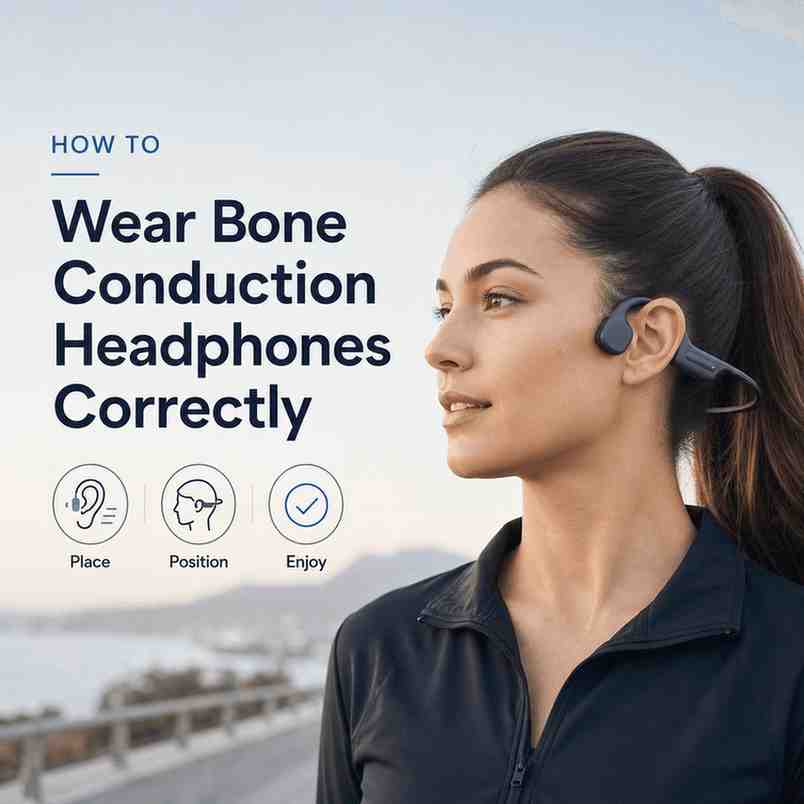
If you just want the fast version, here it is:
- Hold the headphones with the band behind your head. The band should sit around the back of your skull, not on top like a headband.
- Put the transducers in front of your ears. Each vibrating pad should sit on the flat area of your cheekbone, typically about 1 to 2 finger-widths forward from your ear opening.
- Adjust for even contact on both sides. You want the same pressure left and right. If one side floats, the sound will feel unbalanced.
- Tighten only if your pair has adjustment. Many models are one-size. If yours has a slider, use the minimum tightness that stops wobble.
- Do a 10-second fit test: nod “yes,” shake “no,” then jog in place. If they shift, reposition slightly higher on the cheekbone.
That’s the core of it. Now let’s fine-tune, because small changes make a big difference.
Why Placement Matters More Than Volume
These headphones are picky. If the pads sit on soft tissue instead of bone, you lose clarity and bass, and you feel more buzzing. However, when the pads sit on the cheekbone with stable contact, you get better transfer of vibration, which means:
- More perceived bass (still not subwoofer bass, but noticeably better)
- Clearer speech for podcasts and calls
- Less tickle-buzz sensation at higher volumes
That said, don’t chase bass by cranking volume. With bone conduction, higher volume often just adds harsher vibration. Fit first, volume second.
Find the Sweet Spot: Exact Transducer Position
Most people place bone conduction pads too far back, almost touching the ear. That tends to sound thin.
Here’s the sweet spot we aim for when testing:
- Forward of the ear: about 1 to 2 finger-widths in front of your ear opening
- Height: roughly level with the top half of your ear
- Surface: on the firm, flat cheekbone area, not the cartilage of your ear
A simple “two-finger” check
Put two fingers together and place them right in front of your ear. Your fingertips are usually close to the ideal contact patch. Place the transducer pads there, then fine-tune by sliding a few millimeters up or down.
Tip: If the sound improves when you press the pads gently inward, that means you’re close, but you need slightly better natural contact from the fit.
Getting the Band Fit Right (Without a Headache)
A good bone conduction fit feels secure, not tight. The band should wrap around the back of your head and “float” with mild spring tension.
Common band mistakes
- Band riding too high: can cause bounce when running
- Band too low on the neck: can push the pads off the cheekbones
- Wearing over a thick hat: may reduce contact pressure, hurting sound
If you wear glasses, put the headphones on first, then slide your glasses on. Still, some frames play nicer than others.
How to Wear Bone Conduction Headphones With Glasses
Glasses and bone conduction headphones can coexist, but the arms of the glasses can create weird pressure points.
What works best:
- Put the headphones on, set transducer position first.
- Then put glasses on so the temple arms sit either above or below the headphone arms, whichever feels smoother.
- If you get soreness near the temples, move the transducer pad slightly forward and slightly higher to spread pressure.
Buyer context: If you wear thick acetate frames all day, you’ll want a bone conduction set with softer contact pads or a gentler clamp. Comfort becomes the whole game, not raw audio quality.
How to Wear Bone Conduction Headphones for Running
Running is where bone conduction shines, because you keep situational awareness. Still, bounce is the enemy.
Running fit checklist
- Position pads higher on the cheekbone than you would for desk use.
- Make sure the band sits snugly behind the head, not drifting upward.
- Tie hair in a way that doesn’t lift the rear band. A low ponytail often interferes.
If your headphones keep sliding when you sweat, wipe both the pads and your skin. Oil and sunscreen can reduce grip.
Clear opinion + practical reason + buyer context: These headphones are great for runners because you can hear traffic, but a sloppy fit makes them sound weak and feel buzzy, which is why dialing placement before your first mile matters.
How to Wear Bone Conduction Headphones for Cycling
Cyclists love bone conduction for awareness, but wind noise can make audio feel anemic. However, with the right adjustments, you can enjoy your music while biking.
Cycling-specific tweaks
- Wear them slightly firmer than for walking so bumps don’t break contact.
- Consider a headband, helmet straps, or a thin skull cap that doesn’t block the transducers.
- Keep volume moderate. If wind is loud, you might be tempted to crank it, but that usually increases vibration fatigue.
Safety note: Some regions restrict headphone use while cycling. Bone conduction can still count as headphones. Check your local rules.
How to Wear Bone Conduction Headphones at Work (All-Day Comfort)
At a desk, comfort and stable calls matter more than maximum loudness.
We recommend:
- Place pads a touch lower and more forward than for workouts.
- Keep volume lower than you think. Bone conduction can feel “present” even at modest levels.
- Take short breaks every couple of hours to avoid pressure fatigue.
If your cheekbones feel sore, you’re either wearing them too tight, too high on a sensitive spot, or you have glasses pressure stacking on top.

How to Know You’re Wearing Them Wrong (And the Fast Fix)
Here are the most common symptoms and what we do to fix them.
1) “They sound thin and quiet”
Fix: Move the pads forward onto the cheekbone and slightly upward. Then lower volume and re-test.
Often the pads are sitting on soft tissue or too close to the ear cartilage.
2) “They vibrate like crazy and tickle my face”
Fix: Lower volume, then shift pads a few millimeters to a flatter bony spot.
High vibration usually means poor contact or too much volume for the spot you chose.
3) “Audio is louder on one side”
Fix: Match left-right position and make sure hair or glasses aren’t lifting one side.
Even a small gap changes the perceived balance.
4) “They slip when I sweat”
Fix: Wipe skin and pads. Reposition higher. Consider a thin sport headband that doesn’t block the transducers.
5) “My jaw movement changes the sound”
Fix: Slide pads slightly higher and forward so chewing doesn’t shift the contact point.
Should You Use Earplugs With Bone Conduction?
This is the weird trick that makes bone conduction “click” for a lot of people.
Because your ears stay open, outside noise competes with the sound. If you wear light earplugs (or even partially inserted plugs in a safe setting), the perceived bass and loudness often improve.
However, don’t do this when you need situational awareness, like road running or cycling. Use it indoors, on a plane, or in a gym where you still want reduced noise.
Practical rule: Earplugs improve richness. Open ears improve safety. Pick based on context.
Bone Conduction vs Air Conduction: Don’t Expect Earbud Bass
Bone conduction has a ceiling. Even if you wear bone conduction headphones correctly, you’re not going to get the deep, sealed-in bass of in-ear monitors. What you can get is:
- Clear mids for podcasts and calls
- Enough bass for casual music
- A surprisingly “speaker-like” feel when fit is right
If your main goal is booming music in noisy places, you may be happier with ANC earbuds. Though if you value awareness and comfort, bone conduction is still hard to beat.
Cleaning and Maintenance (Yes, It Affects Fit)
Dirty pads lose grip, and grit can cause irritation.
What we do:
- Wipe transducers with a slightly damp microfiber cloth after sweaty sessions.
- Keep sunscreen and face oils off the pad area when possible.
- Store them so the band doesn’t get warped in a tight pocket.
A warped band changes contact pressure, and then you’re back to chasing fit again.
A Simple 60-Second Fit Routine We Use
If you switch between work and workouts, this quick routine keeps things consistent:
- Put them on with the band behind your head.
- Place transducers 1 to 2 finger-widths in front of ears.
- Slide up or down until vocals sound centered and full.
- Do a quick nod-shake test.
- Set volume last.
It’s boring, but it works. And it keeps you from blaming the headphones when the real issue is placement.
FAQs: Wearing Bone Conduction Headphones Correctly
Can I wear bone conduction headphones on my ears?
Not really. The pads should sit in front of your ears on the cheekbone area. If they sit on the ear itself, comfort drops and sound transfer suffers.
Should bone conduction headphones touch my cheekbones?
Yes. Light, steady contact with the cheekbone is the whole point. If there’s a gap, sound gets weaker.
Why do they sound better when I press them in?
Because improved contact increases vibration transfer. Reposition to a spot where that contact happens naturally without you pushing.
Are they supposed to be tight?
Secure, not tight. If you feel pressure pain after 20 to 30 minutes, loosen or reposition.
Conclusion: Wear Bone Conduction Headphones Correctly, Then Judge the Sound
If you take nothing else from this guide, take this: you can’t fairly judge bone conduction audio until you wear bone conduction headphones correctly. Place the transducers on the cheekbones in front of your ears, keep the band comfortably secure, and fine-tune with tiny movements before touching the volume. Once the fit is right, the sound gets clearer, the vibration gets calmer, and the whole “why do people like these?” question finally answers itself.
FAQs (Frequently Asked Questions)
How do I wear bone conduction headphones correctly for the best sound quality?
To wear bone conduction headphones correctly, place the transducers on your cheekbones about 1 to 2 finger-widths in front of your ear openings. The band should sit around the back of your skull with light, steady pressure—firm contact but not too tight. Ensure even contact on both sides, and adjust the fit so the headphones stay stable when you move or jog.
Why is placement more important than volume when using bone conduction headphones?
Placement matters more because bone conduction headphones transmit vibrations through the cheekbones. If the transducers sit on soft tissue instead of bone, audio clarity and bass suffer, and you may experience annoying vibrations. Proper placement on the cheekbone improves bass perception, speech clarity, and reduces tickle-buzz sensations without needing to increase volume.
What is the ideal position for bone conduction transducers?
The sweet spot for bone conduction transducers is about 1 to 2 finger-widths forward from your ear opening, roughly level with the top half of your ear, resting firmly on the flat cheekbone area—not on cartilage or near the ear itself. Using a two-finger check can help find this ideal spot.
How should I adjust the band of my bone conduction headphones for comfort and stability?
The band should wrap around the back of your head with mild spring tension—secure but not tight. Avoid letting the band ride too high or too low; it should not cause bounce when running or push pads off your cheekbones. Wearing over thick hats or glasses can affect fit; put headphones on before glasses to minimize pressure points.
Can I wear bone conduction headphones comfortably with glasses?
Yes, but to avoid discomfort, put the headphones on first and position the transducers properly. Then put on your glasses so their temple arms sit either above or below the headphone arms—whichever feels smoother. If soreness occurs near temples, slightly move transducers forward and higher to spread pressure evenly.
How do I ensure my bone conduction headphones stay secure while running?
For running, position pads higher on your cheekbones than for desk use and make sure the band sits snugly behind your head without drifting upward. Tie hair carefully to avoid lifting the rear band (a low ponytail might interfere). Wipe pads and skin to remove oil or sunscreen that can reduce grip and cause slipping during sweat.
