




If you have ever sat on a plane and thought, why does it sound like I am inside a giant hair dryer. Yeah. That sound.
It is not just annoying. It is tiring. Even when you are not consciously focusing on it, your brain is still working to filter it out. Which is why flights can feel weirdly draining even if you just sat there and did nothing for 4 hours.
So the question is fair.
Do noise cancelling headphones actually help on a plane, or is it just another tech thing people swear by because it was expensive.
They help. A lot. But not in the way some people expect. And not every pair helps the same.
Let’s get into it.
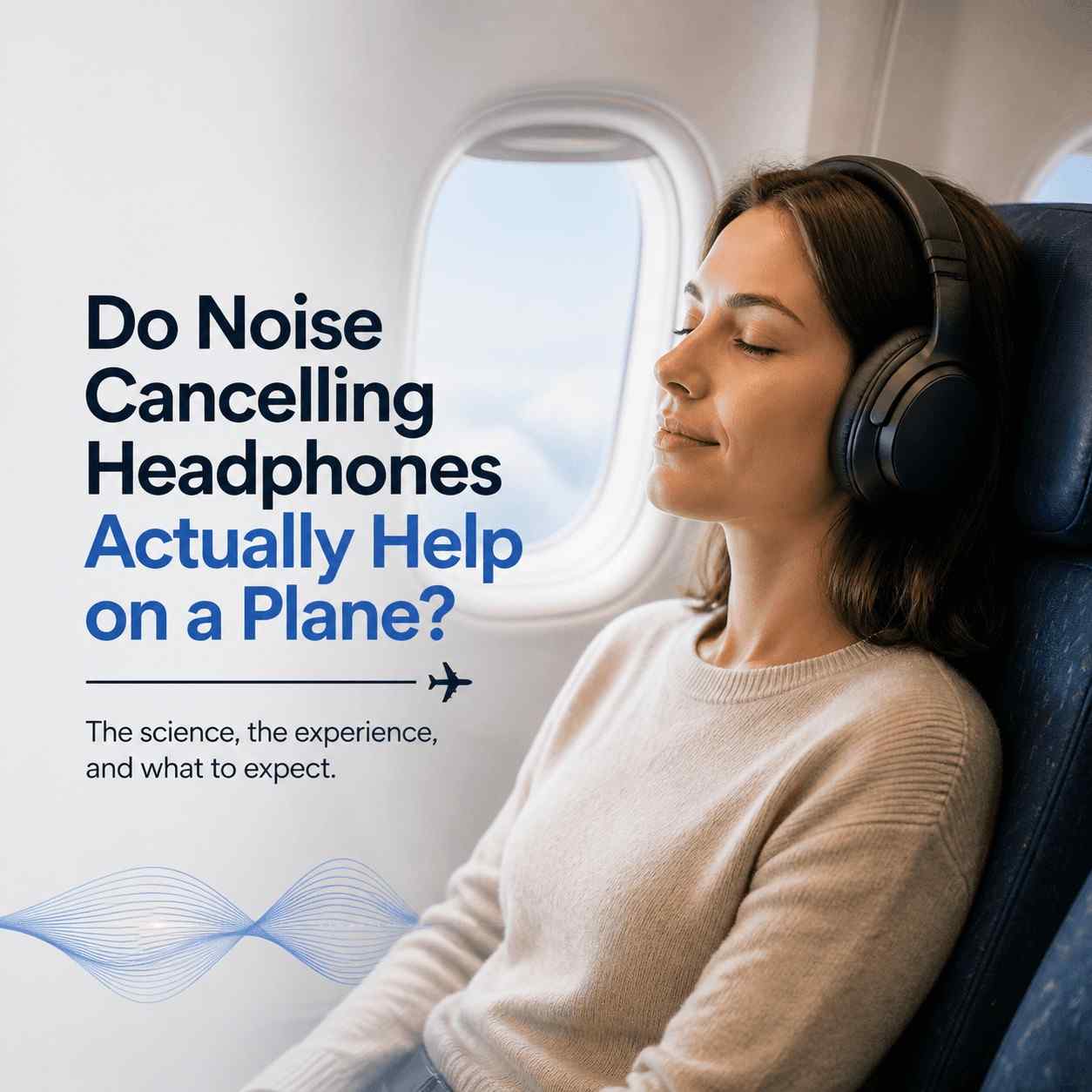
The kind of noise you get on a plane is basically perfect for noise cancelling
This is the big reason ANC (active noise cancelling) works so well in flight.
Most of the noise in a plane cabin is low, constant, and droning.
- Engine hum
- Air rushing past the fuselage
- Ventilation noise
- That steady cabin whoooooosh
Noise cancelling headphones are best at reducing exactly that kind of sound. The consistent low frequencies. The stuff that does not change much second to second.
They are not as magical for sudden sounds like:
- A baby crying two rows back
- Someone dropping a metal water bottle
- The snack cart clunking into your elbow
- A loud laugh that makes you look up like, what was that
Those are higher frequency, irregular noises. ANC can reduce some of it a bit, but it is not the main win.
So if you put on ANC headphones expecting silence like a library at midnight. You might be disappointed.
If you put them on expecting the cabin roar to drop dramatically, like someone turned the volume down. That is what happens.
What “noise cancelling” is actually doing
Passive isolation is the physical stuff.
Ear cups sealing around your ears, or silicone tips sealing in your ear canal. That blocks some noise, mainly mid and high frequencies.
Active noise cancelling is the electronics part.
Tiny microphones listen to outside noise, the headphones generate an opposite sound wave, and the two cancel each other out, especially for steady low frequency noise.
That is why ANC feels strongest on a plane, a bus, or a train. It has a predictable noise profile to attack.
So yes, they help. But how much do they help
On most flights, good ANC can make the cabin sound feel like it moved farther away. Like you went from sitting next to the engine to sitting in the back of a quiet cafe with a fan on.
In practical terms, what that means is:
- You can listen to music or podcasts at a lower volume
- You do not have to constantly re focus because the background roar keeps creeping in
- Your ears feel less fatigued
- You can actually sleep better, because that low rumble is what keeps a lot of people half awake
Also, you stop doing that thing where you crank your volume just to overpower the plane. That matters more than people realize.
If you fly a lot, ANC is one of those purchases that feels kind of boring until you use it. Then you feel annoyed you waited.
The underrated benefit, you listen at lower volume (and your ears will thank you)
Planes are loud. Many cabins hover around roughly 75 to 85 dB during cruise. Sometimes more depending on aircraft and seat location.
When the background is that loud, people naturally turn their audio up. And you can easily creep into unsafe listening levels without realizing it.
Noise cancelling does not just make things more comfortable. It can reduce how loud you need your content to be.
If you are someone who lands from a flight and your ears feel weirdly “spent”. This is probably why.
ANC is basically hearing protection, in a convenient, normal looking form.
Will it help with crying babies
This always comes up. Understandably.
ANC helps most with low steady noise. A crying baby is sharp, varying, and often higher frequency.
So. It will help a little, but it will not erase it.
That said, combining ANC with something else can get you pretty far:
- Over ear ANC + music at low volume
- In ear ANC earbuds with good tips + brown noise
- Even just ANC + foam earplugs (more on this combo later)
If you want the closest thing to “I do not hear this”, the best setup is usually earplugs plus over ear ANC on top. That sounds dramatic but it works.
Over ear vs earbuds on a plane (which is better)
Both can be great now. But they feel different in use.
Over ear ANC headphones
Pros:
- Usually stronger noise cancelling, especially in the low end
- More comfortable for long listening sessions (for many people)
- Better battery life (often)
- Less chance of losing them in the seat crack of doom
Cons:
- Bulkier to carry
- Can get warm
- If you have a tight seat or a big headrest, they can feel awkward
- Not ideal if you are trying to sleep on your side
ANC earbuds
Pros:
- Small, easy to pack
- Good for sleeping if you can keep them in
- Quick to pop in and out for announcements
- Some have surprisingly strong ANC now
Cons:
- Fit matters a lot. Like, a lot.
- Battery life usually shorter
- If one falls out mid flight, good luck finding it in the dark
If you want the “best overall” experience on a plane, over ear ANC still wins most of the time.
If you want minimal packing and you are okay with experimenting with tips, ANC earbuds can absolutely be enough.
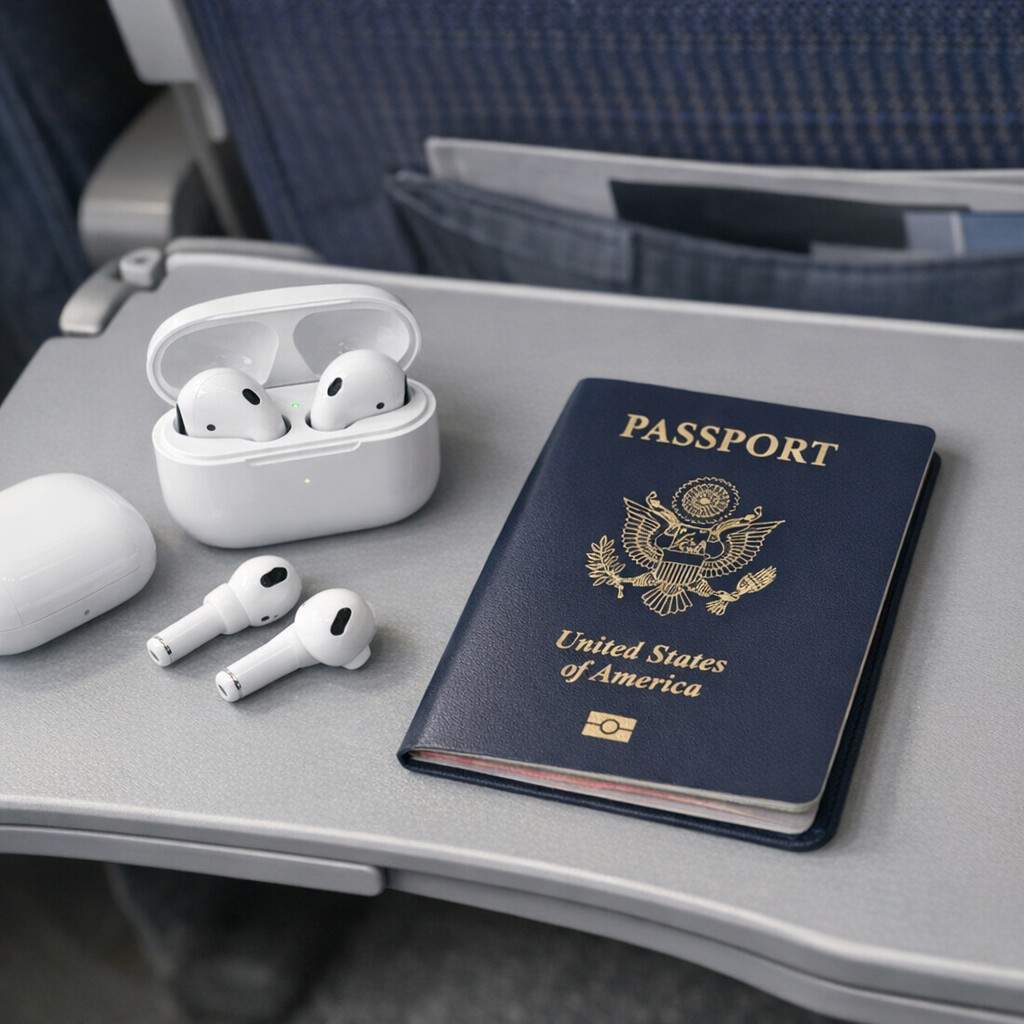
The fit matters more than the brand name, honestly
People buy expensive headphones and then complain ANC does not work. And sometimes the issue is not the ANC at all.
It is the seal.
Over ear headphones need the ear cups to seal around your ear. If you wear thick framed glasses, or you have hair breaking the seal, or the cups are too small. Your noise reduction drops.
Earbuds need the right tip size. If you have a poor seal, ANC cannot do its job properly because too much sound is leaking in.
A simple test: Put the headphones on with ANC on, but no music. If the plane roar drops a lot, you are good. If it barely changes, try adjusting the fit, or change ear tips if you are using earbuds.
Are they safe to use on a plane
Yes.
Airlines do not ban noise cancelling headphones. They are extremely common.
A couple of practical notes though:
- You might miss announcements if you keep ANC on and volume up. So, just be aware.
- Some people feel a slight “pressure” sensation from ANC. Not dangerous, just a sensation. If that happens, try a lower ANC mode or adaptive mode.
- During takeoff and landing, it is smart to keep volume low enough that you can hear if a flight attendant speaks to you.
The “pressure” feeling, is it real
Yes. For some people.
ANC can create a sensation that feels like ear pressure changes, even though it is not the same thing as altitude pressure. Your ears are not physically being pressurized by the headphones. It is more like your brain reacting to the cancellation of certain frequencies.
If you get that feeling:
- Try turning ANC down a notch if your headphones allow it
- Use “adaptive” or “wind reduction” modes
- Try earbuds instead of over ear, or vice versa
- Give it 10 minutes. A lot of people adapt
And if you hate it no matter what, you can still get a lot of benefit from passive isolation plus earplugs.
Where you sit on the plane changes how impressive ANC feels
This is one of those things nobody tells you until you experience it.
- Seats near the engines are louder, especially on wing.
- Bulkhead areas can have different sound reflections.
- Some aircraft are just louder in general.
So if you fly once with ANC and think, wow this is life changing. Then fly again and think, hmm it feels less dramatic. It could just be seat location and aircraft type.
ANC is still doing its job. Your baseline noise changed.
The earplugs + ANC combo (aka the cheat code)
If you want maximum quiet, do this:
- Put in foam earplugs (properly, rolled and inserted)
- Put over ear ANC headphones on top
- Turn ANC on
- Play nothing, or play very low volume audio
This works because:
- Earplugs block a chunk of higher frequency noise
- ANC attacks the low frequency rumble that earplugs do not fully eliminate
The result is genuinely calming. Especially for long haul flights where you just want your nervous system to stop being on alert.
Downside. You will almost definitely miss announcements. So use it when you are settled, not when you are waiting for gate changes or boarding calls or anything like that.
What about cheaper noise cancelling headphones, do they still help
Usually yes. Just less.
Even mid range ANC can reduce the plane’s low hum enough to make a difference. The jump from no ANC to some ANC is massive. The jump from good ANC to elite ANC is smaller. Still noticeable, but not night and day.
So if your budget is tight, do not overthink it. A decent pair will still make flights better.
Things that tend to be better on more expensive models:
- More effective cancellation across a wider range
- Less “hiss” from the ANC system itself
- Better handling of sudden noises
- More comfortable for long wear
- Better transparency mode (when you want to hear your surroundings)
But again. Even basic ANC is not a gimmick on a plane.
One more thing people confuse, ANC does not mean better sound quality
Some noise cancelling headphones sound amazing. Some are just fine.
Noise cancelling is about reducing outside noise. Sound quality is about the drivers, tuning, and how the headphone is designed overall.
You can buy something with strong ANC that sounds kind of flat. Or something that sounds incredible but has weaker ANC.
For plane use, ANC and comfort matter more than audiophile detail. At least for most people. Because the plane is not exactly a critical listening environment.
Battery and wired mode, what you should know before you fly
A few practical travel points that matter a lot in the moment.
- Charge before you leave. Sounds obvious. People forget.
- Some over ear ANC headphones work with a wire even when the battery is dead, but ANC usually turns off. Check your model.
- Some do not work at all when dead. Also check.
- If you plan to use the airplane seat screen, bring the right cable or adapter. Many planes still use the standard single 3.5mm jack now, but some older setups have weird dual prong connectors.
If you are a frequent flyer, throwing a short audio cable and a tiny plane adapter into your bag is a nice boring win.
Do they help with sleep on a plane
Yes, mostly because they reduce the constant low frequency noise that keeps your brain half awake.
But comfort becomes the deciding factor.
If you sleep upright and your head does not press hard into the seat, over ear headphones can be great.
If you sleep leaning to the side, earbuds tend to be easier. Or you use over ears plus a neck pillow that keeps your head from pushing the cups around.
Also, if you are trying to sleep, you do not always need to play anything. ANC alone can make it easier to drift off. The cabin becomes less aggressive.
When noise cancelling does not feel like it helps much
A few scenarios where people feel underwhelmed.
- The seal is bad. Glasses, hair, wrong ear tips, cups not fitting.
- Your expectations are “total silence.” Not realistic on a plane unless you combine methods.
- You are mostly annoyed by voices. ANC is weaker against speech than against engine hum.
- You bought a pair with weak ANC. It happens. Some models prioritize sound or price over cancellation.
- You are in a quieter aircraft and seat location. The difference feels smaller because the baseline noise is lower.
Still, even in these cases, it usually helps at least a bit.
A simple way to know if they are worth it for you
Ask yourself these questions.
- Do I fly more than a few times a year
- Do I get tired on flights mostly because of noise
- Do I turn my volume up way too high on planes
- Do I struggle to sleep because of the cabin hum
- Do I get headaches or feel overstimulated after travel days
If you said yes to even two of those, noise cancelling is probably worth it.
If you fly once every two years and you mostly do short flights, you might be totally fine with basic earbuds plus a cheap pair of foam earplugs. That is not a bad setup at all.
My honest take, what you should actually buy for plane use
Not brand recommendations, just the type. Because people get hung up on the exact model, and the bigger decision is the form factor.
If you want maximum comfort and best ANC for flights:
If you want something pocketable and you travel light:
- ANC earbuds with a few different tip sizes (and ideally foam tips as an option)
If you are noise sensitive and want the quietest possible cabin:
- Foam earplugs + over ear ANC combo
And if your main issue is voices rather than engine hum:
- You still want ANC, but consider adding low volume brown noise or instrumental music to mask speech patterns
Let’s wrap this up
Noise cancelling headphones absolutely help on a plane. They are basically built for that environment.
They will not erase every sound. Babies, clattering carts, loud talkers. Some of that will still cut through.
But the main enemy on flights is the constant low rumble. And ANC attacks that so well that the whole flight feels calmer. Less tiring. Less like you are fighting the cabin just to hear your own thoughts.
If you are on the fence, start simple. Even a decent mid range pair can be a game changer. And if you want the real quiet, the kind where your shoulders drop a bit, try earplugs plus ANC once. Just once.
You will get it.
FAQs (Frequently Asked Questions)
Do noise cancelling headphones actually help reduce airplane cabin noise?
Yes, noise cancelling headphones significantly help reduce the low, constant, and droning noises typical in airplane cabins, such as engine hum and ventilation sounds. They make the cabin sound feel like it’s moved farther away, helping you listen at lower volumes and reducing ear fatigue.
How does active noise cancelling (ANC) technology work on planes?
Active noise cancelling works by using tiny microphones to pick up outside noise and generating opposite sound waves that cancel out steady low-frequency sounds like engine hum and air rushing past the fuselage. This makes ANC especially effective in environments with consistent background noise like airplanes.
Can noise cancelling headphones block sudden noises like crying babies or snack carts on a plane?
Noise cancelling headphones are less effective against sudden, irregular, higher-frequency sounds such as crying babies or clattering snack carts. While ANC can reduce some of these noises slightly, combining ANC with other methods like music or foam earplugs provides better relief from such disturbances.
What are the benefits of using noise cancelling headphones during flights besides noise reduction?
Besides reducing cabin noise, ANC headphones allow you to listen to audio at lower volumes, which protects your hearing from unsafe levels common in planes. They also reduce mental fatigue caused by constant background noise and help many people sleep better during flights.
Which is better for flying: over-ear ANC headphones or ANC earbuds?
Both have pros and cons. Over-ear ANC headphones generally offer stronger noise cancellation, better comfort for long sessions, and longer battery life but are bulkier. ANC earbuds are compact, good for sleeping if they fit well, and easy to remove for announcements but may have shorter battery life and fit challenges. Over-ear ANC usually provides the best overall experience on a plane.
How can I maximize noise reduction if I want to block out crying babies on a flight?
To best block out crying babies, combine over-ear ANC headphones with music at low volume or use in-ear ANC earbuds along with brown noise or foam earplugs underneath your headphones. The combination of passive isolation plus active noise cancellation offers the closest experience to ‘not hearing’ disruptive sounds.
