


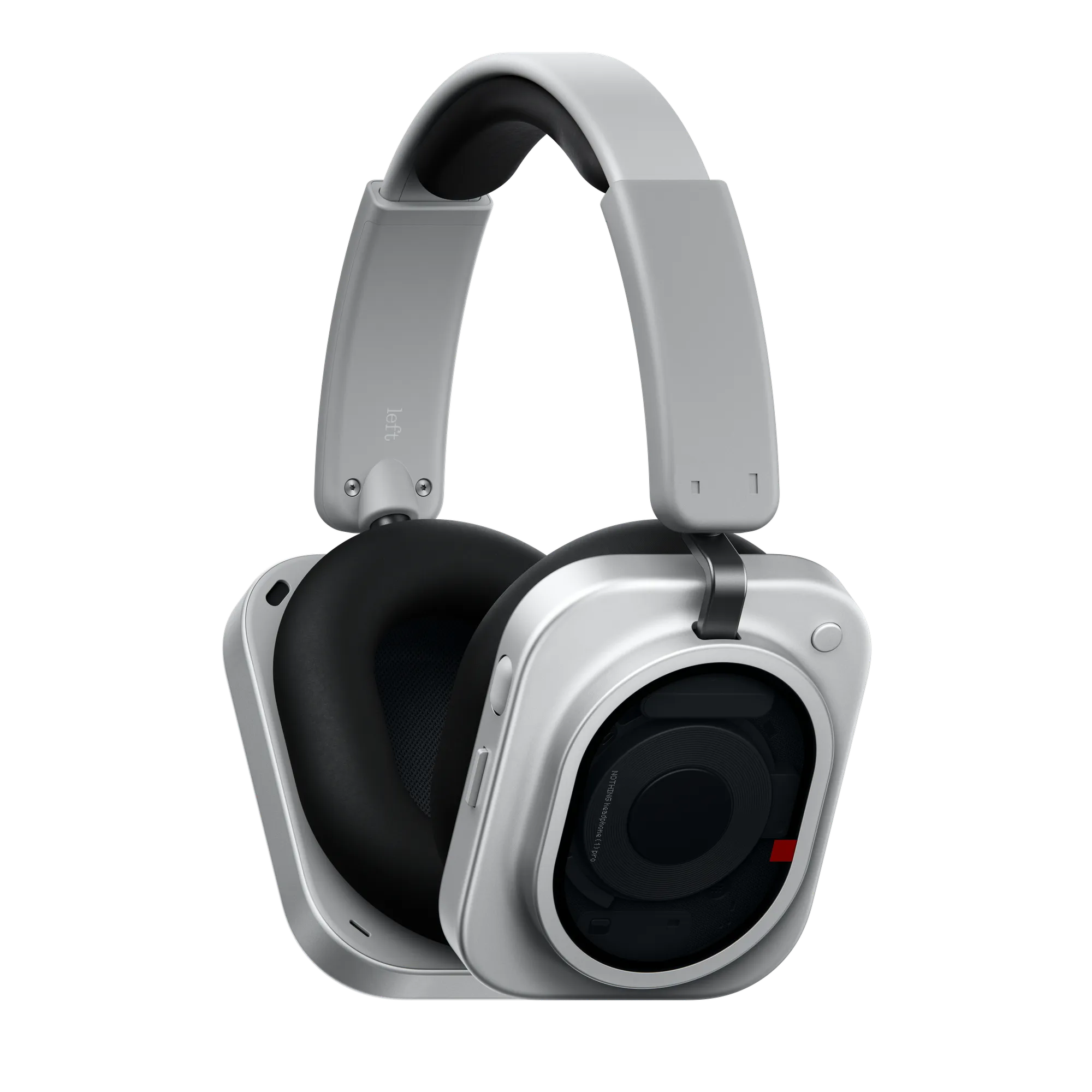
Nothing’s Headphone (1) Pro is one of the most unusual premium headphones released this year.
The $399 over-ear model uses three drivers in each earcup, including an xMEMS treble driver. It also adds adaptive noise cancellation, ten microphones, Bluetooth 6.0, Auracast, USB-C audio, a 3.5mm connection, and studio-focused sound modes developed with Metropolis Studios.
The design also follows Nothing’s transparent hardware style. The headphones use Panda Glass panels, aluminum, and titanium elements. They look unlike the mostly black and gray models from Sony, Bose, and Sennheiser.
That visual difference will attract attention. However, design alone cannot justify a $399 price. Buyers need to know whether the triple-driver system improves everyday listening, whether the ANC competes with established rivals, and whether the fit works for long sessions.
Early reviews provide a mixed but useful answer. The Nothing Headphone (1) Pro produces detailed, flexible sound and offers features that many rivals lack. It also has a heavy case, fit-sensitive isolation, and a price that places it directly beside stronger brands.
Table of Contents
- What Nothing Launched
- What the Triple-Driver System Changes
- Sound Quality and Studio Tuning
- ANC and Fit
- Battery Life and Charging
- Design, Comfort, and Case
- Connectivity and Auracast
- Nothing Headphone (1) Pro vs. Sony and Bose
- Who Should Buy It
- Who Should Skip It
- What to Watch Next
- Conclusion
- FAQs
What Nothing launched
Nothing launched the Headphone (1) Pro in North America on September 29, 2026. The US price is $399, putting the model in the premium over-ear category.
The product is designed as a more advanced version of Nothing’s earlier Headphone (1). It uses better materials, a more complex acoustic system, stronger customization, and expanded connectivity. Nothing’s official product information provides the core hardware and feature specifications.
The most important change is the three-driver layout. Each earcup includes dedicated drivers for bass, midrange, and treble. The treble driver uses xMEMS technology, which places a solid-state micro-speaker in the high-frequency path.
Nothing also worked with Metropolis Studios on the product’s sound modes and Flat EQ approach. That gives the headphones a stronger studio identity than many lifestyle-focused competitors.
The Headphone (1) Pro includes ten microphones for ANC and voice processing. It also offers adaptive ANC, transparency mode, USB-C audio, a 3.5mm jack, and Bluetooth 6.0.
What the triple-driver system changes

Most wireless over-ear headphones use one main driver in each earcup. That driver handles the full frequency range.
A multi-driver design divides the audio into separate sections. One driver handles bass, another handles midrange, and another handles treble.
This approach can reduce the amount of work assigned to each driver. The manufacturer can tune each part of the range more precisely.
That does not guarantee better sound. The crossover design, driver matching, enclosure, amplification, and software tuning matter just as much.
A poor crossover can create gaps or overlap between frequencies. A badly tuned treble driver can sound sharp. More hardware can also add weight, complexity, and power demands.
Nothing is taking a risk because the company believes the added hardware improves detail and separation. Early reviewers generally agree that the headphones sound detailed and precise, especially in wired modes.
The practical benefit will depend on your music. Complex tracks with layered instruments may show more separation. Simple podcasts may not sound meaningfully different from cheaper headphones.
Sound quality and studio tuning
Sound quality is the strongest part of the Headphone (1) Pro.
SoundGuys describes the product as a feature-rich headphone with a detailed sound profile and powerful customization. TechRadar praises its precision and wired high-resolution playback. Gizmodo’s review also focuses on the product’s strong sound quality.
The headphone includes a Flat EQ mode designed to provide a more neutral presentation. That may interest listeners who want a studio-style balance rather than a strongly boosted bass profile.
Nothing also includes a parametric EQ through the Nothing X app. A parametric EQ gives users more control than a simple bass-and-treble slider.
Users can adjust frequency bands, gain, and bandwidth. That makes it possible to tune the headphones around different music or personal preferences.
This is more advanced than the controls found on many consumer headphones. It gives audio enthusiasts a reason to choose the Nothing Headphone (1) Pro even if they do not need the triple-driver hardware.
The catch is usability. Parametric EQ can confuse casual buyers. People who do not understand frequency bands may prefer a few simple presets.
The headphone also supports wired USB-C playback up to 24-bit/192kHz according to current coverage. The source and software still need to support that format, so the specification should not be treated as a guarantee of better sound from every device.
ANC and fit
The Headphone (1) Pro includes adaptive ANC with ten microphones. Nothing says the system improves noise reduction compared with the earlier Headphone (1).
Early reviews suggest that ANC performance depends heavily on fit.
SoundGuys reports that the softer padding can create good isolation, but the seal is sensitive to jaw movement and glasses. Talking, chewing, or shifting the head may reduce the seal.
This is important because headphone ANC is not only about the microphones. The physical seal also blocks outside sound, especially higher frequencies.
If the seal breaks, the ANC system has less control. Music can lose bass, and outside noise can become more noticeable.
That means buyers should test the headphone with their own glasses, hair, and head shape. A product that works well on one reviewer’s head may perform differently for another person.
The transparency mode receives more positive early feedback. SoundGuys reports that voices and nearby sounds remain understandable without obvious positioning problems.
The ANC may be good enough for offices and daily commutes. Buyers who want the quietest possible airplane experience should compare it directly with the Sony WH-1000XM6 and Bose QuietComfort Ultra Headphones.
Battery life and charging
Battery life is one of the Headphone (1) Pro’s more confusing areas.
Current product coverage lists up to 30 hours with ANC enabled and up to 68 hours with ANC disabled.
Those numbers are useful, but buyers must compare them correctly. The 68-hour number does not represent typical ANC listening.
With ANC on, the product’s rated runtime is closer to other premium headphones. Some competing models offer longer ANC runtime, including Sennheiser’s Momentum 5.
Nothing also provides fast charging. What matters is how many hours users gain after a short charging session, and whether the number changes with high-resolution wired use.
The triple-driver system, microphones, and advanced processing may increase power demand. That could help explain why the ANC runtime is lower than the headline figure.
Battery expectations should therefore depend on how you listen. If you use ANC throughout the day, focus on the 30-hour number. If you use wired mode or ANC off at home, the higher estimate becomes more relevant.
Design, comfort, and case
Nothing’s design is one of the product’s biggest advantages.
The Headphone (1) Pro uses transparent Panda Glass panels, aluminum, and titanium details. The materials create a distinctive appearance that separates it from conventional premium headphones.
The design also exposes parts of the internal structure. That matches Nothing’s wider approach to transparent hardware and visible engineering.
The headphone weighs approximately 383.5 grams according to SoundGuys. That is heavier than many established premium models.
Weight affects long-session comfort. The headband and ear cushions need to distribute that weight evenly.
Early reviews generally praise the improved padding, but fit remains personal. Buyers with smaller heads may find the headphone less secure or more tiring.
The carrying case is another trade-off. SoundGuys and TechRadar describe it as bulky or inconvenient, with a design that protects the earcups but does not fold the entire band into a small package.
Frequent travelers should check how the case fits in their luggage. A great headphone becomes less practical when its case takes too much space.
Connectivity and Auracast
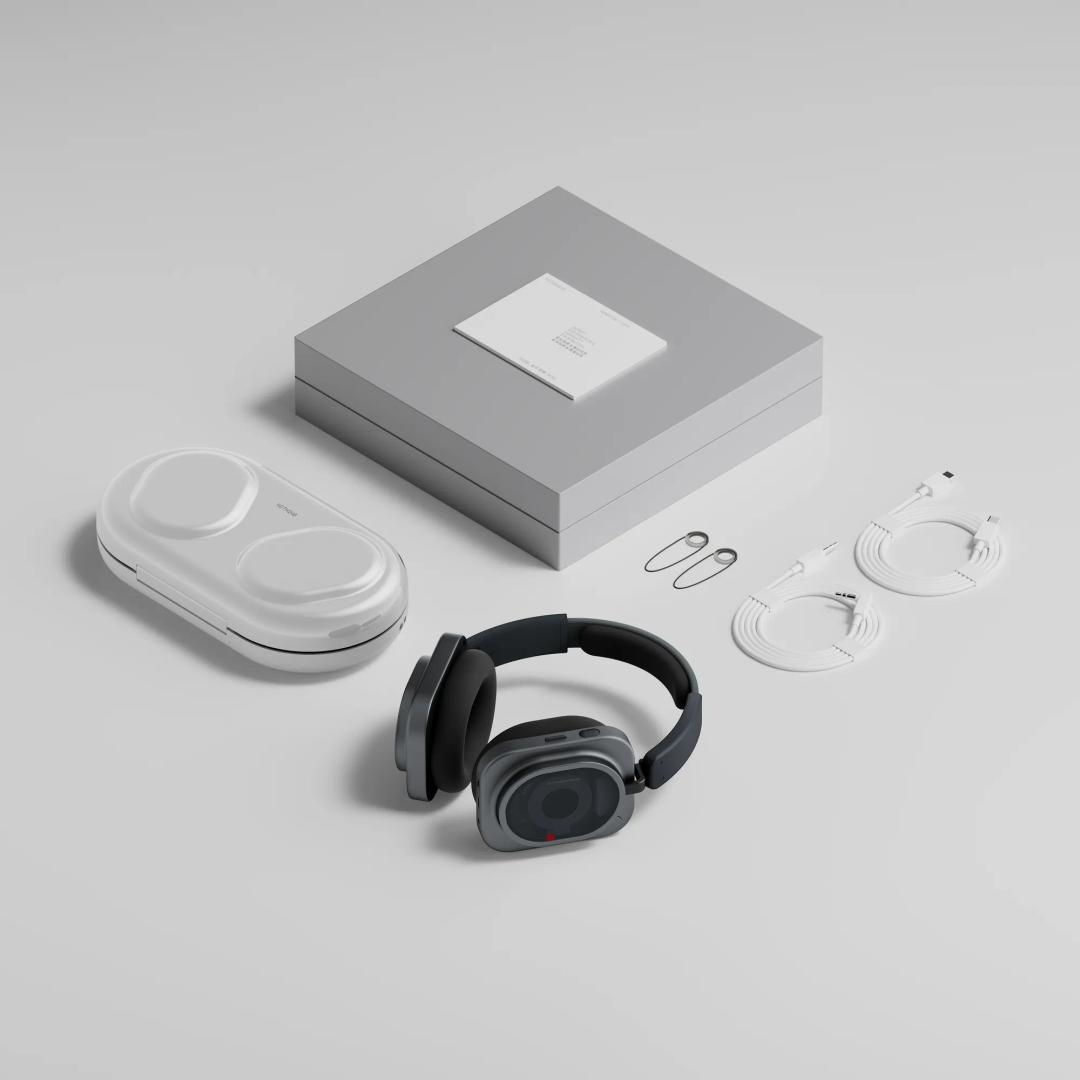
The Headphone (1) Pro includes broad connectivity options.
It supports Bluetooth 6.0, USB-C audio, and a 3.5mm wired input. It also supports Auracast sharing according to SoundGuys.
USB-C audio can be useful for computers and high-resolution playback. The 3.5mm port remains valuable for airplane systems, older devices, and wired backup.
Auracast is Bluetooth’s broadcast-audio technology. It allows compatible transmitters to broadcast an audio stream to multiple compatible receivers.
The feature is still developing. Most consumers will not encounter Auracast transmitters every day.
It is nevertheless useful future-proofing. Buyers who plan to keep headphones for several years may value support for a newer broadcast standard.
Nothing’s inclusion of Auracast is notable because it gives the company another feature that some established rivals may lack today.
Nothing Headphone (1) Pro versus Sony and Bose
The Headphone (1) Pro competes directly with the Sony WH-1000XM6 and Bose QuietComfort Ultra Headphones Gen 2.
Sony and Bose have stronger brand recognition and long experience with ANC. Their apps, support systems, and accessory ecosystems are also more mature.
Nothing counters with design, sound customization, triple drivers, USB-C playback, and Auracast.
Choose Nothing if you value:
- Detailed sound
- Parametric EQ
- Wired USB-C audio
- Distinctive design
- Auracast support
- Studio-oriented tuning
- Transparent hardware
Choose Sony or Bose if you value:
- Established ANC performance
- Travel comfort
- Mature software
- Stronger product support
- Familiar controls
- Easier replacement and resale
The price difference is small. SoundGuys notes that the Sony and Bose flagships are only slightly more expensive.
That makes the Nothing Headphone (1) Pro a difficult recommendation for buyers who want the safest mainstream choice. The product needs to appeal through features and sound rather than price alone.
Who should buy it
The Headphone (1) Pro makes the most sense for:
- Audio enthusiasts
- Tech-focused buyers
- People who enjoy sound customization
- Listeners who want USB-C audio
- Fans of Nothing’s design language
- Buyers interested in Auracast
- Users who prefer neutral or detailed tuning
- People who accept a larger case
The headphone is also attractive for people who listen at home through wired USB-C. That use case takes better advantage of the multi-driver system and high-resolution playback.
It may also suit buyers who want one headphone that looks different from every standard black model on the market.
Who should skip it
The product may not suit:
- Frequent flyers seeking maximum ANC
- Buyers who need a compact travel case
- People with smaller heads
- Users who want the lightest premium model
- Buyers who prefer simple controls
- Listeners who do not use EQ or wired audio
- Consumers who want a lower-risk brand purchase
The $399 price also creates a value problem. Nothing’s own Headphone (a) costs much less, while Sony, Bose, and Sennheiser offer stronger brand confidence at nearby prices.
The Headphone (1) Pro is more compelling for enthusiasts than for ordinary buyers who want headphones that simply work.
What to watch next
The most important next step is long-term testing.
Reviewers should measure:
- ANC against Sony and Bose
- Battery life with ANC in real use
- Comfort for different head sizes
- Seal performance with glasses
- Microphone quality in wind
- Durability of the glass panels
- Case convenience during travel
- Performance of the parametric EQ
- USB-C audio behavior across devices
- Auracast setup and reliability
The triple-driver system will also receive more attention as reviewers compare it with conventional single-driver headphones.
If the sound difference remains noticeable across many genres, Nothing may establish a stronger position in premium audio.
If the benefits remain subtle, the product may depend too heavily on design and enthusiast features.
Conclusion
The Nothing Headphone (1) Pro is an ambitious premium headphone with a clear identity.
Its triple-driver system, xMEMS treble, parametric EQ, USB-C audio, Auracast, and transparent materials make it different from mainstream alternatives. Early reviews generally praise its detailed sound and unusual feature set.
The trade-offs are real. The ANC is fit-sensitive, the case is bulky, the headphone is heavy, and ANC battery life is not class-leading.
At $399, Nothing is asking buyers to choose innovation over familiarity. That can work for audio enthusiasts and tech-focused listeners.
For travelers who care most about silence, comfort, and predictable support, Sony or Bose may remain safer choices.
FAQS
How much does the Nothing Headphone (1) Pro cost?
The US price is $399.
Does the Nothing Headphone (1) Pro have three drivers?
Yes. Each earcup uses dedicated bass, midrange, and treble drivers. The treble path uses xMEMS technology.
How long does the battery last?
Current product coverage lists up to 30 hours with ANC enabled and up to 68 hours with ANC disabled. Real-world results vary by settings.
Is the Nothing Headphone (1) Pro good for travel?
It may work well for travel, but the fit, case size, and ANC performance should be compared with Sony and Bose before purchase.
Does it support wired audio?
Yes. It includes USB-C audio and a 3.5mm connection.
Does it support Auracast?
SoundGuys lists Auracast support as one of the product’s notable features.
Is the Headphone (1) Pro waterproof?
No. It has an IP52 rating, which offers limited protection against dust and light moisture. It is not designed for heavy rain, swimming, or workouts.
Is it better than the Sony WH-1000XM6?
Not for every buyer. Nothing offers more unusual sound hardware and customization, while Sony has stronger mainstream recognition and established ANC performance.
