




Wireless headphones are excellent for commuting, travel, workouts, and everyday listening. They are less convincing when timing matters.
Musicians, producers, and recording engineers often avoid ordinary Bluetooth headphones because even a small delay can disrupt performance. A singer may hear their voice slightly after singing it. A guitarist may notice that the sound arrives behind the instrument. A producer may also struggle to judge timing when monitoring through software.
LEWITT is addressing that problem with the new LW6, a closed-back wireless studio headphone designed around ultra-wideband audio. According to LEWITT’s official LW6 product information, its RealSound system delivers uncompressed wireless audio with less than 6 milliseconds of latency. It also lists onboard DSP, custom EQ, virtual studio monitoring, and up to 21 hours of battery life.
That makes the LW6 one of the more technically interesting headphone launches of the week. It is not another premium consumer headset competing mainly on ANC, spatial audio, or styling. It targets a specialist workflow where delay, accuracy, and freedom of movement matter more than convenience alone.
The bigger question is whether this approach can replace wired monitoring for real creators. The answer depends on how well LEWITT balances latency, sound accuracy, reliability, compatibility, and battery performance.
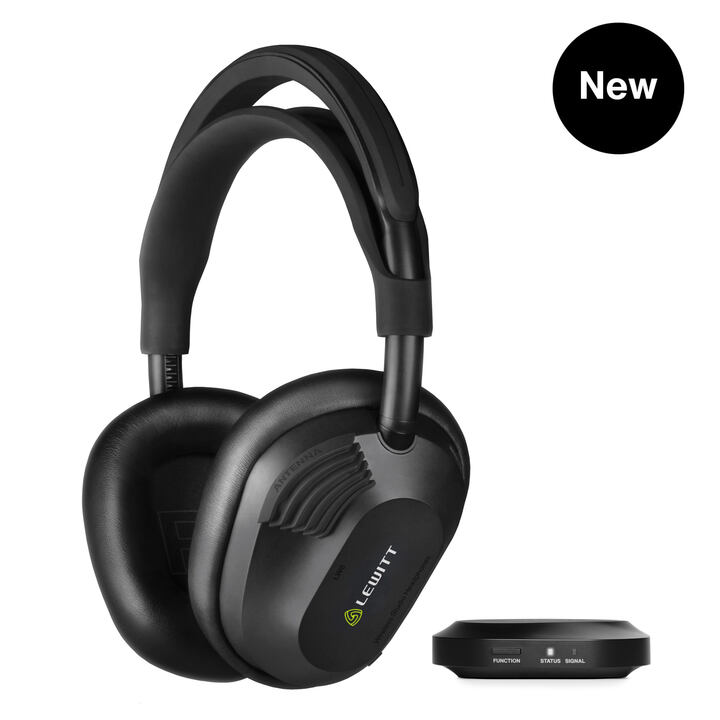
Table of Contents
What LEWITT announced
LEWITT has introduced the LW6 as its first wireless studio headphone. The company is positioning it for recording, monitoring, mixing, and mastering, which places the product closer to professional audio equipment than to ordinary lifestyle headphones.
The design is closed-back. That matters because closed-back headphones help reduce outside noise and minimize sound leakage. Musicians can monitor a backing track without sending too much sound into a nearby microphone.
LEWITT specifically highlights the closed-back design for recording vocals and instruments while reducing monitoring bleed. You can read more about the company’s acoustic approach in its LW6 tuning and design explanation.
LEWITT’s most important claim is the wireless link. The company says its RealSound ultra-wideband system provides uncompressed audio with less than 6 ms of latency. It also says the headphone includes onboard DSP, customizable equalization, virtual studio monitoring, and up to 21 hours of operation.
These specifications suggest a product built for a specific problem. LEWITT is not asking creators to accept a wireless connection for convenience alone. It is arguing that wireless can become practical for professional use if the transmission system is fast enough and stable enough.
The company’s approach also separates the headphone from standard Bluetooth products. Most consumer wireless headphones use Bluetooth because it works with phones, tablets, computers, and cars. Studio systems often use a dedicated transmitter because they need lower delay and tighter control.
Why wireless latency matters
Latency is the time between an action and the sound reaching your ears.
For a normal music listener, a small delay rarely matters. Streaming a song from a phone can tolerate some delay because the user is not creating sound in real time. A video player can also compensate by delaying the picture or adjusting playback.
Recording is different. Musicians create sound and monitor it at the same time. If the monitoring signal arrives late, the delay becomes noticeable. Even a few milliseconds can affect how natural the experience feels during singing or playing.
The problem becomes more obvious when the monitoring chain includes several stages:
- The microphone captures the sound.
- The audio interface converts it into digital data.
- Recording software processes the signal.
- The wireless system transmits it.
- The headphones convert it back into sound.
Each stage adds time. The Bluetooth SIG’s explanation of Bluetooth audio latency notes that encoding, transport, and decoding can all contribute to total audio latency.
A delayed vocal signal can make a singer feel disconnected. A guitarist may adjust their playing to compensate. A drummer may notice that hits feel slightly behind the beat.
The effect is not always dramatic, but professional work depends on timing. That is why many creators still choose wired headphones even when they use wireless products everywhere else.
How UWB differs from Bluetooth
Ultra-wideband, or UWB, is a wireless technology designed around very wide radio bandwidth and precise timing characteristics. UWB is used in several applications, including proximity and spatial-awareness systems. For example, Apple’s documentation on Ultra Wideband describes its use for precise, spatially aware interactions between nearby devices and accessories.
The LW6 does not appear to use Bluetooth as its main monitoring connection. Instead, LEWITT is using its own RealSound system based on UWB. This approach gives the company more control over latency, bandwidth, and the behavior of the wireless link.
That control is important in professional audio. A dedicated system can prioritize timing and consistency rather than trying to support every phone, tablet, and laptop on the market.
The trade-off is flexibility. Bluetooth headphones work with a wide range of devices. A proprietary UWB system may require a dedicated transmitter or a specific connection method. That can add setup steps and limit where the product can be used.
The difference is similar to the one between a general-purpose Wi-Fi network and a dedicated wireless link. A general network may support many devices and applications. A dedicated system can be optimized for one job.
The LW6’s usefulness will therefore depend on the complete package. The headphones may perform very well in a studio, but users will want to know how easy it is to connect them to an interface, computer, mixer, or live-production system.
What the LW6 offers

LEWITT’s headline feature is the claimed latency of less than 6 ms. That figure is important because it places the product in a range that could feel close to wired monitoring for many users.
However, the number needs context. Latency can be measured in different ways. A manufacturer may measure only the wireless link, while the total system latency also includes the audio interface, software buffer, and digital processing.
A low wireless figure is still valuable. It reduces the amount of delay added by the headphone system itself. But creators should evaluate the complete monitoring chain rather than focus on one number.
The LW6 also supports uncompressed wireless audio according to LEWITT. That suggests the company is trying to preserve the source signal rather than use the same kind of compression found in common Bluetooth codecs.
Again, uncompressed transmission is not automatically the same as accurate sound. The headphone drivers, tuning, seal, and amplifier stage still determine how the result sounds.
The product includes onboard DSP and customizable EQ. That gives users more control over tonal balance and monitoring preferences. Some creators may want a flatter reference sound, while others may use an EQ profile that makes long sessions more comfortable.
Virtual studio monitoring is another notable feature. The exact implementation needs more testing, but the idea is to simulate or support studio-style monitoring tools within the headphone system.
Battery life is listed at up to 21 hours. That should cover a full day of production for many users, although the result may vary with wireless range, DSP use, volume, and other settings.
Who benefits most
The LW6 is most relevant to people who already understand the limits of Bluetooth monitoring.
Musicians
Singers and instrumentalists may benefit from moving around without a headphone cable. A wireless link can reduce tangles and make rehearsal or live performance more convenient.
The main requirement is confidence. Musicians need to know that the signal will remain stable and that the delay will not suddenly increase.
Home-studio producers
Home-studio users often work in small rooms with limited space. Wireless monitoring can make it easier to move between a desk, microphone, instrument, and control surface.
However, many home producers do not need extremely low latency if they monitor through direct hardware paths. The LW6 becomes more valuable when the workflow depends heavily on software effects, virtual instruments, or remote recording.
Podcasters
Podcasters may appreciate the ability to move while monitoring guests, especially in a shared studio or interview environment. Closed-back isolation can also reduce bleed into microphones.
The product may be less compelling for simple solo recording, where a standard wired headphone already solves the monitoring problem at lower cost.
Live performers
Wireless monitoring is especially attractive on stage. A performer may want to move without a cable while monitoring backing tracks or a mix.
Live use is also where reliability matters most. If the link drops, the consequences are immediate. Independent tests should examine interference, range, recovery behavior, and performance in crowded wireless environments. Shure’s wireless troubleshooting guidance explains how RF interference, antenna placement, frequency conflicts, and other factors can affect wireless audio systems.
Audio engineers
Engineers may use the LW6 for tracking, editing, and general monitoring. Whether it suits mixing or mastering depends on the headphone’s tuning and measurement performance.
A headphone can be technically advanced and still fail to provide a neutral reference. Professional users will want frequency-response data, distortion measurements, channel matching, and long-session comfort information. RTINGS’ headphone testing methodology provides a useful example of the measurements reviewers can use when evaluating headphones.
Wired versus wireless monitoring

Wired headphones still have clear advantages.
A cable provides a direct connection with no battery requirement and no wireless pairing. It is easy to understand, easy to repair, and usually inexpensive. A good wired studio headphone can also work with nearly any audio interface or mixer.
Wireless systems add convenience, but they add more points of failure. Users must manage charging, transmitters, firmware, interference, and compatibility.
The LW6 may narrow that gap, but it does not erase it.
Wired headphones are better when:
- You need maximum compatibility
- You do not want to manage battery life
- You are mixing or mastering under strict reference conditions
- You want the lowest possible system complexity
- You need a low-cost solution
- You want to avoid proprietary transmitters
The LW6 may be better when:
- You need to move freely while monitoring
- Bluetooth latency is unacceptable
- You want a dedicated professional wireless system
- You record live performances
- You work in a studio where cable management is a constant problem
- You value wireless convenience but still need timing performance
The choice is not simply wired versus wireless. It is also workflow versus workflow.
A professional may keep wired headphones for final mixing and use the LW6 for tracking, rehearsal, and live monitoring. A home creator may use it as a main pair if the benefits justify the price and setup requirements.
Readers comparing different headphone types can also review TechOzea’s guide to how wireless headphones work before deciding which connection method fits their setup.
The limits of the LW6
The first limit is compatibility.
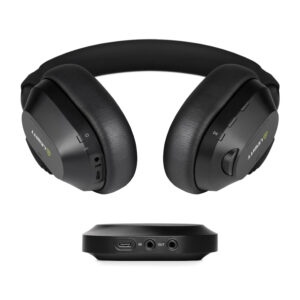
If the LW6 requires a proprietary transmitter, buyers need to understand what comes in the box and which devices are supported. A professional headphone is less useful if it cannot connect cleanly to the interface or mixer already in use.
The second limit is sound accuracy.
LEWITT describes the LW6 as a studio headphone, but that label alone does not prove it is suitable for mixing or mastering. Independent measurements will be important. Users should look for a balanced frequency response, low distortion, good channel matching, and consistent performance across different listening levels.
The third limit is wireless reliability.
A low-latency system must remain stable in the real world. Studios may contain Wi-Fi routers, wireless microphones, phones, computers, and other transmitters. Live venues add even more interference and distance challenges.
The fourth limit is battery dependence.
Twenty-one hours is a useful figure, but it still means the user must charge the headphone. A dead battery can stop a session, which is not a problem with a passive wired pair.
The fifth limit is price.
LEWITT’s professional positioning suggests the LW6 will cost more than ordinary Bluetooth headphones. That price may be justified for a creator who saves time and gains freedom of movement. It may be difficult to justify for someone who only records occasionally.
What independent testing should examine
The LW6 needs more than a short launch summary. The most useful reviews should answer practical questions.
Total system latency
Reviewers should measure the delay from instrument or microphone input to the listener’s ears. The wireless link’s latency is only one part of the complete chain.
Stability and interference
Testing should include crowded wireless environments, distance changes, walls, and movement around a studio. Reviewers should also report how the system behaves when the connection weakens.
Sound quality
A studio headphone should be evaluated with frequency-response measurements, distortion tests, and comparisons against established wired reference models.
Comfort
Creators may wear the LW6 for hours. Reviews should examine clamp force, heat, ear-pad quality, headband pressure, and glasses compatibility.
Battery behavior
A review should test actual runtime rather than repeat the maximum claim. It should also explain what happens when the battery is low or depleted.
Setup and compatibility
Users need to know whether the system works with common interfaces, computers, mixers, and recording software. The setup process should be documented clearly.
Recovery after dropouts
A brief connection interruption may be manageable. A system that fails to reconnect smoothly could become frustrating during a session.
What to watch next
The next important step is independent product testing. LEWITT’s launch information establishes the concept, but real-world results will determine whether the LW6 deserves attention from professionals.
Watch for reviews that compare the product against wired reference headphones, low-latency 2.4GHz systems, and standard Bluetooth models. The key question is not whether the LW6 is wireless. It is whether the wireless link remains invisible during real creative work.
The category may also expand if the product succeeds. SPARK Microsystems, whose UWB technology powers the LW6’s wireless connection, has described the product as its entry into the professional audio market through LEWITT’s headphones. You can read SPARK Microsystems’ announcement about the LEWITT LW6 for more technical context.
There may also be broader implications for consumer audio. Low-latency wireless links could eventually improve gaming, video editing, augmented reality, and interactive music applications. Those markets have different requirements, but they share the same frustration with delayed audio.
Still, professional audio remains a demanding test. A product must be accurate, stable, comfortable, and easy to integrate. A clever wireless protocol is only the beginning.
Conclusion
LEWITT’s LW6 is one of the more unusual headphone launches this week because it targets a real professional problem instead of adding another lifestyle feature.
The company says the LW6 combines ultra-wideband wireless audio, less than 6 ms of latency, uncompressed transmission, onboard DSP, virtual studio monitoring, and up to 21 hours of battery life. Those claims make it technically promising, especially for musicians and producers who want freedom of movement without ordinary Bluetooth delay.
The product is not automatically a replacement for wired headphones. Compatibility, sound accuracy, wireless stability, charging, and price will determine its real value.
For creators who already struggle with Bluetooth latency, the LW6 deserves attention. For everyone else, waiting for independent testing is the sensible choice.
The wireless studio headphone market is still small, but LEWITT’s launch suggests it is becoming more serious. If the system performs as promised, the cable may no longer be the default answer for every professional monitoring workflow.
FAQs
What makes the LEWITT LW6 different from Bluetooth headphones?
The LW6 uses LEWITT’s proprietary RealSound ultra-wideband system rather than relying only on ordinary Bluetooth. The company says this allows lower latency and uncompressed wireless audio.
Is less than 6 ms of latency enough for recording?
It could be, but the total delay also depends on the audio interface, computer, software buffer, and processing chain. The wireless figure alone does not determine the complete monitoring experience.
Can the LW6 replace wired studio headphones?
It may replace wired headphones for tracking, rehearsal, and some live workflows. Mixing and mastering users should wait for independent measurements before relying on it as a primary reference.
Is the LW6 suitable for gamers?
Possibly, but it is designed for professional audio rather than gaming. Gamers should confirm platform support, microphone behavior, and whether the transmitter works with their console or PC.
Does uncompressed wireless audio guarantee better sound?
No. Driver quality, tuning, fit, amplification, and recording quality still determine what you hear. Uncompressed transmission only describes the wireless link.
Who should buy the LW6?
The product is most relevant to musicians, producers, podcasters, and live performers who need wireless movement but cannot tolerate normal Bluetooth delay.
What should I check before buying?
Check transmitter compatibility, supported devices, total system latency, operating range, sound measurements, comfort, battery life, and what happens if the wireless connection drops.
Are wired headphones still useful?
Yes. Wired headphones remain simple, compatible, reliable, and useful for critical reference work. A wireless studio model is better viewed as an additional tool than a universal replacement.
