


The TDM Neo headphone is one of the strangest headphone products to reach U.S. buyers this year.
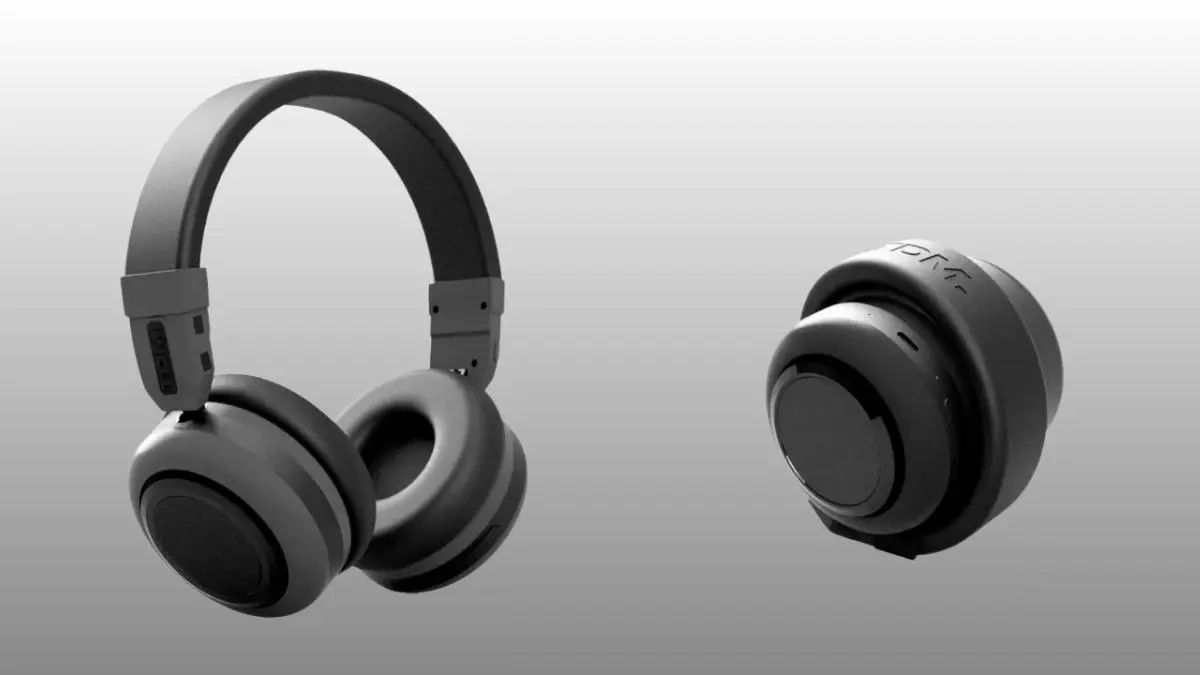
At first glance, it looks like another pair of wireless headphones. But twist the device into its alternate configuration and the headphones become a portable Bluetooth speaker.
That unusual transformation is the entire reason the TDM Neo headphone exists.
Instead of asking consumers to carry headphones for private listening and a separate speaker for sharing music, TDM is betting that one device can do both jobs.
The product is now moving from its CES 2026 debut and Kickstarter campaign into the U.S. consumer market. TDM lists the Neo at $249 and currently says it ships October 16.
That makes the important question less about whether the design is clever. It clearly is.
The more useful question is whether the TDM Neo is actually a practical alternative to buying a good pair of headphones and a separate compact Bluetooth speaker.
The answer depends heavily on how you listen.
For commuters who need strong active noise cancellation, the Neo is not the obvious choice. TDM does not use ANC, instead relying on passive isolation from its memory-foam construction.
For someone who travels, spends time in hotels, moves between private and shared listening, or simply wants to carry fewer devices, however, the idea becomes much more interesting.
Table of Contents
- What is the TDM Neo?
- Why this headphone launch is different
- How the headphone-to-speaker transformation works
- Why TDM uses four 40mm drivers
- The 200+ hour battery claim
- Why the Neo does not have ANC
- What the design means for sound quality
- Can the Neo replace a Bluetooth speaker?
- The replaceable battery matters more than it sounds
- Connectivity and everyday use
- TDM Neo versus conventional ANC headphones
- Who should buy the TDM Neo?
- Who should skip it?
- What to watch after launch
- Conclusion
- Frequently asked questions
Key Takeaways
- The TDM Neo is genuinely different: it physically transforms from wireless headphones into a portable Bluetooth speaker, using separate inward- and outward-facing drivers.
- The biggest trade-off is ANC: TDM uses passive isolation rather than active noise cancellation, so frequent flyers and commuters may be better served by conventional ANC headphones.
- The 200+ hour battery figure is a company claim: it is unusually high and should not be interpreted as independently verified real-world endurance.
What is the TDM Neo Headphones?
The TDM Neo is a wireless headphone designed around two listening modes.
In its normal configuration, it functions as headphones. The earcups sit around your ears and direct audio toward the listener.
The unusual part comes when you twist the physical structure.
The flexible headband and earcups fold into a different configuration, allowing the device to operate as a portable Bluetooth speaker. TDM describes the concept as moving from “solo to social.”
That is a useful description because it explains the product’s intended purpose better than a specification sheet does.
Most headphones are designed around private listening.
Most Bluetooth speakers are designed around shared listening.
TDM Neo attempts to bridge those two scenarios.
The company lists the product at $249 and currently says it ships October 16.
The product is therefore no longer merely a CES prototype or crowdfunding concept. It is entering the consumer market.
TDM’s Kickstarter campaign raised $154,113 from 766 backers, according to the campaign page, giving the company enough support to move the product toward commercial availability.
That transition is important.
Plenty of unusual CES headphones never become products. Neo has.
Why this headphone launch is different
The consumer headphone market is already crowded.
You can buy premium ANC headphones from Sony and Bose, wireless models from Sennheiser and Beats, gaming headsets from companies such as Sony and SteelSeries, open-ear products from Shokz and others, and inexpensive wireless headphones from dozens of brands.
So simply adding another Bluetooth headphone is not enough to make a product interesting.
TDM takes a different approach.
Instead of trying to win entirely through ANC, codec support, microphone processing or sound tuning, it changes the physical role of the device.
The TDM Neo is trying to solve a portability problem.
Imagine traveling with headphones.
You use them on an airplane, at the airport and in the hotel.
Then you reach your room and want to play music for someone else.
Normally, you need a Bluetooth speaker.
The Neo’s proposition is that you already have one.
That sounds like a niche scenario, but it is easy to imagine variations of it.
A student could use the Neo for personal listening in a dorm and then switch to speaker mode when friends arrive.
A traveler could use it privately during transit and socially at a hotel.
Someone camping could use it as headphones during a commute and a speaker around a campsite.
A content creator could use it privately and then play audio for a small group.
The important word is small.
Neo is not automatically a replacement for every Bluetooth speaker.
It is a hybrid.
And hybrid products always involve compromises.
How the headphone-to-speaker transformation works
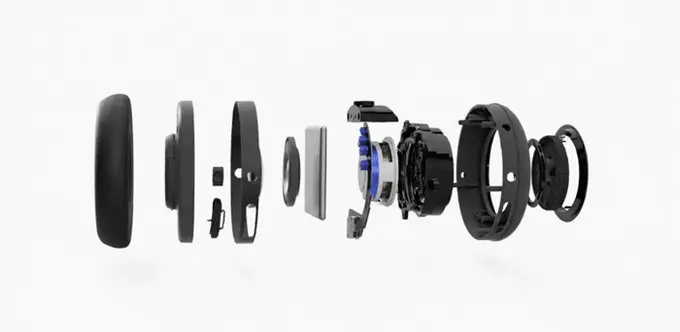
The mechanical design is the heart of Neo.
Instead of using one conventional driver per side and somehow redirecting the same sound outward, TDM uses separate drivers for the two modes.
The Verge reports that each earcup contains an inward-facing 40mm driver for headphone listening and an additional outward-facing 40mm driver for speaker use.
That means Neo has four 40mm drivers in total.
Two are dedicated to the headphone configuration.
Two are used when the product becomes a speaker.
This is an important engineering decision.
A headphone driver is designed to operate very close to the listener’s ear.
A speaker driver has to move air into an open room.
Those are different acoustic requirements.
If TDM had simply pointed the headphone drivers outward, it would have had a difficult compromise between private listening and room playback.
Dedicated outward-facing drivers make the concept more practical.
The physical transformation also gives the software and hardware an obvious mode change.
Instead of asking the user to select “speaker mode” from an app, the device’s physical configuration becomes part of the interaction.
That is one of the most interesting aspects of Neo.
The product is not merely two audio modes hidden behind software.
The industrial design communicates what the product is doing.
Why TDM uses four 40mm drivers
The four-driver arrangement also illustrates an important principle in consumer audio: driver size alone does not determine sound quality.
A larger driver is not automatically better.
Tuning, enclosure design, amplification, DSP, positioning and acoustic loading all affect the result.
In Neo, the drivers have different jobs.
The inward-facing pair can be optimized for headphone listening.
The outward-facing pair can be optimized for speaker playback.
That separation is sensible.
The trade-off is physical size.
The Verge’s hands-on experience found the headphones somewhat bulky and heavy because of the additional hardware required for speaker functionality.
That is exactly the kind of compromise potential buyers should expect from a hybrid device.
You are not getting the speaker function for free.
You are carrying the additional drivers, electronics and mechanical structure that make the transformation possible.
This is why comparing Neo only with conventional $249 headphones would miss part of the value proposition.
The more appropriate comparison is:
$249 hybrid headphone + speaker
versus
$150–$250 headphone + separate portable speaker.
The second option may produce better performance in each individual category.
The first option may be considerably more convenient.
The 200+ hour battery claim
One of the most attention-grabbing parts of TDM’s pitch is battery life.
The company’s current website advertises 200+ hours.
That is an enormous number for wireless headphones.
But this is where careful reporting matters.
The 200+ hour figure should be treated as a manufacturer claim, not an independently established real-world result.
TDM’s Kickstarter FAQ also references its 200-hour battery focus.
There is a logical reason why such a long figure might be possible.
Headphones generally require considerably less acoustic power than a speaker attempting to project sound into a room.
Speaker mode is therefore expected to consume substantially more energy.
The Verge reports that TDM’s claimed speaker-mode endurance is much lower, at around 16 hours, compared with more than 200 hours in headphone mode.
That difference is actually useful.
It demonstrates how dramatically power requirements can change between private and room playback.
Still, buyers should wait for standardized independent battery testing before treating the 200+ hour number as a real-world expectation.
Battery-life claims depend on factors such as volume, codec, wireless connection, DSP behavior and operating conditions.
So the correct interpretation is:
TDM claims exceptionally long endurance. Independent testing is still needed to establish how that translates into normal use.
That distinction is important because battery life is one of the easiest specifications to misunderstand.
Why the Neo does not have ANC
This is arguably the biggest weakness of the TDM Neo for mainstream headphone buyers.
The product does not use active noise cancellation.
TDM’s Kickstarter FAQ explicitly says the company chose passive isolation instead of ANC, using high-density memory foam.
For some consumers, that will be perfectly acceptable.
For others, it will be a dealbreaker.
If your primary headphone use is airplanes, trains, offices, city commuting or other noisy environments, ANC is one of the features you are likely to value most.
TechOzea’s guide to how active noise cancellation works and what it cannot block explains why ANC is particularly useful for reducing consistent environmental noise.
Neo takes a different route.
Instead of electronically generating an opposing signal, it depends on physical isolation.
Passive isolation can be useful.
A well-sealed earcup can reduce external sound without consuming battery power.
But passive isolation and ANC are not interchangeable.
That distinction becomes especially important for low-frequency environmental noise such as aircraft engine rumble.
A consumer choosing Neo because they want a travel headphone should understand that it is fundamentally different from an ANC flagship such as the Sony WH-1000XM6.
For comparison, see TechOzea’s Sony WH-1000XM6 review.
The Sony is designed around premium personal listening and active noise cancellation.
Neo is designed around versatility.
Neither approach is automatically better.
They solve different problems.
What the design means for sound quality
The TDM Neo should not be judged solely by the novelty of its transformation.
A headphone still needs to sound good.
The Verge’s hands-on evaluation provides useful independent context. The reviewer found the sound good overall but noted a somewhat bass-heavy presentation.
That is an observation from a hands-on evaluation, not an objective measurement of frequency response.
It should therefore be understood as a listening assessment.
This distinction matters.
Terms such as “warm,” “bass-heavy,” “bright” and “detailed” describe perceived sonic characteristics. They do not substitute for laboratory frequency-response measurements.
For everyday listeners, however, the practical question is simpler:
Does the headphone sound enjoyable?
The available independent evidence suggests that Neo can provide a good listening experience, but there is not enough standardized measurement data yet to place it confidently against established audiophile or premium ANC models.
That is another reason the $249 price needs to be viewed through the hybrid-product lens.
You are paying for functionality as well as sound.
A dedicated headphone at the same price may have more sophisticated acoustic tuning.
But it cannot become a speaker.
Can the Neo replace a Bluetooth speaker?
This is where expectations need to be controlled.
Neo can operate as a speaker.
That does not mean it should replace every portable Bluetooth speaker.
A conventional portable speaker is built around open-air playback from the beginning.
Its enclosure, driver placement, acoustic tuning and physical structure are optimized for that job.
Neo starts with the constraints of a wearable headphone and then transforms.
That is a fundamentally different design objective.
The advantage is portability.
The disadvantage is specialization.
If you already own a small Bluetooth speaker that you love, Neo probably does not make it obsolete.
Instead, Neo makes more sense for someone who does not want to carry two devices.
That distinction gives us a useful way to understand the product:
Neo is a convenience-first hybrid, not necessarily a performance-first speaker.
The product’s physical transformation is the feature.
The speaker mode is valuable because it is there when you need it.
It does not have to outperform a dedicated $150 speaker to justify its existence.
It simply has to be good enough that carrying one device becomes more attractive than carrying two.
The replaceable battery matters more than it sounds
One of the more interesting aspects of Neo is the replaceable battery.
TDM says the battery is user-replaceable.
That is significant because battery degradation is one of the biggest long-term limitations of wireless headphones.
Most wireless headphones eventually face a basic problem:
The battery wears out, but the rest of the product may still work.
If the battery cannot be replaced economically, consumers may end up replacing the entire headphone.
A modular battery potentially changes that equation.
Instead of treating the battery as a permanently sealed component, the manufacturer can treat it as a replaceable part.
That can extend useful product life.
However, buyers should distinguish between replaceable and readily available replacement batteries.
A product can technically have a replaceable battery without making replacement parts easy to obtain years later.
TDM’s long-term support record will therefore matter.
The company also says the memory-foam ear cushions are replaceable, which addresses another common wear point in headphones.
For a $249 product, repairability and parts availability could become an important part of its value proposition.
Connectivity and everyday use
TDM’s Kickstarter documentation says Neo supports Bluetooth 6.0 and is backward-compatible with older Bluetooth devices.
The product also includes a 3.5mm connection, according to the available product documentation and reporting.
The wired connection is useful for consumers who want an alternative to Bluetooth.
It also makes sense for travel.
A wired connection can be useful with entertainment systems, laptops, audio equipment or other devices where Bluetooth pairing is inconvenient.
For gaming, expectations should be more cautious.
TDM says the product supports Bluetooth 6.0 and describes it as suitable for low-latency wireless gaming, while also offering a 3.5mm wired connection.
The wired connection remains the safer recommendation when latency is critical.
Gamers who prioritize competitive performance should still consider a dedicated gaming headset designed around low-latency wireless protocols and platform compatibility.
Neo’s primary advantage is versatility, not specialization.
TDM Neo versus conventional ANC headphones
The most useful comparison is not simply which product has better specifications.
It is which problem you are trying to solve.
| Priority | TDM Neo | Premium ANC headphones |
|---|---|---|
| Private listening | Strong potential | Strong |
| Speaker functionality | Yes | Usually no |
| ANC | No | Yes |
| Passive isolation | Yes | Usually yes |
| Long battery claim | 200+ hours claimed | Usually much lower |
| Replaceable battery | Yes, according to TDM | Varies |
| Travel | Convenient, but lacks ANC | Usually better for noisy travel |
| Shared listening | Major advantage | Poor |
| Audiophile-focused design | Not the primary purpose | Varies |
| One-device convenience | Major advantage | Limited |
| Mature ecosystem | Newer brand/product | Established manufacturers usually have an advantage |
This is why a buyer should not automatically conclude that a $249 TDM Neo is better than a $400-plus ANC headphone.
They are not direct equivalents.
If your life is built around flights, commuting and office work, ANC remains a major reason to choose a conventional premium headphone.
If your priority is carrying less gear and switching between private and shared audio, Neo becomes much more compelling.
Who should buy the TDM Neo?
Travelers who hate carrying multiple audio devices
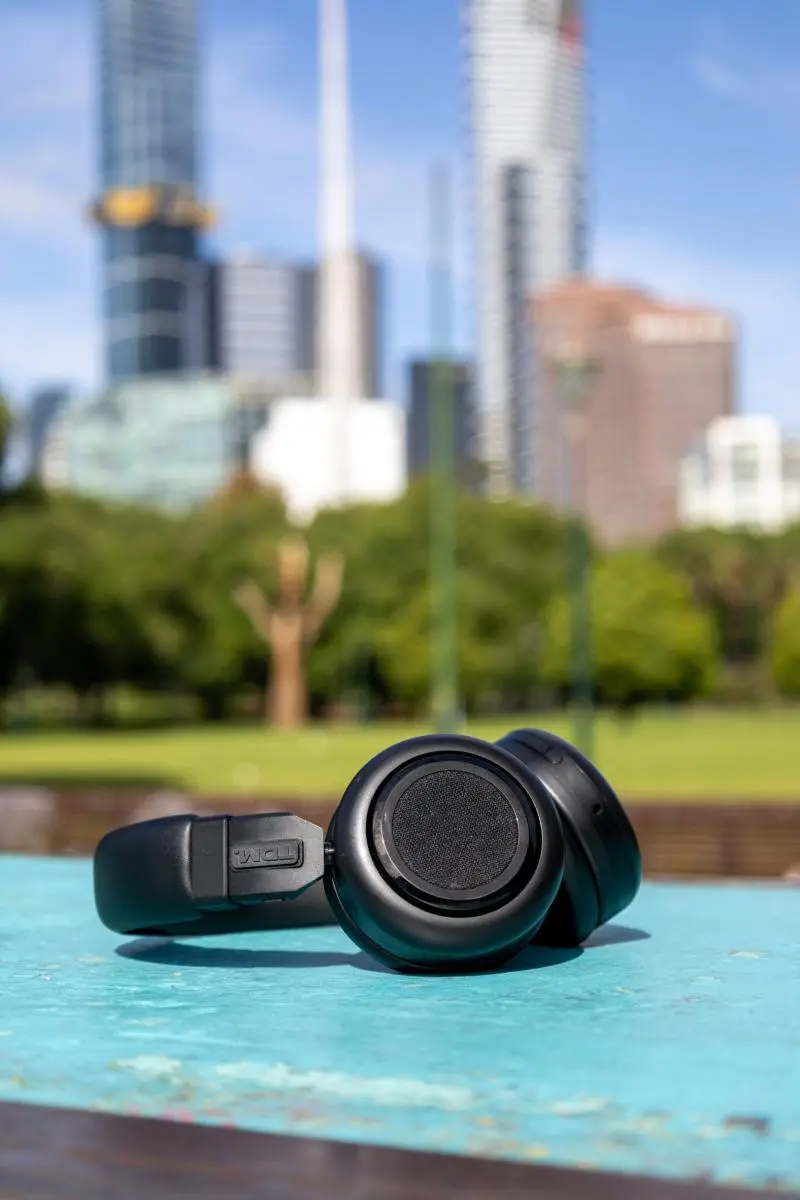
This is probably one of the strongest use cases.
The same device can be used privately during a flight and socially at the hotel.
The lack of ANC limits its appeal for the noisiest travel environments, but the two-in-one design is still convenient.
College students
Students living in dorms or shared apartments could benefit from the ability to switch between private and shared listening.
A separate Bluetooth speaker takes up space.
Neo combines the functions.
People who frequently share music
If you constantly move between headphones and speaker playback, Neo solves a very specific annoyance.
You do not need to find a speaker.
You simply transform the device.
Minimalists
If your priority is carrying fewer devices rather than maximizing performance in each category, Neo makes considerable sense.
Early adopters
The product is mechanically unusual and represents a different direction for personal audio.
That alone will appeal to consumers who enjoy experimental hardware.
Who should skip it?
Frequent flyers who prioritize ANC
This is the clearest reason to look elsewhere.
TDM explicitly chose passive isolation instead of ANC.
If reducing aircraft noise is your priority, a dedicated ANC headphone is a better fit.
Audiophiles seeking maximum sound quality
There is not yet enough independent measurement evidence to conclude that Neo competes with dedicated audiophile headphones at its price.
Its purpose is broader.
Serious outdoor users
The current evidence reviewed does not establish a meaningful water-resistance rating.
That means buyers should not assume the product is designed for heavy rain, swimming or sweat-intensive workouts.
For workout-focused buying advice, TechOzea’s best over-ear headphones for working out guide is a more appropriate starting point.
People who already own excellent headphones and a good speaker
The value proposition weakens if you already have both products.
Neo is most attractive when consolidation itself is valuable.
Is $249 a reasonable price?
The answer depends on what you compare it with.
Compared with a basic wireless headphone, $249 is expensive.
Compared with premium headphones, it is not unusual.
Compared with buying two products, however, the calculation changes.
Suppose someone would otherwise buy a $150 pair of headphones and a $100 compact Bluetooth speaker.
The total is already $250.
Neo effectively targets that combined category.
But price alone cannot prove value.
A hybrid product can be cheaper than two separate products and still be worse if neither mode performs adequately.
The key question will therefore be real-world quality.
How good is the headphone mode?
How loud and clear is speaker mode?
How well does the transformation hold up after months of use?
How close is the battery performance to TDM’s claims?
How easy is it to replace the battery?
How well does the product handle calls?
Those are questions that extended testing should answer.
What to watch after launch
The next phase of the TDM Neo story should be independent testing.
The most important measurements will include:
Battery testing
The 200+ hour claim deserves standardized testing.
Testing should separate:
- Bluetooth playback;
- volume level;
- codec;
- headphone mode;
- speaker mode;
- wired operation.
Speaker loudness
The product needs to be tested against compact Bluetooth speakers.
A hybrid device does not need to win, but it needs to demonstrate useful output.
Sound quality
Independent frequency-response measurements would help establish whether the bass-heavy subjective impression reported during hands-on testing is visible in measured response.
Comfort
The additional hardware makes weight and clamping force especially important.
A product designed to be carried everywhere should also be comfortable enough to wear for long sessions.
Mechanical durability
The twist mechanism is central to the product.
That means durability matters more here than it does on conventional headphones.
Everyday users will want confidence that repeatedly converting the product between modes will not create mechanical wear.
Battery replacement
This could become one of Neo’s strongest long-term advantages if replacement cells remain accessible.
Software support
The product’s long-term value will also depend on firmware updates and app support.
A hardware design can remain useful for years, but software abandonment can reduce functionality.
The bigger trend behind TDM Neo
The most interesting thing about Neo may not be the product itself.
It may be what the product says about consumer audio.
Headphones are becoming increasingly multifunctional.
Modern products are no longer just transducers.
They include microphones, processors, sensors, voice assistants, hearing features, spatial-audio systems and increasingly sophisticated software.
The direction is clear: consumers want audio devices that do more.
But there is another trend happening at the same time.
Consumers also want simplicity.
That creates an interesting tension.
More features can make products more useful.
They can also make them more complicated.
Neo takes a different approach.
Instead of adding another software feature, it adds another physical function.
The result is easier to understand:
Wear it as headphones. Twist it into a speaker.
That simplicity may be one of its strongest advantages.
What TDM Neo tells us about the future of headphones
For years, headphone innovation has largely followed predictable categories.
Better ANC.
Better microphones.
Better battery life.
Better codecs.
Better spatial audio.
Better apps.
TDM is exploring another question:
Can the physical form of a headphone change what the product is?
That is a more ambitious industrial-design question.
It is also risky.
The more complicated the mechanical design becomes, the more potential failure points exist.
The product therefore needs to demonstrate that the twist mechanism can survive years of use.
TDM says the hinge is designed for tens of thousands of rotations. That is a company claim from the Kickstarter FAQ rather than an independently verified durability test.
That distinction should remain clear.
The idea is promising.
The durability is something consumers will have to establish through longer-term use and independent testing.
TDM Neo first-look verdict
The TDM Neo is not simply another pair of $249 headphones.
It is an experiment in combining two audio categories.
The headphone mode gives you private listening.
The speaker mode gives you shared listening.
The physical transformation makes the concept easy to understand.
And the replaceable battery gives the product an interesting long-term ownership angle.
But there are meaningful compromises.
There is no ANC.
The design appears more substantial than a conventional headphone.
The 200+ hour battery figure is a manufacturer claim that needs independent verification.
And the speaker function should be evaluated as a convenience feature rather than assumed to outperform dedicated Bluetooth speakers.
That leaves the TDM Neo in an unusual position.
It may not be the best headphone for someone who wants maximum ANC.
It may not be the best speaker for someone who wants maximum room-filling performance.
But it could be a very good one-device solution for someone who wants both.
And that is precisely why this launch is worth watching.
Conclusion
The TDM Neo is an unusually thoughtful piece of consumer-audio hardware.
Its biggest innovation is not a new codec or an AI feature.
It is the physical decision to make headphones change into a speaker.
At $249, that makes sense only for consumers who value versatility.
If you primarily need strong ANC for flights and commuting, stick with a dedicated ANC model.
If you want the best possible speaker performance, buy a dedicated Bluetooth speaker.
But if you regularly switch between private and shared listening and hate carrying two devices, the TDM Neo has a genuinely useful proposition.
TDM currently lists the Neo at $249 and says it ships October 16.
The biggest unanswered question is no longer whether the concept works.
It does.
The next question is whether the finished product can deliver enough sound quality, durability, battery endurance and speaker performance to make the hybrid approach better than simply owning two specialized devices.
That is what independent testing should determine.
For now, the TDM Neo is one of the more interesting new headphone products of 2026—not because it tries to be another Sony or Bose, but because it asks whether a headphone can become something else when you need it to.
Frequently Asked Questions
What is the TDM Neo?
The TDM Neo is a wireless headphone that physically transforms into a portable Bluetooth speaker. TDM describes the design as moving between private headphone listening and shared speaker playback.
How much does the TDM Neo cost?
TDM currently lists the Neo at $249.
Does the TDM Neo have ANC?
No. TDM says Neo uses passive noise isolation rather than active noise cancellation.
How long does the TDM Neo battery last?
TDM advertises more than 200 hours of headphone-mode battery life. This should be treated as a manufacturer claim until independent standardized testing verifies it.
Can the TDM Neo really become a Bluetooth speaker?
Yes. The product physically transforms, activating outward-facing drivers for speaker playback. The Verge reports that the device uses separate inward- and outward-facing 40mm drivers.
Is the TDM Neo good for airplanes?
It may work, but it is not the ideal choice if your priority is strong noise cancellation. TDM does not provide ANC, so travelers seeking maximum reduction of aircraft noise should consider dedicated ANC headphones.
Does the TDM Neo have a replaceable battery?
Yes. TDM’s Kickstarter FAQ states that Neo has a modular, user-replaceable battery.
Who should buy the TDM Neo?
It is most interesting for travelers, students, minimalists and consumers who regularly switch between private headphone listening and shared speaker playback.
Timeline
-
January 2026: Neo introduced at CES.
-
February–March 2026: Kickstarter campaign runs.
-
September 2026: Product appears in broader IFA-related coverage.
-
October 6, 2026: U.S. retail availability is reported.
-
October 16, 2026: TDM’s current website lists this as the shipping date.
