


Samsung’s Micro RGB television technology is moving beyond the ultra-large-screen category and into more conventional living rooms. The company’s 2026 US lineup includes the R85H and R95H series, with different screen sizes, processing features, and gaming capabilities.
A recent analysis published by HD Guru on October 10, 2026, examined whether the technology could challenge OLED’s position in the premium television market. Its central argument was that Micro RGB aims to combine strong color performance with the brightness and scale associated with advanced LCD televisions.
Samsung’s official product announcement confirms that the R85H and R95H use Micro RGB backlighting. The company also advertises advanced processing, HDR features, and high refresh rates across the two series.
However, an announcement does not prove that a television performs better than every competing model. Independent measurements and real-world viewing tests remain essential.
That distinction matters because television manufacturers increasingly compete through technical labels. Terms such as OLED, QLED, Mini-LED, and Micro RGB describe different technologies, but they do not tell the whole story.
The real question is whether Micro RGB delivers practical benefits that justify its price.
Key Takeaways
- Choose OLED for pixel-level contrast: OLED remains a strong option for movie lovers who want true black and precise control over dark scenes.
- Consider Micro RGB for bright rooms: Samsung’s technology targets buyers who want vivid colors, high brightness, and strong performance in larger living spaces.
- Compare real testing and prices: Do not choose a television based only on color-gamut figures, AI features, or advertised refresh rates.
Table of Contents
- What is Micro RGB technology?
- Micro RGB vs OLED vs Mini-LED
- What independent reviewers found
- Brightness and color performance
- Contrast, black levels, and blooming
- HDR support and picture processing
- Gaming performance
- Smart-TV software and AI features
- Pricing and value for US buyers
- Which television should you buy?
- What to watch next
- Conclusion
- Frequently asked questions
What is Micro RGB technology?
Micro RGB is an LCD television technology that uses microscopic red, green, and blue LEDs in its backlighting system. These colored light sources work behind an LCD panel rather than acting as individual picture-forming pixels.
Samsung says its system uses independently emitting red, green, and blue micro LEDs to improve color control. The company also advertises 100% coverage of the BT.2020 color area, supported by VDE certification.
To understand why this matters, consider how a conventional LED-LCD television works.
A conventional LCD television uses a backlight to illuminate the panel. Additional layers control the amount of light passing through and help produce the colors you see.
Many QLED televisions add quantum dots to improve color reproduction. Mini-LED televisions use smaller backlight LEDs, allowing manufacturers to create more precise local-dimming systems.
Micro RGB changes the light source itself. Instead of relying on the same conventional backlight approach, it uses separate red, green, and blue LEDs.
This design aims to produce a wider range of colors while maintaining strong brightness. It also gives the television’s processing system more control over the backlight.
But the technology still uses an LCD panel. It does not give every pixel the same independent light-emitting ability found in OLED.
That distinction is the foundation of the comparison.
Samsung Micro RGB vs OLED vs Mini-LED
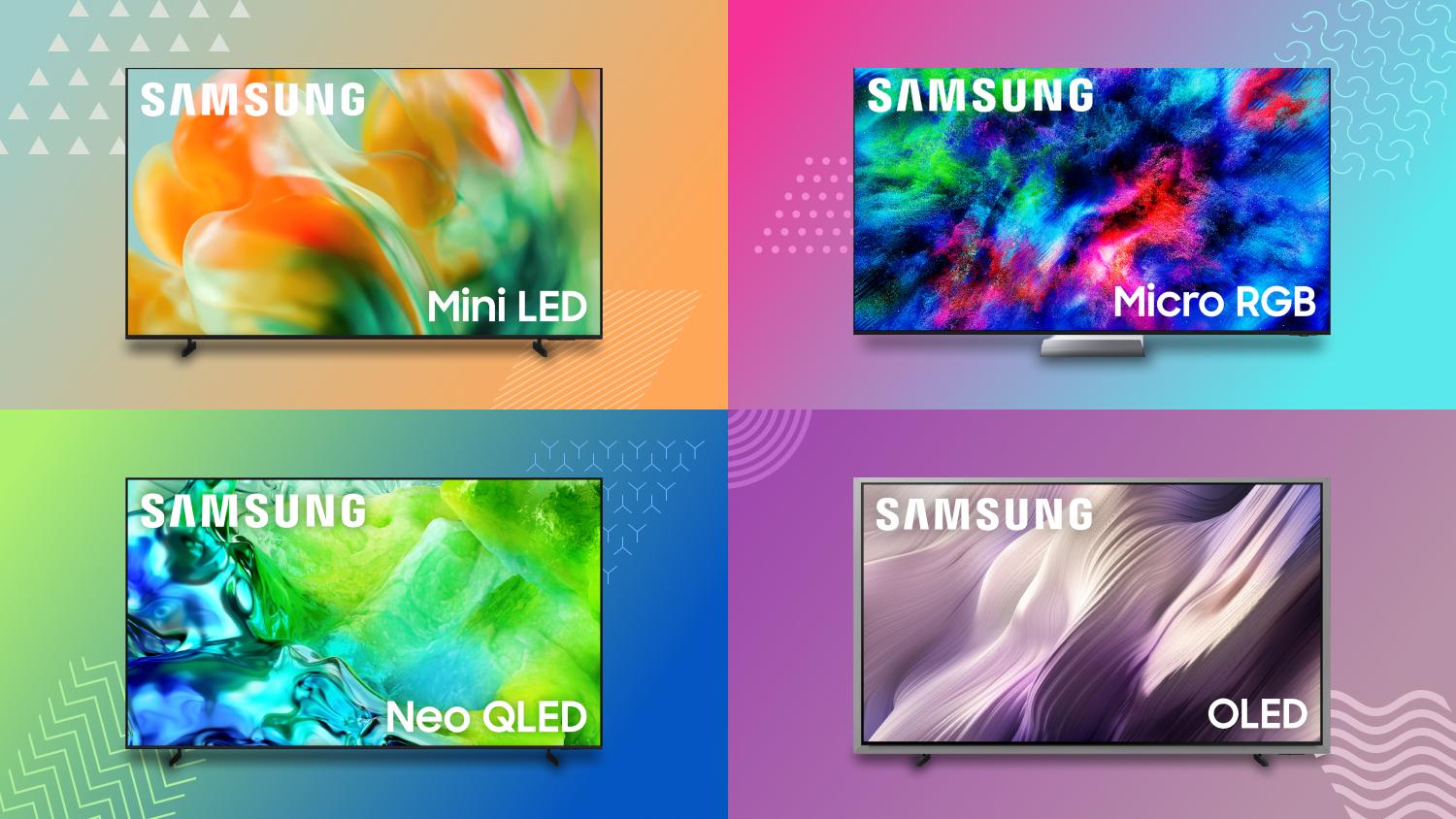
These technologies can produce excellent images, but they solve different problems.
| Feature | Micro RGB | OLED | Mini-LED |
|---|---|---|---|
| Core technology | LCD with RGB LED backlighting | Self-emissive pixels | LCD with many small backlight LEDs |
| Individual pixel light control | No | Yes | No |
| True black | Not at individual pixels | Yes | Depends on local dimming and panel behavior |
| Bright-room potential | Designed for strong color and brightness | Varies by model | Often strong |
| Blooming risk | Possible | No backlight blooming | Possible |
| Color performance | Depends on light sources, panel, and processing | Depends on panel and processing | Depends on quantum dots, panel, and processing |
| Gaming | Model-dependent | Model-dependent | Model-dependent |
| Price | Premium | Ranges from midrange to premium | Broad price range |
Micro RGB vs OLED
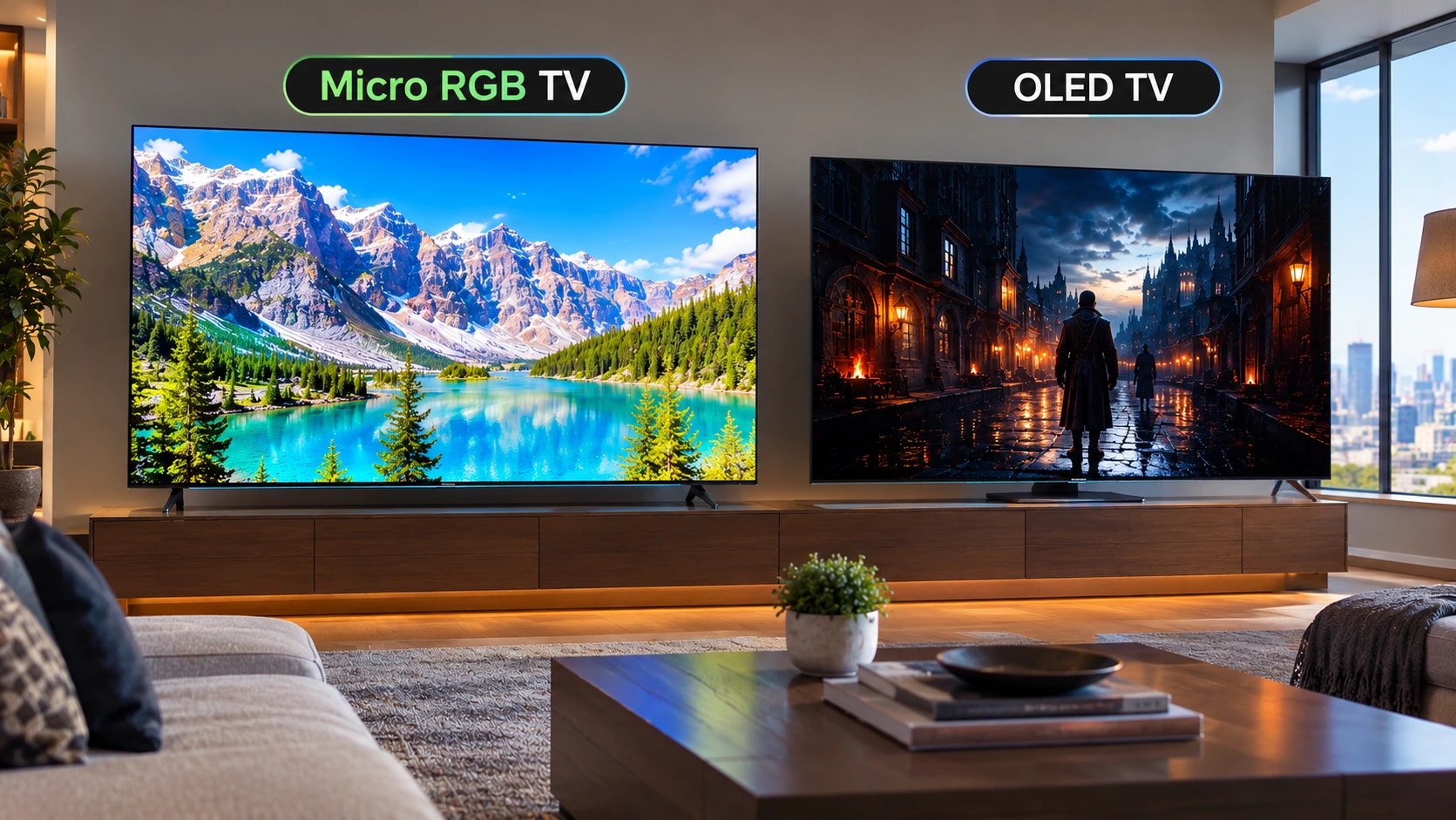
OLED uses pixels that produce their own light. A pixel can turn off completely, creating black without requiring a separate backlight.
Micro RGB uses a backlight behind an LCD panel. Even if the television controls its colored light sources very precisely, the LCD structure still determines how effectively light is blocked.
This difference is especially important during dark scenes. A bright subtitle against a black background can reveal weaknesses in an LCD television’s light control.
OLED does not need to dim a separate backlight to produce black. That gives it a fundamental advantage in scenes with extreme differences between bright and dark areas.
For a detailed explanation, see TechOzea’s guide to OLED display technology.
Micro RGB vs Mini-LED
Mini-LED also uses an LCD panel, but it employs many small LEDs for backlighting. Local dimming allows the television to reduce illumination in darker areas while keeping bright areas visible.
Micro RGB uses separate red, green, and blue LEDs as its light source. The goal is to improve color control without relying on the same color-conversion approach used by conventional backlights.
Neither technology automatically guarantees better contrast or color accuracy. Panel quality, local-dimming algorithms, image processing, and calibration still matter.
For buyers comparing these technologies, the model matters more than the label alone.
What independent reviewers found
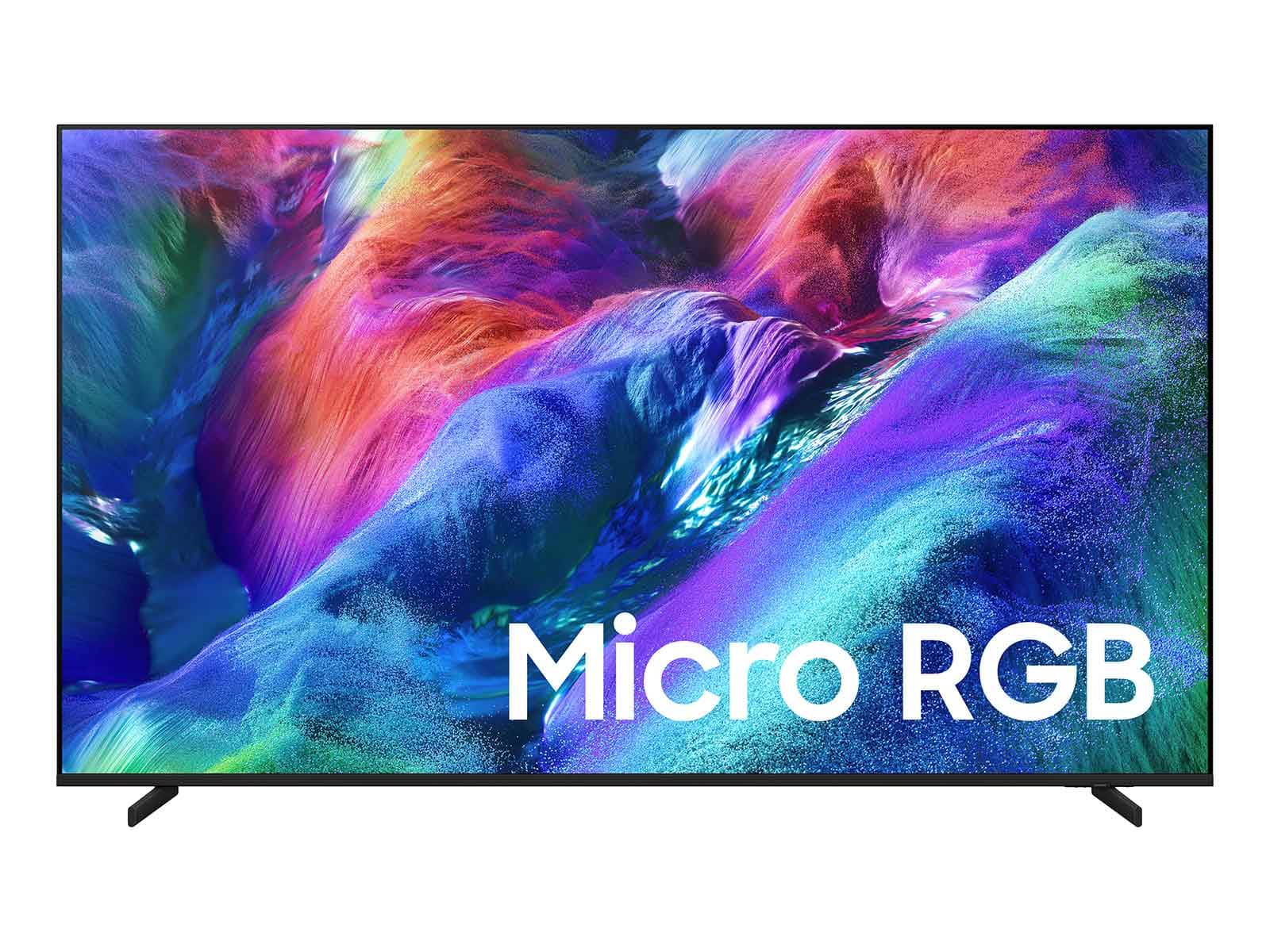
Samsung’s Micro RGB televisions have attracted both positive and critical assessments.
In its July 2026 review, WIRED rated the R95H 6 out of 10. The publication praised its easy setup, gaming performance, and AI-assisted sports viewing, but criticized aspects of its color reproduction and picture customization.
Other specialist reviews have been more positive about the technology’s color range and brightness. Expert Reviews described the R95H as an impressive development for LCD televisions, while also identifying its high price and lack of Dolby Vision as drawbacks.
These differences show why shoppers should not treat a manufacturer’s specifications as a complete assessment of picture quality.
Why reviewers can disagree
Picture quality depends on more than a single measurement. A television might reproduce a wide range of colors but still struggle with subtle skin tones or dark scenes.
Reviewers also use different picture modes, test patterns, and measurement equipment. Some focus on cinematic accuracy, while others give more weight to brightness, gaming, and performance in bright rooms.
A television that looks spectacular in a vivid demonstration may not reproduce a film accurately. Strong saturation can make colors look impressive without making them more faithful to the original source.
The most useful reviews examine several types of content. They should include dark films, bright outdoor scenes, sports, gradients, and gaming.
For Micro RGB, the most important evidence is whether its color capabilities translate into consistently convincing pictures.
Brightness and color performance
Brightness is one of the main reasons to consider advanced LCD televisions.
A bright television can make sports, daytime programs, and HDR highlights easier to see in a well-lit room. However, brightness alone does not determine picture quality.
Samsung promotes Micro RGB as a technology capable of producing exceptionally vivid colors. Its official announcement states that the system achieves 100% BT.2020 color-area coverage, verified through VDE certification.
The BT.2020 standard defines a wide color space for ultra-high-definition television. The International Color Consortium‘s description of the standard provides technical context for the colors that the system is designed to represent.
Yet a wide color gamut is only one part of image quality.
Color gamut is not the same as color accuracy
Color gamut describes the range of colors a display can reproduce. Color accuracy describes how closely those colors match their intended values.
A television can reproduce highly saturated reds and greens while displaying skin tones inaccurately. It can also produce impressive colors in bright scenes but lose subtle detail in shadows.
This is why Samsung’s color claim should be viewed as a technical specification rather than a final verdict.
Buyers should look for independent testing that examines color accuracy, brightness, color volume, and performance across different picture modes.
Which technology is better in a bright room?
Micro RGB could appeal to people who watch television during the day or have large windows near their screens. Samsung also offers Glare Free technology on the R95H, designed to reduce reflections.
However, OLED technology has also improved its brightness and reflection handling. Some premium OLED models are designed for bright-room use, so buyers should compare specific televisions rather than assume that every LCD will outperform every OLED.
Room lighting, window placement, screen finish, and viewing angle can change the experience significantly.
For a bright living room, compare measured brightness and reflection handling. For a dark cinema room, prioritize contrast, black levels, and accurate shadow detail.
Contrast, black levels, and blooming
Contrast describes the difference between bright and dark parts of an image. It has a major influence on perceived depth and realism.
OLED has a clear technical advantage because each pixel can switch off independently. This allows an OLED television to display bright stars against a truly black background without illuminating surrounding pixels.
LG explains this principle in its official overview of self-emissive OLED pixels.
Micro RGB relies on a backlight and LCD panel. Its ability to produce deep blacks depends on the precision of its light-control system.
What is blooming?
Blooming is a visible halo that can appear around bright objects against a dark background. It happens when light from a backlight zone affects nearby parts of the image that should remain dark.
Advanced local dimming can reduce blooming, but it does not guarantee its complete elimination.
Micro RGB’s smaller light sources may help manufacturers improve control over illumination. However, the number of LEDs alone does not reveal how many independently controlled dimming zones the television uses.
The LCD panel and processing algorithms also influence the result.
What should buyers look for?
When comparing televisions, examine difficult scenes rather than relying only on colorful demonstration footage.
Useful test material includes:
- White subtitles against a black background.
- Stars against a dark sky.
- A candle in a dim room.
- Faces illuminated from one side.
- Dark scenes with small, bright objects.
- Slow camera movements across nighttime landscapes.
These scenes help reveal whether the television preserves shadow detail and controls unwanted light.
If you watch films mainly in a dark room, OLED remains a strong choice. If you watch in a bright room, Micro RGB may deserve consideration, provided independent testing confirms that the model suits your needs.
HDR support and picture processing
High Dynamic Range, or HDR, expands the range of brightness and color that compatible content can use.
However, HDR performance depends on the television’s hardware, tone mapping, brightness, and the source material. A television can support an HDR format without delivering equally strong results in every scene.
Samsung’s Micro RGB lineup supports HDR10+ Advanced, according to the company’s official announcement. Samsung describes improvements involving brightness, genre-based optimization, and motion.
These features should be understood as part of Samsung’s implementation. Their practical benefits depend on compatible content and processing.
Dolby Vision remains a buying consideration
Samsung’s Micro RGB televisions do not support Dolby Vision. Instead, the company emphasizes HDR10+ and its own picture-processing features. Independent reviews have identified the absence of Dolby Vision as a limitation.
This matters to buyers who prefer Dolby Vision content or want that format available across their television’s supported sources.
The absence of Dolby Vision does not mean the television cannot display HDR content. It means buyers should verify the formats their preferred streaming services, discs, and connected devices use.
Does AI picture processing improve everything?
Samsung uses dedicated processing to adjust color, contrast, and motion. Its Vision AI features also provide personalized services and conversational interactions.
These features may improve convenience and picture presentation, but AI processing is not automatically better than accurate native reproduction.
Some processing settings can exaggerate colors or alter the original appearance of a film. For cinematic viewing, test the available picture modes and consider using a filmmaker-oriented setting.
The best approach is to judge the picture rather than rely on the AI label.
Gaming performance
High-refresh-rate televisions can deliver smoother motion and more responsive gaming when paired with compatible hardware.
Samsung advertises refresh rates up to 144Hz on the R85H and 165Hz on the R95H. These capabilities are relevant to compatible PC gaming, but actual performance depends on the graphics card, connection, game, and signal format.
Console buyers should pay attention to supported refresh rates and features rather than assuming that a higher advertised number guarantees a better experience.
What matters most for gaming?
Before purchasing a television, check:
- Native refresh rate and supported gaming signals.
- Variable refresh rate support.
- Auto Low Latency Mode.
- HDMI input capabilities.
- Input lag in game mode.
- HDR performance in games.
- Compatibility with the console or PC you own.
OLED televisions also offer strong gaming performance. Their pixel response and independent light control can be particularly useful in fast-moving games with dark environments.
Micro RGB’s high brightness and refresh-rate capabilities may appeal to PC gamers. However, buyers should compare measured input lag and motion performance before deciding.
Is 165Hz better than 144Hz?
Not necessarily for every user.
The difference matters most when a compatible PC and game can deliver frames at the higher rate. A console or streaming device may not use the television’s maximum refresh rate.
For many viewers, contrast, HDR performance, and input lag will matter more than the difference between these two refresh-rate figures.
Smart-TV software and AI features

Samsung’s Micro RGB televisions use its Tizen smart-TV platform. The company also advertises Vision AI Companion, Samsung TV Plus, Samsung Gaming Hub, and other connected features.
These functions influence everyday use. A television with an easy interface and reliable streaming apps can be more convenient than a technically impressive screen with a frustrating software experience.
Consider software support
Samsung says its 2026 televisions support up to seven years of operating-system updates, based on the model year. Buyers should confirm the applicable terms for their specific model.
Longer software support can help a television remain useful as apps and services change. However, an update commitment does not guarantee that every feature will remain available indefinitely.
Consider privacy as well
AI assistants and personalized recommendations may require accounts, internet access, and data-processing permissions.
Samsung’s official announcement includes disclosures about the use of AI services and possible sharing of information with third-party providers.
Before enabling conversational AI or personalized features, review the privacy settings and account requirements. You should be able to decide whether those conveniences justify the information you share.
Pricing and value for US buyers
Micro RGB entered the market as a premium technology, but the 2026 lineup brings it into a wider range of screen sizes.
Samsung’s announced US pricing included the following launch prices:
| Series | Screen size | Announced US price |
|---|---|---|
| R85H | 55 inches | $1,599.99 |
| R85H | 65 inches | $2,099.99 |
| R85H | 75 inches | $2,799.99 |
| R85H | 85 inches | $3,999.99 |
| R95H | 65 inches | $3,199.99 |
| R95H | 75 inches | $4,499.99 |
| R95H | 85 inches | $6,499.99 |
These figures come from Samsung’s official announcement. They are launch prices, not guaranteed current selling prices.
Current promotions can change the comparison considerably. For example, Samsung’s official product pages have displayed discounts on R85H models, including the 55-inch and 65-inch versions.
Compare the complete purchase cost
When evaluating a television, consider more than the advertised price.
A large display may require a stronger wall mount, professional installation, or a larger entertainment unit. You should also consider shipping, warranty terms, return conditions, and any accessories you need.
A cheaper television can be the better choice if its picture quality meets your needs. A more expensive model may be worthwhile if its contrast, reflection handling, sound, or gaming performance offers a clear benefit.
Do not pay extra for a specification you cannot use
A 165Hz television offers little advantage if your primary source cannot provide a compatible high-refresh-rate signal.
Likewise, a television with an exceptionally wide color gamut may not improve every program you watch.
The best purchase is the model that delivers the features you will use, at a price that makes sense for your budget.
Which television should you buy?
Micro RGB and OLED target overlapping audiences, but their strengths differ.
Choose Micro RGB if:
- You want a premium LCD television with advanced color technology.
- You often watch in a bright room.
- You prioritize high brightness and vivid colors.
- You play PC games that can benefit from high refresh rates.
- You find a specific Micro RGB model competitive with similarly sized alternatives.
Before buying, check independent measurements of brightness, contrast, color accuracy, and blooming.
Choose OLED if:
- You watch movies in a dark room.
- You value true black and pixel-level light control.
- You want strong contrast in challenging scenes.
- You play games where dark detail and pixel response matter.
- You prefer a technology with an established record of independent testing.
You should still compare individual OLED models because brightness, panel construction, reflection handling, and gaming features vary.
Choose Mini-LED if:
- You want a broad choice of prices and screen sizes.
- You need strong brightness for daytime viewing.
- You want advanced local dimming without paying for a premium Micro RGB model.
- You find a well-reviewed model at a competitive price.
Mini-LED remains a practical alternative for consumers who want bright HDR images and strong overall value.
Use a simple buying checklist
Before purchasing, answer these questions:
- Will you watch mainly during the day or at night?
- How much natural light reaches your screen?
- Do you watch films, sports, or play games most often?
- How important are true black levels?
- Does the television support your preferred HDR formats?
- Will you use its maximum refresh rate?
- Does the price justify its measured performance?
Your answers will be more useful than choosing the television with the longest feature list.
What to watch next
The next stage of the Micro RGB market will depend on independent testing, retail pricing, and the technology’s wider adoption.
Several developments deserve attention.
First, more independent comparisons should help clarify how Micro RGB performs against premium OLED and Mini-LED televisions under consistent test conditions.
Second, pricing will determine whether the technology becomes a realistic option for more households. Discounts may make the smaller R85H models more attractive, but buyers should compare them with competing televisions at the same price.
Third, buyers should watch how other manufacturers develop RGB-based LCD systems. Different implementations may deliver different results, even when their marketing terminology sounds similar.
Finally, smart-TV software and AI features deserve continued scrutiny. Picture processing may improve, but buyers still need reliable apps, useful settings, transparent privacy controls, and sensible long-term support.
Conclusion
Samsung Micro RGB represents a meaningful development in premium LCD television technology. Its use of separate red, green, and blue backlight LEDs aims to improve color control while retaining the benefits of an LCD-based design.
However, the technology has not made OLED obsolete. OLED’s pixel-level light control remains valuable for dark scenes, while Micro RGB’s brightness and color ambitions may appeal to viewers in brighter rooms.
Independent reviews show that the experience depends on the specific model and its implementation. Buyers should compare measured performance, supported HDR formats, gaming features, software, and current prices before making a decision.
The bottom line: Micro RGB deserves consideration, but it should win your purchase only if its real-world performance and price suit your viewing habits better than the available OLED and Mini-LED alternatives.
Frequently Asked Questions
Is Samsung Micro RGB better than OLED?
Not in every situation. Micro RGB aims to deliver strong color and brightness, while OLED offers pixel-level light control and true black. The better choice depends on the television model, room lighting, content, and price.
Does Micro RGB use OLED pixels?
No. Samsung’s Micro RGB televisions use an LCD panel with red, green, and blue LED backlighting. OLED uses pixels that emit their own light.
Can Micro RGB produce perfect black?
Micro RGB can produce deep blacks through its light-control system, but it does not offer the same independent pixel shutoff as OLED. Its black levels and blooming behavior depend on the specific panel and local-dimming implementation.
Does Samsung Micro RGB support Dolby Vision?
Samsung’s 2026 Micro RGB lineup emphasizes HDR10+ and does not support Dolby Vision. Buyers who want Dolby Vision should verify the formats supported by the television they are considering.
Is Micro RGB good for gaming?
It can be. Samsung advertises up to 144Hz on the R85H and 165Hz on the R95H under compatible conditions. Buyers should also check VRR, input lag, HDMI capabilities, and compatibility with their gaming hardware.
Is Micro RGB worth the price?
It may be worth considering if you prioritize its particular combination of color performance, brightness, and gaming features. However, buyers should compare independent test results and current prices against premium OLED and Mini-LED alternatives.
Should I wait before buying a Micro RGB TV?
If you are not in a hurry, comparing more independent reviews and monitoring prices can help you make a better decision. If you need a television now, compare the available models based on your room, preferred content, budget, and required features.
