




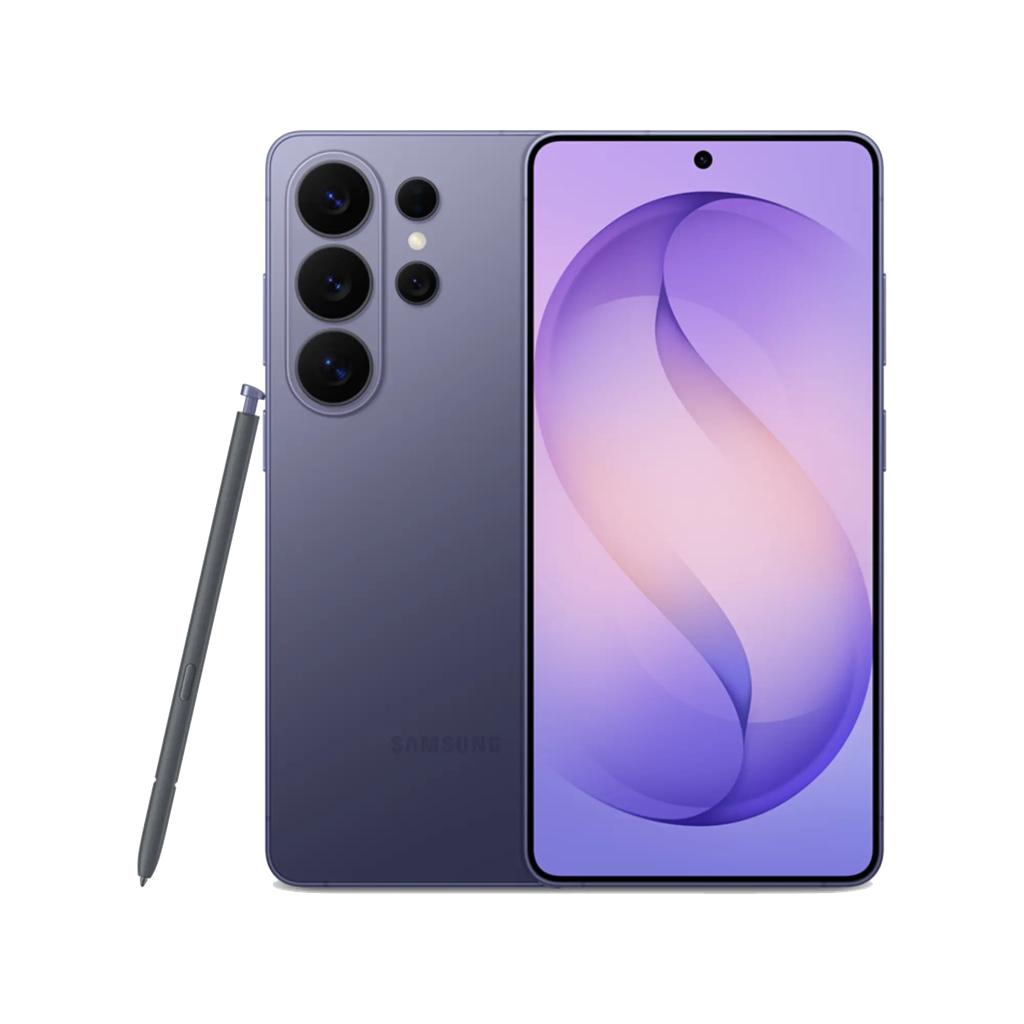
Samsung’s Galaxy A series has long occupied an important place in the smartphone market.
These phones give buyers many Galaxy features without requiring flagship-level spending. That value proposition is now under pressure as Samsung reportedly raises prices across several Galaxy A models in the United States.
The reported increases affect the Galaxy A57 5G, Galaxy A37 5G, Galaxy A27 5G, and Galaxy A17 5G. The increases vary by model, but some configurations are now significantly more expensive than their launch prices.
This change arrives at a difficult time for smartphone buyers.
Samsung has also raised Galaxy S26 prices in the US. Google is reportedly raising the Pixel 10a price as well. Meanwhile, memory manufacturers continue warning about tight supply caused partly by growing demand from AI infrastructure.
That raises a larger question.
Are affordable smartphones becoming permanently more expensive, or are these temporary pricing adjustments?
The evidence does not support a simple answer yet. However, the current market gives buyers several reasons to rethink when and how they purchase their next phone.
Key Takeaways
- Galaxy A-series prices have reportedly increased: The A57, A37, A27, and A17 are all affected in the US.
- Memory costs are a credible industry pressure: AI infrastructure is increasing demand for advanced memory, but Samsung has not publicly tied every A-series increase to memory costs.
- Compare the actual selling price, not just MSRP: Discounts, trade-ins, carrier offers, and older models can materially change the final cost.
What happened to Samsung Galaxy A-series prices?
Samsung’s Galaxy A family covers a broad part of the mid-range smartphone market.
The Galaxy A17 targets buyers looking for a lower-cost Samsung phone. The A27 sits higher in the lineup, while the A37 and A57 offer more premium hardware.
According to recent reports, all four models have received US price increases.
The reported A57 5G starting price has moved from $549.99 to $599.99. The A37 5G has reportedly moved from $449.99 to $489.99. The A27 5G is reported at $379.99, while the A17 5G is now reported at $269.99.
The increases are important because Samsung originally positioned these phones as more affordable alternatives to its flagship Galaxy S range.
The company’s official launch announcement placed the A57 at $549.99 and the A37 at $449.99.
That means the reported new A57 starting price is about $50 higher than its original US MSRP.
The A37 has reportedly increased by about $40.
Those changes may not sound dramatic next to a $1,000 flagship. They matter more when a buyer has a fixed budget.
The Galaxy A17 has a bigger pricing story
The Galaxy A17 is especially interesting because it has reportedly experienced more than one price increase.
Android Authority reported that the phone originally launched at $199.99. Its price later increased to $249.99 before reaching the reported $269.99 level.
That creates a much larger gap between the launch price and the current reported price.
For budget buyers, a $70 difference can change the buying decision entirely.
A buyer who planned to spend about $200 may now need to consider a different model. Alternatively, they might decide to keep their existing phone longer.
This is one reason smartphone pricing should be viewed in terms of percentage changes rather than dollar amounts alone.
A $50 increase on a $550 phone is different from a $50 increase on a $200 phone.
Why are smartphone prices rising?
The strongest industry explanation involves memory.
Modern smartphones contain several types of memory. RAM temporarily holds information that applications need while running. Storage holds apps, photos, videos, documents, and other files.
Higher-end phones increasingly use larger memory configurations.
At the same time, AI data centers need enormous amounts of memory.
High-bandwidth memory, or HBM, has become especially important for AI computing. HBM allows processors to access large amounts of data quickly, which helps support demanding AI workloads.
The same broad memory industry must allocate manufacturing capacity across different products.
Samsung recently said HBM could represent nearly 30% of global DRAM wafer capacity next year, compared with about 20% currently. Samsung also noted that HBM and standard DRAM share production capacity.
That creates a potential supply constraint for conventional memory.
The AI boom is affecting ordinary electronics
This is one of the less obvious effects of the AI boom.
Consumers usually think about AI as a software feature. Smartphone manufacturers advertise AI photo editing, assistants, translation, summarization, search, and other tools.
But AI also requires enormous physical infrastructure.
Data centers need processors, networking equipment, storage, power, cooling, and memory.
As companies build more AI infrastructure, demand for advanced memory increases.
That can influence the wider memory market.
Micron has said that supply-demand conditions could remain tight through 2028.
That does not mean every phone will become more expensive for the next two years.
It does mean manufacturers face an uncertain component-cost environment.
Is memory definitely responsible for Samsung’s Galaxy A price increases?
This distinction matters.
Memory pressure is confirmed as an industry issue.
Samsung’s exact reason for every reported Galaxy A price increase is not confirmed.
Samsung executives previously discussed memory costs when explaining higher pricing for the Galaxy S26 generation.
That provides useful context.
However, it would be inaccurate to say Samsung officially confirmed that the October Galaxy A-series increases were caused entirely by RAM prices.
Smartphone prices can change for several reasons.
Manufacturers may face higher component costs, logistics costs, currency movements, tariffs, manufacturing expenses, distribution costs, or changes in product strategy.
Retail pricing can also change independently of the original launch MSRP.
Therefore, the safest conclusion is that memory costs are a credible industry pressure, not a confirmed single cause of every Galaxy A-series adjustment.
The Galaxy S26 shows the problem is broader
The Galaxy A series is not experiencing pricing pressure in isolation.
Samsung also increased Galaxy S26 prices in the US in October.
The S26 originally launched at $899.99. Reports now put the starting price at $999.99.
The S26+ reportedly moved from $1,099.99 to $1,199.99.
The S26 Ultra reportedly increased from $1,299.99 to $1,399.99 at the base storage level. The 1TB model reportedly increased by $200 to $1,999.99.
Samsung’s official launch announcement documented the original US prices.
This matters because it shows that pricing pressure is not limited to inexpensive hardware.
The flagship and mid-range segments are both being affected by a changing component-cost environment.
What does the Pixel 10a price change mean?
Google’s Pixel 10a provides another important comparison.
Google launched the Pixel 10a at $499 in the United States. Its launch announcement promoted the phone as an affordable way to access Pixel AI and camera features.
Recent reports say Google has raised the US price to $599 for the 128GB model.
The 256GB version is reportedly $699.
Google has not been identified as providing an official explanation for the reported change.
That distinction matters.
It is reasonable to discuss the Pixel 10a alongside Samsung’s pricing changes because both products target consumers who care about value.
It is not reasonable to claim that Google raised the Pixel 10a price specifically because of RAM costs without a supporting statement from Google.
The definition of a mid-range phone is changing
For years, smartphone buyers could roughly divide the market into three groups.
Budget phones were inexpensive but often made major compromises. Mid-range phones offered strong everyday performance at moderate prices. Flagships offered the latest cameras, displays, processors, and premium designs.
That separation has become less clear.
Modern mid-range phones can offer high-refresh-rate displays, 5G, capable cameras, long software support, advanced security, and AI features.
At the same time, their prices are moving upward.
When a mid-range phone reaches $500 or $600, buyers naturally begin looking at older flagship models.
That changes the competitive landscape.
Why older flagship phones deserve more attention
A new phone is not automatically a better value than an older flagship.
Flagship models often receive aggressive discounts after launch.
Retailers also want to clear inventory before newer models arrive.
This creates an unusual situation.
A current mid-range phone can sometimes cost close to a discounted previous-generation flagship.
The older flagship may have a better camera system, faster processor, wireless charging, a stronger display, or a more premium build.
However, buyers should also consider software support.
An older phone may have fewer remaining years of updates than a newer mid-range model.
That makes the comparison more complicated than simply comparing specifications.
What should US buyers do?
The first step is to stop treating MSRP as the final price.
Samsung, Google, carriers, Amazon, Best Buy, and other retailers frequently run different promotions.
Trade-in programs can also reduce the effective price.
Carrier offers can be even more aggressive, although they often involve installment plans and bill credits.
A $600 phone can therefore have a very different effective cost from one buyer to another.
Before purchasing, compare the outright price, trade-in value, carrier requirements, storage capacity, and total monthly cost.
Be careful with trade-in promotions
Trade-in offers can make a price increase look smaller than it really is.
Suppose a phone costs $600 but a manufacturer offers $150 for an eligible trade-in.
The customer may focus on the resulting $450 effective price.
But that discount depends on owning another eligible device.
It may also require specific conditions.
The trade-in device may need to be functional, unlocked, or in good physical condition.
Buyers should therefore compare both numbers.
Look at the full retail price first, then evaluate the trade-in or carrier promotion separately.
Storage pricing deserves more attention
Memory shortages can affect more than RAM.
Smartphone storage also uses semiconductor memory.
This makes storage tiers increasingly important when comparing prices.
A phone that starts at $500 may seem attractive until the 256GB model costs substantially more.
For buyers who keep phones for several years, storage can matter more than small differences in processor speed.
Photos and video files are getting larger.
AI applications may also create additional local data.
A buyer planning to keep a phone for four or five years should think carefully about storage before choosing the cheapest configuration.
Should you buy a Galaxy A57 right now?
There is no universal answer.
The A57 remains positioned as a higher-end Galaxy A model, and Samsung launched it with a $549.99 US starting price.
The question is whether the current selling price represents good value for your needs.
If you need a Samsung phone and want long software support, the A57 can remain relevant.
But buyers should compare it with discounted older Galaxy models, current Pixel models, and carrier promotions.
Do not assume that a new mid-range phone automatically beats an older flagship.
The opposite is also true.
An older flagship is not automatically better simply because it has a higher original MSRP.
What about the Galaxy A37?
The A37 occupies an interesting position because its reported new starting price is below $500.
That keeps it closer to the traditional mid-range category.
The problem is that small price gaps can create difficult buying decisions.
If the A37 is only slightly cheaper than a discounted flagship, the flagship may attract performance-focused buyers.
If the A37 receives stronger promotions, however, its newer hardware and longer remaining support period may become more attractive.
The final decision depends heavily on current retail pricing.
What about the Galaxy A17?
The A17 is more exposed to price sensitivity.
Budget buyers often have firm spending limits.
Moving from roughly $200 to nearly $270 can make a meaningful difference.
That is especially important for families buying multiple phones.
A $70 increase across two phones adds $140.
Across four devices, it becomes $280.
This is why price increases in entry-level smartphones can affect household budgets more than flagship increases.
The bigger issue is smartphone affordability
The Galaxy A-series story matters because smartphone replacement cycles are changing.
Many consumers now keep phones longer.
Longer software-support commitments make that possible.
A phone that receives security updates for many years can remain useful well after its first birthday.
That reduces the need to upgrade every year.
However, higher phone prices can also encourage consumers to extend replacement cycles.
Instead of buying a new device every two years, someone might wait three or four years.
That could affect overall smartphone demand.
Higher prices could make software support more important
Longer software support becomes more valuable when phone prices rise.
A $250 phone with short support may look attractive initially.
But if the device needs replacement sooner, the total ownership cost can increase.
A $500 phone that receives updates for several more years may provide better long-term value.
This does not mean consumers should always spend more.
It means buyers should consider the cost per year of usable ownership, not only the purchase price.
That calculation can make a significant difference.
What could happen next?
The next major question is whether these price increases remain in place.
Manufacturers can reduce prices through promotions.
Retailers can also discount older inventory.
Component costs can move in either direction.
Memory manufacturers are expanding production, but new capacity takes time to build and bring online.
Samsung has indicated that HBM‘s share of DRAM capacity will continue increasing.
Micron expects supply-demand pressure to remain significant for several years.
That means consumers should not assume that every smartphone will suddenly become cheaper.
But they also should not assume that today’s MSRP will remain unchanged.
The next smartphone cycle will be important
The industry will have another major test when manufacturers introduce their next-generation flagship phones.
If component costs remain high, companies may raise launch prices.
If demand weakens, however, aggressive promotions could become more important.
Manufacturers have to balance production costs with consumer willingness to pay.
That balance becomes particularly difficult in the mid-range market.
Buyers have more alternatives than they did several years ago.
Samsung competes with Google, Motorola, OnePlus, Apple, and numerous other manufacturers.
What buyers should watch
If you are planning to buy a smartphone soon, watch five things.
1. Official MSRP changes
Do not rely only on social media posts or retailer listings.
Check the manufacturer’s US store when possible.
2. Temporary discounts
A reported MSRP increase does not necessarily mean you must pay the new price.
Retail promotions can change the equation.
3. Older flagship pricing
Previous-generation flagships may become unusually attractive when new mid-range phones become more expensive.
4. Memory supply
Watch developments from Samsung, SK hynix, and Micron.
Memory supply is becoming an important factor across consumer electronics.
5. Software support
A phone that receives years of security updates can provide better long-term value than a cheaper device with limited support.
The bottom line
Samsung’s reported Galaxy A-series price increases are important because they affect the part of the smartphone market where price matters most.
The reported increases cover the Galaxy A57, A37, A27, and A17.
At the same time, Samsung’s Galaxy S26 family has also experienced price increases, while Google’s Pixel 10a has reportedly become more expensive in the US.
These developments point toward a broader change in smartphone economics.
Memory is a major part of that story.
AI infrastructure is consuming enormous quantities of advanced memory, and manufacturers are warning that supply could remain tight.
However, buyers should not treat memory costs as a confirmed explanation for every individual price adjustment.
For consumers, the practical lesson is simpler.
Do not assume the newest mid-range phone is automatically the best value.
Compare the full price, promotions, trade-in offers, storage options, software support, and older flagship alternatives.
In a market where smartphone prices can change months after launch, shopping carefully may save more money than chasing the newest model.
FAQS
Why did Samsung increase Galaxy A-series prices?
Samsung has not publicly provided a detailed explanation for every reported Galaxy A-series increase. The changes arrive during a broader memory-supply crunch affecting consumer electronics.
How much did the Galaxy A57 price increase?
The Galaxy A57 5G launched in the US at $549.99. Recent reports put its new starting price at $599.99.
How much does the Galaxy A17 cost now?
Recent reporting puts the Galaxy A17 5G at $269.99 in the US. It originally launched at $199.99.
Is the RAM shortage causing smartphone prices to rise?
Memory supply is under pressure, partly because AI infrastructure requires large quantities of advanced memory. Samsung has previously linked memory costs to Galaxy S26 pricing, but that does not prove memory alone caused every smartphone price increase.
Did Samsung also increase Galaxy S26 prices?
Yes. Reports say the Galaxy S26 family received additional US price increases in October 2026. The base S26 reportedly moved to $999.99.
Did Google increase the Pixel 10a price?
Recent reports say the US Pixel 10a price increased from $499 to $599 for the 128GB model. Google’s original launch price was $499.
Should I buy a Galaxy A phone now?
Compare its current selling price with discounted older Galaxy models, Pixel phones, and carrier offers. The reported MSRP increase does not necessarily represent the final price you will pay.
