




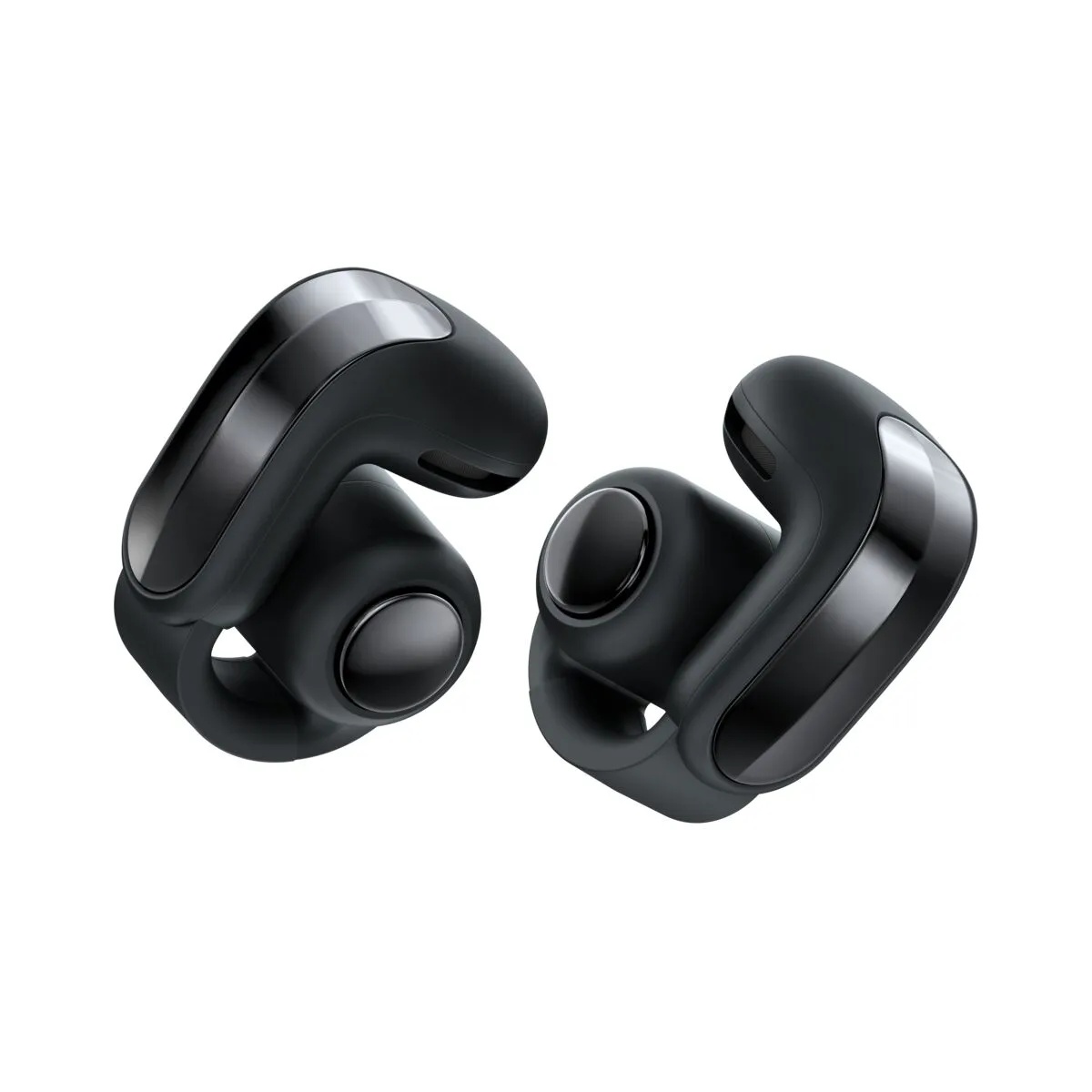
Bose has expanded its open-ear strategy with two new wireless earbuds that approach the category from different directions.
The company announced the Bose Ultra Open Earbuds 2nd Gen and the new Bose Sport Open Earbuds on September 17. The Ultra model costs $299, while the Sport model costs $199. Both are scheduled to arrive October 1, with preorders starting September 19.
The announcement matters because Bose is not simply refreshing one product. It is building a small open-ear lineup around everyday listening and active use.
That makes this more interesting than another annual earbud refresh. Bose is betting that some consumers would rather hear their music while remaining connected to their surroundings.
There is also a significant trade-off. Neither model includes active noise cancellation, because the entire concept depends on keeping the ears open.
Here is what Bose actually changed, what it left alone, and what consumers should consider before these earbuds go on sale.
Table of Contents
- What Bose Announced
- Bose Ultra Open Earbuds 2nd Gen
- Bose Sport Open Earbuds
- Why Neither Model Has ANC
- The $100 Difference Between the Two
- What the Launch Says About Open-Ear Audio
- The First-Generation Problem
- Where These Earbuds Could Work Well
- Where They Could Struggle
- What Still Needs Independent Testing
- What to Watch Next
- Conclusion
- FAQs
What Bose Announced
Bose introduced two open-ear earbuds rather than one.
The Ultra Open Earbuds 2nd Gen remains the premium product. Bose lists it at $299 and describes it as its flagship open-ear model for commuting, work, downtime, and everyday listening. The design retains the cuff-style shape used by the original Ultra Open.
The Sport Open Earbuds cost $199. Bose designed this version around running, workouts, and outdoor activity. It uses a C-arm cuff with a matte silicone finish designed to improve grip and stability during movement.
Both products share the same basic philosophy.
They sit around the outer ear instead of sealing the ear canal. That means users can hear surrounding sounds while listening to music, podcasts, or calls.
Bose also says both models use OpenAudio technology and SpeechClarity. The latter combines microphones and voice processing to isolate the wearer’s speech from background noise.
The launch therefore creates two distinct use cases.
The Ultra targets people who want open-ear audio as a daily wearable. The Sport targets people who want that same concept while exercising or moving outdoors.
Bose Ultra Open Earbuds 2nd Gen: What Changed?
The Ultra Open 2nd Gen looks familiar, but Bose has changed several parts of the experience.
The company says the new model has a newly engineered driver designed to produce deeper bass and higher volume than the first generation. It also adds Cinema Mode through Bose TrueSpatial technology.
Cinema Mode is intended for movies, shows, and podcasts.
Instead of simply making content louder, Bose says the feature creates a wider soundstage while keeping dialogue centered. That could make the mode especially relevant for people who use earbuds for more than music.
There is also a substantial battery improvement.
Bose rates the earbuds for up to nine hours of playback. The wireless charging case adds another 19.5 hours, giving a claimed 28.5 hours in total.
The original Ultra Open was rated for seven hours of playback, so the new model adds two hours of claimed single-charge endurance.
Wireless charging also arrives with the new generation.
That is an important convenience upgrade for everyday users. The case can stand upright and supports wireless charging, while Bose continues to support USB-C charging.
Connectivity also moves forward.
The Ultra Open 2nd Gen supports Bluetooth 5.4, Bluetooth multipoint, SBC and AAC codecs, Google Fast Pair, and Snapdragon Sound with aptX Adaptive on compatible Android devices.
The combination gives Bose a more complete feature set without changing the basic open-ear concept.
Bose Sport Open Earbuds: A Different Job
The Sport Open is arguably the more interesting part of this launch because it broadens Bose’s audience.
Instead of positioning the product as a premium fashion-oriented open earbud, Bose designed it around movement.
The C-arm cuff uses a soft silicone matte finish. Bose says the design is intended to remain secure during head movement, running, and other active situations.
The controls are also more practical for exercise.
Bose added textured physical buttons so users can locate them more easily without looking at the earbuds. That sounds minor, but physical controls become more useful when hands are wet, sweaty, or occupied.
The Sport model also has an IP54 rating for sweat, splashes, and dust.
Battery life is rated at seven hours.
The charging case adds another 22 hours, according to Bose. The case also supports wireless charging.
The important distinction is that Bose is not trying to make the Sport model a cheaper version of the Ultra in every respect.
It is a separate product with a different purpose.

Why Neither Model Has Active Noise Cancellation
This is the biggest issue consumers need to understand before buying.
The Bose Ultra Open 2nd Gen and Sport Open are not ANC earbuds.
That is intentional.
Bose’s OpenAudio system is designed to provide sound without closing the ear canal. The company specifically says the earbuds are designed for situational awareness, so they do not include active noise cancellation.
That creates a clear trade-off.
Traditional in-ear ANC earbuds can physically seal the ear canal and electronically reduce external noise. Open-ear earbuds do the opposite. They let environmental sound remain part of what you hear.
That is useful in certain situations.
You may want to hear traffic while running. You may need to notice an approaching bicycle. You might work in an office where you need music but still want to hear someone speak to you.
The same design becomes less useful when isolation matters.
On an airplane, subway, loud bus, construction site, or crowded terminal, environmental noise can compete directly with the audio you are trying to hear.
WIRED’s open-ear earbuds guide makes a similar distinction, noting that open earbuds are useful for environmental awareness but are less suitable for noisy environments and travel because they lack noise cancellation.
So the missing ANC feature should not be interpreted as a conventional specification failure.
It is a design choice that defines the product.
The $100 Difference Between the Bose Sport and Ultra
The two models have a straightforward $100 gap.
The Sport Open costs $199.
The Ultra Open 2nd Gen costs $299.
The extra money buys several features.
| Feature | Sport Open | Ultra Open 2nd Gen |
|---|---|---|
| U.S. launch price | $199 | $299 |
| Open-ear design | Yes | Yes |
| ANC | No | No |
| Battery, earbuds | Up to 7 hours | Up to 9 hours |
| Case battery | Up to 22 additional hours | Up to 19.5 additional hours |
| Wireless charging | Yes | Yes |
| Cinema Mode | No | Yes |
| TrueSpatial | No | Yes |
| Bluetooth 5.4 | Yes | Yes |
| Multipoint | Yes | Yes |
| SpeechClarity | Yes | Yes |
| IP rating | IP54 | IPX4 on Bose product page |
| Main use case | Sport and outdoor use | Everyday listening |
The difference is therefore less about basic connectivity and more about audio features, battery life, and design positioning.
There is another complication.
Bose’s own U.S. product page currently lists the first-generation Ultra Open at $199, down from its original $299 positioning.
That gives buyers three relevant price points:
- First-generation Ultra Open: $199 current listed price
- Sport Open: $199
- Ultra Open 2nd Gen: $299
That pricing structure will probably be important once the new products actually reach stores.
A buyer who only wants the basic open-ear experience may compare the $199 first-generation Ultra with the $199 Sport. A buyer who wants the newest features will look at the $299 Ultra Open 2nd Gen.
This is one area where launch-day coverage cannot provide a final value judgment because real-world prices can change before October.
Bose Is Expanding Into a Category That Is Getting More Attention
Bose’s launch does not happen in isolation.
Open-ear earbuds have become a more visible category in 2026, with products from Shokz, Nothing, Soundcore, Bose, and other manufacturers.
WIRED’s recent open-ear earbuds guide highlights the growing range of designs and notes that open earbuds can work well for users who want environmental awareness during activities such as running, biking, and household chores.
Shokz’s OpenDots 2 is listed at $199.95 with an open-ear clip-on design, up to 10 hours of rated earbud battery life, up to 40 hours with the case, wireless charging, and an IP57 rating.
Meanwhile, Nothing’s CMF Clip Pro sits at $99 in the U.S. and brings open-ear audio into a much lower price bracket.
That creates a broader market spectrum.
Consumers can now look at inexpensive open-ear models, midrange options, premium clip-on products, and sport-focused designs.
Bose’s strategy is therefore notable because it is not entering the category with one expensive product alone.
It is creating two products for different lifestyles.
The Open-Ear Design Has a Very Different Consumer Use Case
The biggest mistake would be to treat these products like normal noise-cancelling earbuds.
They are not.
Open-ear earbuds make more sense when awareness is part of the listening experience.
Think about a runner moving alongside roads. Music is useful, but hearing traffic remains important.
Think about a parent working around the house. Music can stay on while conversations remain audible.
Think about someone working in an office who wants a podcast without completely disconnecting from colleagues.
These are situations where isolation can become a disadvantage.
Bose itself uses commuting, work, running, and outdoor activity as examples in its positioning.
There is also a comfort angle.
Because open-ear products do not use traditional silicone tips to seal the canal, they can appeal to people who dislike the pressure or plugged-ear sensation associated with sealed earbuds.
That does not mean everyone will find them comfortable.
Ear shape varies considerably, and clip-style products distribute pressure differently from traditional earbuds. Actual long-term comfort will need hands-on testing across different ears.
Where the New Bose Earbuds Could Struggle
The most obvious limitation remains noise.
A crowded train is a perfect example.
An open-ear earbud needs to deliver enough sound that the user can enjoy a podcast or song, while ambient noise continues entering naturally.
A sealed ANC earbud has an entirely different acoustic advantage because it combines physical isolation with active processing.
That does not make one design universally better. It means they solve different problems.
The Ultra Open 2nd Gen also deserves scrutiny because Bose is making performance claims that still need independent testing.
Bose says the new driver delivers deeper bass and higher volume than the first-generation model.
The Verge reported the same claim but noted that independent testing would be needed to determine how much the performance has actually improved.
That distinction matters.
A company specification can tell us what a product is designed to do. It cannot tell us exactly how it performs for every listener.
The same applies to SpeechClarity.
Bose describes the technology as AI-enhanced voice isolation designed to preserve voice tone while reducing background noise.
That sounds useful for calls.
But real conversations in windy streets, busy cafés, and traffic-heavy environments will tell us much more than the launch specification.
Another Question: Automatic Wear Detection
One small feature could become surprisingly important.
Tom’s Guide’s launch coverage noted that automatic wear detection remained unclear for the new models.
Wear detection sounds insignificant until you use earbuds regularly.
With traditional earbuds, removing one often pauses playback automatically.
Without that feature, a user may need to manually pause an audiobook or podcast. That can become annoying when listening frequently throughout the day.
Bose had not clearly answered this question in the early launch coverage.
That makes wear detection one of the small details worth checking when the products reach reviewers.
The Software Story Is Still Developing
The hardware gets most of the attention, but Bose is also preparing a software layer around the new earbuds.
Both models support the Bose app, customizable shortcuts, EQ adjustments, and Bluetooth management.
Bose also says a planned post-launch firmware update will add Google Find Hub, Alexa+, and an Apple Music shortcut.
There is an important distinction here.
Those are planned future features, not features that consumers should automatically assume will be active on day one.
That distinction should matter to buyers.
A product should be judged on what it ships with, not only what its manufacturer says may arrive later.
This is particularly important for emerging audio products because firmware can become a major part of the user experience.
How the Bose Launch Changes the Buying Conversation
For years, wireless earbud shopping revolved around a relatively simple choice.
Buy a sealed earbud for stronger isolation, or buy a cheaper model with fewer features.
Open-ear products complicate that conversation.
Now the buyer also needs to decide whether they actually want isolation in the first place.
That is why Bose’s two-model strategy is interesting.
The Sport Open makes a strong case for open-ear earbuds as dedicated activity gear.
The Ultra Open 2nd Gen pushes the same concept toward mainstream daily listening.
That split could help consumers understand why the category exists.
Instead of competing directly with every ANC earbud, open-ear products can serve situations where ANC is not the priority.
That is also why Bose’s decision to avoid ANC across both new models makes sense within the product concept.
The company is not trying to solve every listening environment with one earbud.
It is selling a different relationship between the listener and their surroundings.
What Consumers Should Watch Before October 1
The launch date is important, but the weeks between announcement and availability may tell us more.
First, independent testing should reveal how much the Ultra Open 2nd Gen actually improves bass and volume.
Second, reviewers should test the claim of minimal sound leakage at normal listening levels.
Third, call testing will show how SpeechClarity performs outside controlled launch demonstrations.
Fourth, battery testing will determine how closely real use approaches Bose’s rated figures.
Fifth, comfort testing across different ear shapes could reveal whether the new flex design works better than the original.
Finally, price changes may complicate the launch.
The first-generation Ultra Open is already listed at $199 by Bose’s U.S. site.
That means the new $299 model needs to deliver enough meaningful improvements to justify its higher price for buyers who could purchase the discounted previous generation.
That is not something specifications alone can answer.
What This Means for Everyday Buyers
The Bose Ultra Open Earbuds 2nd Gen should not be viewed as a replacement for Bose’s traditional ANC earbuds.
They occupy a different category.
The same applies to the Sport Open.
Someone who spends hours on airplanes or commutes through extremely noisy environments may still prefer a sealed ANC earbud or headphone.
Someone who runs, walks, works around other people, or dislikes in-ear pressure may find the open design much more attractive.
The important question is therefore not simply whether the Bose earbuds are good.
The question is whether open-ear listening fits the way you actually use headphones.
That is the broader lesson from this launch.
Conclusion
Bose’s September 17 announcement is significant because it expands open-ear audio from one unusual premium product into a more structured product family.
The Ultra Open Earbuds 2nd Gen adds longer battery life, wireless charging, Cinema Mode, updated connectivity, and upgraded audio hardware at $299. The Sport Open Earbuds bring the same general open-ear philosophy to a $199 product designed around exercise and outdoor use.
The biggest limitation remains the same by design: neither model has ANC.
That will make them unsuitable for some environments, but it is also the reason they make sense for consumers who want music without completely blocking the world around them.
The real story will come after launch.
Independent testing needs to determine how much the new Ultra improves sound, volume, calls, battery life, and comfort. Buyers also need to compare the $299 model against the discounted first-generation Ultra and increasingly competitive products from Shokz, Nothing, and others.
For now, Bose has made one thing clear: open-ear audio is no longer a side experiment inside its wireless lineup.
It is becoming a category the company is willing to build around.
FAQS
Are the Bose Ultra Open Earbuds 2nd Gen noise cancelling?
No. Bose says the Ultra Open Earbuds 2nd Gen do not include active noise cancellation because the open-ear design is intended to preserve awareness of surrounding sounds.
How much do Bose Ultra Open Earbuds 2nd Gen cost?
The U.S. price is $299. Bose says preorders begin September 19, 2026, with availability starting October 1.
How long do Bose Ultra Open Earbuds 2nd Gen last?
Bose rates the earbuds for up to nine hours of playback. The case provides up to another 19.5 hours, for a claimed 28.5 hours total.
Are Bose Sport Open Earbuds waterproof?
They have an IP54 rating for sweat, splashes, and dust. This is a protection rating rather than a promise that the earbuds can be submerged.
What is the difference between Bose Sport Open and Ultra Open 2nd Gen?
The Sport Open costs $199 and focuses on exercise, secure fit, durability, and seven-hour battery life. The Ultra Open 2nd Gen costs $299 and adds features such as Cinema Mode, TrueSpatial technology, longer nine-hour earbud battery life, and aptX Adaptive support on compatible Android devices.
Should you buy open-ear earbuds instead of ANC earbuds?
It depends on the environment and your priorities. Open-ear earbuds preserve awareness but do not isolate you from loud surroundings. ANC earbuds offer much stronger isolation and are generally better suited to airplanes, trains, and other noisy environments.
