




Anker’s Soundcore brand has launched a broad new range of headphones and earbuds in the United States, including the Space 2 Pro over-ear headphones, AeroClip 2 open-ear earbuds, and Liberty Buds 2 true-wireless earbuds.
The products are connected by a common theme: Soundcore is trying to make artificial intelligence and advanced digital signal processing a visible part of everyday audio.
That is a meaningful shift.
For years, the main questions when buying headphones were straightforward. How good is the sound? How strong is the active noise cancellation? How long does the battery last? Are the earcups comfortable? Can the earbuds stay in place?
Those questions still matter, but headphone makers are increasingly adding a second layer of functionality.
New models are expected to make phone calls clearer in noisy places, adjust sound to the user, preserve awareness of the environment, support multiple connected devices, record meetings, create transcripts, and in some cases monitor sleep or respond to changing conditions.
Soundcore’s latest lineup captures that transition particularly well because it covers several different form factors rather than placing all of its technology in one flagship product.
The Space 2 Pro is aimed at users who want an over-ear headphone for work and travel. The AeroClip 2 is designed for people who want to hear their surroundings without using a traditional transparency mode.
The Liberty Buds 2 target compact everyday listening with adaptive ANC and voice-processing features. Soundcore currently lists the Liberty Buds 2 at $129.99 on its U.S. website and says they use the ANKER Thus AI chip, six-sensor ANC, and an eight-sensor voice-processing system. Soundcore’s official Liberty Buds 2 product page provides the current specifications.
The important question for buyers is not whether these products use AI. The important question is whether the technology solves a problem better than simpler alternatives.
What Soundcore launched in the United States
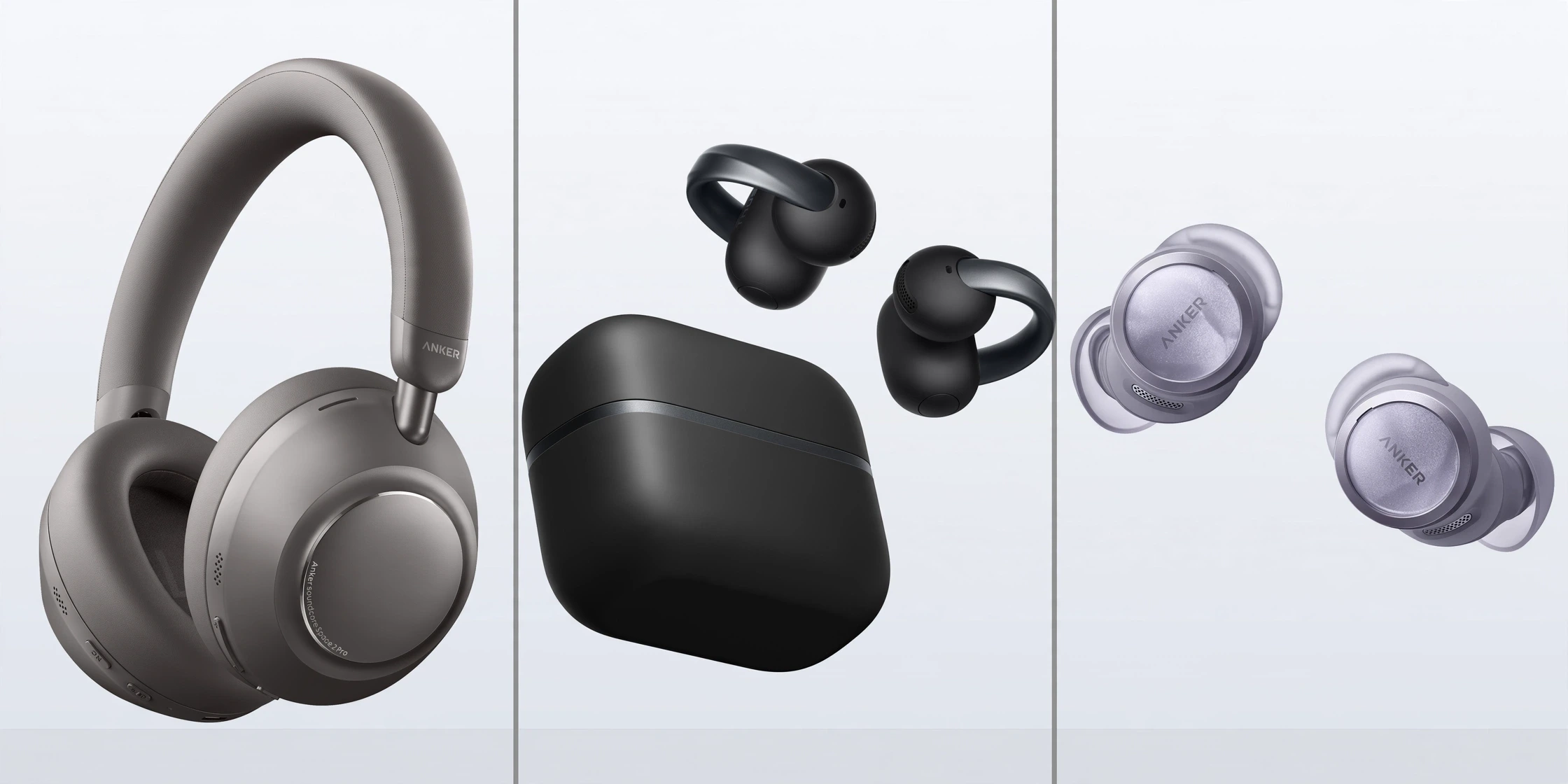
Soundcore’s September lineup includes several new products, but three models are especially relevant to everyday U.S. buyers.
The Space 2 Pro is an over-ear wireless headphone with active noise cancellation, LDAC support, sound personalization, and a claimed battery life of up to 60 hours with ANC turned off or around 30 hours with ANC enabled.
Soundcore’s support documentation lists approximately 30 hours with ANC enabled, 20 hours with ANC and LDAC enabled, and 20 hours with ANC and call mode. Soundcore’s battery documentation also notes that actual runtime can vary with codec, volume, connected device, and other features.
Soundcore positions it as a work, travel, and general-purpose headphone priced at about $200.
The AeroClip 2 uses an open-ear clip-on design. Instead of sealing the ear canal or covering the ear with a traditional earcup, it places the speaker near the ear while leaving the ear more open to outside sound.
Soundcore lists a price of about $170 and claims up to eight hours of playback from the earbuds, with additional listening time from the charging case.
The Liberty Buds 2 are conventional true-wireless earbuds with adaptive ANC, a compact design, and a multi-microphone system intended to improve calls. Launch coverage places the U.S. price at approximately $130.
AeroClip 2 Pro and Soundcore’s sleep-focused products expand the idea further. Some versions are designed to record or transcribe meetings, while others use sensors or adaptive audio features for sleep.
Those functions are more specialized and require closer scrutiny around privacy, data handling, comfort, and reliability.
Why AI is appearing in headphones
In a headphone, “AI” usually refers to machine-learning algorithms used within a broader digital signal-processing system. The label may cover several different tasks:
- Separating a speaker’s voice from background noise
- Detecting wind and adjusting microphone processing
- Recognizing whether the user is speaking
- Personalizing EQ based on a hearing test or listening profile
- Adapting ANC to the environment
- Creating transcriptions from recorded audio
- Classifying sounds or events
- Adjusting playback behavior based on context
Some of these functions are not entirely new. Noise suppression, beamforming microphones, and adaptive equalization have been present in consumer audio for years.
What is changing is the amount of processing, the speed of the algorithms, and the way brands package these capabilities as a product feature.
Soundcore says its ANKER Thus platform is designed specifically for AI audio processing in wearable devices. According to Soundcore’s explanation of ANKER Thus, the technology uses compute-in-memory architecture to process AI workloads locally on compatible devices.
Soundcore claims that Thus can provide up to 150 times the peak AI computing power compared with its previous flagship earbud chip in internal laboratory testing. That is a manufacturer claim, so it should not be treated as independent evidence that every Thus-powered product will outperform competing headphones. Soundcore identifies the 150× figure as an internal lab-test comparison.
The company also says Thus can handle audio processing directly on the device, including voice isolation. Soundcore’s technical explanation of ANKER Thus describes the chip as a compute-in-memory AI system designed for portable devices.
For consumers, the practical test is simple: Can the person on the other end of a call understand you when you are speaking beside a road, in a café, at an airport, or in a busy office?
Space 2 Pro: the practical all-rounder
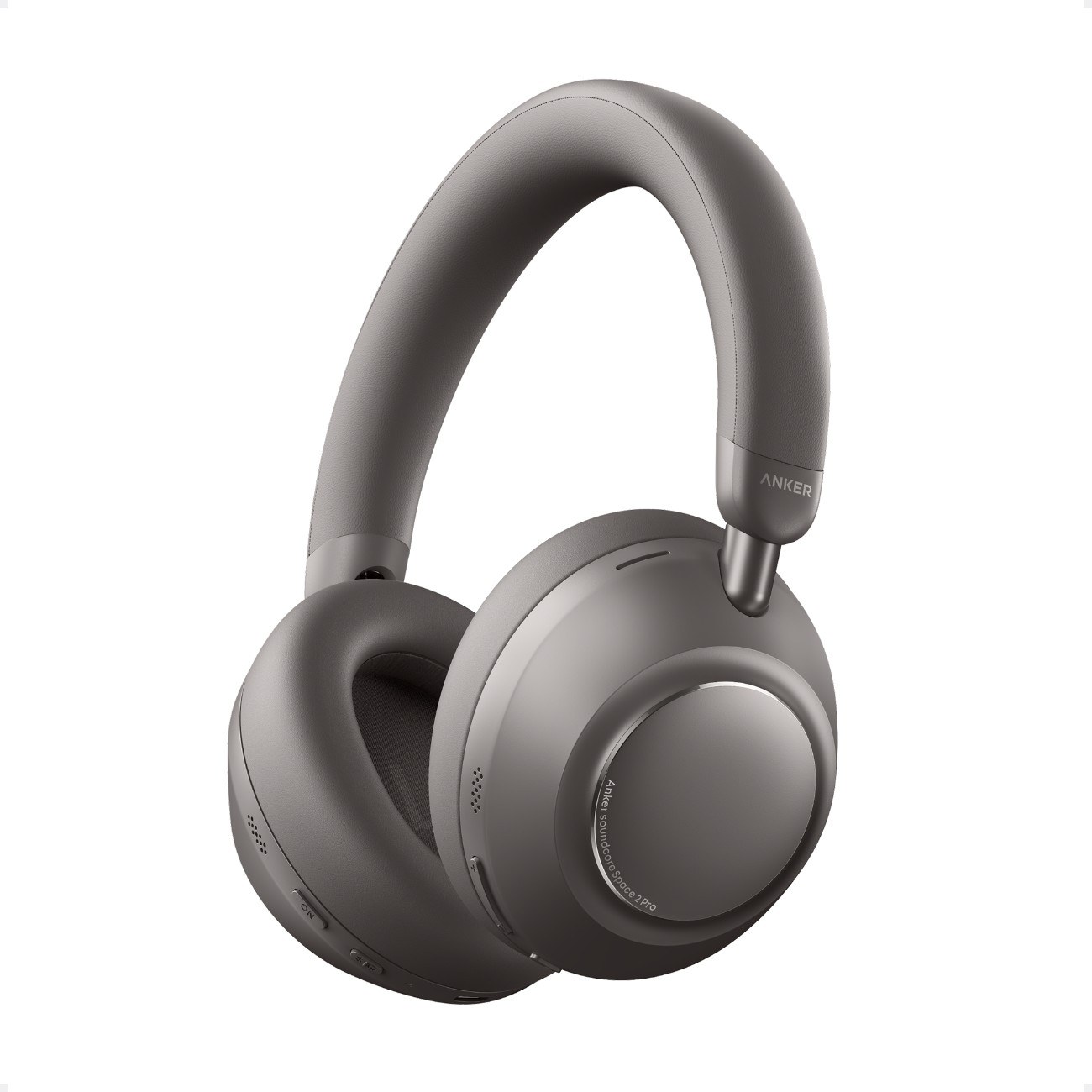
The Space 2 Pro is the most familiar product in the lineup because it follows the established over-ear ANC format. This is still the safest design for shoppers who want one headphone for commuting, office work, long flights, and general listening.
Over-ear headphones have several advantages. Their larger earcups can provide better passive isolation than small earbuds, and they offer more physical space for microphones, batteries, and larger drivers.
They can also be more comfortable for people who dislike having silicone tips inside their ear canals.
Soundcore claims up to 60 hours of battery life without ANC and around 30 hours with ANC enabled. That is useful because battery anxiety remains one of the main frustrations with wireless headphones.
The difference between a headphone that requires charging every few days and one that can survive a long trip without a cable is significant for everyday users.
Still, buyers should be careful when comparing battery claims. Manufacturers do not always use the same test volume, codec, ANC mode, or microphone activity.
Listening over LDAC may consume more power than using a simpler codec. Calls can also use more battery than music playback.
The Space 2 Pro also supports LDAC, a codec associated with higher-bitrate Bluetooth audio on compatible Android devices. Codec support can be useful, but it should not be confused with a guarantee of better sound. Fit, tuning, source quality, and the listener’s own preferences often matter more.
The product’s most interesting feature may be its use of Soundcore’s THUS processing for calls. If the microphones can preserve speech clarity while suppressing road noise, keyboard noise, or café chatter, the headphone could be particularly useful for hybrid workers and frequent callers.
That is the area independent reviewers need to test most carefully. A headphone can sound excellent for music and still produce mediocre voice calls. Microphone quality is not automatically improved by adding an AI label.
AeroClip 2: open-ear audio without traditional transparency mode
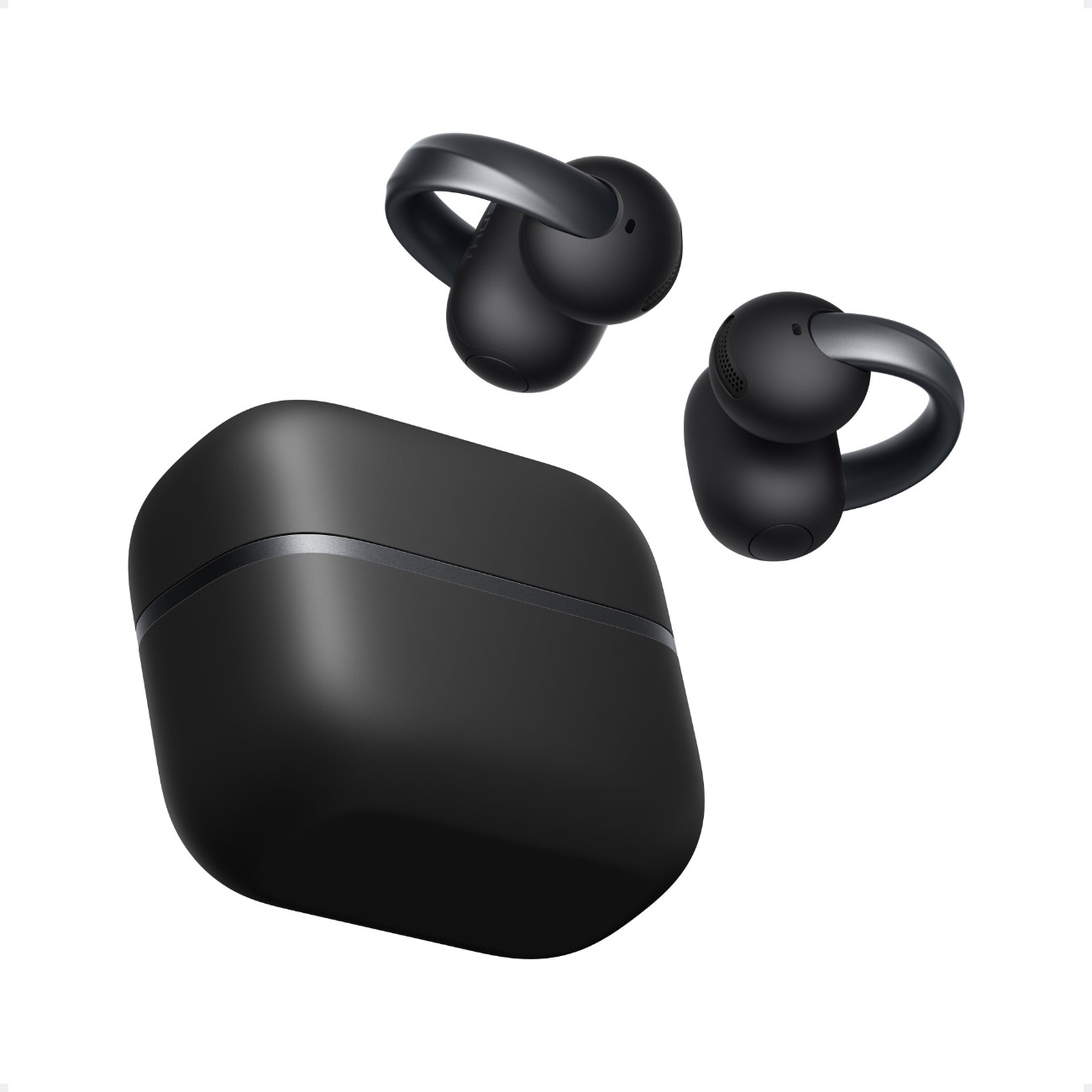
Open-ear audio is one of the fastest-growing segments in consumer headphones. Products such as AeroClip 2 appeal to users who want to listen while remaining aware of people, traffic, announcements, or workplace activity.
The main difference between an open-ear design and a conventional transparency mode is how the outside world reaches the user. With transparency mode, microphones capture outside sound and feed it through the headphone’s speakers.
With an open-ear design, the ear is less physically sealed, so environmental sound can reach the listener more naturally.
That can be useful for walking, outdoor exercise, retail work, and office settings where the user needs to hear colleagues. It can also reduce the plugged-up sensation some people experience with sealed earbuds.
The tradeoff is sound leakage and reduced isolation. AeroClip 2 is unlikely to be the best choice for airplanes, loud buses, or environments where the user wants maximum bass and silence. The surrounding sound can interfere with music, and people nearby may hear some of the playback.
Open-ear audio is also not automatically safer. Users still need to control playback volume and remain attentive to their environment. Hearing traffic is not the same as seeing traffic, and the ability to hear a car does not remove the need for normal situational awareness.
Soundcore’s open-ear design is especially relevant because the company is combining environmental awareness with AI-assisted voice processing.
That combination could make the earbuds useful for outdoor calls, but it also creates more complicated engineering challenges. Microphones must capture the user’s voice while avoiding wind, traffic, and sound from the earbuds themselves.
Liberty Buds 2: the compact ANC choice
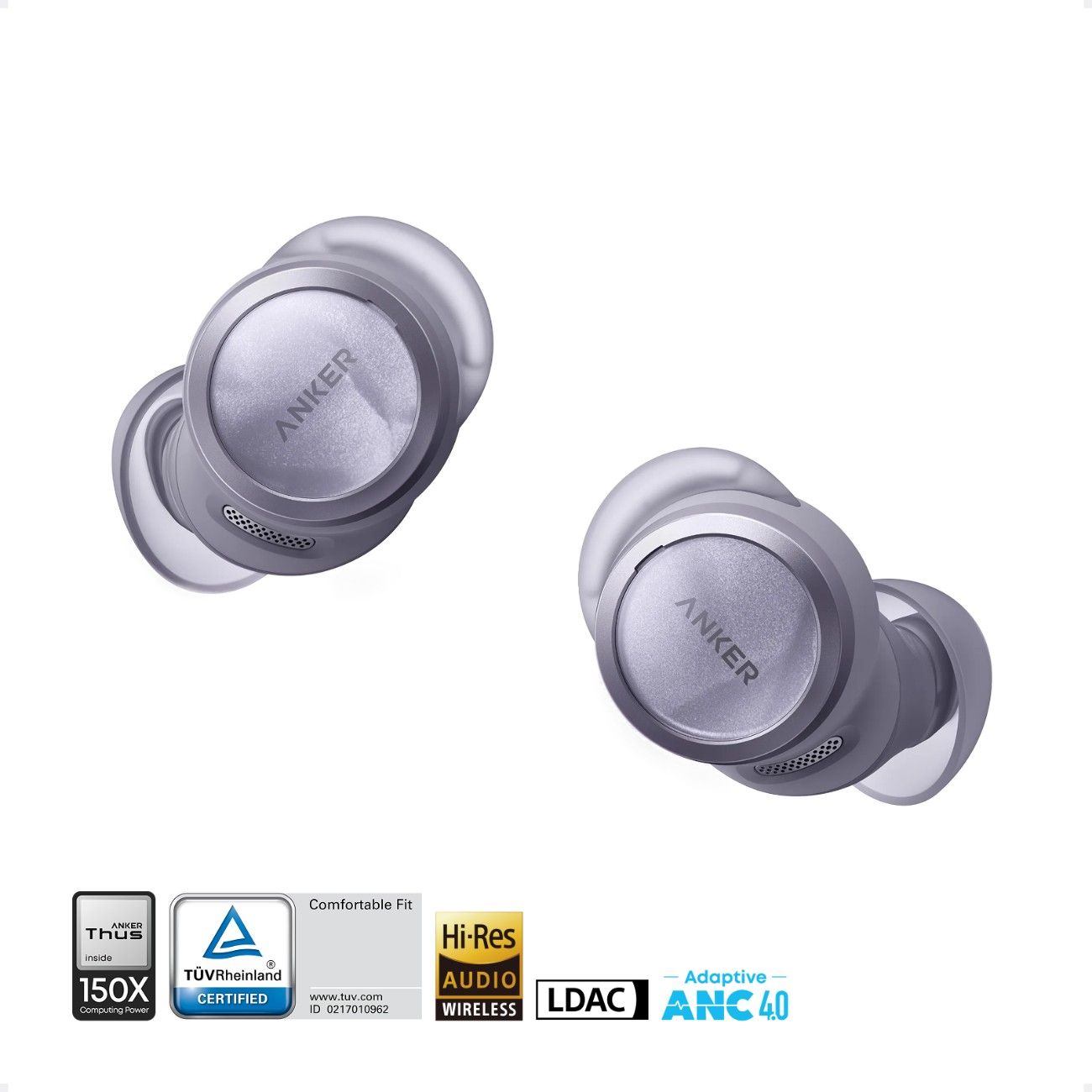
The Liberty Buds 2 target the mainstream true-wireless market. This is the category most consumers already understand: small earbuds, a charging case, silicone tips, active noise cancellation, transparency or ambient modes, and app-based controls.
The product’s advertised strengths are adaptive ANC, a six-microphone system, lightweight construction, and Soundcore’s voice-processing platform.
For buyers, the most important factor may be fit. ANC performance depends heavily on the seal between the ear tip and the ear canal. A poorly fitting earbud can sound thin, leak sound, and perform badly against outside noise even if the software is excellent.
The Liberty Buds 2 may be appealing to shoppers who want many features without moving into premium pricing. But buyers should compare them with established models from Apple, Bose, Sony, Samsung, Jabra, and other brands based on the actual features they use.
For example, multipoint connectivity may be more valuable than advanced EQ for someone who switches between a laptop and phone. A stable transparency mode may matter more than a higher codec bitrate for someone who walks outside.
A good microphone may matter more than an extra five hours of battery life for a remote worker.
The best specification is the one that solves the buyer’s real problem.
What the THUS platform may change
Soundcore’s THUS platform represents a broader movement toward software-defined audio. The physical headphone remains important, but more of the product’s value is now delivered by algorithms and app updates.
That creates both opportunities and risks.
The opportunity is personalization. A headphone can adapt to a user’s hearing profile, environment, voice, and preferred listening style.
It may be able to reduce background sound during a call without making the user sound robotic. It may automatically change ANC levels when the user enters a train station or office.
The risk is that feature quality can vary. A system that performs well in a quiet laboratory may struggle with multiple voices, strong wind, music in the background, or rapidly changing noise.
AI can improve a product, but it cannot remove the basic acoustic limits of microphones, speaker placement, ear shape, and battery capacity.
There is also a difference between AI used for real-time audio processing and AI used for cloud-based services. Real-time voice isolation may occur locally on the headset.
Transcription may involve a phone app or remote service. Buyers should find out where data is processed and stored before using meeting-recording features.
AI audio is not the same as better music quality
One of the most important distinctions for consumers is that AI processing may improve a call without improving music playback.
A voice-isolation model is optimized to separate a speaker from background noise. That is a different task from reproducing a complex musical recording naturally. An AI feature may reduce noise during a call while having no meaningful effect on tonal balance, dynamics, or soundstage.
Similarly, “AI noise cancellation” does not mean that every type of noise disappears. ANC remains most effective against relatively steady low-frequency sounds, such as engine rumble or air-conditioning noise. Sudden sounds, sharp impacts, and nearby speech are more difficult to suppress.
That is why buyers should still evaluate:
- Comfort
- Fit
- Sound signature
- Microphone quality
- ANC performance
- Transparency quality
- Battery life
- Codec support
- App reliability
- Multipoint behavior
- Repairability
- Privacy controls
AI is one feature among many, not a replacement for product fundamentals.
Privacy questions around transcription and recording
The most sensitive features in Soundcore’s broader lineup are the ones that record, summarize, or transcribe conversations.
Recording a meeting can be useful. It can help users capture action items, remember decisions, and avoid taking notes while participating in a discussion. But the feature also creates privacy and consent issues.
Before using any headphone or earbud recording function, users should confirm:
- Whether the feature records locally or uploads audio to the cloud.
- How long recordings are retained.
- Whether the user can delete recordings permanently.
- Whether transcription requires a subscription.
- Which languages are supported.
- Whether speaker identification is enabled.
- Whether the app clearly indicates when recording is active.
- Whether local laws require consent from all participants.
This is especially important in the United States because recording-consent rules vary by state. Consumers should not assume that a built-in hardware feature automatically makes every use legal or appropriate.
The Reporters Committee for Freedom of the Press recording-law guide provides an overview of U.S. federal and state recording rules and explains why consent requirements can differ between jurisdictions.
The best audio products will make recording visible, controllable, and easy to disable. They should also provide clear documentation instead of hiding important behavior in a long privacy policy.
How the new lineup compares with conventional headphones
The new Soundcore products are not designed to replace one another.
Choose the Space 2 Pro if you want:
- Stronger physical isolation
- Long listening sessions
- A travel and office headphone
- Over-ear comfort
- More battery capacity
Choose the AeroClip 2 if you want:
- Environmental awareness
- An open-ear listening experience
- A design for outdoor use
- Less ear-canal pressure
- A product for walking or light exercise
Choose the Liberty Buds 2 if you want:
- A compact charging-case design
- In-ear ANC
- Easy portability
- Everyday calls
- A more familiar true-wireless format
Soundcore’s strength is breadth. The company is not betting on one single form factor. It is spreading similar processing technology across different products and different consumer needs.
That is strategically important because the future of audio may not be one universal headphone. Some people will want open-ear awareness. Others will want maximum isolation. Some will prioritize calls and transcription, while others will care only about music quality.
Should you buy now?
There are good reasons to consider the new Soundcore products now, especially if you want current features at prices below many premium competitors.
The Space 2 Pro is potentially attractive for users who want an affordable over-ear model with long battery life, ANC, LDAC, and call-focused processing. The AeroClip 2 is worth watching if you are interested in open-ear audio but do not want to pay the highest prices in the category.
The Liberty Buds 2 may appeal to buyers who want a full feature set without moving into the $200-plus earbud market.
However, early buyers should accept some uncertainty. New products often receive firmware updates after launch. App behavior can change. Battery claims may differ from independent testing. Comfort is difficult to judge from specifications alone.
If voice quality is your priority, wait for tests that include outdoor calls and noisy indoor environments. If music quality is your priority, focus on sound measurements and listening impressions rather than AI branding. If privacy is your priority, read the recording and app documentation before activating transcription features.
What independent reviewers still need to test
The most valuable reviews will answer practical questions rather than repeat launch specifications.
Reviewers should test:
- Voice quality beside traffic
- Wind handling during walking
- Call quality in an open office
- Speech separation when multiple people are talking
- ANC performance against engines, HVAC, and voices
- Transparency naturalness
- Battery life with ANC and multipoint enabled
- LDAC battery impact
- App stability
- Bluetooth range
- Device switching
- Comfort after several hours
- Heat buildup on the Space 2 Pro
- Sound leakage from AeroClip 2
- Privacy controls for recording and transcription
Those tests will show whether the new technology is genuinely useful or simply well marketed.
The broader industry trend
Soundcore’s lineup is part of a larger transition across headphones and earbuds. Brands are building products that act less like passive accessories and more like intelligent personal-computing devices.
This trend is visible in several categories:
- Open-ear products that preserve awareness
- Earbuds with health and sleep sensors
- Headphones with transcription and meeting tools
- AI-powered voice isolation
- Personalized hearing profiles
- Real-time translation
- Adaptive sound environments
- Wearables that understand context
The market opportunity is large because audio is already part of daily routines. People wear earbuds during travel, work, fitness, study, and social activities. Adding software features to that hardware gives manufacturers more reasons to sell upgrades and companion services.
But complexity also creates a challenge. Every new feature can add battery drain, privacy concerns, software dependence, and support requirements. A product that tries to do everything may be less reliable at the basics.
Final verdict for everyday buyers
Soundcore’s new products are important because they reflect where consumer audio is going, not because every AI claim has already been proven.
The Space 2 Pro, AeroClip 2, and Liberty Buds 2 give buyers more choice across over-ear, open-ear, and in-ear designs. The THUS platform suggests that call clarity and software-assisted personalization will become increasingly important across price ranges.
For most people, the best buying decision is still practical:
- Choose the form factor that fits your routine.
- Prioritize comfort and microphone quality if you take calls.
- Prioritize fit and transparency if you commute or exercise outdoors.
- Compare real battery testing rather than headline claims.
- Review privacy settings before using recording or transcription.
- Do not confuse AI branding with independently verified performance.
The next generation of headphones will probably be more adaptive, more aware of context, and more deeply connected to phone software. The products that succeed will be the ones that use that intelligence quietly and reliably, without making the user work harder to listen.
FAQs
What is the Soundcore Space 2 Pro?
The Space 2 Pro is an over-ear wireless headphone with active noise cancellation, LDAC support, sound personalization, and claimed battery life of up to 60 hours without ANC. Its approximate U.S. price is $200.
What is the Soundcore AeroClip 2?
The AeroClip 2 is an open-ear clip-on earbud designed to keep the user more aware of surrounding sound. It is aimed at outdoor listening, commuting, and users who dislike sealed in-ear designs.
Does AI automatically make headphones sound better?
No. AI may improve voice isolation, adaptive noise control, or personalization, but it does not automatically improve music quality. Sound tuning, driver design, fit, and source quality remain important.
Are open-ear earbuds better than ANC earbuds?
Neither is universally better. Open-ear earbuds are better for environmental awareness, while sealed ANC earbuds are generally better for travel, noisy offices, and strong low-frequency noise reduction.
Should I trust battery-life claims?
Treat manufacturer battery figures as useful estimates, not guaranteed real-world results. Actual runtime depends on volume, ANC, codec, microphone activity, multipoint, and software features.
Are headphone transcription features private?
Privacy depends on how the feature is implemented. Check whether audio is processed locally or in the cloud, how long data is stored, and whether the product provides clear recording indicators and deletion controls.
Can ANC headphones replace hearing protection?
No. ANC headphones are consumer listening devices and are not substitutes for certified hearing protection in hazardous environments. For workplace noise exposure, consult guidance from the CDC and NIOSH on occupational noise and hearing loss and use appropriate hearing protection where required.
