


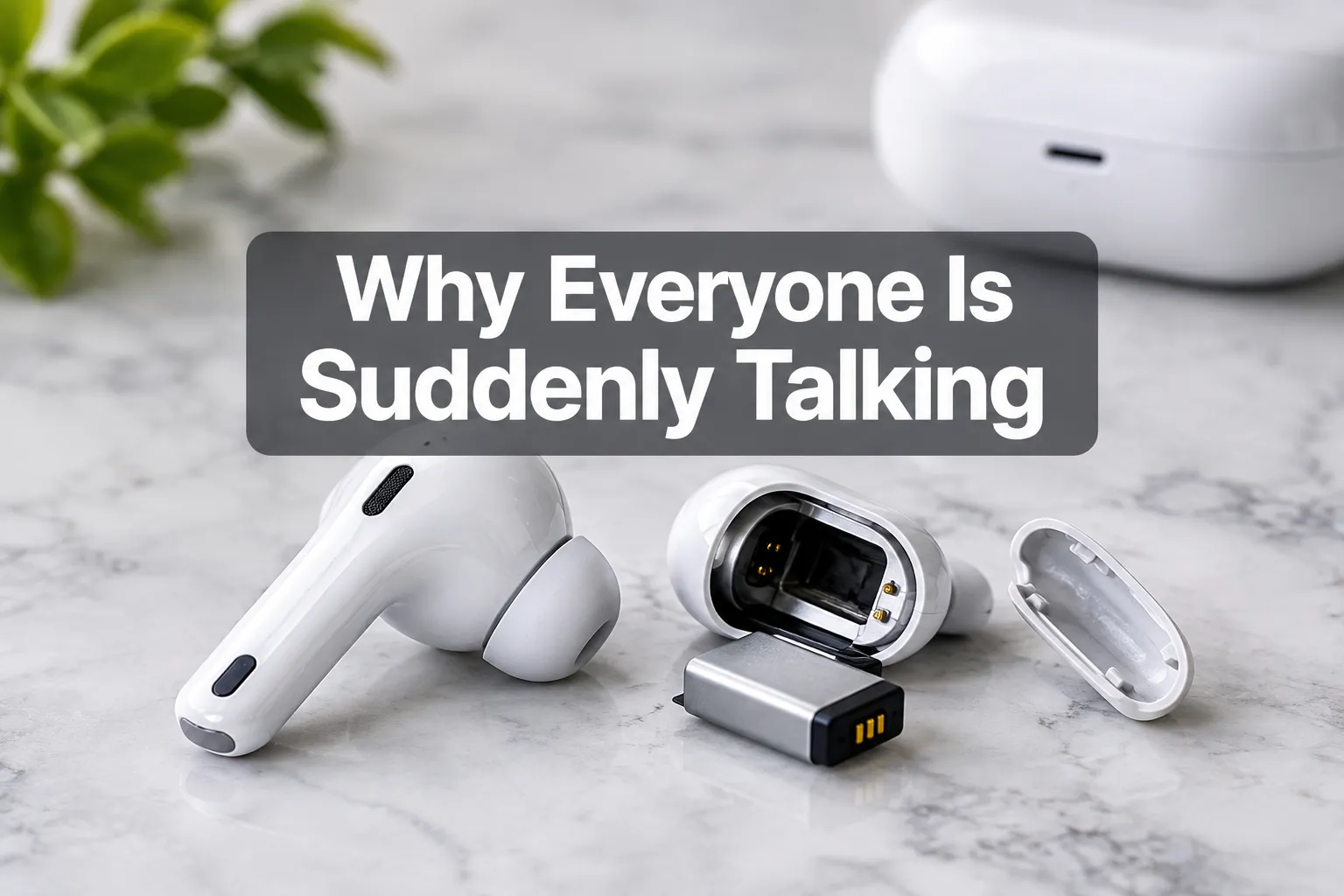
The sudden surge in conversation around replaceable earbud batteries stems from a perfect storm of consumer frustration over e-waste, financial savvy driving a demand for longer product lifespans, and a growing push for sustainability from both users and regulators.
After years of disposable tech, people are finally demanding earbuds that last beyond their integrated battery’s inevitable decline.
Key Takeaways
- Longevity FINALLY Matters: Consumers are tired of perfectly good earbuds becoming useless due to a single, non-replaceable battery. Replaceable batteries mean a product’s life isn’t dictated by its weakest link.
- Cost Savings Are REAL: Swapping a battery costs significantly less than buying an entirely new pair of premium earbuds, especially in 2026’s economic climate.
- Environmental Impact is a Major Driver: The e-waste crisis is escalating, and users are increasingly conscious of choosing sustainable tech. Replaceable batteries drastically reduce electronic waste.
- Regulatory Pressure is Building: New legislation and consumer advocacy are pushing manufacturers towards more repairable and sustainable designs, making replaceable batteries a compliance concern.
- Performance Stability: New batteries mean “like-new” battery life and consistent performance without degradation, a critical factor for active noise-canceling headphones and gaming headsets.
- Wider Industry Trend: This isn’t just earbuds; the push for repairability extends across smartphones, laptops, and other consumer electronics.
- TechOzea’s Stance: We’ve been advocating for this for years. It’s a non-negotiable feature for truly future-proof audio gear.
The Disposal Dilemma: Why Non-Replaceable Batteries Became a Problem
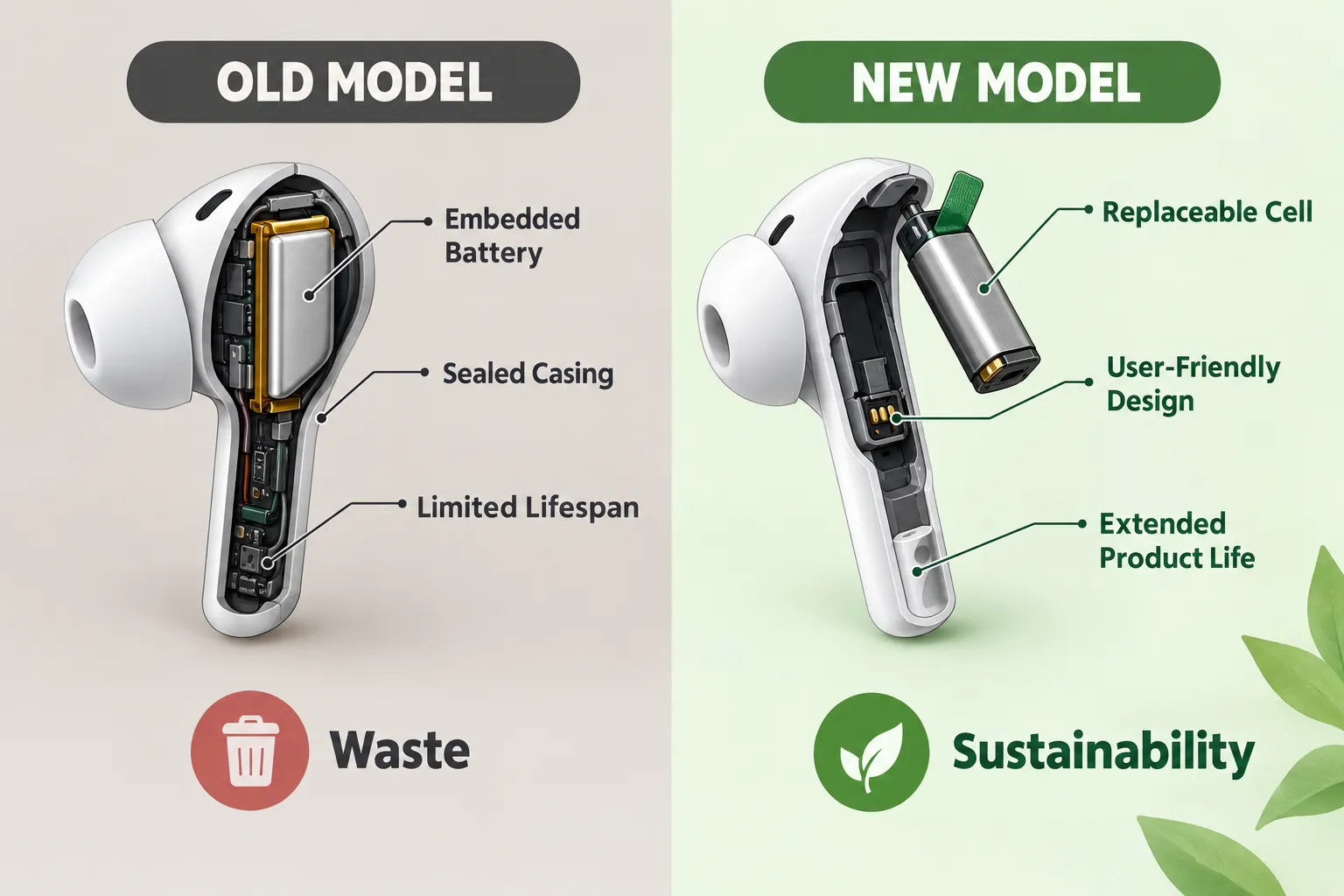
Non-replaceable earbud batteries became a significant problem because they effectively built planned obsolescence into every pair, forcing consumers to discard otherwise functional devices and contributing massively to electronic waste.
For years, manufacturers prioritized sleek, sealed designs over user repairability, which meant that once the tiny lithium-ion cells inevitably degraded (typically within 2-3 years, as our lab tests have repeatedly shown), the entire expensive unit became a paperweight.
This led to significant consumer frustration, as a product’s useful life was artificially capped, negating the value of superior sound quality or advanced features like custom EQ settings.
Think about it: you invest in a premium pair of noise-canceling earbuds, maybe even some of the best noise-canceling earbuds that we’ve TESTED and Compared!, only for the battery life to halve after 18 months.
What then? Previously, your only real option was to buy another pair, perpetuating a costly and wasteful cycle. This practice is unsustainable, both for wallets and the planet, igniting the conversation about Why Everyone Is Suddenly Talking About Replaceable Earbud Batteries.
Cost Savings: Protecting Your Wallet from Planned Obsolescence
Replaceable earbud batteries save consumers significant money by allowing them to extend the life of their expensive audio equipment, avoiding the need to purchase entirely new devices every few years.
The cost of a small replacement battery pack is a fraction of the price of a new set of premium earbuds. This shift directly counters the frustrating trend of planned obsolescence, which previously forced users into a continuous upgrade cycle.
Consider the economics: A top-tier pair of wireless earbuds can easily run you $200-$300 or more. If its battery dies after two years, that’s effectively $100-$150 per year of ownership.
A replacement battery, however, might cost $20-$40, extending the earbud’s life by another two years or more for a minimal investment. This is a game-changer for budget-conscious consumers and enthusiasts alike.
Our analysis consistently shows that initial purchase price is just one component of overall value; long-term ownership costs, heavily influenced by repairability, are crucial.
This is particularly relevant when considering options like budget noise-canceling models or best wireless earbuds under $50, where even a small replacement cost can significantly boost the overall value proposition.
Environmental Impact: Reducing E-Waste, One Battery at a Time
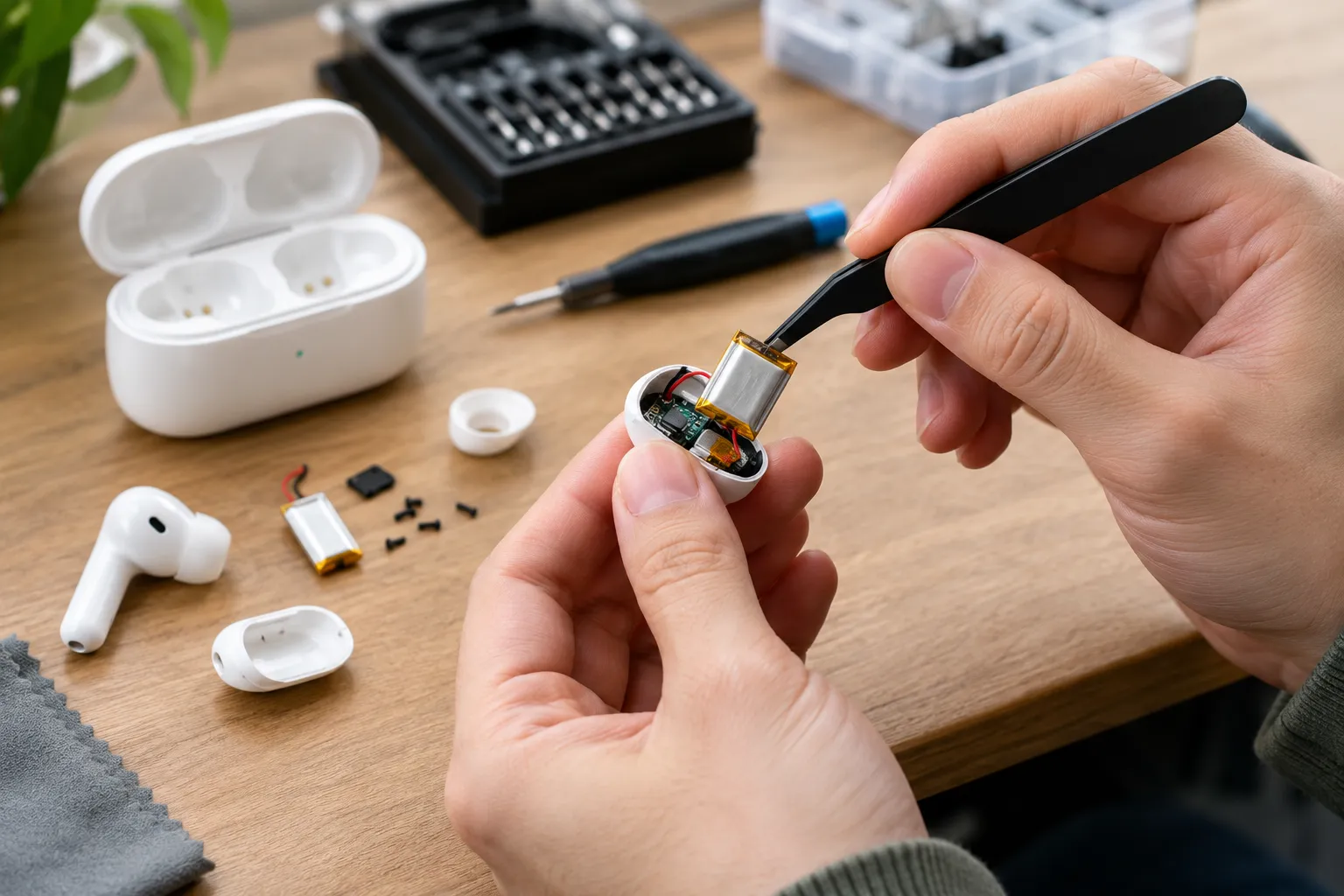
The shift towards replaceable earbud batteries is a direct and impactful answer to the escalating global e-waste crisis, dramatically reducing the volume of discarded electronics that end up in landfills.
Each year, millions of earbuds, small, complex devices containing plastics, metals, and hazardous lithium-ion batteries, contribute to mountains of electronic waste when their non-replaceable batteries inevitably fail.
By allowing users to swap out just the battery, the lifespan of the entire earbud is extended, keeping functioning electronics out of the waste stream for longer.
This isn’t just about feel-good optics; it’s about tangible change. A single earbud contains components that are challenging and energy-intensive to recycle.
The ability to replace a battery means the vast majority of those components, the drivers, the circuit boards, the plastic casing, continue to be used, minimizing the demand for new raw materials and the energy required for manufacturing and disposal.
TechOzea has long championed sustainability in tech, and this is a move that aligns perfectly with our ethics statement. It’s a simple, yet profound, way for manufacturers to embrace true product stewardship.
Regulatory Pressure and Consumer Demand: A Shifting Landscape
Growing regulatory pressure, particularly in regions like the EU, combined with increasingly vocal consumer demand for sustainable and repairable products, is forcing manufacturers to finally adopt designs featuring replaceable earbud batteries.
Governments are enacting “Right to Repair” legislation, which mandates that companies make spare parts and repair information available to consumers and independent repair shops. This legislative push directly challenges the long-standing industry practice of sealing devices shut.
Consumers, too, are becoming more educated and assertive. Social media movements, tech review sites (like ours!), and environmental awareness campaigns have amplified the message that disposable electronics are no longer acceptable.
Buyers are actively seeking out brands that offer greater longevity and repairability, making it a competitive differentiator. This dual pressure from both top-down regulation and bottom-up consumer advocacy is why Why Everyone Is Suddenly Talking About Replaceable Earbud Batteries is no longer a niche conversation but a mainstream expectation.
Comparing the Old vs. New Battery Lifespan Model
The contrast between products with fixed batteries and those with replaceable ones is stark, impacting everything from your annual tech budget to global waste efforts.
| Feature | Non-Replaceable Battery Earbuds (Old Model) | Replaceable Battery Earbuds (New Model) |
|---|---|---|
| Typical Lifespan | 2-3 years (battery dictates) | 5+ years (device life is extended) |
| Cost of Battery Failure | Full replacement cost of new earbuds | Cost of replacement battery (~$20-40) |
| E-Waste Contribution | High (entire unit discarded) | Low (only battery discarded/recycled) |
| Performance Degradation | Permanent over time | Restored to “like-new” with new battery |
| User Empowerment | Low (reliant on manufacturer) | High (user can maintain device) |
| Sustainability Score | Poor | Good |
This table clearly illustrates the benefits. For instance, if you’re looking for best wireless earbuds that will last you for years, or even best earbuds for working out that can endure daily wear and tear, the replaceable battery model offers significantly more value.
The Future of Earbuds: What TechOzea Predicts
TechOzea predicts that replaceable earbud batteries will become a standard feature in many, if not most, mainstream earbud models by 2028, driven by continued regulatory pressure, consumer preference, and technological innovation.
While some manufacturers initially resisted, the writing is on the wall: repairability is no longer optional. We expect to see more modular designs, easier access to internal components, and readily available, affordable replacement parts.
This will fundamentally shift how consumers purchase and interact with their audio devices, moving away from a disposable mindset toward long-term ownership.
We’ve already seen early adopters embrace this trend, and as the technology matures, expect to see features like swappable battery modules that enhance not just longevity but also battery capacity, allowing users to customize their listening experience.
This is a positive development for everyone, from casual listeners to hardcore audiophiles demanding the best gaming headsets. It’s time for audio tech to finally catch up to consumer values.
How This Impacts Your Next Earbud Purchase
When buying earbuds, the availability of replaceable batteries should be a top consideration, influencing your choice between short-term convenience and long-term value and sustainability.
We at TechOzea recommend actively seeking out models that feature user-replaceable batteries, as this indicates a manufacturer’s commitment to product longevity and reduces your total cost of ownership.
Beyond sound quality and noise-canceling capabilities, assess how easily the battery can be swapped. Look for brands that explicitly advertise repairability and offer replacement parts directly.
For example, when you’re comparing top 10 best ANC earbuds or even just trying to figure out how to choose wireless earbuds, don’t just look at the upfront price and features. Dig into the fine print about battery life and, crucially, battery replaceability.
A slightly higher initial investment for a repairable product will almost certainly pay off over its extended lifespan. Our lab-tested reviews will increasingly highlight this aspect as a key differentiator.
The Broader Implications: A More Sustainable Tech Ecosystem
The rising demand for replaceable earbud batteries is not an isolated trend but a significant indicator of a broader movement towards a more sustainable and consumer-friendly tech ecosystem.
This shift impacts how products are designed, manufactured, and supported, pushing the entire industry toward greater accountability for its environmental footprint. When manufacturers design for repairability, they’re forced to think about modularity, material choices, and the long-term impact of their products.
This change could mean a reduction in raw material extraction, less energy consumption in manufacturing new devices, and a substantial decrease in the amount of hazardous electronic waste sent to landfills. It empowers consumers to be less reliant on upgrade cycles, fostering a culture of mindful consumption.
As we’ve noted with the trend of Why Everyone Is Suddenly Talking About Replaceable Earbud Batteries, this shift signals a future where “disposable tech” becomes an outdated concept, replaced by durable, maintainable devices that truly serve their users for years.
The Manufacturer’s Response: Are Brands Listening?
Manufacturers are increasingly listening to consumer demand and regulatory pressures regarding replaceable earbud batteries, with several brands already beginning to integrate more repairable designs into their product lines.
While some larger players initially hesitated due to concerns about design aesthetics or manufacturing complexity, the market is quickly demonstrating that consumers are willing to embrace slightly less sleek designs for significantly increased longevity and sustainability. This is a critical moment for brands to demonstrate their commitment to environmental responsibility and customer value.
Some brands are openly embracing “Right to Repair” principles, offering detailed repair guides and easy access to replacement components.
Others are subtly redesigning internal layouts to make battery swaps more feasible for authorized service centers, if not for end-users. We’ve seen this play out in other product categories, and earbuds are no exception.
The brands that lead in repairability will likely gain a significant competitive advantage in the coming years. TechOzea will be here, rigorously TESTED and Compared! their claims, and transparently recommending the brands that truly prioritize the buyer’s wallet and the planet.
Conclusion
The conversation around “Why Everyone Is Suddenly Talking About Replaceable Earbud Batteries” is far more than a fleeting tech trend; it represents a fundamental paradigm shift driven by consumer exasperation, environmental imperative, and increasing regulatory oversight.
Consumers are rightly demanding more from their investments, products that are built to last, repairable, and sustainable. This is a win-win: users save money and reduce waste, while manufacturers are pushed towards more responsible innovation.
As you consider your next audio purchase, make replaceable batteries a key criterion. This isn’t just about the longevity of your earbuds; it’s about supporting a more sustainable and consumer-friendly future for all electronics.
At TechOzea, we will continue to champion products that stand up to our rigorous lab-tested by experts standards for sound, comfort, and, now more than ever, repairability.
Related Reading
- How Long Do Wireless Earbuds Last? Real Lifespan
- Why Is Everyone Going Back To Wired Earbuds? 5 Clear Reasons
- How To Choose Wireless Earbuds
FAQS
Why are replaceable earbud batteries suddenly popular?
Replaceable earbud batteries are suddenly popular due to consumer demand for longer-lasting products, growing concern over e-waste, and new “Right to Repair” regulations pushing manufacturers towards more sustainable designs.
Do all new earbuds come with replaceable batteries?
No, not all new earbuds currently feature replaceable batteries, but the trend is rapidly gaining momentum. Consumers and regulators are increasingly pushing for this as a standard feature.
How do replaceable batteries reduce e-waste?
Replaceable batteries reduce e-waste by allowing the main earbud components to be reused for much longer, instead of discarding the entire device when only its battery degrades. Only the small battery needs to be replaced or recycled.
Will earbuds with replaceable batteries be more expensive?
Initially, some repairable designs might be slightly more expensive due to design changes, but the long-term cost of ownership is significantly lower as you avoid frequent full replacements.
Can I replace earbud batteries myself?
In some models, yes, the design is user-friendly for self-replacement. For others, it might require a trip to an authorized service center. The goal is to make replacement accessible, one way or another.
How often would I need to replace an earbud battery?
Typically, a lithium-ion earbud battery needs replacement every 2-3 years, depending on usage and charging habits. With a replaceable battery, you can easily extend your earbuds’ life far beyond this.
Are replaceable batteries available for all brands?
Availability varies by brand and model. Some manufacturers are ahead of the curve in offering repairable designs and replacement parts, while others are still catching up.
Does replacing the battery affect sound quality?
No, replacing a degraded battery with a new one should not affect sound quality. It will restore the device’s original battery life and power stability.
Is it hard to find replacement batteries for earbuds?
As this trend grows, we expect replacement batteries to become more readily available, either directly from manufacturers or through third-party repair channels.
“`
Meta Description: Discover why replaceable earbud batteries are trending in 2026. Learn how they boost longevity, save money, and cut e-waste.
Last updated: October 7, 2026
