




An estimated 11.2 to 12.4 million U.S. adults experienced pain in the temporomandibular joint (TMJ) region in 2018 that could be related to temporomandibular disorders (TMDs).
These conditions can cause jaw pain, stiffness, difficulty chewing, and other symptoms, raising an important question for frequent headphone users: could wearing headphones contribute to jaw discomfort or worsen existing TMJ problems?
The answer is nuanced: headphones themselves are not a direct cause of TMJ disorders for most people, but certain types, prolonged use, and improper fit can exacerbate existing conditions or contribute to jaw discomfort. This article explores the relationship between headphones and jaw pain, offering practical advice for comfortable listening.
Quick Answer
Headphones typically do not cause TMJ disorders directly, but they can contribute to or worsen jaw pain and TMJ symptoms, especially with prolonged use, excessive clamping force, or improper fit.
Over-ear and on-ear headphones are more likely to create pressure around the jaw, while earbuds usually pose less direct risk but can still contribute to overall head and neck tension.
Key Takeaways
- Headphones are generally not a primyyyary cause of TMJ, but can be a contributing factor.
- Excessive clamping force from over-ear or on-ear headphones can put pressure on the jaw joint and surrounding muscles.
- Prolonged headphone use without breaks can lead to muscle fatigue and tension.
- Improper fit is crucial; headphones that are too tight or heavy increase risk of discomfort.
- Earbuds pose less direct jaw pressure but can still contribute to overall tension if posture is poor.
- Symptoms linked to headphones include jaw soreness, headaches, ear pain, and clicking sounds.
- Look for lightweight headphones with adjustable, even clamping force and soft padding.
- Regular breaks (every 30-60 minutes) are essential to prevent strain.
- Consult a doctor or dentist if jaw pain persists or worsens, especially if accompanied by other TMJ symptoms.
- Other common causes of TMJ include stress, teeth grinding, poor posture, and jaw injuries.
Can Wearing Headphones Too Much Lead to Jaw Pain?
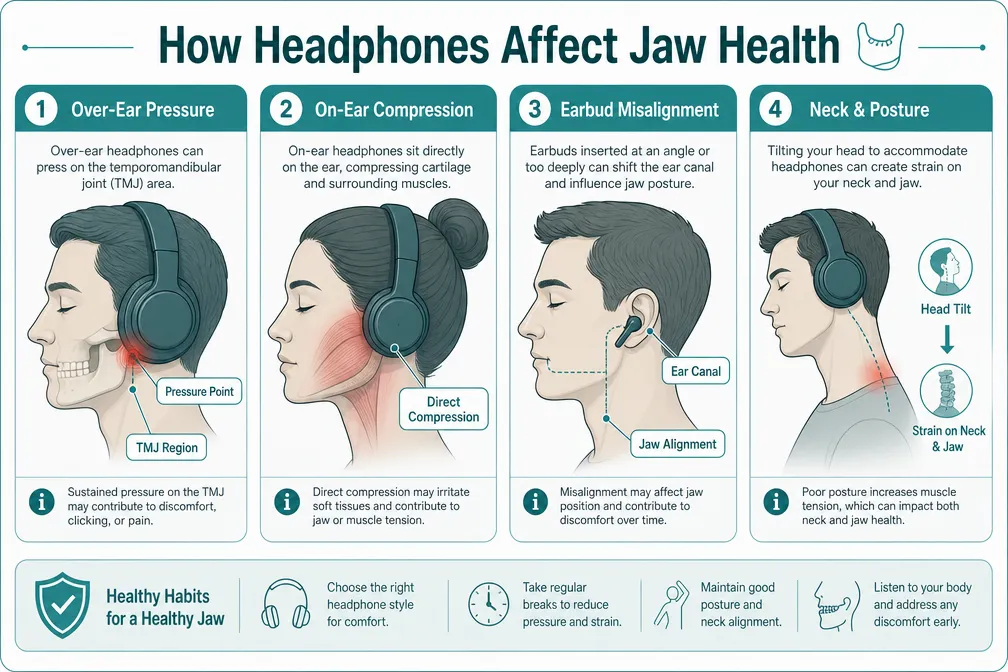
Yes, wearing headphones too much can indeed lead to jaw pain or exacerbate existing TMJ symptoms. While occasional use is unlikely to cause issues, prolonged periods of wearing headphones, especially those with significant clamping force, can put sustained pressure on the temporomandibular joints and the surrounding muscles.
Consider a recent experience I had: I was editing an audio project for several hours, completely immersed with my high-fidelity over-ear headphones.
By the end of the session, my temples ached, and my jaw felt strangely stiff, almost like it had been clenching. It wasn’t until I removed the headphones and stretched that I realized the constant, albeit subtle, pressure had fatigued the muscles around my jaw.
This kind of sustained pressure, combined with poor posture often adopted during focused work, can restrict blood flow and lead to muscle tension, soreness, and even referred pain in the jaw and head. According to the CDC’s ergonomics guidance, maintaining good posture and taking frequent breaks can help reduce musculoskeletal strain.
What Kind of Headphones Are Most Likely to Cause TMJ Pain?
Over-ear and on-ear headphones are generally the types most likely to cause or worsen TMJ pain due to their design, which involves a headband and earcups that apply pressure to the sides of the head and around the ears. This pressure can inadvertently transfer to the jaw joint and surrounding muscles.
Here’s a breakdown of how different types can impact jaw comfort:
- Over-ear Headphones: These headphones encase the entire ear. If the clamping force is too high or the headphones are heavy, the pressure can strain the TMJ and the muscles of mastication.
- On-ear Headphones: These headphones rest directly on the ear. They typically have smaller earcups than over-ear models and often rely on substantial clamping force to maintain a secure fit. This direct pressure on the outer ear and adjacent skull can be particularly problematic, transmitting force directly to the jaw area.
- Noise-Cancelling Headphones: While not a separate category in terms of fit, many active noise-cancelling (ANC) headphones tend to be over-ear or on-ear designs and can sometimes be heavier or have a stronger clamp to ensure a good seal for effective noise cancellation. This increased weight and pressure can contribute to jaw discomfort. For tips on finding effective ANC without discomfort, you might check our guide on the Best Noise Cancelling Headphones.
Decision Rule: If you experience jaw discomfort, prioritize lightweight, over-ear headphones with soft, breathable padding and an adjustable headband that allows for a relaxed, not tight, fit. Avoid models known for very high clamping force.
Are Over-Ear Headphones Worse for Jaw Pain Than On-Ear?
Generally, on-ear headphones have a higher potential to cause direct jaw pain than over-ear headphones, though both can contribute depending on their design and fit. On-ear models rest directly on the ear cartilage, often requiring more clamping force to stay secure, which can transmit pressure more acutely to the surrounding jaw muscles and joint.
Over-ear headphones, while potentially heavier, typically distribute pressure more broadly around the ear and head, encasing the ear rather than pressing on it directly. This can sometimes result in less direct jaw pressure, especially if they have excellent padding and a well-engineered, evenly distributed clamping force.
However, if over-ear headphones are too tight or excessively heavy, their sustained pressure can still be very problematic for TMJ sufferers. The key factor is how the pressure is applied and distributed, not just the type itself. For more on the differences, see our comparison of “In Ear Vs On Ear Headphones.”
How Can I Tell if My Headphones Are Causing My TMJ Symptoms?
You can identify if your headphones are contributing to your TMJ symptoms by paying close attention to when and where your pain occurs, as well as the nature of the discomfort. A direct correlation between headphone use and the onset or worsening of symptoms is a strong indicator.
Here’s a simple self-assessment:
- Timing of Pain: Does your jaw pain, soreness, or headache typically start or worsen shortly after you begin wearing your headphones? Does it improve within an hour or two of removing them?
- Location of Discomfort: Do you feel pressure, soreness, or aching directly around your ears, temples, or jaw joints (just in front of your ears) while wearing the headphones?
- Headphone Fit: Do your headphones feel noticeably tight, especially over long periods? Do they leave red marks on your skin or cause your ears to feel compressed?
- Associated Symptoms: Do you experience any new or increased clicking, popping, or grinding sensations in your jaw when you open or close your mouth after wearing headphones? Does your jaw feel stiff or locked?
- Relief Measures: Does taking breaks from headphone use, gently massaging your jaw, or doing light jaw stretches provide temporary relief?
If you answer yes to several of these questions, particularly the first three, it’s highly likely your headphones are playing a role in your jaw discomfort.
What Are the Symptoms of TMJ Caused by Headphones?
The symptoms of TMJ or jaw pain exacerbated by headphones are similar to other causes of TMJ disorders but are specifically triggered or worsened by headphone use. These symptoms primarily involve discomfort in and around the jaw.
Common symptoms include:
- Jaw pain or tenderness: A dull ache or sharp pain in the jaw joint area, which may spread to the face, neck, or shoulders.
- Headaches: Often tension-type headaches, particularly in the temples or sides of the head, which can be directly related to muscle strain from headphone pressure.
- Ear pain: Aching or pressure in or around the ears, often mistaken for an ear infection, when it’s actually referred pain from the jaw joint or surrounding muscles.
- Clicking, popping, or grinding sounds: These noises may occur when opening or closing your mouth, Common signs of TMJ disorders.
- Limited jaw movement: Difficulty fully opening your mouth, or a feeling of your jaw locking or catching.
- Facial soreness: Tenderness or fatigue in the muscles of the face, especially after prolonged use.
Can Earbuds Also Cause Jaw Pain or TMJ?
Earbuds are less likely to cause direct jaw pain because they do not exert clamping force around the head. However, poor posture during prolonged use can strain neck and shoulder muscles, which are connected to jaw muscles.
The Occupational Safety and Health Administration (OSHA) notes that poor ergonomic habits can contribute to muscle tension and discomfort throughout the head, neck, and shoulders.
High listening volumes can also lead to hearing damage. The CDC recommends protecting hearing by limiting exposure to loud sounds.
Here’s why earbuds are generally less of a direct concern but still warrant consideration:
- No Clamping Force: Unlike their larger counterparts, earbuds sit within the ear canal and do not apply external pressure to the jaw area.
- Indirect Tension: Prolonged listening, especially at high volumes, can lead to a subconscious tensing of the jaw or neck muscles as a way to “concentrate” or block out external noise. This tension, over time, can contribute to discomfort.
- Posture: If using earbuds while hunched over a desk or in an awkward position, the poor posture can strain neck and shoulder muscles, which are interconnected with jaw muscles, potentially leading to referred jaw pain.
- Hearing Health: While not directly related to jaw pain, loud volumes through earbuds can cause hearing damage, which can sometimes lead to an increased perception of pain or discomfort in the ear area, which might be mistaken for jaw pain. Always monitor your volume levels to avoid issues like those discussed in “Can Headphones Cause Hearing Damage? Safe Volume Levels”.
Edge Case: Individuals with very sensitive ear canals or specific ear conditions might experience discomfort from the physical presence of earbuds, but this is distinct from TMJ-related jaw pain.
What Are Some Comfortable Headphones for People with TMJ?
For individuals prone to TMJ or jaw pain, selecting headphones designed for comfort and minimal pressure is crucial. The best choices prioritize lightweight construction, soft padding, and an adjustable, even clamping force.
Here are features to look for and types to consider:
- Lightweight Design: Opt for headphones that feel light on your head. Less weight means less strain over long periods.
- Soft, Plush Earpads: Look for earcups with generous, soft padding (like memory foam or velour) that conform to your head without creating pressure points.
- Adjustable Headband: A headband that can be easily adjusted to fit your head without being too tight or too loose is essential. Some headbands have a suspension system that further reduces pressure on the crown of the head.
- Even Clamping Force: The ideal headphone will distribute its clamping force evenly across the contact points, rather than concentrating it in one area. Some brands are known for more relaxed fits.
- Open-Back Headphones: While not ideal for noise isolation, open-back designs often have a lighter build and more relaxed clamping force, as they don’t need to create a seal. This can make them more comfortable for prolonged use. You can explore options in “Best Open Back Headphones“.
- Bone Conduction Headphones: These headphones sit on your cheekbones, completely bypassing your ears and jaw. They are an excellent alternative if direct pressure from traditional headphones is a primary issue. Learn more about “How Bone Conduction Headphones Work (And Who They’re For)” for a detailed explanation.
- Wireless Options: While not directly related to comfort, wireless headphones eliminate cable tangles which can sometimes pull or snag, indirectly contributing to neck or head strain. See “Wired Vs Wireless Headphones: Which Is Better?” for a comparison.
Recommendation: Brands like Sennheiser, Bose, and specific models from Sony are often praised for their ergonomic designs and comfort, making them good starting points for those with jaw sensitivity. Always try headphones on before buying if possible.
How Tight Should Headphones Be to Avoid Jaw Pain?
Headphones should be just tight enough to stay securely on your head without slipping, but loose enough that they do not exert noticeable pressure or discomfort around your ears, temples, or jaw. The goal is a gentle, even pressure distribution, not a vice-like grip.
Think of it this way: if your headphones leave red marks on your skin, cause a headache after 30 minutes, or make your jaw feel tired, they are too tight. A good fit allows you to move your head slightly without the headphones shifting drastically, but you should not feel any squeezing sensation.
If you find yourself constantly adjusting them or feeling relief the moment you take them off, that’s a sign the clamping force is too high. Proper fit, alongside features like good padding, is critical for comfort. See our guide on “How To Wear Headphones Correctly” for more tips.
How Long Is Too Long to Wear Headphones Without a Break?
Wearing headphones for more than 60 minutes without a break is generally considered too long, especially if you are prone to jaw pain or if your headphones have a noticeable clamping force. Regular, short breaks are crucial for preventing muscle fatigue and tension in the jaw and neck.
A good rule of thumb is the 60-60 rule for general listening:
- Listen at no more than 60% of the maximum volume.
- Take a break for at least 5-10 minutes every 60 minutes.
This aligns with recommendations from the World Health Organization’s safe listening guidance.
During these breaks, remove your headphones completely, gently stretch your neck and jaw, and allow your muscles to relax. If you’re using particularly heavy or tight headphones, or if you’re already experiencing discomfort, you might need to take breaks every 30-45 minutes.
My personal anecdote of jaw stiffness after long editing sessions taught me the value of these short pauses, even if it means interrupting my flow for a few minutes. It pays off in preventing pain later.
What Other Things Can Cause TMJ Besides Headphones?
While headphones can be a contributing factor, many other common conditions and habits can cause or exacerbate TMJ disorders and jaw pain. Identifying these primary causes is crucial for effective treatment.
Here are some of the most frequent culprits:
- Bruxism: Teeth grinding and clenching place significant stress on the jaw.
- Stress and Anxiety: The National Institute of Mental Health explains that stress can increase muscle tension.
- Jaw Injury: Trauma can damage the joint.
- Arthritis: Conditions like osteoarthritis and rheumatoid arthritis may affect the TMJ.
- Malocclusion: A poor bite can create uneven stress.
- Poor Posture: Forward head posture increases strain on the jaw and neck.
- Excessive Gum Chewing: This can overwork jaw muscles.
It’s important to remember that TMJ disorders are often multifactorial, meaning a combination of these elements, including potentially headphone use, contributes to the overall problem.
Should I See a Doctor If I Think My Headphones Are Causing TMJ?
Yes, you should absolutely see a doctor or a dental professional specializing in TMJ disorders if you suspect your headphones are causing or worsening your jaw pain, especially if symptoms persist or interfere with your daily life. While this article provides general guidance, only a healthcare professional can provide an accurate diagnosis and personalized treatment plan.
The American Dental Association recommends professional evaluation for persistent TMJ symptoms, as jaw pain can have multiple underlying causes.
It’s tempting to try and self-diagnose, but TMJ symptoms can overlap with other conditions, and a medical expert can rule out more serious issues. A dentist specializing in temporomandibular disorders, an oral and maxillofacial surgeon, or even your primary care physician can assess your symptoms, examine your jaw, and recommend appropriate next steps.
They might suggest jaw exercises, mouthguards, pain management strategies, or adjustments to your daily habits. Don’t delay seeking professional advice if the pain is chronic, severe, or accompanied by clicking, locking, or difficulty eating.
Are There Specific Exercises to Relieve Jaw Pain from Headphones?
Yes, there are several gentle exercises and stretches that can help relieve jaw pain and tension that might be caused or exacerbated by headphone use. These exercises aim to relax the jaw muscles, improve flexibility, and reduce stiffness.
Here are a few simple exercises you can perform during your headphone breaks:
- Gentle Jaw Stretches: Slowly open your mouth as wide as comfortable, hold for a few seconds, then relax. Repeat 5-10 times. Avoid forcing your mouth open if it causes pain.
- Tongue Up: Place the tip of your tongue on the roof of your mouth, directly behind your front teeth. Slowly open and close your mouth, keeping your tongue in place. This helps to keep your jaw aligned.
- Relaxed Jaw Exercise: Let your lips part and your teeth separate, allowing your jaw to relax. You can place a finger lightly on your chin to feel if your jaw is relaxed. Hold this position for 30 seconds.
- Side-to-Side Jaw Movement: Gently move your lower jaw from side to side, without forcing it. Perform 5-10 repetitions.
- Forward Jaw Movement: Gently move your lower jaw forward, holding for a few seconds, then relax. Perform 5-10 repetitions.
- Self-Massage: Gently massage the muscles around your jaw joint, temples, and neck with your fingertips.
The UK National Health Service (NHS) notes that jaw exercises and relaxation techniques may help relieve TMJ discomfort.
What Are Common Mistakes People Make When Choosing Headphones If They Have Jaw Pain?
When selecting headphones, especially if you’re sensitive to jaw pain, several common mistakes can worsen the problem. Being aware of these can help you make a more informed decision.
Here are the key pitfalls to avoid:
- Prioritizing Sound Quality Over Comfort: While excellent audio is desirable, for someone with jaw pain, comfort must be the primary factor. Many mistakenly buy audiophile-grade headphones that are heavy or have an extremely tight clamp, assuming superior sound justifies discomfort.
- Ignoring Clamping Force: Many headphones, particularly those designed for stability during exercise (like “Best Over Ear Headphones For Working Out” or effective noise cancellation, have a very strong clamping force. People often overlook this until they experience pain. Always look for reviews that mention comfort and fit for extended periods.
- Choosing Heavy Headphones: Heavier headphones, while sometimes signaling premium build quality, can put undue strain on your neck and jaw over long listening sessions.
- Not Trying Before Buying: Relying solely on online reviews or specifications without physically trying on the headphones is a major mistake. Head fit is highly individual. If possible, try them on for at least 15-20 minutes.
- Assuming All Over-Ear Headphones Are Equally Comfortable: While generally better than on-ear for pressure distribution, not all over-ear models are created equal. Padding material, earcup size, and headband design vary significantly.
- Neglecting Earpad Material: Stiff or non-breathable earpads can lead to sweat and discomfort, causing you to constantly adjust the headphones, which can increase strain.
Can Noise-Cancelling Headphones Affect Jaw Pressure?
Yes, noise-cancelling headphones, particularly active noise-cancelling (ANC) over-ear or on-ear models, can affect jaw pressure. This isn’t due to the noise-cancelling technology itself, but rather the design choices often made to maximize their effectiveness.
Here’s why:
- Tighter Seal for Performance: To achieve optimal noise cancellation, many ANC headphones are designed to create a very tight seal around the ears. This often translates to a stronger clamping force from the headband.
- Increased Weight: ANC technology requires additional components (microphones, processing chips, larger batteries), which can sometimes make noise-cancelling headphones heavier than their passive counterparts. Increased weight contributes to overall strain on the head, neck, and jaw.
- Perceived Pressure: While the ANC circuitry itself doesn’t exert physical pressure, some individuals report a slight “pressure” sensation when ANC is active, particularly in very quiet environments or during the initial adjustment period. While usually harmless and not directly related to jaw mechanics, this sensation can heighten awareness of any existing physical pressure from the headphones.
Recommendation: If you require noise cancellation but are sensitive to jaw pressure, prioritize models known for their lightweight design and comfortable, non-aggressive clamping force. Look for headphones that balance excellent ANC with ergonomic comfort, such as some models from Bose or Sony. Refer to our “Best Noise Cancelling Headphones” guide for options that often consider comfort alongside performance.
Conclusion
While headphones are an indispensable tool for many, it’s clear they can play a role in jaw pain and TMJ symptoms, particularly with prolonged use and improper fit. The good news is that by understanding the connection and making informed choices, you can mitigate these risks significantly.
Prioritizing comfort over purely aesthetic or technical specifications, opting for lighter designs with soft padding, ensuring a relaxed fit, and taking regular breaks are all actionable steps.
Should you experience persistent or worsening jaw pain, headaches, or other TMJ symptoms, the most crucial next step is to consult a medical or dental professional. They can provide an accurate diagnosis, rule out other underlying conditions, and recommend a tailored treatment plan that might include physical therapy, medication, or specific lifestyle adjustments. Your listening experience doesn’t have to come at the expense of your health.
Frequently Asked Questions
Can headphones directly cause TMJ disorder?
No. TMJ disorders are usually caused by multiple factors, according to the National Institute of Dental and Craniofacial Research. Headphones may worsen symptoms but are rarely the sole cause.
Do tight headphones cause jaw pain?
Yes, tight headphones, particularly over-ear or on-ear models with excessive clamping force, can cause jaw pain by applying sustained pressure to the temporomandibular joints and the surrounding muscles.
What is the ideal clamping force for headphones to prevent jaw pain?
There isn’t a specific “ideal” number, as it varies by individual head shape, but headphones should feel secure without any noticeable squeezing or discomfort around the ears, temples, or jaw. A gentle, even pressure is preferred.
Can listening to loud music cause jaw pain?
Loud music can lead to muscle tension and increases the risk of hearing damage. The World Health Organization recommends safe listening habits.
How do I relieve jaw pain from wearing headphones?
To relieve jaw pain from headphones, remove them, gently massage your jaw muscles, perform light jaw stretches (slowly opening and closing your mouth), and take regular breaks from headphone use. Applying a warm compress can also help.
Are there any specific headphone brands known for being comfortable for TMJ?
Brands like Sennheiser, Bose, and some models from Sony are often recommended for their ergonomic designs, lightweight build, soft padding, and balanced clamping force, which can be more comfortable for individuals prone to jaw pain.
Can earbuds cause TMJ pain?
Earbuds are less likely to cause direct TMJ pain compared to over-ear or on-ear headphones because they don’t exert external clamping pressure on the jaw. However, poor posture while using earbuds can still indirectly contribute to overall head and neck tension.
How often should I take breaks from wearing headphones?
Take a 5-10 minute break every 60 minutes, following general ergonomic recommendations from the CDC.
What are signs my jaw pain is serious and I should see a doctor?
You should see a doctor if your jaw pain is severe, persistent, limits your ability to open your mouth, or is accompanied by frequent clicking, locking, or grinding sounds in your jaw.
Can noise-cancelling headphones make jaw pain worse?
Noise-cancelling headphones can potentially worsen jaw pain if they have a very tight clamping force or are significantly heavier than other models, as these features are often designed to enhance the noise-cancelling seal and accommodate the extra technology.
