




Despite the wireless boom, many consumers are actively returning to wired earbuds in 2026 due to their superior audio fidelity, lower latency, consistent reliability, and often significantly lower cost.
This resurgence highlights a growing preference for functional performance over pure convenience for specific use cases like gaming, critical listening, and travel.
Key Takeaways
- Wired earbuds offer UNMATCHED audio quality, especially for audiophiles and lossless audio formats.
- ZERO latency makes them superior for gaming and video consumption.
- They provide UNINTERRUPTED listening without battery anxiety or charging woes.
- Wired options are significantly MORE affordable, offering premium sound at budget prices.
- Durability and longevity are often higher, as there are no internal batteries to degrade.
- No pairing issues means instant, RELIABLE connection every time.
- They reduce environmental impact due to simpler construction and longer lifespan.
A seismic shift is underway in the audio landscape. Just a few years ago, the march towards truly wireless earbuds seemed irreversible, with every major manufacturer pushing new Bluetooth innovations.
Yet, in 2026, we’re seeing a surprising counter-movement: an increasing number of everyday listeners and enthusiasts asking, “Why is everyone going back to wired earbuds?” It’s not nostalgia; it’s a calculated return to fundamental advantages that wireless simply can’t match, especially when you value performance and reliability above all else.
At TechOzea, our lab-tested by experts reviews have consistently highlighted the often-overlooked benefits of a good old-fashioned cable.

Reason one: no charging, no battery life stress
The biggest reason is also the simplest. No charging means one less thing to manage every day.
Wireless buds add a small task to your routine, but that task shows up at the worst time. A dead pair can ruin a commute, a work call, or a flight, even if you charged them yesterday.
Wired earbuds remove that worry because they do not depend on a battery in each earpiece or in a charging case. For people already juggling a phone, watch, laptop, and maybe a speaker, one less battery matters.
This is why some users who once loved Bluetooth now compare their options more carefully in guides on wired vs wireless headphones. A simple plug-in setup also feels safer for travel, office use, and backup listening.
That low-friction experience connects to the next reason: reliability.
Reason two: a reliable connection still wins
Wired earbuds work because the signal path is simple. Plug them in, and the sound starts.
A headphone jack or a good USB-C or Lightning adapter often beats Bluetooth when you need a reliable connection. Wireless earbuds can drop out in crowded stations, switch to the wrong device, or lag during video and gaming.
Wired sets avoid most of that, so voices stay in sync on calls and audio stays stable during long listening sessions. They also skip many setup steps, with no pairing menu, no firmware update, and no brand app asking for permissions.
That makes them especially easy to use for school, work, and shared devices. Even wireless fans often keep a wired pair nearby for backup because it simply works.
Once people trust the connection, they start noticing another benefit: sound per dollar.
Reason three: sound value often favors wires
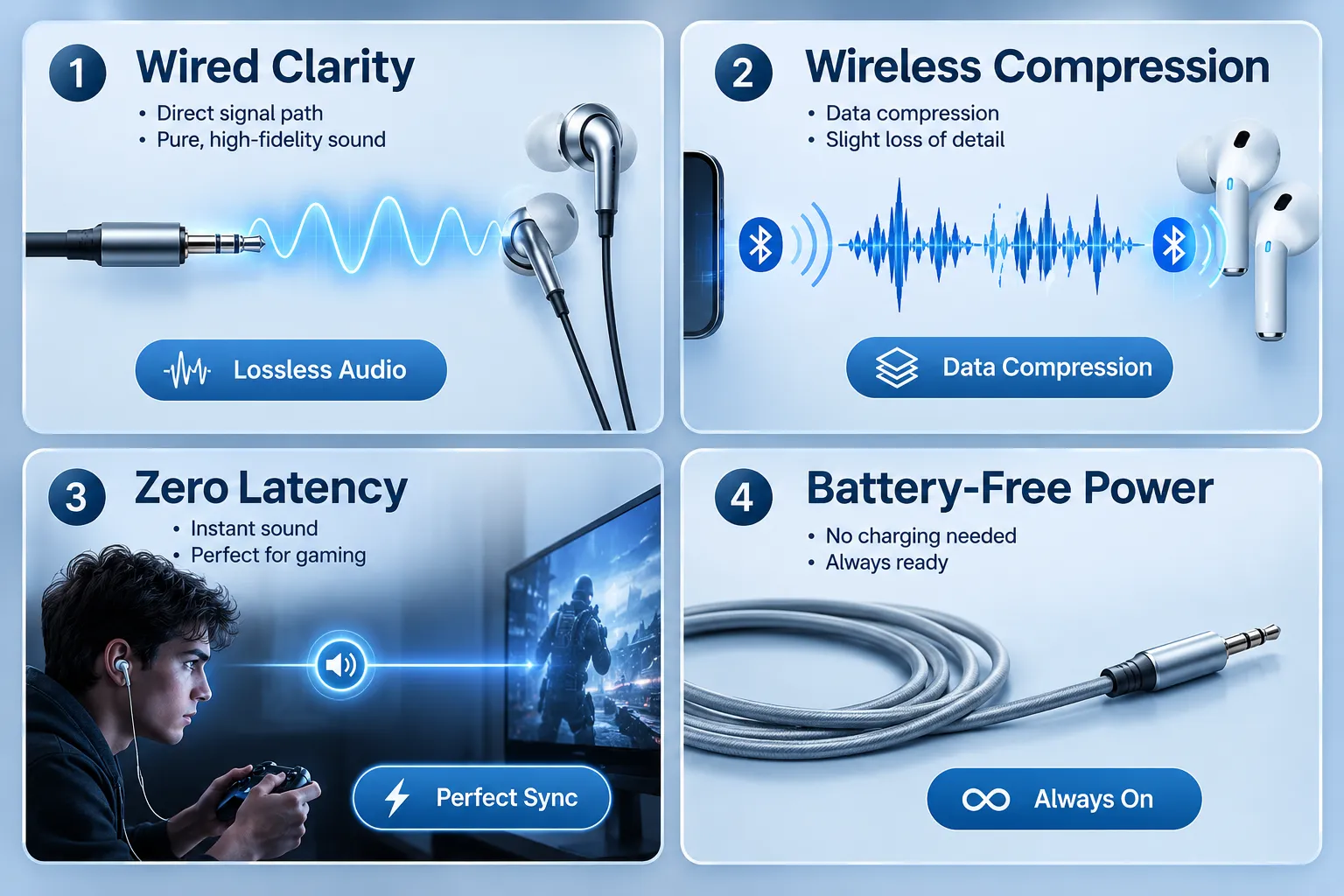
For many buyers, wired earbuds offer better audio quality at the same price. That is where the value gap becomes hard to ignore.
A $30 to $80 wired pair often sounds clearer than wireless models in the same range because more of the budget goes into drivers and tuning, not batteries, chips, and radios.
Wired models can also support lossless sound, which matters to music fans using high-quality files or streaming tiers with better detail. Not everyone hears a huge difference, but cleaner highs, tighter bass, and more natural vocals are common gains with solid analog listening gear.
This is a key reason buyers looking at affordable headphones still choose cables. Engadget makes a similar point in its look at wired IEMs versus wireless earbuds.
At the same price, wired earbuds often give you:
- better drivers
- less compression
- stronger long-term value
Once sound improves, the old cable starts to feel less like a drawback and more like a feature.
Reason four: style, nostalgia, and social pull
The comeback is not only practical. Wired earbuds also look right for the moment.
Y2K nostalgia has made older tech feel fresh again, and earbuds with a visible white or black cable now signal a kind of retro style. What once looked outdated can now read as intentional, simple, and even a little rebellious against expensive status gadgets.
A growing celebrity trend has helped too, turning basic earbuds into a quiet fashion statement rather than a budget compromise. Reports from The Guardian on wired headphones being cool again and social trend coverage have pushed that image further.
Some users also like what wired earbuds say about how they listen:
- they feel more direct and less distracted
- they create a stronger sense of privacy and isolation
- they fit the appeal of slow, analog listening
Still, style alone would not bring people back if the tradeoffs were not manageable.
Reason five: the tradeoffs still matter
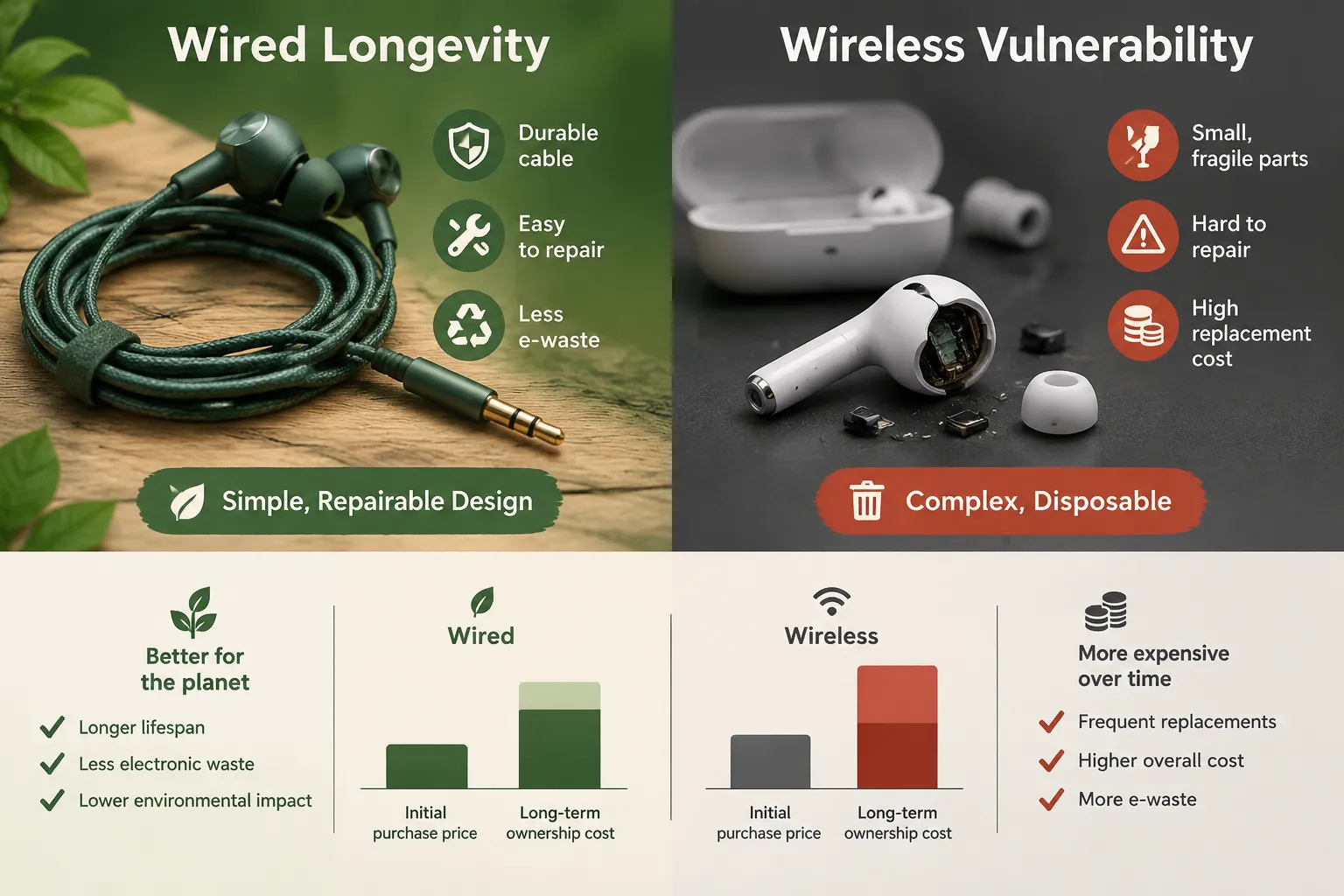
Wired earbuds are not perfect, and that matters if you are choosing for real life. The cable solves some problems while creating others.
The most obvious downside is tangle issues. Even good cables can knot in a pocket, snag on a bag, or pull if you move quickly. That makes wireless earbuds a better fit for running, gym sessions, and days when you need full freedom of movement.
If you want that kind of setup, models covered in roundups of the best wireless earbuds for gaming often overlap with what active users like too: low latency, stable fit, and strong battery life. There is also a mixed environmental impact story here. Wires use materials too, but fewer built-in batteries can mean a longer usable life and less battery waste over time.
In short, wired earbuds win many daily battles, but wireless still makes more sense in specific cases.
Which users get the most from wired earbuds
Wired earbuds help most when your top priorities are better value, simple setup, and dependable wired audio. They are strongest in routine use, not high-motion use.
Students benefit because a cheap pair can last through classes, library sessions, and laptop work without charging. Commuters like the fast plug-in use and stable sound on trains, buses, and flights.
Desk workers often gain the most because they spend hours on calls, music, and videos in one place. Portable earbuds also beat bulky over-ear headphones when you want something light in a pocket or small bag. That matters if you need quick access during the day but do not want a headset around your neck.
People most likely to prefer wired earbuds include:
- students on a budget
- commuters and travelers
- office and desk workers
- listeners who care about sound for the money
If that sounds like you, the next step is choosing the right pair without getting distracted by trends.
A simple way to choose the right pair
Buying wired earbuds is easier than buying wireless, but a few details still matter. A smart choice comes down to fit, plug type, and durability.
Start by checking cable length. A short cable works well at a desk, while a longer one helps if your phone stays in a bag or coat pocket. Next, confirm the plug type, since many newer phones need a USB-C or Lightning adapter instead of a built-in headphone jack.
If you already use Bluetooth most days, a good wired setup can still extend your phone use as a backup beside your main pair of wireless headphones with long battery life. Comfort matters too, because even great sound loses its value if the earbuds hurt after 30 minutes.
Before you buy, compare:
- sound and tuning
- cable and strain relief quality
- plug compatibility
- price versus build
Choosing this way usually works better than chasing the latest hype or copying a celebrity look.
Frequently asked questions
Are wired earbuds really better than wireless earbuds?
Often, yes, for people who want battery-free use, stable sound, and lower cost. They are not better for every situation, but they solve many of the small annoyances that create wireless fatigue.
Why do people miss the headphone jack?
Many people want a simple plug-in option that works right away. A headphone jack means fewer steps, fewer pairing problems, and no charging worries when you need audio fast.
Do wired earbuds sound better?
In many cases, yes, especially at the same price. Wired audio can deliver clearer detail and support lossless sound without the compression limits common in Bluetooth listening.
Are wired earbuds more affordable?
Yes, they usually cost less than wireless models with similar sound quality. That makes them a strong pick for shoppers who want better value and reliable everyday listening.
Are wired earbuds coming back only because of style?
No. Style helps, especially with Y2K nostalgia and the current celebrity trend, but function matters more. No charging, stronger reliability, and better sound for the money are the main reasons people are plugging back in.
